Last updated: May 2026
Margins are getting squeezed. Tariffs are higher, ocean freight is volatile, and customer acquisition cost on Meta and TikTok keeps climbing. For DTC brands doing $1M–$15M, the math gets harder every quarter: you pay more to acquire a customer, then pay more to fulfill their order, and the first sale rarely covers either.
The brands surviving this aren't the ones running better ads. They're the ones extracting more revenue from every customer they already paid to acquire. That's customer lifetime value (CLV), and it's the single highest-leverage metric you can move right now. Understanding DTC and Ecommerce trends shaping retention is the starting point.
What is customer lifetime value (CLV) and how do you calculate it
Customer lifetime value is the total revenue a customer generates across their full relationship with your brand. The formula is simple:
CLV = (average purchase value × average number of purchases) × average customer lifespan
A brand with a $60 AOV, three orders per customer, and a two-year average lifespan has a CLV of $360. If your blended CAC is $90, your CLV-to-CAC ratio is 4:1 — healthy. If your CAC creeps to $150 and your CLV stays flat, you're losing money on acquisition.
The five levers below move both halves of the equation: how often customers buy, and how long they stay.
How shipping speed and cost directly increase customer lifetime value
Shipping is the most underrated CLV lever in DTC. Fast, reliable, free shipping outperforms discounts and free gifts as a purchase driver, according to consumer surveys reported by Deloitte. Late deliveries, on the other hand, are one of the fastest ways to lose a customer for good. Convey's logistics research found 84% of shoppers won't return to a brand after a single poor delivery experience, making on-time delivery one of the most direct levers on repeat purchase rate.
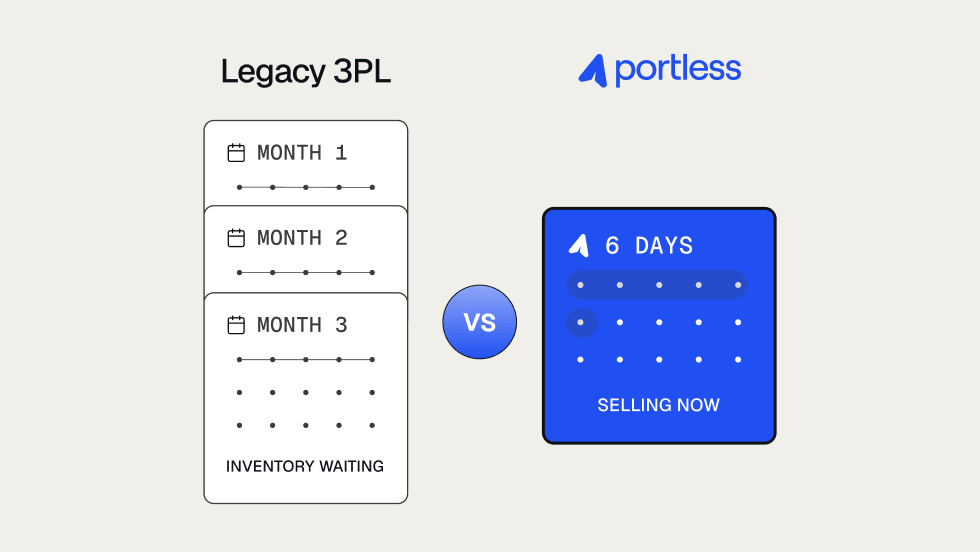
The legacy fulfillment model makes this worse, not better. The standard playbook looks like this: place a bulk order with your manufacturer in China or Vietnam, wait 30–45 days for ocean freight, pay duties on every unit upfront, store it in a US 3PL, and ship from there. By the time inventory hits a customer's door, you've waited 60–90 days and tied up six figures in working capital. If demand shifts, you're stuck with the wrong SKUs in the wrong warehouse. This is also why last-mile logistics has changed for DTC brands: the old hub-and-spoke model can't keep up with customer expectations.
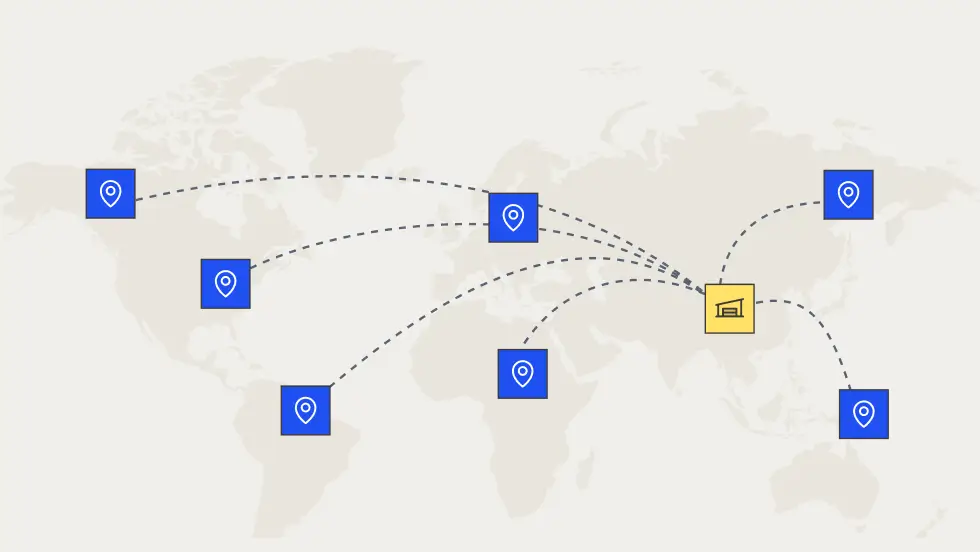
Direct fulfillment from the point of manufacture changes the math. Portless ships orders directly from fulfillment centers in China and Vietnam to customers in 75+ countries in five to eight days, with no domestic warehousing. That means:
- You stay in stock on bestsellers without overordering, which protects repeat purchase rates
- You ship faster than the brands still routing through a US 3PL
- You stop paying duties on unsold inventory, freeing cash to reinvest in retention
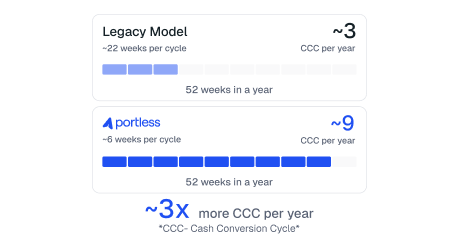
For a deeper look at how direct fulfillment changes cash flow and lead times, the working capital story is often more compelling than the speed story. Shein and Temu built billion-dollar businesses on direct fulfillment for a reason. The brands that adopt the same model, with better products and brand equity, compound every CLV gain by removing the supply chain drag underneath it.
Loyalty programs and incentives that lift repeat purchase rate
Customers are more likely to keep returning for more if they know they're getting something out of it. This includes loyalty programs that offer discounts after you make a certain number of purchases or even free gifts.
Bond Brand Loyalty's annual report found loyalty program members are significantly more likely to choose a brand over a competitor and buy more often than non-members. So, consider introducing a loyalty scheme or some form of incentive into your business.
Excellent customer support that protects repeat purchase rate
Quality customer service is important among shoppers, and it is something that all Ecommerce businesses should offer. If a customer has a question or concern, make sure it's easy for them to contact you via contact forms, live chat, email, or social media. Have all these aspects available on a user-friendly 'contact us' page.
It's been found that 72% of shoppers are willing to spend with brands that provide excellent support, and one-third of consumers are likely to switch brands after a single instance of poor customer service. 80% of business buyers want companies to respond and interact with them in real time. The best way to do this is by offering live chat support.
Having self-service content and infrastructure
Around 91% of consumers would rather use a Knowledge Base, like frequently asked questions, if available, and 70% prefer using a company's website to solve their problems instead of email or phone support. With that in mind, a knowledge base should be part of your support infrastructure.
Simple ways to promote better customer support can include:
Providing 24/7 support
Customers want to get help with their questions and requests immediately. The best way to do this is by offering 24/7 support, where you can respond as quickly as possible.
Offering live chat support
About 79% of consumers prefer live chat over other support channels because of the immediate response, according to Comm100's customer service research. Live chat also lets you intervene in the moment that matters most for CLV: when a customer is about to abandon, return, or churn. A two-minute chat that resolves a sizing question saves both the sale and the future repeat order.
The brands that get this right tier their support: AI handles tier-1 questions (where is my order, return policy, sizing), and humans handle anything involving a refund, a complaint, or a high-LTV customer flagged in the CRM.
Cross-selling and upselling
Attracting customers and increasing sales are crucial for an Ecommerce or DTC business. However, to truly maximize customer lifetime value (CLV), upselling and cross-selling are key.
The best cross-selling and upselling results come from the following pages:
Checkout pages
It's always a good idea to offer recommended purchases before customers buy their cart products.
Order confirmation emails
You can promote related products inside order confirmation emails, but the FTC's CAN-SPAM rule requires that the email's primary purpose remain transactional. Keep promotional content secondary to the order details to stay compliant.
Subscription renewal reminder emails
If someone has a good experience with you, subscription renewal reminders and milestone emails will remind users about the value your company is providing them.
Personalized customer experience
Customers relate much better with businesses that offer a personal experience. In fact, 71% of consumers expect personalization when they connect with a brand. And 78% of consumers are more likely to purchase repeatedly from companies that personalize their marketing communications and buying experiences.
But why is it important? Personalization involves making the customers feel special and valued when engaging with a brand. When you add that personal touch, you deepen customer engagement and foster stronger emotional connections.
Here are some ways you can personalize your customer experiences:
Website personalization
Website personalization works because it reduces the cognitive load of choosing. When a returning customer lands on a homepage tuned to their last purchase, conversion lifts measurably — McKinsey research shows personalization can deliver a 10–15% revenue lift. It's also worth understanding the hidden cost of fast shipping on returns: personalization that drives the wrong recommendation creates return volume that eats the margin gain.
Tailor-made product suggestions
When marketers keep accurate records of past purchases, they can make product recommendations based on customers' wants and needs.
Personalized communication strategies
Email personalization makes a customer feel like you're talking directly to them. This includes mentioning their name, referencing their job or location, and providing targeted recommendations.
Businesses that evaluate and understand their customer lifetime value gain a strategic advantage in predicting revenue growth and allocating marketing resources effectively for maximum results. For more context on what's driving repeat purchase behavior right now, see the DTC and Ecommerce trends shaping retention.
CLV is won in the supply chain, not just the funnel
Loyalty programs, support, personalization, and upsells all matter, but none of them compound if your fulfillment is slow, your cash is locked in a US 3PL, and your duties are paid before a customer ever clicks add to cart. Portless helps DTC brands move the CLV needle from the supply chain side: faster delivery, lower landed cost, and sustainable fulfillment that cuts cost and builds loyalty. If you want to see what direct fulfillment would change for your repeat purchase rate and working capital, talk to our team.
FAQ
What is customer lifetime value (CLV)?
Customer lifetime value is the total revenue a customer generates across their full relationship with your brand. For DTC brands, it's the metric that determines whether your customer acquisition cost is sustainable.
How do you calculate customer lifetime value?
Multiply average purchase value by average number of purchases to get customer value, then multiply that by average customer lifespan. For example, a $50 AOV × 4 orders × 3 years equals a $600 CLV.
Why does customer lifetime value matter for DTC brands?
CLV tells you how much you can spend to acquire a customer profitably. Brands with rising CAC and flat CLV are running unprofitable acquisition. Brands that increase CLV unlock budget for paid media and new market expansion.
What is a good customer lifetime value for an Ecommerce brand?
A healthy CLV-to-CAC ratio is 3:1 or higher. The absolute CLV number varies by category, but the ratio is what determines whether your unit economics work.
How does shipping speed affect customer lifetime value?
Faster, more reliable shipping increases repeat purchase rates. Delivery delays reduce repeat orders by up to 87%, according to operator surveys, making fulfillment one of the highest-leverage CLV inputs you control.








.jpg)
.jpg)
%20(1).jpg)