“We generated $70K in package protection revenue in a single quarter by adding a simple $4 protection option at checkout — plus an additional $12K from cashbacks. Customers get peace of mind, and we're making a profit on every protected order with zero effort."
“We generated $70K in package protection revenue in a single quarter by adding a simple $4 protection option at checkout — plus an additional $12K from cashbacks. Customers get peace of mind, and we're making a profit on every protected order with zero effort."
Originally posted: December 2025 | Updated: May 2026
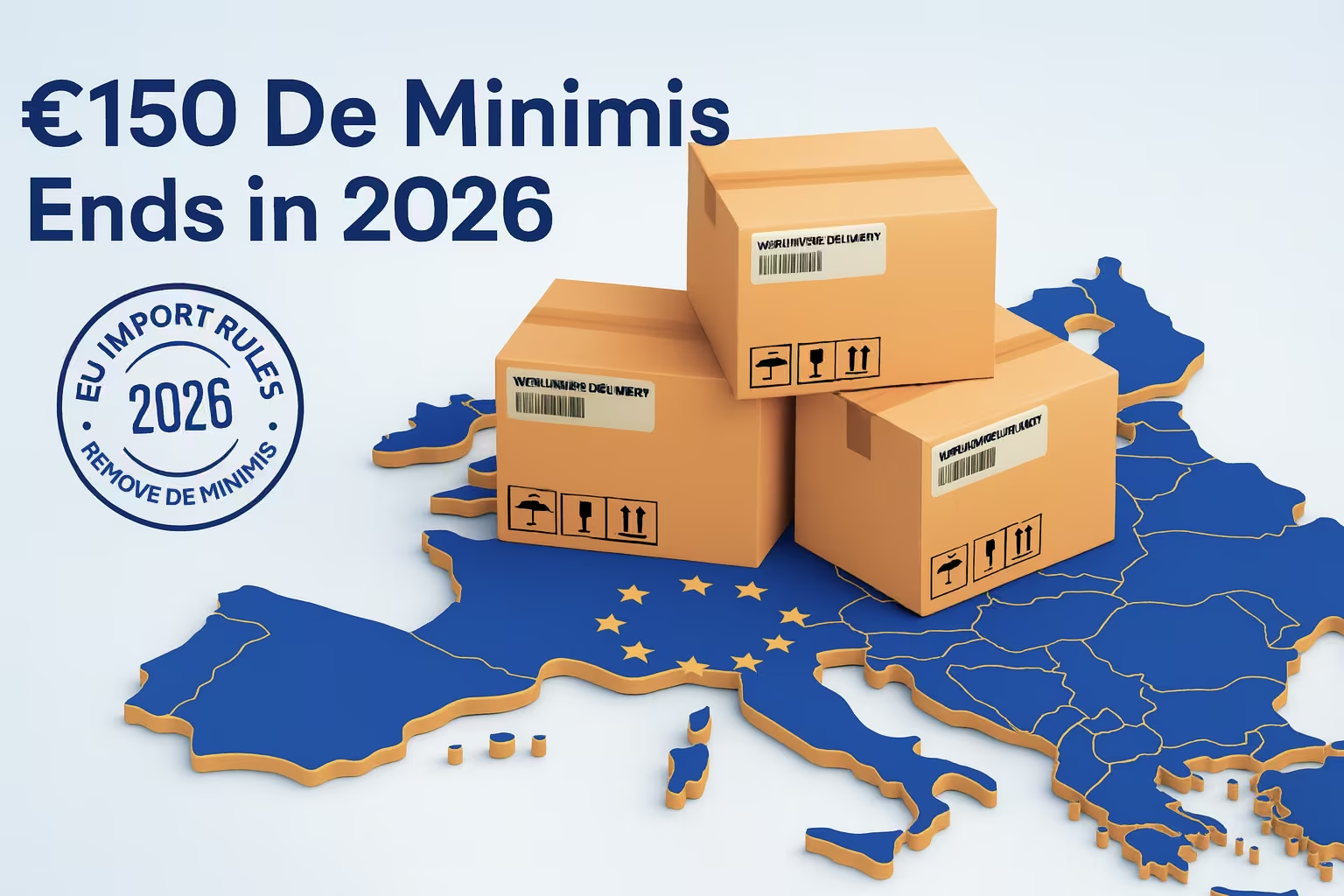
The EU de minimis exemption is changing. From July 1, 2026, every low-value parcel entering the EU faces a flat €3 customs duty for the first time, with full duty assessment following in 2028 once the exemption is fully removed.
If you sell DTC into Europe, this changes your landed costs, your pricing, and your compliance workflow. Here's what's happening, what it costs, and how to prepare.
What is the EU de minimis exemption and why is it ending
The EU de minimis exemption allowed packages valued below €150 to enter the European Union without paying import duties. While packages still required customs declarations and VAT payments, the duty exemption created a significant advantage for non-EU sellers, particularly from China. The European Council voted to phase out the de minimis exemption on November 13, 2025, ending a key benefit that many Ecommerce businesses built their models around.
Many DTC categories currently benefiting from de minimis will see direct increases in duty costs. These include fashion, jewelry, accessories, beauty and skincare, home goods, and most consumer products priced below €150.
Phase one: July 1, 2026. A flat-rate customs duty of €3 per HS code applies to every low-value parcel entering the EU. The charge is per HS code, not per package or per SKU. A parcel containing items under a single HS code triggers one €3 charge — even if those items are different SKUs. Two swimsuits in different colors and sizes still fall under one HS code, so the parcel gets charged once. A parcel that spans two distinct HS codes — say, a swimsuit and a sun hat — triggers two €3 charges.
Phase two: mid-2028. This is when EU de minimis is fully removed. The €3 flat rate disappears, and parcels get assessed at standard import duties — the same product-specific tariff rates that apply to commercial bulk shipments today. Duty rates vary by HS code and country of origin, so the cost impact depends on what you sell and where it’s made. The mechanism behind this shift is the EU Customs Data Hub, which goes live at the same time and gives customs authorities the infrastructure to process duty on every parcel at scale.
For Portless customersUntil July 2026, there's no cost impact — our carriers currently route through EU countries that haven't rolled out parcel fees yet. After July 2026, expect a per-parcel fee in the low single-digit euro range, depending on entry country. We'll pick the most cost-effective route available, communicate specifics closer to the date, and give you lead time to adjust your pricing. The fee will appear on your bill.
The urgency felt by European lawmakers led to this accelerated timeline, with EU Trade Commissioner Maroš Šefčovič stating that the original 2028 timetable was "incompatible with the urgency of the situation." The confirmed date of July 1, 2026 leaves you limited time to adapt your pricing, fulfillment, and compliance strategy.
What steps should your brand take to prepare for these changes
Preparing for the de minimis changes takes a systematic approach. Follow these steps to make sure your operations are ready when the new charges take effect on July 1, 2026.
1. Audit current EU shipments
Begin by analyzing your EU order data to understand how many shipments fall below the €150 threshold. Identify your most affected product categories and calculate the potential duty impact based on their Harmonized System (HS) codes. This baseline assessment quantifies the financial impact on your business — and the deeper cost analysis later in this guide will help you stress-test those numbers.
2. Update pricing models
Revise your pricing strategy to account for the new duty (€3 per HS code from July 2026, climbing to roughly €5 from November once the EU handling fee lands) and the processing costs that come with them. Test pricing scenarios to see how much of the increase you can pass to customers without tanking conversion. Country-specific pricing is worth modeling — VAT rates and national handling fees vary by destination, and a flat global price hike misses that nuance.
To understand how duties will affect margins and conversion, model three scenarios:
Brand absorbs most costs: Lower margins, frictionless customer experience
Customers absorb most costs: Margins protected, potential conversion impact
Hybrid approach: Adjust pricing by market or category
3. Make sure your IOSS coverage is sorted
IOSS lets you collect VAT at checkout and remit it monthly through a single EU registration. Without it, customers get hit with VAT and handling fees at the door, and shipments face customs delays that can result in orders being delayed, refused, or returned.
Non-EU sellers can’t register directly. You need to appoint an EU-established intermediary to register on your behalf and handle your IOSS obligations. Onboarding takes weeks. The July 1 deadline is fixed.
What changes from July 2026: The €3 duty is integrated directly into the IOSS system. IOSS-registered sellers collect both the VAT and the €3 duty at checkout, enabling instant customs clearance. IOSS is no longer a duty shield — it’s the rails the duty rides on.
FOR PORTLESS CUSTOMERSYou don't need to register for IOSS or appoint your own intermediary. We handle IOSS coverage through our partner network, and your shipments move under our infrastructure.
4. Evaluate fulfillment options
For many brands, a hybrid approach works best — using direct fulfillment for new products and EU warehousing for proven bestsellers. If you sell devices or electronics with accessories (for example, cameras with straps or cases), run separate models for the core device and for accessory bundles, since they can sit in different duty brackets and have different demand patterns. If you're selling DTC into Europe, think through how your fulfillment model maps to these new cost dynamics.
Given that duties will now apply to all shipments regardless of fulfillment method, EU-based warehousing is becoming increasingly attractive for high-volume products. Bulk importing into EU warehouses requires paying duties once per inbound shipment, while direct shipping applies duties per parcel.
5. Communicate with customers
Develop a clear communication plan to explain any pricing or delivery time changes to your EU customers. Transparency about the regulatory changes can help maintain customer loyalty despite potential price increases. Consider offering incentives like free shipping thresholds to offset the perceived impact of higher landed costs.
Update these core areas:
EU shipping and duties FAQ
Checkout messaging for duties/VAT
Country-specific pricing if applicable
A short educational banner or email explaining regulatory changes
How the new EU duty rules will impact your shipping costs and operations
Starting July 1, 2026, every low-value parcel entering the EU incurs a flat-rate customs duty of €3 per HS code, regardless of declared value. A separate EU-wide handling fee of approximately €2 per HS code is also confirmed, to be implemented no later than November 1, 2026, bringing the combined charge to roughly €5 per HS code once both are in effect. From 2028, full product-specific duty rates replace the flat fees once de minimis is fully removed.
Understanding how tariffs work across different markets is crucial for Ecommerce brands. For more insights on navigating these changes, see our guide on adapting to US tariff changes, which shares similar compliance strategies.
Duty impact by product category
Here’s what the cost looks like for common DTC categories across both phases — the flat €3 during the interim period, then the product-specific duty once de minimis is fully removed in 2028.
Fashion and apparel (HS chapters 61–62): During the interim, every parcel carries the flat €3 per HS code, regardless of garment value. From 2028, duty rates typically run 12%. On a €60 garment, that’s €7.20 in duty. On a €35 item, that’s €4.20.
Accessories and jewelry (metals, leather): Flat €3 during the interim. From 2028, rates range from 2.5% to 12% depending on material and construction. A €45 leather accessory at 2.5% works out to €1.13. At 12%, it’s €5.40.
Beauty and skincare (HS chapter 33): Flat €3 during the interim. From 2028, rates typically fall between 0% and 6.5%. A €35 product at 6.5% works out to €2.28.
Home goods (HS chapters 39, 44, 94): Flat €3 during the interim. From 2028, rates vary by material — plastics, wood, and furniture sit roughly in the 2.7–6.5% range.
Consumer electronics (HS chapter 85): Flat €3 during the interim, which can be a meaningful share of product value on low-price-point accessories. From 2028, duties are often 0–3.5%, so the percentage-based hit is smaller than apparel or accessories.
Look up your specific duty rate using the EU's TARIC database. If you're unsure of your HS classification, work with a customs broker now. Misclassification creates clearance delays and penalties once every order is processed individually.
How VAT stacks on top of duties
Most EU countries calculate VAT on product value + shipping + duties, which means that higher duty amounts indirectly increase the VAT owed.
Additional costs beyond customs duties
Customs clearance processing fees typically add €5–10 per package based on industry estimates. Delivery timelines may extend by 1–3 business days due to customs processing. Brands that ship DDP (Delivered Duty Paid) with accurate data — including correct HS codes, values, and VAT handling — usually see fewer surprises and sit at the lower end of that delay range. Shipments that rely on the customer to pay duties on delivery, or that have poor documentation, are more likely to be held up.
Documentation requirements will become more stringent, with every shipment needing complete commercial invoices with accurate HS codes. VAT obligations will remain through the Import One-Stop Shop (IOSS) or alternative arrangements.
The financial impact on your business
From July 1, 2026 to mid-2028, a flat €3 customs duty per HS code applies to all low-value parcels. The percentage-based duty examples below show what your costs look like once the EU Customs Data Hub goes live in 2028 and full tariff rates take effect.
The financial impact becomes clear when examining typical Ecommerce orders:
After (2028 rates): €50 product + €6 duty (12%) + €10.50 VAT + €7 processing = €73.50 total landed cost
That's a 21% increase in landed costs that must either be absorbed by your business or passed on to customers. For brands operating on thin margins, this change could significantly impact profitability.
For higher-value products, the impact scales proportionally. Consider a €200 product:
That's a €31 increase over today's cost structure. This cost increase is meaningful even for high-AOV brands because duties and VAT scale with value, while processing fees remain fixed.
If your main products sit between €70 and €120, you can expect the combined effect of duty, VAT, and processing fees to add a noticeable percentage on top of your current landed cost — especially for gifting and impulse price points.
ASSESS YOUR EU EXPOSURE NOWTalk to our team to understand how these changes affect your specific product categories and shipping strategy.
What alternative strategies can brands use to stay competitive
With the de minimis exemption changing, you'll need to adopt new approaches to maintain competitive pricing and efficient operations. Several strategies can help offset the increased costs and complexity.
Direct fulfillment
Eliminates warehouse holding costs and accelerates cash flow cycles. This model enables you to ship finished goods immediately after production. Even with duties now applying to all shipments (per parcel), direct fulfillment can still reduce total landed cost by eliminating storage, handling, and inventory financing fees. These are costs that meaningfully impact categories where margins depend on lean operations and fast inventory turnover.
Increases your average order value, helping distribute fixed customs clearance costs across more revenue. Since processing fees remain relatively constant regardless of package value, higher-value shipments become proportionally more efficient.
The right strategy depends on your product category, average order value, and customer expectations. Most successful brands will implement a combination of these approaches to minimize the impact of the new duties.
How direct fulfillment reduces total landed costs
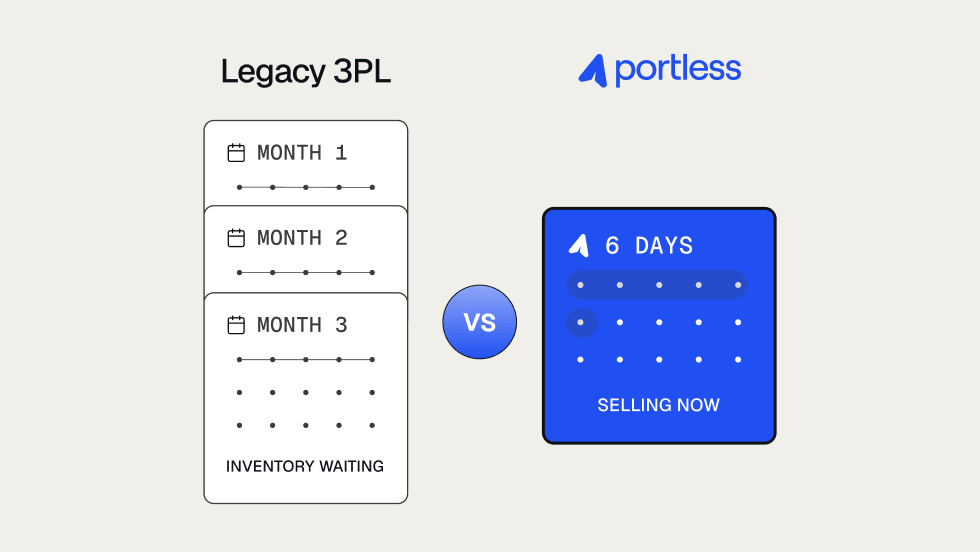
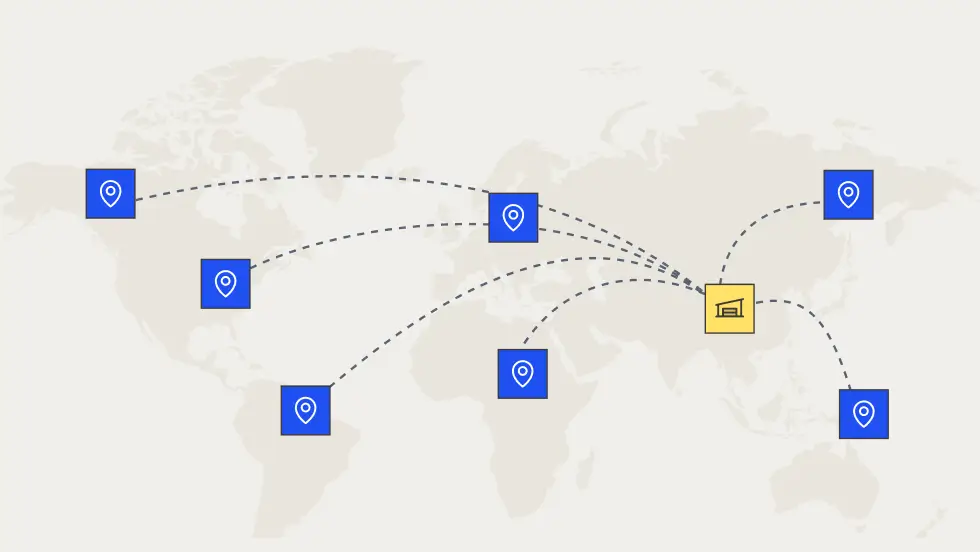
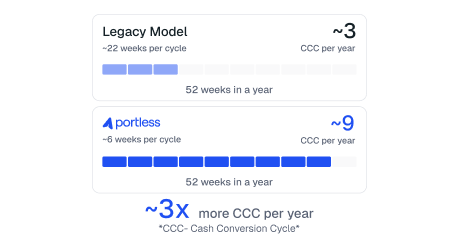
Direct fulfillment provides a compelling alternative to traditional supply chains under the new EU duty regime. This model ships products straight from production facilities to end customers, bypassing intermediate warehousing steps. Even with duties now applying to all shipments, the overall cost savings from eliminated touchpoints can offset the new duty expenses. It also compresses your cash flow cycle — products become available for sale almost immediately after production rather than waiting for warehouse receiving and processing.
The direct fulfillment model eliminates several cost centers that typically inflate landed costs:
::table
Cost component;Traditional 3PL;Direct from Asia
Product cost;€25;€25
Shipping;€15;€15
Warehousing;€5;€0
Duties (12%);€3;€3
Total;€48;€38
:table
The 25% total cost reduction comes primarily from:
Eliminated warehousing: No storage fees, handling charges, or inventory financing costs
Optimized shipping routes: More efficient shipping lanes with fewer touchpoints
Reduced inventory risk: Production closer to actual demand, minimizing markdowns
NATPAT used this model to expand to 50+ countries while simplifying their supply chain, proving that direct fulfillment scales across markets even as regulatory complexity increases.
See how Portless can help
See how our platform can help you prepare for the July 2026 deadline. Book a demo to walk through your specific product mix and EU exposure.
FAQ
How do EU changes compare to the $800 de minimis threshold in the US?
The EU's elimination is more aggressive than the US approach. The United States eliminated its $800 de minimis exemption in two phases — for China imports on May 2, 2025, and for all other countries on August 29, 2025. Both regions acted in response to the massive volume of low-value shipments from Chinese Ecommerce platforms. For details on how US brands are adapting, see our comprehensive guide to US tariff changes.
Which product categories will face the highest duty increases under the new EU rules?
Fashion, accessories, jewelry, beauty products, home goods, and electronics under €150 will experience the most significant impact. Textiles typically face duty rates around 12%, while electronics often see lower rates of 0–5%. These categories currently benefit most from duty-free shipping and typically have lower per-unit values that historically qualified for the exemption.
What documentation will EU customs require for low-value packages from July 2026?
Every shipment will need a commercial invoice, customs declaration with accurate HS codes, proof of origin, and verification of VAT payment through the Import One-Stop Shop (IOSS) or alternative methods. Electronic submission will be mandatory, with more stringent documentation requirements across all shipments. The EU Customs Data Hub, expected to be fully operational by mid-2028, will standardize these processes across all member states.
How can brands determine the correct HS code for their products entering the EU?
You'll need to identify the correct Harmonized System (HS) code for each product category. These standardized codes determine duty rates and are essential for accurate customs declarations. The EU's TARIC database provides the official tool for looking up HS codes and applicable duty rates. Consult with a customs broker or use digital tools that provide HS code lookup functionality for accurate classification.
Will imports from the UK to EU countries be affected by these changes?
Yes. All imports from non-EU countries, including the UK, will be subject to the €3 flat duty from July 2026 and to full product-specific duties from 2028 once de minimis is removed. This applies to all product categories, which must be properly classified with correct HS codes. Brexit created separate customs systems, so UK goods entering the EU are treated as third-country imports.
What happens with returns and exchanges under the new rules?
Returned products don't automatically qualify for duty refunds. Replacement, exchange, or warranty repair shipments may incur duties again unless specific customs procedures are used. Brands with high return rates or significant repair volumes should review these workflows with their fulfillment partner or customs broker to avoid paying full duty twice when it can be prevented.
Frequently asked questions
Heading
Lorem ipsum dolor sit amet, consectetur adipiscing elit. Suspendisse varius enim in eros elementum tristique. Duis cursus, mi quis viverra ornare, eros dolor interdum nulla, ut commodo diam libero vitae erat. Aenean faucibus nibh et justo cursus id rutrum lorem imperdiet. Nunc ut sem vitae risus tristique posuere.
Get operator-level supply chain insights
Thank you! Your submission has been received!
Oops! Something went wrong while submitting the form.







.jpg)
.avif)