"We generated $70K in package protection revenue in a single quarter by adding a simple $4 protection option at checkout — plus an additional $12K from cashbacks. Customers get peace of mind, and we're making a profit on every protected order with zero effort."
"We generated $70K in package protection revenue in a single quarter by adding a simple $4 protection option at checkout — plus an additional $12K from cashbacks. Customers get peace of mind, and we're making a profit on every protected order with zero effort."
How Memobottle cut a 120-day cash cycle by consolidating six global warehouses into one
How memobottle consolidated six global warehouses into one, compressing its cash conversion cycle by 100+ days and cutting inventory holding by 5x
120+ days
Cash conversion cycle compression
5×
Reduction in inventory holding
6 → 1
Warehouses consolidated into one Portless hub
$25–30K/month
Storage costs eliminated
Industry
Home & Garden
Products
Reusable water bottles, bags, lunchboxes
Headquarter
Australia / NZ
A conversation with
Jesse
Co-founder • memobottle
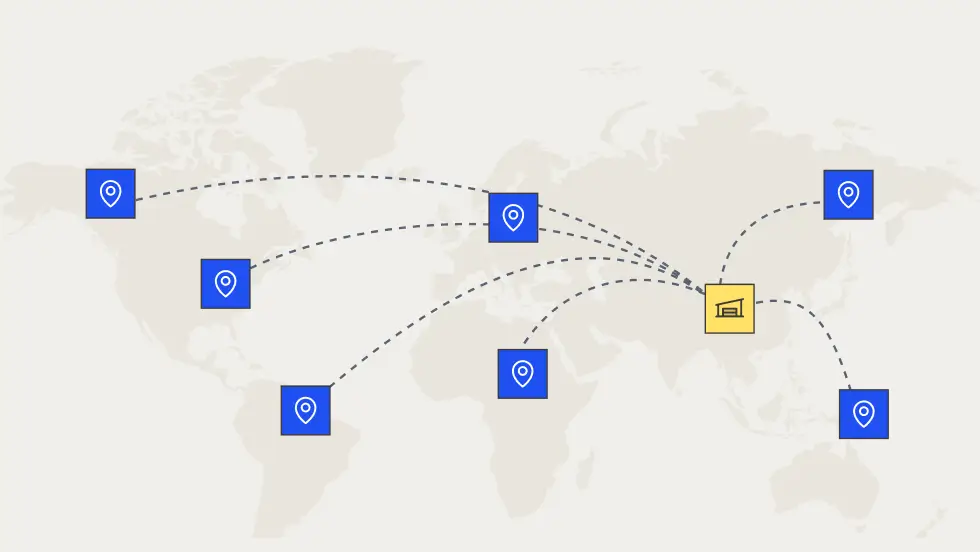
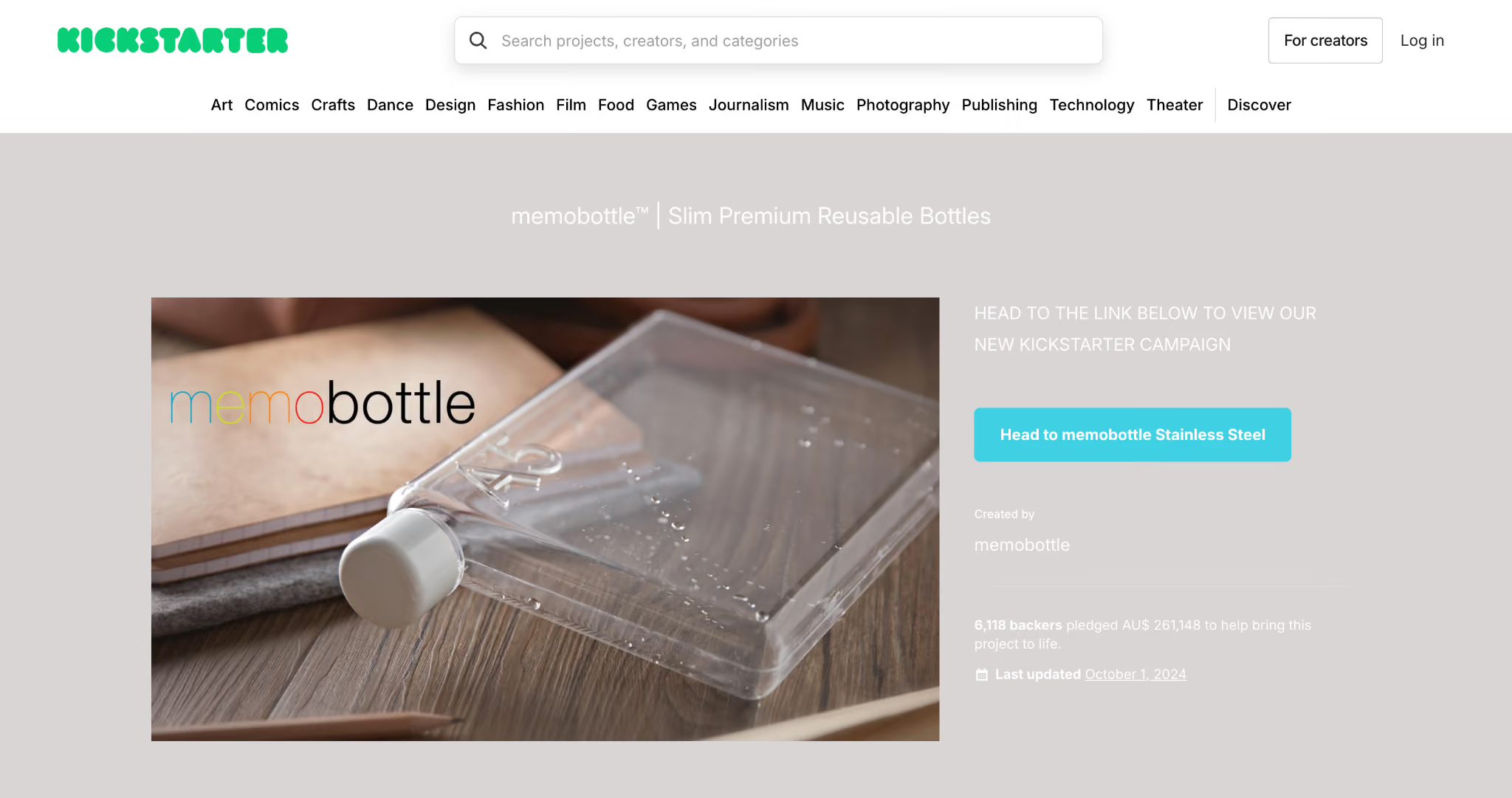
Challenge: memobottle's flat, design-led water bottles found a global audience from day one. The team sold 14,000 bottles to customers in 70+ countries during their Kickstarter launch, and to serve that demand they built out six regional 3PLs around the world. The result was a logistics setup that worked but quietly choked the business: every SKU had to be stocked at every warehouse "just in case," sea freight to each region pushed their cash conversion cycle past 120 days, and storage costs hit $25-30K USD per month in peak periods.
Solution: memobottle is consolidating their entire global fulfillment footprint onto Portless. Once complete, the move is set to compress their cash conversion cycle by 100+ days, reduce inventory holding by roughly 5x, eliminate the bulk of their monthly storage spend, and shorten new-product time-to-market by 100+ days — all while preserving their ability to ship to customers in 70+ countries.
About memobottle
memobottle was born in 2014 out of a simple, design-led frustration. Co-founders Jonathan and Jesse, childhood friends from a small coastal town an hour south of Melbourne, were university students trying to fit cylindrical water bottles into already-stuffed bags. Everything else they carried was flat: laptops, notebooks, phones. Why wasn't the water bottle?
They paired that observation with a deeper concern about single-use plastic, designed a flat reusable bottle in multiple sizes that slipped into handbags and back pockets, and took it to Kickstarter with no funding behind them. The response was immediate: 14,000 bottles sold in 30 days, with orders from more than 70 countries.
"We had orders from over 70 different countries from the get-go." — Jesse, Co-founder
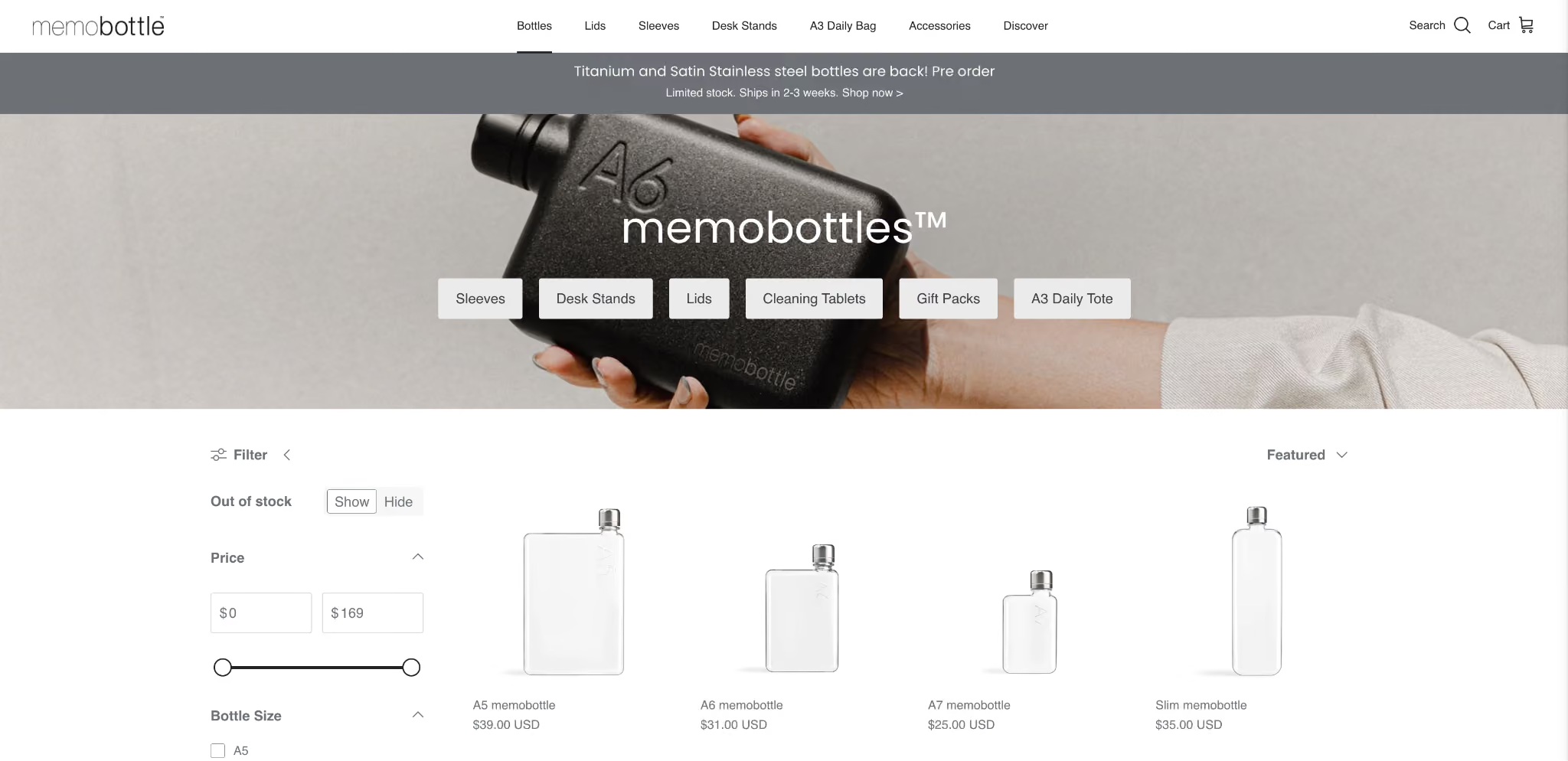
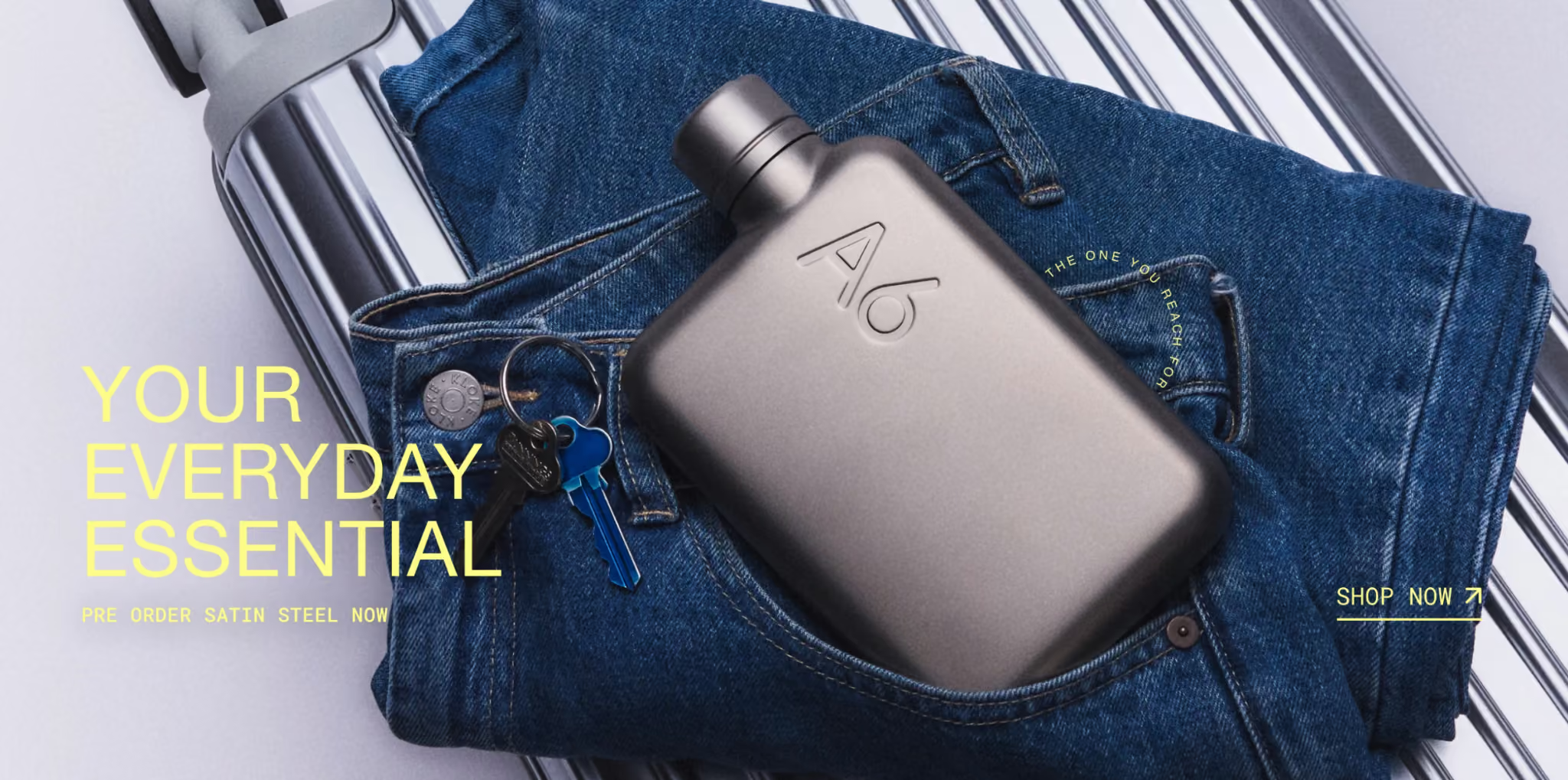
That early validation has compounded into a category-defining brand. Today memobottle operates four revenue channels: direct-to-consumer e-commerce, Amazon, B2B wholesale through roughly 2,000 retail stores worldwide, and a fast-growing corporate gifting business with global enterprises. The product range has expanded well beyond the original bottle: stainless steel and titanium versions, a bag line, a lunchbox launching soon.
That growth, global from inception and multi-channel by design, is precisely what made memobottle's legacy fulfillment model unsustainable.
The Challenge: A 120-day cash cycle and six "just-in-case" warehouses
Because the Kickstarter sent product into 70+ countries from day one, memobottle had to solve international fulfillment immediately. Shipping every order from Australia wasn't viable: tax IDs, international entities, and direct-from-manufacturer freight to every market were either prohibitively expensive or operationally impossible at their stage.
So they did what most globally distributed DTC brands do: they stood up regional 3PLs in every major market, eventually working with six warehouses around the world, most recently ShipBob.
That model kept orders moving, but it created a structural cash flow problem. With four revenue channels and 2,000 retail accounts depending on availability, memobottle couldn't risk stockouts in any region. Every SKU had to be held at every warehouse as "just in case" inventory, and to protect margin, that inventory traveled by sea.
Jonathan, who came from a chartered accounting background at one of the Big 4 firms, ran the math:
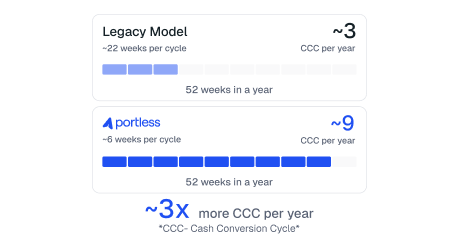
"We have our supplier terms, which you have to put down a deposit before production, and then we've got the production cycle, and then we have 45 to 80 days on the water to get to these warehouses, so we actually weren't recouping any cash from sales for 120 days, if not more."
The downstream effects were significant. Storage alone was costing $25-30K USD per month in peak inventory periods. Cash that should have funded new product development was locked inside containers on the Pacific. And despite the inflated holding, regional stockouts were still common — a 3PL in one market would run dry on a bestseller while another sat overstocked.
"We were probably kind of kneecapping ourselves into our potential, because... just stock management," Jonathan said.
"We had some serious cash flow and overstock issues at Memo that were really painful, and we couldn't work out how to fix that, because we needed all that stock."
The Decision: Why memobottle chose Portless
memobottle had actually looked at China-direct fulfillment models five years earlier and concluded it wasn't workable.
"When we saw the model, we thought, that'd be a game changer if we could do that," Jesse remembered. "And I think we did look into it, and it just wasn't workable for us at the time."
What changed wasn't memobottle's appetite. It was the maturity of the model. Word-of-mouth from other brands using Portless kept surfacing, and Jonathan trusted that signal over any sales pitch.
"We've worked with so many 3PLs over the years... The deciding factor was just word of mouth. Other people that were working with Portless. We heard this from quite a few people that it was a great setup, and I think once you get to our point, that's probably the most important thing — just speaking to other brands around what's working for them, and true and honest feedback."
The team didn't switch on faith. memobottle ran a six-month evaluation, researching the model, talking to existing Portless customers, and building a cost-and-operations case before they trialed anything. Two structural advantages stood out once they did:
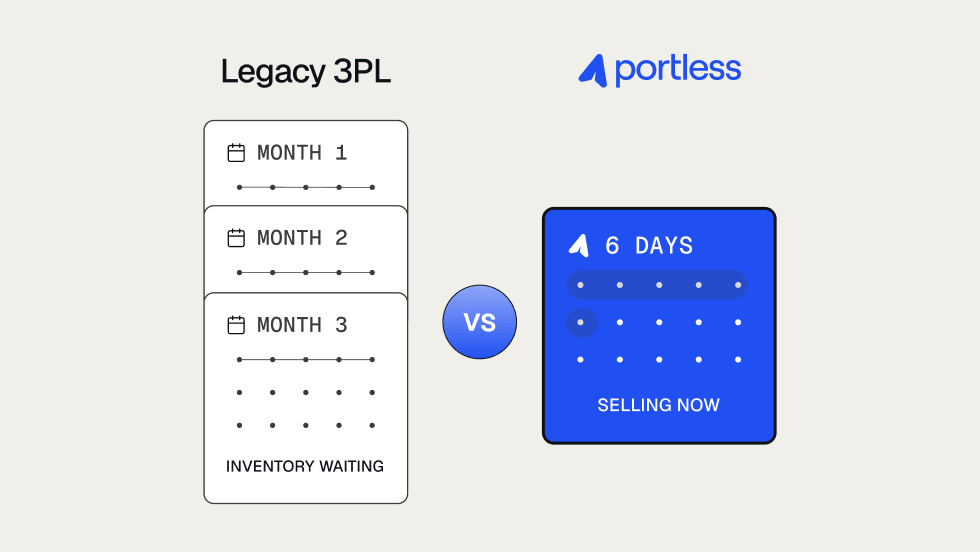
The first was proximity to manufacturing. Portless warehouses sit minutes from memobottle's factories, which means finished stock can move from the production line into the warehouse and become available for sale in less than 24 hours rather than spend 45-80 days at sea. The second was the consolidation itself: one warehouse with full SKU coverage, instead of six warehouses each carrying duplicate "just-in-case" stock.
"It was more just excitement of, like, wow, if we could make this work, then it's going to really make a huge difference to our business and create a bit of a growth unlock for us," Jonathan said.
The Rollout: Six months in tandem
memobottle didn't cut over cold. For more than six months they have been running Portless alongside ShipBob, using Shopify routing rules: if ShipBob had every SKU in an order, the order shipped from there; if anything was missing, the order routed through Portless as backup. By the end of the test period, which included Black Friday, roughly 40% of orders were already flowing through Portless.
The onboarding experience set the tone for the rest of the relationship. memobottle's catalog and four-channel mix made the setup unusually complex, but the Portless team treated it as a partnership rather than a ticket queue.
"We had so many questions, and we're probably relatively difficult to onboard, but we didn't really get that feeling at all while we were onboarding. We had a lot of time given to us," Jonathan said.
One example: early on, a memobottle product was arriving damaged in transit. The Portless team identified the issue, designed an additional packaging step, and built it directly into the picking line, a problem the customer support team was "very quick to identify a way to provide additional support around," in Jesse's words.
The ShipBob warehouses are now being packed and the bulk of inventory shipped back to China. Once the transition completes, memobottle's global fulfillment will run from one warehouse instead of six.
The Impact: From 120 days to same-day
The financial transformation is the headline. By moving inventory from "in transit by sea to six warehouses" to "next to the factory, deployable in a day," memobottle is set to compress its cash conversion cycle from 120+ days to near-immediate for the bulk of inventory. The projected 5x reduction in inventory holding, combined with the elimination of most of the $25-30K/month in storage costs, will release capital that can flow back into product development, marketing, and the corporate channel: exactly the growth investments the old model was suffocating.
Speed-to-market is the second unlock, and one memobottle is already feeling. Because Portless sits next to memobottle's manufacturers, finished product can be selling within a day of leaving the line, rather than waiting two to three months for a container to clear a regional FC.
"It's allowed us to bring forward our product launches by 100+ days. They can finish at our supplier, get straight into the warehouse, and we can start selling the next day. Speed to market, it gives us a lot more flexibility," Jesse said.
That speed also opens up tactics memobottle previously couldn't run, like pre-sales and faster international product tests.
"There is that option now, because it is so close, that we can pre-sell and test before we actually launch and have the stock available," Jonathan added.
The customer experience improvement is just as meaningful. Under the legacy multi-3PL model, regional stockouts meant memobottle was regularly throttling its own bestsellers to avoid disappointing local customers. As consolidation completes and one warehouse carries full SKU coverage, that pressure disappears.
"From a customer experience point of view, it means that our products are always available. Whereas previously, that wasn't the case."
Shipping economics, tested live across the parallel-running period, have held up better than memobottle had modeled. They had budgeted a 10-20% increase in shipping cost to customers as the price of consolidation; the actual figure during the test has been closer to 10%, with several markets — particularly across Asia — coming in cheaper than before. And on speed, memobottle's average global delivery time with Portless is now averaging 6 days — proof that direct fulfillment from China can match legacy multi-3PL speeds at a fraction of the operational overhead.
memobottle's advice for growing DTC brands
Jonathan's message to founders staring at a similar inventory and cash flow problem is blunt:
"If you fit within that category — you're an up-and-coming brand that has cash flow and inventory management struggles — then I think it's [Portless] a bit of a no-brainer. Because it [Portless] allows an international unlock for your business that is going to be a lot harder if you're trying to do it via multiple 3PLs around the world."
He pointed to a second, less obvious benefit: cheap optionality on new markets. With Portless, testing a new country becomes a switch you flip, not a regional FC you commission.
"It allows you to test new markets without really investing significantly into that new market — just to see if there's any demand. You can switch on ads to that country and ship direct to them. If it works, it works. You can lean into it more. But if it doesn't, then you haven't really lost anything along the way. It's low commitment."
For a brand built on a Kickstarter that reached 70 countries before it had a 3PL — and that is now scaling four global revenue channels at once — that combination of cash flow relief and low-commitment international optionality is the unlock that the legacy multi-warehouse model never could deliver.
"It's going to really make a huge difference to our business — and create a bit of a growth unlock for us."







.svg)


.svg)