“We generated $70K in package protection revenue in a single quarter by adding a simple $4 protection option at checkout — plus an additional $12K from cashbacks. Customers get peace of mind, and we're making a profit on every protected order with zero effort."
“We generated $70K in package protection revenue in a single quarter by adding a simple $4 protection option at checkout — plus an additional $12K from cashbacks. Customers get peace of mind, and we're making a profit on every protected order with zero effort."
When a custom product flops, the founder usually blames the factory. The sample came back wrong, the quality was off, the money's gone. But most products fail long before anything gets made. By one widely cited Harvard estimate, around 30,000 new consumer products launch every year and most of them fail, and a lot of that traces back to how the product was specced and developed in the first place.
The good news is that the upstream part is the part you control. A clear blueprint, the right factory relationship, and a real testing habit will save you more money than any price negotiation. Here's how to get the front end right so the back end actually works.
The failure usually happens before the factory
The trap is that sourcing looks easy from the outside. You can find a product on Alibaba, get a sample, and get a quote in an afternoon, which gives a lot of first-time founders false confidence. Picking something off the shelf and adding a logo is genuinely simple. Designing something new is a different sport, and that's where the money gets lost.
Henrik Johansson has watched that play out for years. He co-founded and scaled Boundless into a $100 million promotional products company that Zazzle acquired, and now he's co-founder and president of Gembah, a product development platform that turns rough ideas into manufacturing-ready specs. He's blunt about how quickly a custom build gets complicated.
If you start changing it and you're trying to create something truly unique, then it's a whole different ballgame. — Henrik Johansson, Co-founder at Gembah
He tells a story that stuck with him. A small distributor spent $100,000 on a production run and expected to sell it for double. The container showed up and the product was useless. It couldn't be fixed, and it took the business down with it. Looking back, Henrik puts the cause down to a mix of a weak tech pack, thin specs, and no independent quality check. The blueprint failed, and the factory just built what the blueprint told it to.
Your tech pack is the DNA of the product
A photo off the internet and a size chart is not a tech pack, though plenty of early founders treat it like one. What a real one looks like depends on the product. For soft goods like apparel, it's a clear definition of materials and how the piece is cut and sewn, and a good factory can often walk you through it. For hard goods, especially anything with mechanical or electrical parts, it's a different animal. You need industrial design for the form, engineering for the mechanics and electronics, a full bill of materials, and CAD drawings.
I would never go to a factory and just hope to kind of figure it out without having exactly defined how this product's going to work. — Henrik Johansson, Co-founder at Gembah
Two things founders miss here. First, whoever creates the tech pack tends to control it. If you let a factory design your product on the cheap, that factory can end up owning the design and the tooling, and there's little stopping them from raising the price next year. Second, a tech pack does not remove the need for quality control. You still want an independent third party checking the goods at the factory, because you can't fully rely on a factory to grade its own work.
Design for manufacturing is the hidden profit lever
The biggest savings in product development come from a habit most brands skip. They finish the design in isolation, fall in love with it, then bring it to a factory and hear that it can't be built, or that it can but the unit cost is double what they modeled. Designing for manufacturing flips that. You get factory feedback while the design is still soft, so you learn early what's feasible, what's expensive, and where there's a smarter way to build the same thing.
It's really dangerous and a very common mistake that you finish design without talking to factories. — Henrik Johansson, Co-founder at Gembah
A lot of what drives up cost adds nothing a customer actually cares about. Maybe a specific shape means the factory can't use its existing molds, or a material won't run on its machines. If those details aren't core to why people buy the product, dropping them cuts cost and time without touching the value. That's the whole lever. Same product experience, cheaper to make, faster to ship.
Treat the factory as a partner
How you treat a factory changes what you get from it. Factories make their money on repeat orders, so they prioritize partners over one-time buyers. That creates a real problem for small brands. When your first order is a modest minimum order quantity, most factories aren't interested, and the ones that are still need to hold a high quality bar and know how to build and export for the US market. Finding that combination is the hard part.
Most factories don't want to touch you. They look for bigger customers that place $100,000 POs, million dollar POs. — Henrik Johansson, Co-founder at Gembah
The brands that do best treat it like a real partnership. Visit the factory, meet the owner, understand the process, and you'll usually find ways to improve quality and cost together. One caution, though. Don't oversell your volume to land a big factory. If you promise a million units and deliver a fraction of that, you drop to the bottom of the production line fast.
There's a shift working in smaller brands' favor. More factories, especially in China and especially for soft goods, are opening up to small-batch runs. Shein helped prove the model works. If a factory trusts you as a partner, it can turn out small quantities quickly, so you can test, read the feedback, and scale what sells. That's a big change from the old world of huge minimums.
Test before you commit real money
The cheapest way to de-risk a product is to find out if anyone wants it before you spend on design and tooling. AI makes that nearly free now. You can generate a clean product rendering in minutes, put it in front of real buyers with a few ads, and see if there's demand before a dollar goes into engineering.
AI is not ready to run the whole thing yet. For simple soft goods, AI-generated tech packs are getting close. For hard goods heading into a big purchase order, you still want a human expert signing off, because “your output depends a lot on your input.” Taste and judgment still matter, and the deep, non-public knowledge of someone who has actually built your kind of product is hard to replace.
Give it a few years and we'll probably be there, but today I would not. — Henrik Johansson, Co-founder at Gembah
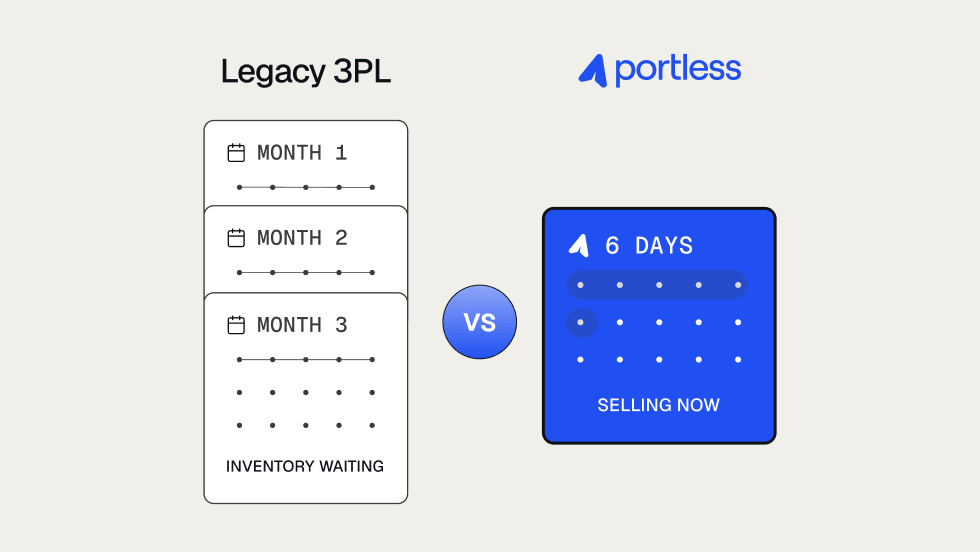
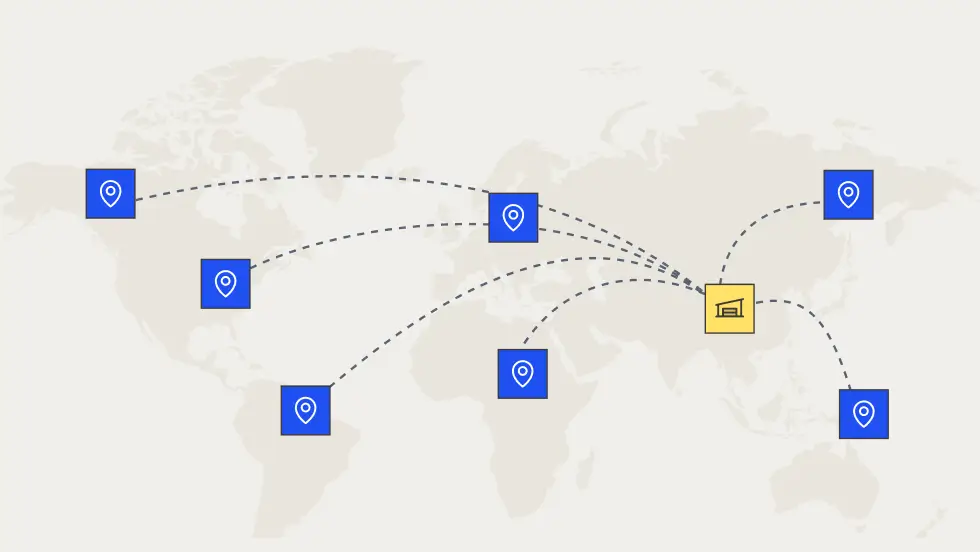
Testing fast only works if you can produce and ship fast to match. Once a product proves out, a short production run and a quick path to customers let you read real demand and reorder before the trend moves. That's where fulfillment speed comes in. Shipping straight from the manufacturer, the way Portless works, keeps inventory lead time short, so you can test, learn, and restock in days instead of sitting on a container of guesses.
Watch the full episode
Izzy Rosenzweig and Henrik Johansson covered a lot more on The Modern Supply Chain. The full episode gets into how to read demand by scouting trends instead of chasing backward-looking search data, which categories Henrik thinks are worth watching, and how the lawyer-and-AI model applies to product design.
Lorem ipsum dolor sit amet, consectetur adipiscing elit. Suspendisse varius enim in eros elementum tristique. Duis cursus, mi quis viverra ornare, eros dolor interdum nulla, ut commodo diam libero vitae erat. Aenean faucibus nibh et justo cursus id rutrum lorem imperdiet. Nunc ut sem vitae risus tristique posuere.
Get operator-level supply chain insights
Thank you! Your submission has been received!
Oops! Something went wrong while submitting the form.








.jpg)
.avif)