You placed a bulk order with your manufacturer three weeks ago. The goods won't reach your domestic warehouse for another 40 days. In that window, one of your top sellers starts trending, a competitor restocks, and your cash sits in a container somewhere on the Pacific.
That gap has a name: inventory lead time. It's the stretch between ordering product and being able to sell it. For most Ecommerce brands running the legacy supply chain model, that gap runs past 60 days. Every day inside it costs money, limits your agility, and raises the odds that you bought the wrong thing.
This guide covers what inventory lead time is, how to calculate it, what drives it up, and how to cut it.
What is inventory lead time?
Inventory lead time is the total time between placing a purchase order with your manufacturer and having that stock available to sell. It covers every step in between: order processing, production, shipping, customs clearance, and receiving at a domestic warehouse.
For direct-to-consumer (DTC) and Ecommerce brands, it's the gap between paying for inventory and earning revenue from it. The longer the gap, the more capital sits idle. Understanding how your Ecommerce supply chain works end to end is the first step to fixing it.
It sits between two related ideas. It starts when you place the order, and it ends when you can actually sell the product, not just when a box lands at the port.
How to calculate inventory lead time
The core formula is simple:
Inventory lead time = supply delay + reordering delay
Supply delay is the time your supplier needs to produce and ship the goods. Reordering delay is the time your team takes to spot the need, place the order, and process it.
In practice, lead time breaks into distinct phases. Here's how a typical order from a manufacturer in China looks under two models:
::table
Phase;Legacy model;Direct fulfillment model
Order processing;Two to three days;Two to three days
Production;14 to 21 days;14 to 21 days
Ocean freight;25 to 35 days;Eliminated
Customs clearance;Three to five days;Eliminated
Domestic warehouse receiving;Three to seven days;Eliminated
Pick and pack at source warehouse;Not applicable;One to two days
Express shipping;Not applicable;Five to eight days
:table
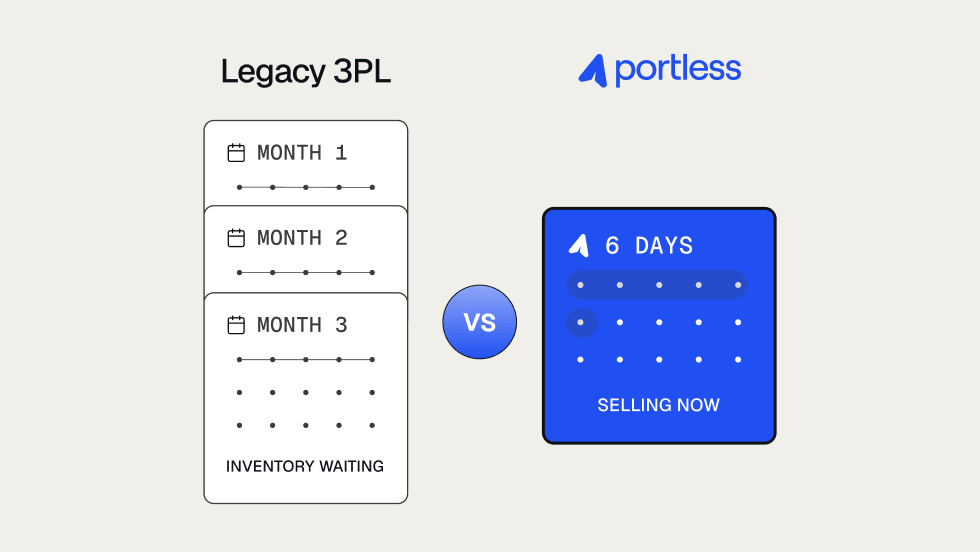
The difference is stark. The legacy model adds 30 to 45 days of transit and processing that direct fulfillment removes entirely. Those are days your capital is locked in stock that can't generate revenue.
Why inventory lead time matters for Ecommerce brands
Every extra day in your inventory lead time costs money and adds risk. Here's where it hits hardest.
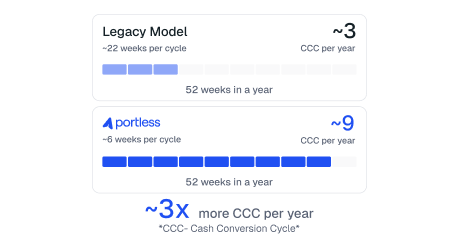
- Cash flow. Longer lead times tie up more capital in stock that isn't earning yet. This is the core of the DTC cash flow trap. Inventory carrying costs run 20% to 30% of total inventory value a year. If your lead time forces 90 days of stock instead of 30, you roughly triple those costs.
- Demand forecasting. When lead time stretches past 60 days, you're predicting demand two months out. In fast-moving categories, that's closer to guessing than forecasting.
- Stockout risk. Long lead times mean slow replenishment. If a product trends or a competitor sells out, you can't capture the spike, because your next batch is weeks away.
- Customer experience. Brands that can't restock quickly lose sales to brands that can. Few shoppers wait for a back-in-stock email when another brand ships today.
Shorter lead times also cut your need for safety stock. When you can replenish in weeks instead of months, you carry less buffer and free up cash for growth.
From six weeks to a few days
Foreign Resource cut its inventory lead time by about 90%, from six to eight weeks down to two to five days, by shipping direct from source. See what the same shift could do for your numbers with the direct fulfillment ROI calculator.
What causes long inventory lead times
Long inventory lead times aren't random. They're built into the legacy supply chain model.
- Ocean freight transit. A door-to-door sea shipment from China to the US runs around 30 to 40 days. That single leg accounts for roughly half the lead time in most legacy chains.
- Domestic warehouse processing. Once a container hits port, it still has to be unloaded, trucked to a warehouse, received, inspected, and shelved. That's three to seven days on a good run, longer in peak season.
- Customs and compliance delays. Tariff classifications, inspections, and paperwork errors can hold shipments for days. Large bulk orders draw more scrutiny and more documentation.
- Multi-leg complexity. The legacy model hands inventory off four or five times: factory to port, port to vessel, vessel to destination port, port to warehouse, warehouse to customer. Each handoff adds delay and risk.
- Supplier communication gaps. Without real-time visibility into production, brands often learn about delays weeks late, after the downstream schedule has already broken.
You can't optimize these away with a better spreadsheet. The legacy model builds them in.
How to reduce inventory lead time
Cutting inventory lead time starts with removing steps, not speeding them up. These strategies make the biggest difference.
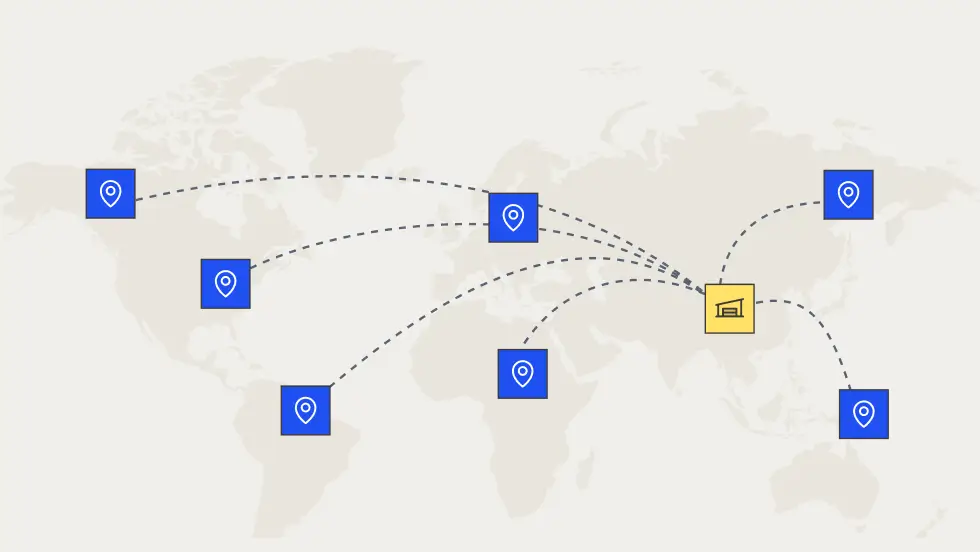
- Remove supply chain legs. The most effective lever is cutting whole segments out. Shipping direct from a warehouse near your manufacturer to the customer removes ocean freight, domestic receiving, and the handoffs between them.
- Use demand forecasting tools. Better forecasting means smaller, more frequent orders instead of large bulk buys. You reduce exposure to demand shifts and keep inventory lean.
- Build stronger supplier relationships. Clear lead time expectations, regular communication, and agreed production schedules prevent the surprise delays that cascade downstream.
- Adopt just-in-time inventory. Just-in-time means ordering against real demand signals rather than 90-day forecasts. It needs short lead times to work, which is why it pairs naturally with direct fulfillment.
- Ship from source with a direct fulfillment provider. This is where the math changes. Portless operates warehouses in China near major manufacturing hubs. After production, your goods move to a Portless warehouse for pick, pack, and direct shipping to customers in 75+ countries.
The result is up to a 90% cut in lead time. Instead of waiting 60+ days for stock to reach a domestic warehouse, your products are sellable within days of production. Portless delivers in five to eight days on a Delivered Duty Paid (DDP) basis, so duty is paid upfront and your customers see no surprise fees at the door.
See how Portless works
Inventory lead time is the hidden cost center of the legacy Ecommerce supply chain. Every day between production and sale ties up capital, raises forecasting risk, and limits your response to real demand. Cutting it isn't just an operational tweak. It changes the economics of your business.
If your supply chain locks you into 60-day lead times and bulk inventory bets, there's a faster path. Talk to our team to find out whether Portless fits your business.
FAQ
What is a good inventory lead time?
Under 30 days is competitive for most Ecommerce brands, though it depends on your product and category. Direct fulfillment models can bring it under 10 days.
How does lead time affect safety stock?
Longer, more variable lead times force higher safety stock to avoid stockouts, which ties up more working capital. Shorten the lead time and you can safely carry less buffer.
What is the difference between lead time and cycle time?
Lead time is the total time from placing an order to having inventory ready to sell. Cycle time is the time to complete one process inside that window, such as production or picking.
How do you calculate reorder point with lead time?
Reorder point = (average daily sales x lead time in days) + safety stock. It tells you when to place the next order so you reorder before existing stock runs out.
Can you reduce lead time without changing suppliers?
Yes. You can cut supply chain legs, use a fulfillment provider with warehouses near your manufacturer, or tighten your internal order processing, all without switching suppliers.








%20(1).avif)
.jpg)
.jpg)