“We generated $70K in package protection revenue in a single quarter by adding a simple $4 protection option at checkout — plus an additional $12K from cashbacks. Customers get peace of mind, and we're making a profit on every protected order with zero effort."
“We generated $70K in package protection revenue in a single quarter by adding a simple $4 protection option at checkout — plus an additional $12K from cashbacks. Customers get peace of mind, and we're making a profit on every protected order with zero effort."
Apparel is one of the hardest categories to scale without running out of cash. Every product decision commits money to inventory months before a customer sees it, unsold stock gets liquidated at a loss that cheapens the brand, and long lead times force you to bet big and early. For years, cheap venture money papered over those mistakes. That money has largely dried up for DTC brands, so the margin for error is a lot thinner now.
The brands that keep growing anyway tend to run the same handful of plays. They pick products that don’t strand cash, buy materials in a way that shortens lead times, spread production across countries before they’re forced to, and add sales channels early. Here’s how each one works.
Going all in and staying lean at the same time
An inventory business asks for two things that feel opposite. You have to be all in, because the risk is real and a side project won’t survive the first hard decision. And you have to be relentlessly lean, because there’s no pool of investors waiting to fund your next mistake. Brands that treat it as a side hustle tend to quit at the first blocker, and brands that spend like it’s 2015 run out of road.
Brian Berger has lived both sides of that. He launched Mack Weldon in 2012 after a decade in consumer internet, built it product-first with custom fabrics and a supply chain across five countries, and grew it into an omnichannel brand with its own stores and shelf space in Nordstrom and Bloomingdale’s. His advice for building one starts in a single place.
Lean, lean, lean. And avoid the complexities of raising money as long as you can. — Brian Berger, CEO at Mack Weldon
That changes how you build from day one. Payback periods that used to run 60 or 90 days stretched to a year or more as ad costs climbed, and with no easy funding round waiting to cover the gap, the brands that survived were the ones already profitable on unit economics. Going all in is what carries you through the uncertainty, since, as Brian puts it, “you just can’t really have that if you’re treating it as a side hustle.” The discipline is what keeps you alive long enough for the bets to pay off.
Design the catalog to limit inventory risk
The first lever is deciding what to sell. Evergreen basics like underwear, socks, tees, and undershirts carry very little inventory risk, which is why durable apparel brands so often anchor on them. Evergreen product never has to be marked down and liquidated, which protects both margin and how customers see the brand. It also lets you produce base fabric in bulk before you ever commit it to a specific color or cut. Brian Berger built Mack Weldon on exactly that logic.
Let’s only play in categories with very minimal inventory risk. — Brian Berger, CEO at Mack Weldon
The same discipline shows up in how the best operators buy. Always-in-stock basics run year round, while seasonal pieces get bought against a tight sell-through window, often 10 to 14 weeks, so a style is meant to sell out rather than linger. Every buy is a live tradeoff. Putting $25,000 into a fall style you have never sold is $25,000 you can’t put anywhere else. Knowing your real order minimums and the inventory risk that comes with them before you commit turns a guess into a calculated bet.
Buy your fabric ahead to cut lead time
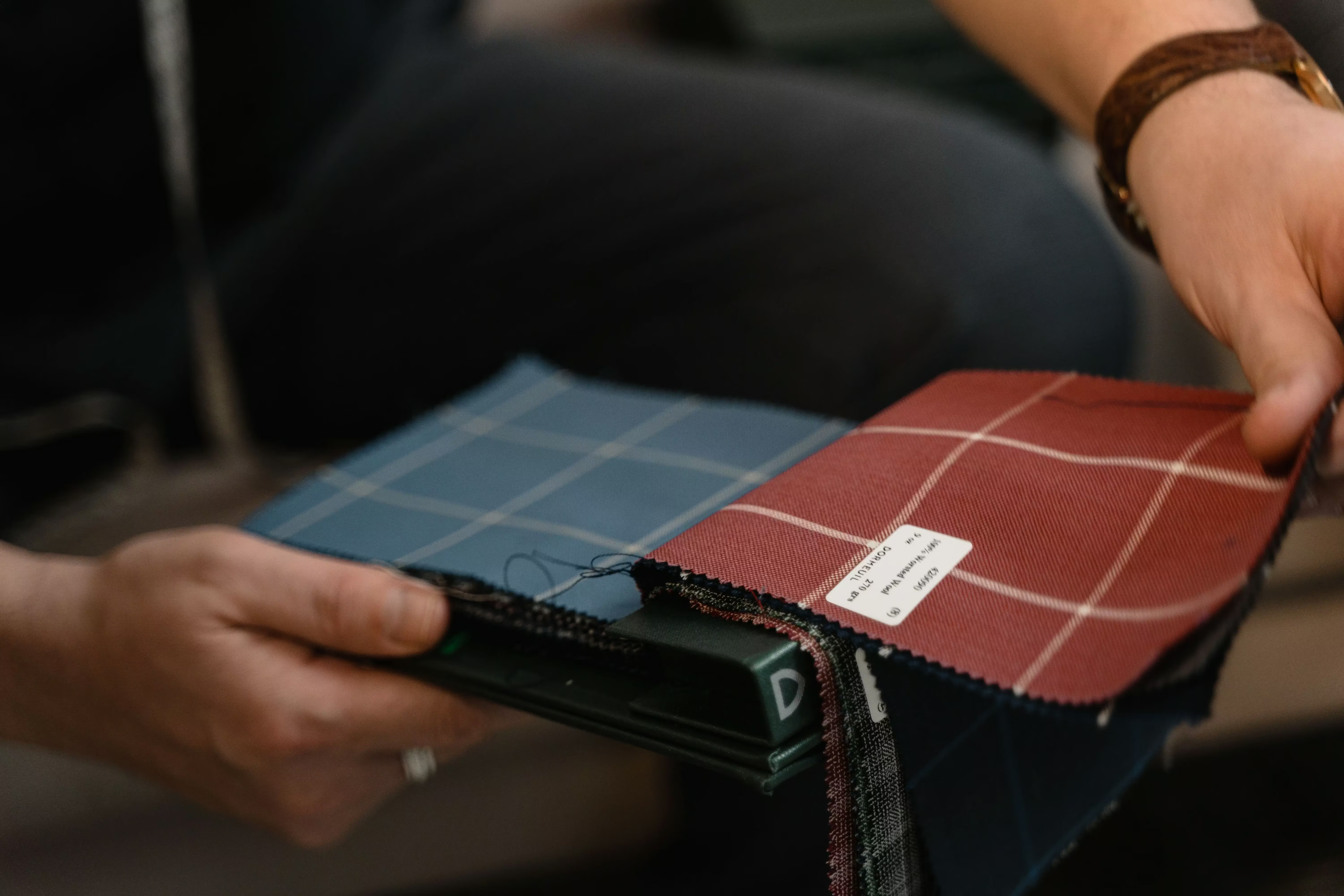
The highest-leverage move in apparel is also the least obvious. Build proprietary base fabrics that feed several products at once, so one material becomes joggers, sweatpants, a hoodie, a crew, and a zip. Because every product carries at least 30 days of fabric lead time, you can produce that base fabric in advance and hold it undyed and uncut.
That could shave 30 days off of the lead time for the product, which is significant. — Brian Berger, CEO at Mack Weldon
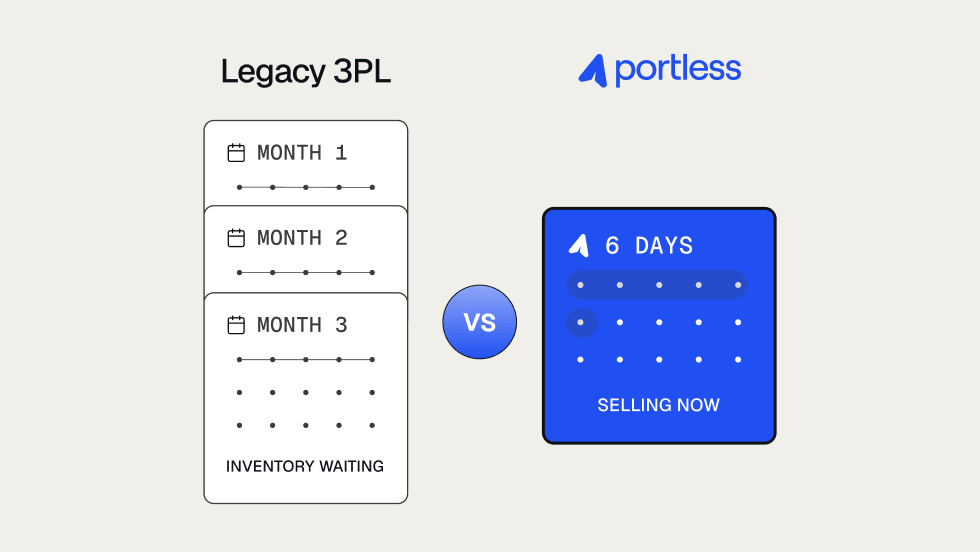
Pre-buying fabric carries some financial risk, but it’s a manageable kind. Because the fabric is evergreen and shared across products, you know it will get used, so it won’t end up liquidated. What you gain is time and flexibility. You can wait longer to decide colors, cuts, and quantities, which pushes the real commitment closer to the moment of sale. That same principle carries downstream. Shipping straight from the manufacturer after a sale, the way Portless works, keeps inventory lead time short and keeps cash out of stock that hasn’t sold yet.
Diversify production before you have to
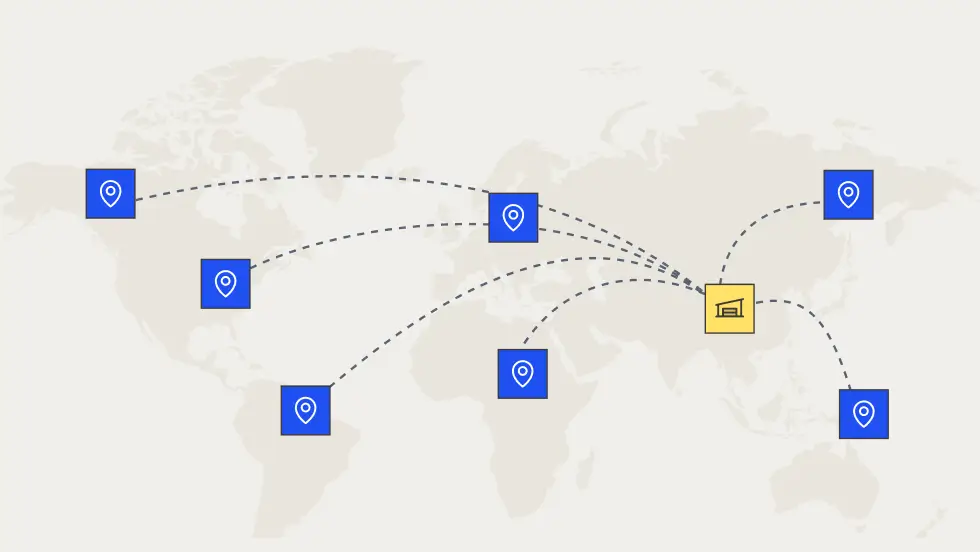
Concentration is an underrated risk in apparel. Spreading production across a few countries, before a disruption forces the issue, gives you room to move if something goes wrong at a single factory or in one region. The logic is a simple order of priorities. First, where can you make the best product. Then, where can you make the best product at the best price. Then, an eye on concentration risk. Mack Weldon built that kind of spread across five countries well before COVID or the recent supply chain shocks made it common.
We just wanted to make sure that we had some ability to toggle if need be. — Brian Berger, CEO at Mack Weldon
Diversifying is about quality and resilience more than cheap labor. Quality lives at the factory and mill level, so the goal is matching each product to the place that makes it best and can still fit your cost and warranty structure. Building that optionality early means you get to choose from a position of strength later, rather than scrambling when something disrupts a single source.
Go omnichannel earlier than feels comfortable
DTC is only one channel. Adding wholesale and retail early brings revenue diversification, brand exposure, and cash flow that can fund the slower-to-pay-back channels. Retail rarely makes money in year one, and DTC keeps getting more expensive, so a wholesale revenue stream can bankroll the rest. Some of the strongest brands went wholesale from the start for exactly that reason. Brian’s biggest do-over with Mack Weldon is that he didn’t add those channels sooner.
I would say do it as soon as you can, unequivocally. — Brian Berger, CEO at Mack Weldon
The catch is that wholesale runs on its own logic. Separate inventory, strict shipping rules, chargebacks when a label is in the wrong spot, and a different kind of team. None of that is a reason to wait. Learning it while you’re small is far cheaper than learning it once it matters, and even if you can’t land Nordstrom on day one, you can build the unit economics so the model supports it when the time comes.
Watch the full episode
Izzy Rosenzweig and Brian Berger got into a lot more on The Modern Supply Chain. The full episode covers the Bloomingdale’s underwear aisle that started Mack Weldon, why being a total outsider to fashion turned out to be an advantage, and how Brian thinks about buying inventory for a brand new category with no track record.
Lorem ipsum dolor sit amet, consectetur adipiscing elit. Suspendisse varius enim in eros elementum tristique. Duis cursus, mi quis viverra ornare, eros dolor interdum nulla, ut commodo diam libero vitae erat. Aenean faucibus nibh et justo cursus id rutrum lorem imperdiet. Nunc ut sem vitae risus tristique posuere.
Get operator-level supply chain insights
Thank you! Your submission has been received!
Oops! Something went wrong while submitting the form.







%20(1).avif)
.jpg)
.jpg)