“We generated $70K in package protection revenue in a single quarter by adding a simple $4 protection option at checkout — plus an additional $12K from cashbacks. Customers get peace of mind, and we're making a profit on every protected order with zero effort."
“We generated $70K in package protection revenue in a single quarter by adding a simple $4 protection option at checkout — plus an additional $12K from cashbacks. Customers get peace of mind, and we're making a profit on every protected order with zero effort."
You can grow revenue every quarter, hold healthy margins, and still run out of money. Profit and cash are not the same thing. Profit is what you earn over a period. Cash is what's in the account when a supplier deposit, payroll, and a bigger purchase order all come due in the same week. Cash flow is the most commonly cited reason small businesses fail.
The best brands treat inventory the way a CFO does. Every purchase order is a bet made without full information. You size it to the risk and to how much loss your balance sheet can take. Get this right and growth funds the business. Get it wrong and growth drains your cash.
A profitable brand can still go broke
Bankruptcy rarely starts on the income statement. It starts when you can't pay what you owe on the day it's due. That's a cash flow problem, and the P&L can look healthy the whole time. Early on, the founder places every order and knows the numbers firsthand. Then the business grows. Purchase orders get bigger. The catalog adds SKUs. New channels come online. Other people start placing the orders. The founder loses track of how that volume affects cash.
Jon Blair has seen this from both sides. He spent about a decade at Guardian Bikes, rising from bookkeeper to COO and CFO as the brand grew from nothing to eight figures. He owned its finance, supply chain, and inventory planning. He now runs Free to Grow CFO, a fractional finance firm for scaling DTC brands. He puts the trap plainly.
You can be healthily profitable and go bankrupt. It happens every day to public companies. — Jon Blair, Founder of Free to Grow CFO
Track cash and profit separately. A brand can post a strong margin and still lock every spare dollar into stock that won't sell for months. That product is profitable. The cash is gone until it sells.
Treat inventory as a series of risk-adjusted bets
Every inventory purchase is a bet, and you make it without full information. You can't know exactly what will sell. So you size the bet to the risk. When the risk is low, commit more. When the risk is high, commit less and keep your options open.
We'll never have 100% information on any decision, inventory or otherwise, so everything inherently is a bet. — Jon Blair, Founder of Free to Grow CFO
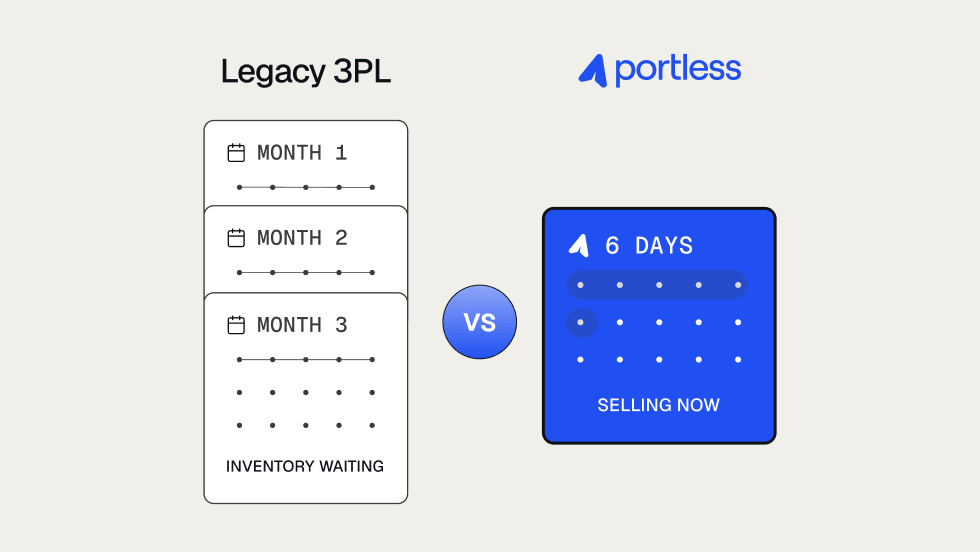
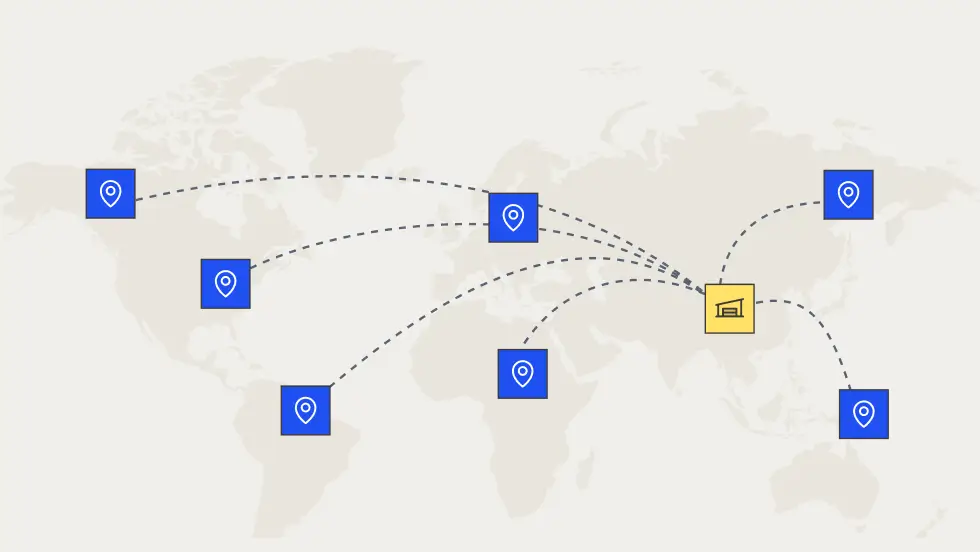
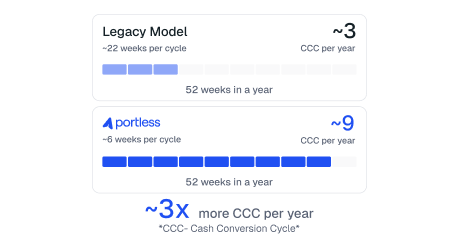
A strong balance sheet doesn't lower the risk. Cash and equity just let you survive a loss. The real question is how much of that reserve you'll put on one order. Anything that lowers the cash you commit before a sale makes the bet smaller. Portless does this by fulfilling orders from its own center in China, right next to where your product is made, and shipping them direct to your customers. You hold less stock in a warehouse, so inventory lead time stays short and less cash sits in inventory that hasn't sold.
Your inventory risk depends on which game you're playing
Not every DTC brand carries the same inventory risk. Most founders don't know they're playing one of three games. High-LTV consumables and subscriptions are the least risky. Customers come back on a known cycle, so you can commit to more inventory against demand you can predict. You can even lose money getting a customer and earn it back later. Durable goods are harder. With no repeat purchase, “you have to be first order profitable,” and a rising acquisition cost can force you to sell unsold stock at a loss.
Apparel is the riskiest of the three.
Apparel is actually the riskiest inventory game out of all three. — Jon Blair, Founder of Free to Grow CFO
A big catalog of sizes and colors locks up cash across hundreds of variants. Seasonal styles only sell in their season. Miss the season and you hold that stock for another ten months. To survive, you launch new styles constantly and clear old ones fast. That's its own apparel inventory strategy.
Evaluate your supply chain often, change it rarely
When costs jump, the instinct is to move production somewhere cheaper. Separate the evaluation from the decision. Keep testing alternatives, but treat an actual switch as its own bet. A lower unit price in a new country often shrinks once you add the real costs. Longer lead times, higher minimum order quantities, unfamiliar materials and labor, and the work of setting up a new supply chain all reduce the savings.
You have to weigh the explicit costs with the implicit costs. — Jon Blair, Founder of Free to Grow CFO
Jon saw this pay off at Guardian Bikes. A sharp cost increase pushed competitors to cheaper factories in Southeast Asia. Guardian ran the numbers. The savings were small once they counted the added freight and effort. So Guardian stayed with its factory in China. As rivals pulled their volume out, Guardian became a bigger customer and got better terms. Then COVID hit. The overseas factories shut down for months. Guardian kept getting product while its competitors couldn't get any.
The pattern repeats. Brands expect to move production to a new country. Then they find the mills won't take small runs, the lead times stretch, and the finishing isn't what they're used to. Most look hard, run a few tests, and stay where they already work. Evaluating is cheap. Moving is expensive, and often riskier than staying.
Earn better payment terms over time
Payment terms are the other big source of cash. Most brands ask for them the wrong way. Terms follow trust, and you build trust over time by giving as well as taking. You won't get net-60 on the first order. You earn it in steps. Pay on time, flag problems early, and ask for a little more once you've proven reliable.
This is a relationship. It's about trust. — Jon Blair, Founder of Free to Grow CFO
Give before you ask. Consistency, forecasts you keep updated, and referrals to other brands all count, even when you're not paying more. The factory's cash cycle matters too. Ask what they must pay their own suppliers upfront, then shape terms that fit both sides. If one component has to be paid in full on their end, cover that piece and take more time on the rest. When you can, visit in person. Meeting face to face builds trust faster than email.
Watch the full episode
Izzy Rosenzweig and Jon Blair covered more on The Modern Supply Chain, including how a fractional CFO reads a brand from its numbers, why cost of goods is the messiest data most brands have, and how AI helps lean brands get more precise at the SKU level.
Lorem ipsum dolor sit amet, consectetur adipiscing elit. Suspendisse varius enim in eros elementum tristique. Duis cursus, mi quis viverra ornare, eros dolor interdum nulla, ut commodo diam libero vitae erat. Aenean faucibus nibh et justo cursus id rutrum lorem imperdiet. Nunc ut sem vitae risus tristique posuere.
Get operator-level supply chain insights
Thank you! Your submission has been received!
Oops! Something went wrong while submitting the form.






.jpg)

.jpg)
.jpg)
%20(1).jpg)