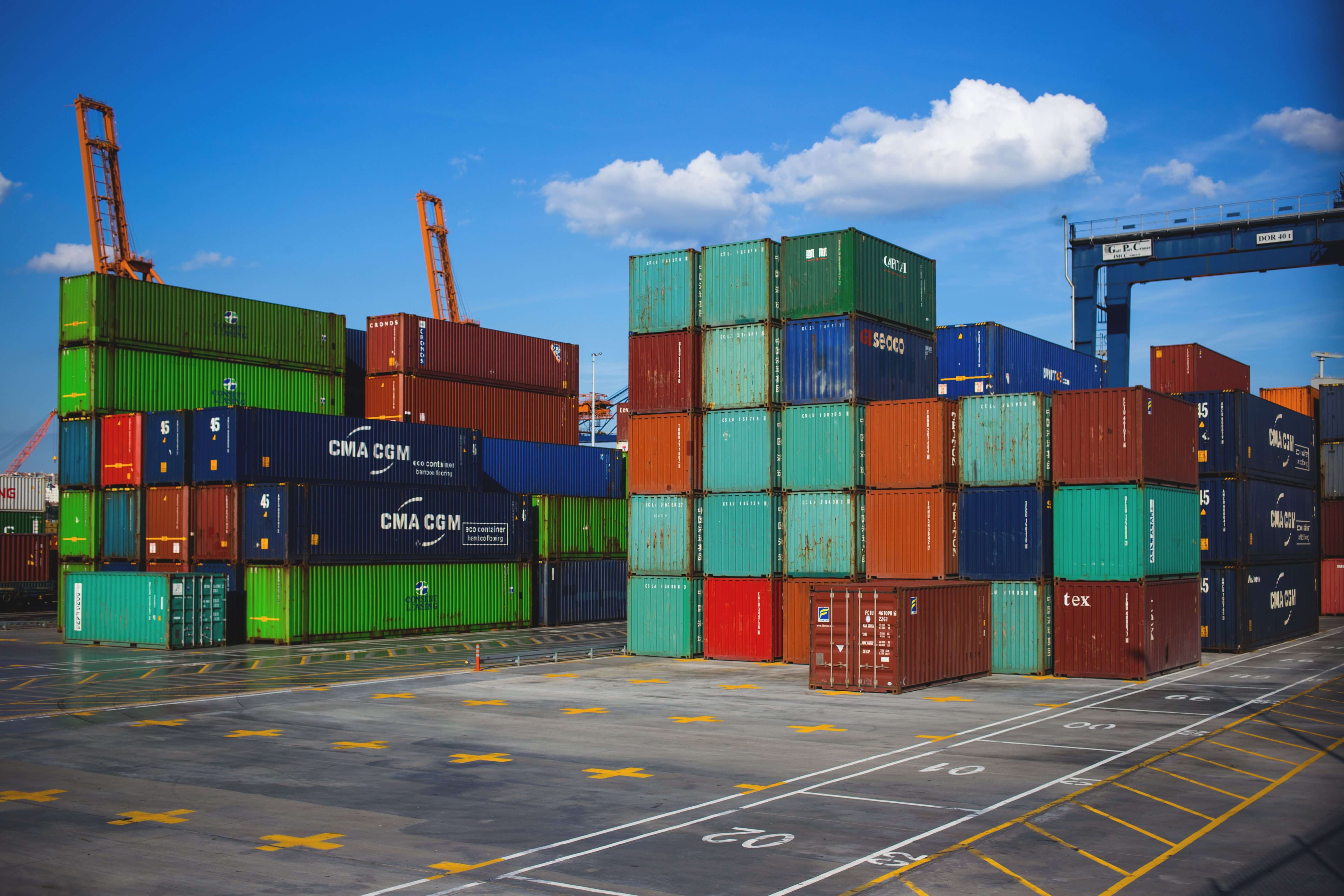
Your bestseller has been out of stock for five weeks. The replacement run left the factory on time, but it's stuck on a boat, and after that it still has to clear customs and get received. Meanwhile you're paying storage on the three SKUs that didn't sell, and the ad account that was working got switched off because there's nothing to send people to.
If that sounds familiar, you're probably shopping for a new fulfillment provider. Sometimes that's the fix. Other times the warehouse was doing its job fine, and the constraint is where your inventory sits, which no 3PL can change.
So we'll cover both. The 3PLs worth shortlisting, the models that aren't 3PLs at all, and how to tell which one fits you, because that comes down to what you sell, how much of it you move, where you make it, and what stage you're at.
Why Shopify brands actually switch
Most brands tolerate a bad fulfillment setup far longer than they should, because switching is a project and the pain comes on gradually. By the time you're taking discovery calls, it's usually one of these four.
Cash goes out in lumps and comes back in drips
You fund manufacturing, freight, duties, and storage long before customer sales recover any of it. Once you're growing you're paying for three batches at once, and only the one on the shelf can actually be sold.
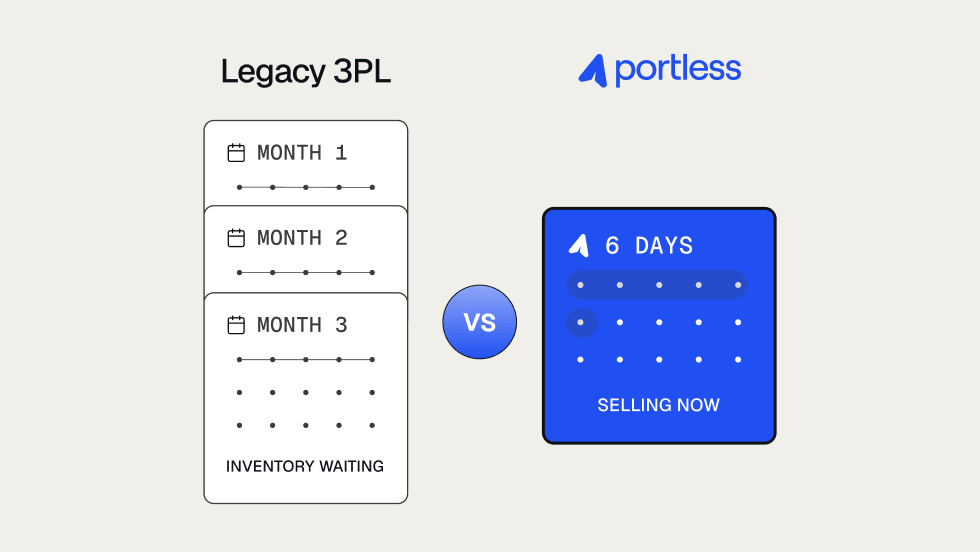
Ocean transit runs 30 to 45 days before customs and receiving get added on top. At a carrying cost of roughly 20% of inventory value a year, holding $500,000 of stock for an extra 45 days costs you about $12,500 to carry. Trim the wait to 10 days and the same inventory costs around $2,700.
You stock out on the wrong SKU, repeatedly
Forecasts get made months before demand shows up, and 23.3% of Ecommerce brands name overstocking and stockouts as their main challenge. Sixty percent now carry more inventory than they used to, buying safety stock to cover transit they can't control.
You can see exactly what to reorder two months before you can do anything about it. A campaign starts working, and two weeks later you're out of the SKU it was working on. Regional splits make it worse, because one warehouse sells out of the bestseller while the next one sits on stock nobody wants.
The invoice rarely matches the quote
Fulfillment cost scatters across international freight, customs duties, insurance, port fees, inbound shipping, receiving, storage, pick and pack, parcel rates, fuel surcharges, weight fees, and peak surcharges. One production run can generate 20 separate invoices. By the time you've reconciled them the per-order rate you negotiated has stopped meaning very much.
International hits a ceiling
Opening a second or third market means committing bulk inventory there upfront, before you know whether anyone in that market wants the product. Guess wrong and you're discounting your way out of a country for a year. So the expansion keeps sliding to next quarter, and the fulfillment setup is the reason.
A new provider can solve the invoicing problem. The other three depend on where your inventory sits and how long it takes to arrive, so they follow you to the next warehouse. Settle the model first, then the provider.
The options at a glance
The 10 options below sort into a few different models. Start with that column, because two providers on the same model will run into the same constraints regardless of what their rate cards look like.
::table
Company;Model;Best for;Choose this if
Portless;Direct fulfillment from Asia;Cost efficiency, global expansion, cash flow;You want to reduce inventory risk, increase cash on hand, and turn inventory into revenue faster
ShipBob;Domestic 3PL;Domestic-first DTC at scale;You require a lot of one- or two-day delivery shipments
ShipMonk;Domestic 3PL;High-volume, high-SKU brands;You need predictive automation for complex catalogs
Stord;Domestic 3PL;Brands graduating from a basic 3PL;You want advanced routing software
NextSmartShip;China-based 3PL;Self-serve buyers;You want a self-service portal and accept variable support
Floship;China-based 3PL;Cross-border with checkout duties;You want to collect duties at checkout
Amazon FBA;Marketplace fulfillment;Amazon-native sellers;Amazon is 60%+ of your revenue
Dropship China Pro;China-based 3PL;Dropshipping, POD, private label;Your model is dropshipping or print-on-demand
Flexport;Freight forwarding and software;Enterprise importers;You're managing freight at enterprise scale
DHL Supply Chain;Enterprise logistics;Large-scale supply chains;You need global enterprise infrastructure
:table
Which model do you actually need (define this first)
Answer the following and you'll know which model fits before you start comparing providers inside it.
1. What you sell
Weight and margin together decide whether shipping from origin is even available to you. Under about a pound with healthy margin, per-order air works and the unit economics hold up. Between one and 3.5lbs it depends on your average order value, because the air cost is roughly fixed while your revenue per order isn't. Past about five pounds, or anything bulky, air pricing eats the order and you want sea freight into a domestic warehouse.
Regulated goods narrow it again. Batteries, liquids, aerosols, supplements, and cosmetics each limit which carriers will take them and which countries will clear them. If you sell any of those, pre-import filings need to be done months ahead or you find out in November.
2. Where you manufacture
If you make in Asia, shipping from origin removes an entire leg of the journey along with the capital that leg ties up. Your inventory stops being a bet you placed 90 days ago.
If you make domestically, that option doesn't exist and you're picking between domestic 3PLs on service and price, with network shape as the tiebreaker. Dual-sourcing across two regions means you'll run a hybrid whether or not you planned one. Better to plan it.
3. How many markets you sell into, and how many you want to
One or two markets, a domestic 3PL can work. After that, costs and logistics break.
Every additional market means inventory pre-positioned before a single sale, duty paid upfront on goods nobody has bought, a separate forecast, another contract, and another pile of stock that can turn out to be in the wrong country. A single pool scales across markets without repeating the bet each time.
4. Where you're heading, not where you are
Pick for this year's volume and the model quietly sets your ceiling. If you intend to open markets in the next 12 months, a setup that requires bulk pre-positioning per market has already priced that decision before you get to make it, because the cash has to be found first.
Watch your stockout pattern. If the bestseller goes dark every time demand moves, your constraint is lead time, and no 3PL fixes lead time. They're all downstream of the boat.
5. What stage you're at
Under 30 to 50 orders a day, keep packing in-house. From there to roughly 1,000 orders a month, a domestic 3PL with low minimums matters more than network size, because you don't yet have the volume to spread across nodes anyway. Past 1,000 a month, direct fulfillment opens up. High SKU counts and heavy bundling push you toward automation-led providers at any volume.
6. Which constraint you're actually solving
Name it before you shortlist. If cash is the binding constraint, the model matters more than the rate, and the real question is how many months of inventory you can afford to have standing still. If speed to a domestic customer is the constraint, distributed domestic wins and you should stop reading comparison tables about anything else.
::table
If this is you;Start here
Under 30 to 50 orders a day, one market;Self-fulfillment, and revisit in two quarters
Domestic manufacturing, one or two markets, speed matters most;Domestic 3PL with the network shape closest to your customers
Heavy or bulky products, any origin;Domestic 3PL, sea freight, accept the cash cycle
Asia manufacturing, lightweight goods, three or more markets;Direct fulfillment, or a hybrid with a domestic node for express
Amazon is most of your revenue;Marketplace fulfillment, with a second option for your DTC channel
Cash is the binding constraint and you make in Asia;Direct fulfillment, because the rate card can't solve this
:table
A closer look at each option
Once you know the model, this is how the options inside each one differ. Every provider here does the core job competently, so the useful detail is what each is built around and where that shows its limits.
Portless
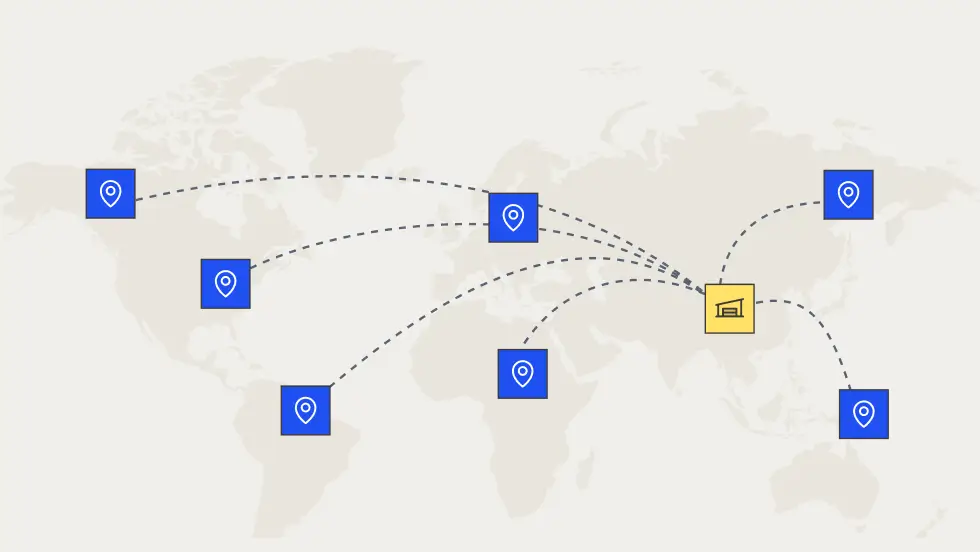
Portless holds inventory near your manufacturer and ships each Shopify order by air to the customer, which removes the domestic warehouse from the model. Products can be sold within days of production instead of weeks after a sailing.
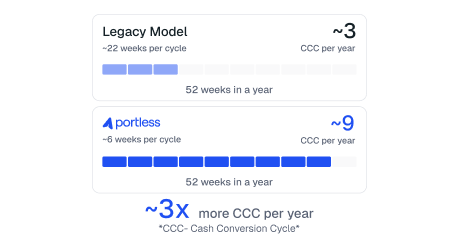
It ranks first here because it addresses the cash and lead-time problems above instead of repricing them. Portless reduces your cash conversion cycle from months to weeks, serves 75+ countries from one inventory pool, and ships 99.8% of orders within a day.
Success stories
- Craft Club cut its cash conversion cycle from more than 22 weeks to six, and tripled revenue over the same stretch
- Cosara went from 15+ day delivery to six to eight, and grew weekly revenue 10x
- Spartan Kitchen cut lead times by 90% and got 20+ hours a week back
Where it falls short
Portless isn't optimized for next-day domestic delivery, so if a large share of your orders carry express expectations you want a domestic 3PL or a hybrid. It also doesn't suit low-margin heavyweight items, where per-order air changes the unit economics.
ShipBob
A domestic 3PL with a distributed network, storing inventory across regional centers so orders ship locally, with two-day shipping across major markets.
Where it falls short
Each new region needs inventory pre-positioned and duty paid before any sales. Storage runs roughly $40 to $80 per pallet per month after a 30-day grace period, contracts typically run six to 12 months with monthly volume minimums, and variable surcharges mean the total moves month to month.
ShipMonk
A domestic 3PL built around automation and predictive data, aimed at high SKU counts, bundles, and order spikes, selecting the lowest-cost viable shipping option per order.
Where it falls short
Account experience scales with volume, so smaller brands get less hands-on support, and pricing complexity grows with catalog size and bundling.
Stord
Fulfillment paired with routing software that decides how each order moves through the network to cut cost or avoid delay.
Where it falls short
Implementation is more involved than a standard 3PL with a longer onboarding window, service varies between owned and partner facilities, and the routing features only pay off if you have the technical depth to use them.
NextSmartShip
A China-based 3PL with a self-service portal, letting you ship direct from China or through global warehouses and route by speed or cost.
Where it falls short
Self-serve means no dedicated account management. Of the eight to 10 fulfillment centers in the network only the Shenzhen facility is owned, and some public reviews describe rates rising meaningfully after onboarding.
Floship
A China-based 3PL built for international selling, using warehouses near manufacturers plus global hubs, and it calculates and collects landed costs upfront.
Where it falls short
Pricing isn't published as a standard rate card, reliance on partner warehouses means quality varies by location, and it suits steady international volume better than early testing.
Amazon FBA
Your inventory sits in Amazon warehouses and Amazon handles storage, packing, shipping, and returns, with access to the Prime delivery network.
Where it falls short
Long-term storage surcharges apply past 365 days, so slow movers compound. Amazon controls packaging, customer communication, and the post-purchase experience, and places your inventory on its own forecasting rather than yours.
Dropship China Pro
Dual-coast US warehouses in Los Angeles and New Jersey alongside China facilities, processing 30,000+ parcels daily, structured around dropshipping and print-on-demand.
Where it falls short
It's built for dropshipping and print-on-demand rather than established branded DTC, China-to-overseas transit runs 15+ business days, and fees are quoted by use case.
Flexport
A freight forwarder with software that coordinates carriers, customs, and warehouses on one platform.
Where it falls short
Built for enterprise importers, which makes it the wrong fit for most SMB DTC brands, and fulfillment carries a $5,000 monthly minimum with the difference charged if you spend less.
DHL Supply Chain
Global infrastructure across dozens of countries, designed to plug into complex supply chains at enterprise scale.
Where it falls short
Less flexible than newer models, service varies by region and account size, and pricing and onboarding complexity make it impractical below enterprise volume.
What the rate card doesn't show
Peak season is decided in August
Q4 is decided in August. Factory capacity locks in by early August and production slots fill by mid-August across Chinese manufacturing hubs. Production runs four to six weeks. Ocean adds another two to four, and then customs and 3PL receiving push the full legacy lead time to eight to 12 weeks.
That means committing cash in August for sales that may not happen in November. Overorder by 30% to 40% and you carry dead stock into Q1. Underorder and you're buying emergency air freight at five to 10 times the ocean cost per unit. Carriers add 15% to 30% per package from early October through mid-January, on top of it.
Ask any provider you're considering what their receiving lead time looks like in October, and what happens to your account when a larger one needs the same dock space.
The contract, not the rate
Minimum spend and exit terms decide what a bad quarter costs you, and no comparison guide covers either. ShipBob's six to 12 month contracts with monthly volume minimums and Flexport's $5,000 monthly minimum are both public. Find out who pays to pull and palletize your stock if you leave. Ask separately what storage costs once inventory ages past a year, because that number tends to arrive late.
Duty, now that de minimis is gone
Since June 2026 the $800 de minimis exemption has been indefinitely suspended for merchandise arriving by all modes other than the international postal network, with postal shipments under separate rulemaking. For most commercial Ecommerce parcels that means a customs entry and duty owed, and 78.9% of US Ecommerce brands already report tariffs shrinking their margins.
Find out who acts as importer of record, and when the duty actually gets paid. Paying it upfront on a container and paying it per parcel as orders ship are very different demands on the same cash.
See how Portless works
Most of what hurts about fulfillment traces back to a decision made 90 days earlier, when you guessed how much to make and where to put it. The provider you pick decides how expensive that guess is when it's wrong.
If you manufacture in Asia and sell worldwide, direct fulfillment shortens the gap between making a thing and getting paid for it. Model your own numbers, then request a demo to see how it works against your product mix and markets.
FAQ
How do you switch 3PLs without pausing business?
Run both in parallel instead of cutting over. Stand up the new provider and move a subset of SKUs first. Ship live orders through it for a few weeks, then migrate the rest once you trust the counts.
Who's responsible when a 3PL ships late?
Your customer holds you responsible, and your contract almost certainly doesn't. Most agreements cap liability at the fulfillment fee for that order. Not the order value, and not the customer. Read the service levels before you sign, and ask what actually happens when they're missed.






.jpg)

%20(1).jpg)