Last updated: May 2026
Q4 inventory prep is the most expensive guessing game in DTC Ecommerce. You forecast peak demand months before it happens, commit cash to inventory in August, and find out in December whether you got it right. Get it wrong by 30% in either direction and you either stock out mid-BFCM or carry dead stock into Q1.
The pressure is real. The National Retail Federation reported that 2024 holiday spending reached a record $994.1 billion between November and December (NRF, January 2025). And nearly half of US holiday shoppers say they start before Halloween (NRF Consumer Holiday Survey, 2024). The window to get Q4 inventory right keeps moving earlier.
This guide walks through what to lock in with your factories now, how to plan capacity without overordering, and how direct fulfillment from China or Vietnam changes the math on Q4 prep. For a deeper look at peak-season planning, see our breakdown of BFCM stocking strategies that drive revenue growth.
How to confirm your factory is still producing your Q4 SKUs
Start factory conversations by early August. Production slots for Q4 inventory typically fill by mid-August across most Chinese manufacturing hubs, and brands that wait until September pay premium pricing or face capacity rejection.
Send your factory a written list of last year's Q4 SKUs and ask three questions: Are these still in active production? Have any components, materials, or finishes changed? What is the current minimum order quantity (MOQ)?
If anything has changed, you need samples before you commit to a Q4 run. A swapped fabric or a substituted component can break your listings, trigger returns, and damage repeat purchase rates — the exact wrong outcome heading into BFCM.
What weekly production capacity to lock in before Q4
Ask your factory for their weekly output ceiling on your specific SKUs, not the factory's total capacity. A factory running 50,000 units a week across 10 brands has different available capacity than the headline number suggests.
Then back-calculate from your forecast. If you project 20,000 BFCM units across your top SKUs and your factory can produce 4,000 a week, you need five production weeks plus a buffer. Working backward from a November 20 deadline, that means production starts by mid-October at the latest.
Brands using direct fulfillment from Portless compress this further. Units ship to customers seven to 15 days after they come off the line, so you can start production later and replenish based on actual sales velocity rather than forecasted demand.
How long do production lead times take for Q4 inventory
Get familiar with your supplier's ramp-up and production lead times. Knowing how much time you need from order placement to finished product helps you build a well-structured timeline for Q4 readiness.
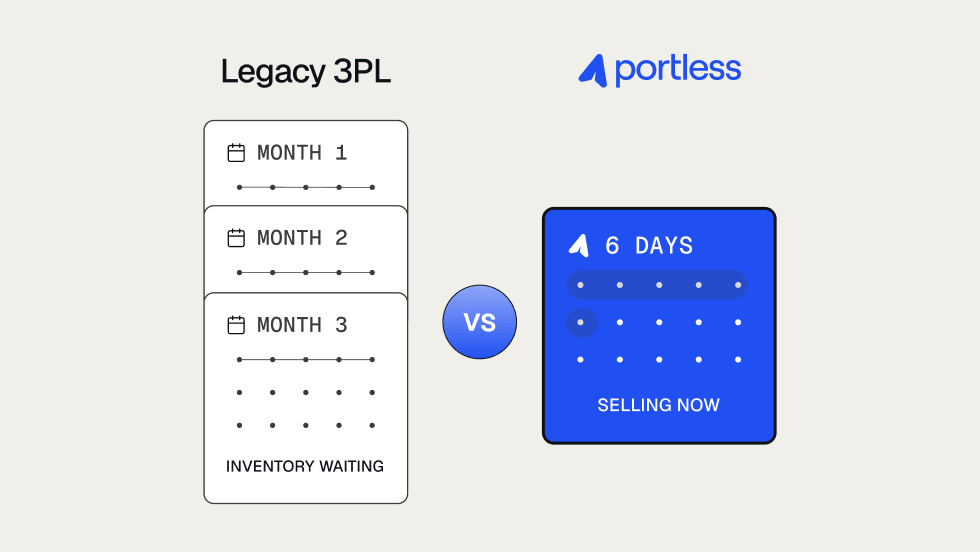
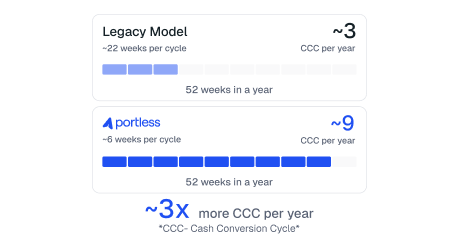
Production lead times vary by category, but the baseline for most lightweight DTC products manufactured in China or Vietnam is four to six weeks from purchase order to finished goods. Add another two to four weeks for ocean freight, plus customs clearance and 3PL receiving, and total legacy lead time runs eight to 12 weeks.
That is the core Q4 inventory problem: you commit cash in August for sales that may or may not happen in November.
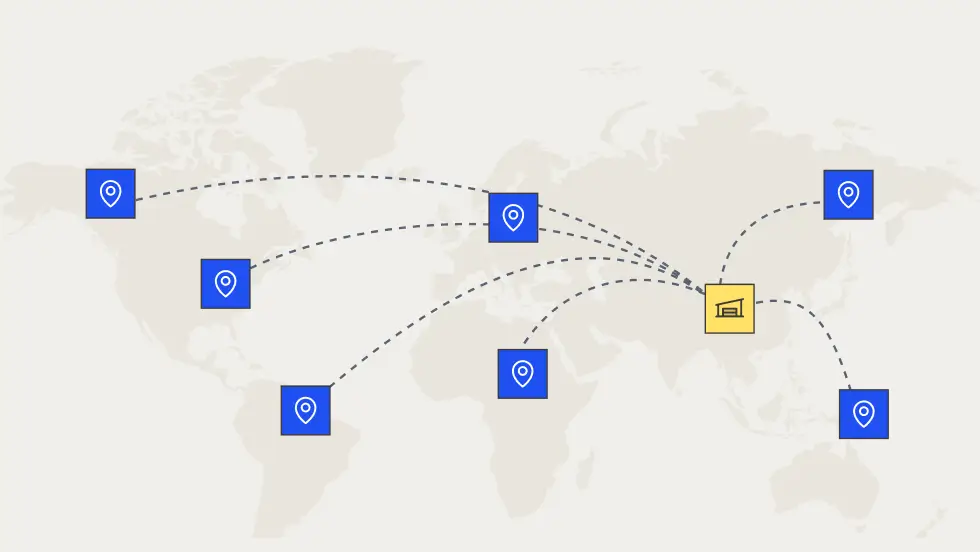
Direct fulfillment cuts the second half of that timeline. Portless ships finished units directly from our Shenzhen fulfillment center to customers in five to eight days, removing ocean freight, US 3PL receiving, and warehouse storage from the lead time entirely.
Which product restrictions can delay Q4 inventory (FDA, tariffs, customs)
Three categories of restrictions delay Q4 shipments most often: regulated products, tariff classification disputes, and de minimis changes.
Regulated products, including cosmetics, supplements, electronics with batteries, and children's toys, require pre-import filings with the FDA, CPSC, or FCC. Filings missed in August do not get expedited in November.
Tariff classification matters more than ever. The US eliminated the de minimis exemption for low-value shipments from China on May 2, 2025, and extended that change globally on August 29, 2025, meaning all commercial imports now face duty regardless of value (US Customs and Border Protection). If you have not reviewed your HTS codes and landed cost model this year, do that before placing Q4 orders. Use our landed cost calculator to get a current view.
Why Q4 manufacturing costs rise and how to plan for it
Q4 manufacturing costs rise for three reasons: factory overtime to hit deadlines, raw material price spikes from concentrated demand, and ocean freight peak season surcharges. Carriers like UPS and FedEx apply peak season surcharges from early October through mid-January, adding 15–30% to per-package costs (UPS Peak Surcharge Schedule, 2025).
Build cost increases into your Q4 budget instead of treating them as surprises. Ask your factory in writing for their Q4 unit price, and lock it with a deposit. Ask your freight forwarder for peak season rate confirmations by August.
Brands using direct fulfillment skip the ocean freight peak surcharge entirely. Units move on commercial parcel networks, not container ships, so your cost per unit stays consistent through peak.
See how direct fulfillment changes Q4 inventory prep
Portless ships units directly from manufacturers in China and Vietnam to customers in 75+ countries in five to eight days, with inventory available for sale days after production rolls off the line. No domestic warehouse, no ocean freight surcharge, no post-BFCM dead stock. You don't have to commit cash to a forecast in August to be ready for November — talk to our team about what direct fulfillment would change for your Q4 math.
FAQ
How far in advance should DTC brands start Q4 inventory prep?
Start by early August at the latest. Production lead times for Q4 SKUs run four to six weeks, plus two to three weeks for shipping if you're using legacy ocean freight. Brands using direct fulfillment from China compress this to seven to 15 days.
How much inventory should you order for Q4?
Order 1.5x to 2.5x your projected 30-day BFCM sales for top SKUs, depending on confidence. Avoid the common 30–40% overorder trap that traps cash through Q1. Use rolling replenishment instead of one large bet.
What happens if your Q4 inventory is late?
Late Q4 inventory forces emergency air freight, which costs five to 10 times more than ocean freight per unit and erodes margin. Direct fulfillment from the factory eliminates this risk by shipping units as orders come in.
How do you avoid post-Q4 dead stock?
Manufacture closer to actual demand rather than forecasted demand. Direct fulfillment ships units only after customers order, preventing the post-BFCM clearance cycle that erodes margins through Q1.
Do Chinese factories close before Q4?
Production capacity tightens in August and September as global brands prepare for BFCM. Factories that take Golden Week breaks (early October) further compress the window. Lock in capacity by July with deposits to secure priority slots.






.jpeg)

.jpg)
.jpg)
%20(1).jpg)