“We generated $70K in package protection revenue in a single quarter by adding a simple $4 protection option at checkout — plus an additional $12K from cashbacks. Customers get peace of mind, and we're making a profit on every protected order with zero effort."
“We generated $70K in package protection revenue in a single quarter by adding a simple $4 protection option at checkout — plus an additional $12K from cashbacks. Customers get peace of mind, and we're making a profit on every protected order with zero effort."
International Ecommerce is the process of selling products online to customers in other countries. For growing DTC brands, it's one of the highest-leverage revenue moves available. You already have the product, the brand, and the supply chain. New markets are incremental upside without rebuilding from scratch.
The question isn't whether to expand. It's how to do it without overcommitting capital before you know a market will perform.
The numbers make the case. Global retail Ecommerce sales are forecast to reach $6.88 trillion in 2026, a 7.2% increase from the previous year. Latin America posted the fastest regional growth at 12.2%, while India — with only 5% Ecommerce penetration across a population of 1.4 billion — remains the largest untapped market. Opportunity is everywhere. The constraint is execution.
Free playbookWhat would three new international markets do for your revenue this year?The International Expansion Playbook covers the data, the framework, and the 90-day plan to enter your first three international markets — without opening a single warehouse.Get the free playbook
In this article, we’ll cover:
What international Ecommerce actually involves
How the landscape has changed in 2026
A step-by-step guide to expanding internationally
How direct fulfillment changes the math on global expansion
The benefits and challenges
Real-life examples from Portless customers
Where to expand first
A readiness checklist and top tips before you launch
What international Ecommerce actually involves
Selling internationally means more than turning on a new ad campaign targeting a different country. You can do that today. The harder work is building the operational layer underneath it: localizing your store, supporting local payment methods, navigating duties and taxes, and getting orders to customers in a reasonable timeframe.
Here’s what goes into it.
Localizing your store
Your product descriptions, pricing, sizing, and messaging all need to match local expectations. A UK customer expects British spelling and GBP. A German customer expects their VAT included at checkout. A customer in Australia expects local sizing conventions.
Generally, it's easier to start with markets that share your language. The localization lift is lower, buyer expectations are more familiar, and you can move faster. For a US brand, that means Canada, the UK, Australia, and New Zealand are natural first targets.
Supporting preferred payment methods
Missing a preferred payment method is a checkout killer. One study found that 52% of Australians state that Apple Pay is their preferred payment method, while 90% of people in China use Alipay for online payments.
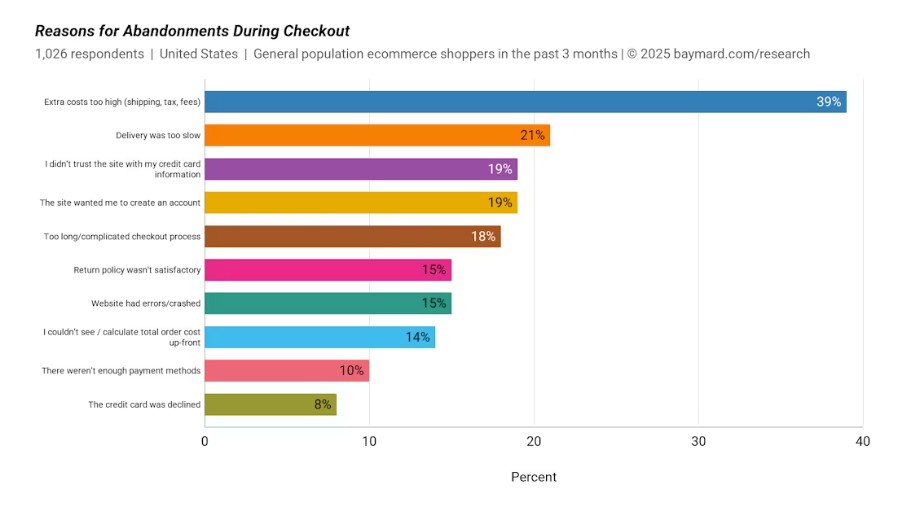
According to another study from Baymard, 10% of customers will abandon their cart if the website doesn’t offer their preferred payment method.
Start with the major card networks, then layer in the most-used local options for each market.
Managing cross-border logistics
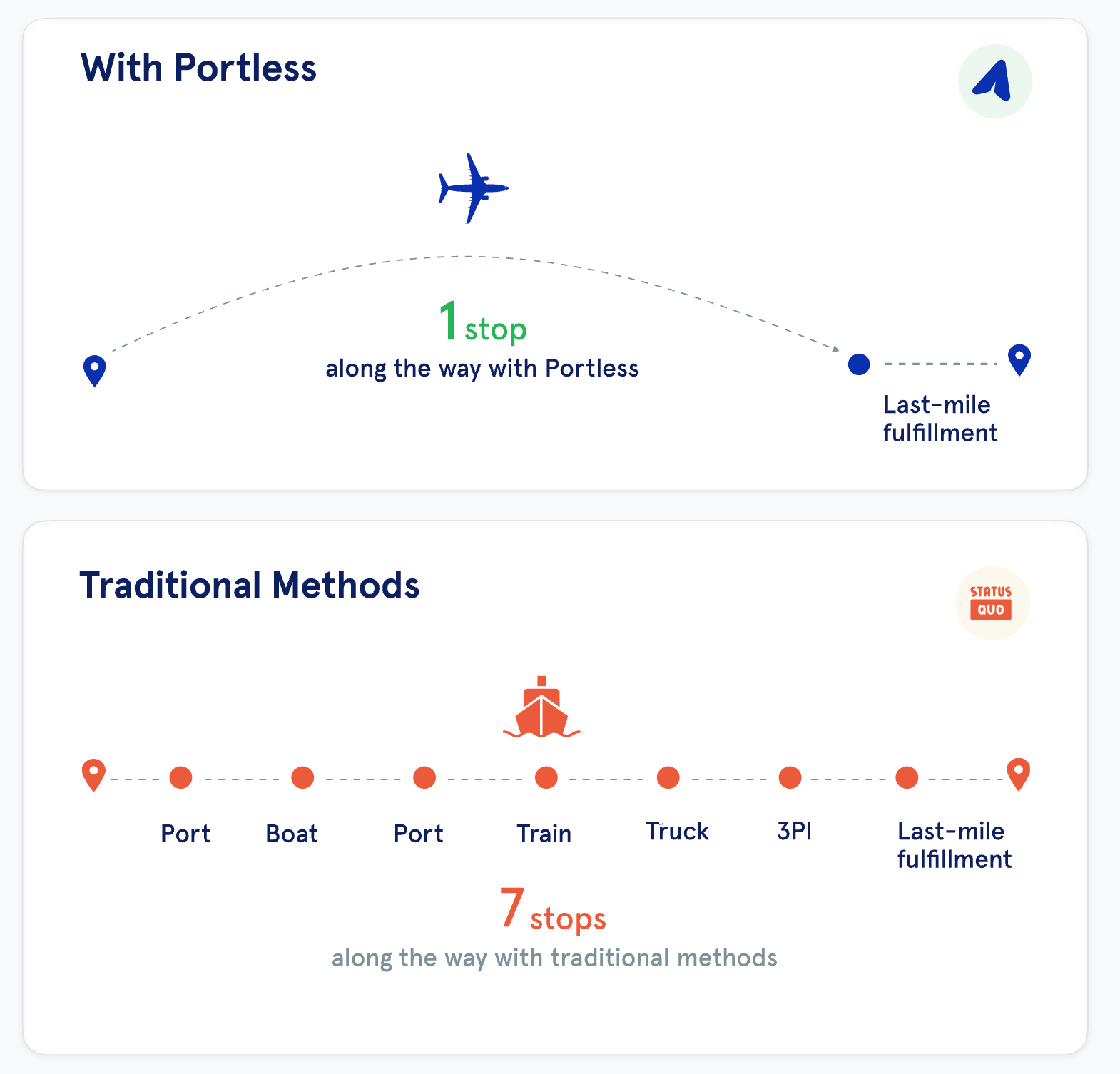
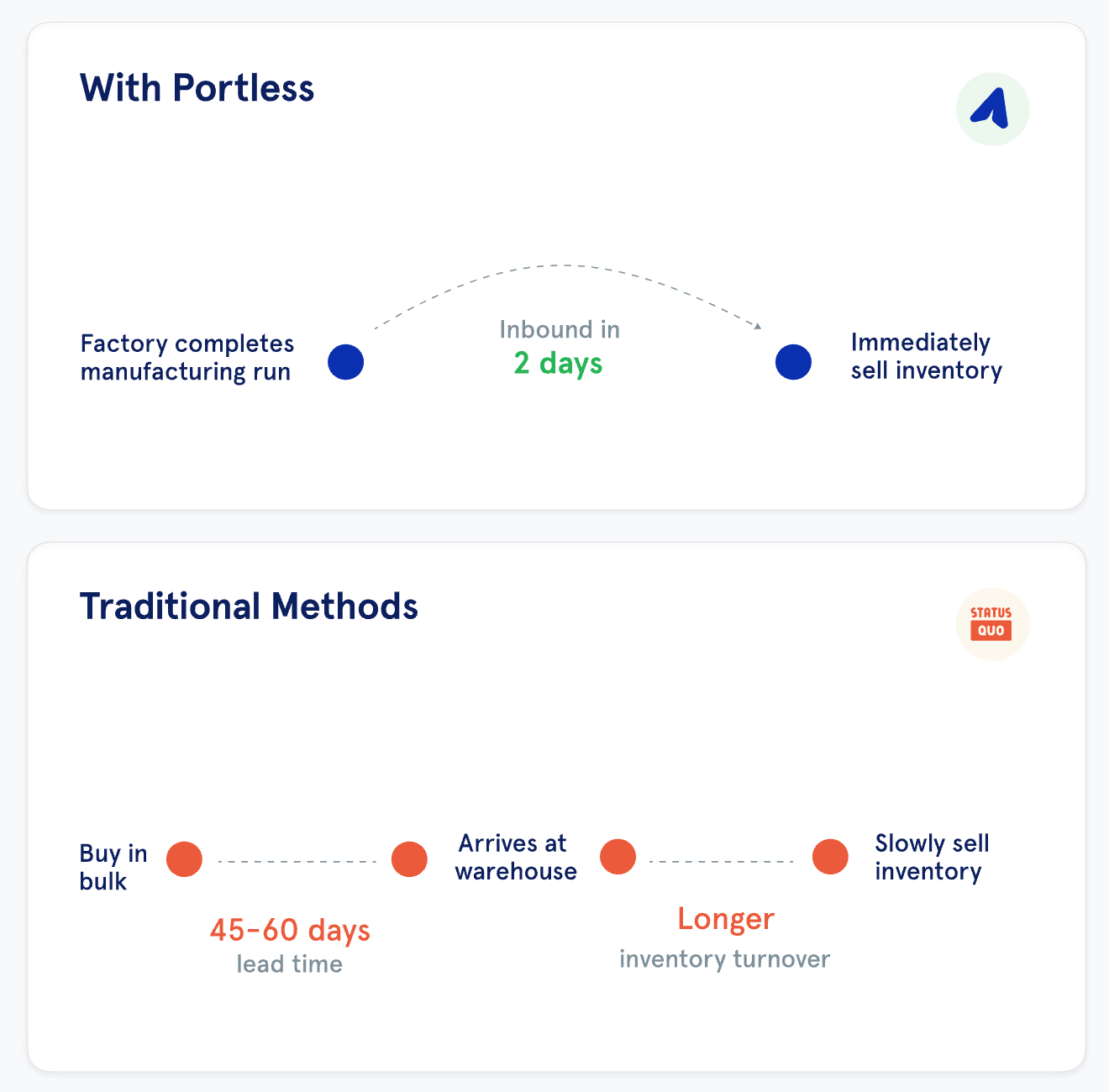
Shipping times, duties, taxes, customs clearance, and tracking all vary by country and can add complexity as you expand. The traditional approach of importing bulk inventory on a boat to a domestic warehouse then gradually adding local warehouses as demand grows is capital-intensive and punishing if the market doesn't perform. Not to mention slow. And Statista found that 21% of US online shoppers abandon their cart because they think the delivery options are too slow.
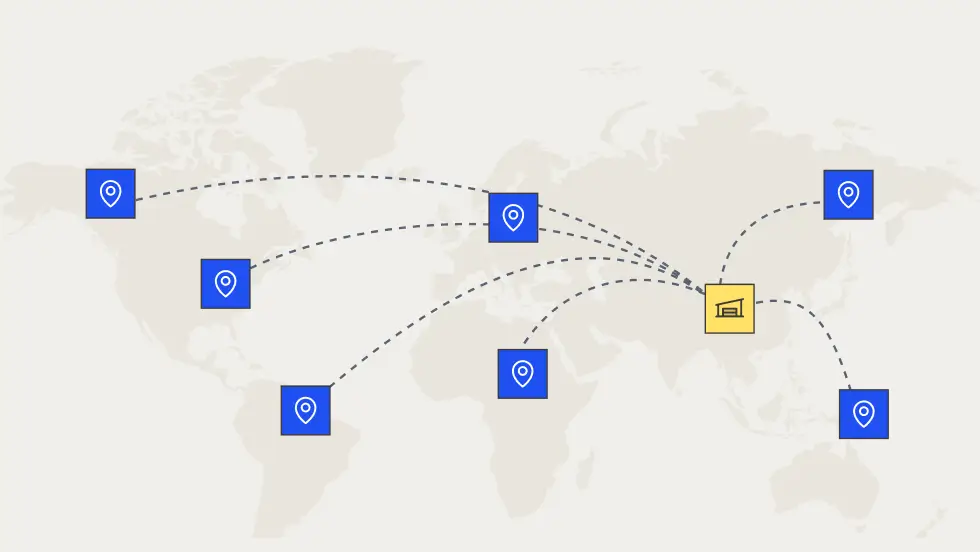
A direct fulfillment model sidesteps much of this. We'll get into the detail later, but the core idea is holding inventory in one central location and shipping directly to customers in each country as orders come in.
Assessing local competition
You might be the best in your category at home. That doesn't automatically translate. Before entering a market, run a competitor analysis. Who else is selling what you sell, at what price, with what delivery promise? If the market is mature and you can't differentiate on price, quality, or brand story, that's a signal to focus elsewhere first.
Choosing the right platform
The platform you use will affect how easily you can expand internationally. The good news is that most modern sites support international selling. You just need to confirm it can handle currency conversion, localized checkout, and country-specific shipping rules before you expand.
Many businesses see Shopify as the gold standard for international ecommerce because it can natively serve 85+ countries. It also offers built-in tools to help you to adapt your content, currency and product range by country.
How international Ecommerce is changing in 2026
Two things have made international Ecommerce more complex since 2025: regulatory tightening and rising trade costs.
The end of de minimis as a free pass
Governments, particularly in the US and EU, have been restricting or eliminating de minimis exemptions. These were the thresholds that previously allowed low-value shipments to enter a country without duties or taxes. The removal of these exemptions increases per-order costs, which either compresses margins or forces price increases in affected markets.
This doesn't make international expansion unviable. But it does mean brands that were relying on duty-free thresholds as a cost advantage need to recalculate their landed costs and price accordingly.
Tariffs are reshaping supply chains
In our research, 88% of US respondents said recent tariff changes have significantly impacted their product costs or profit margins. Brands importing into the US face higher border costs, while US-based brands selling internationally are encountering new tariffs in destination markets.
The brands navigating this best aren't waiting for trade policy to stabilize. They're diversifying into new markets and rethinking their fulfillment model. 70% of executive leaders in our survey said they are actively changing their supply chain strategy in response to trade policy shifts.
Traditional expansion vs. direct fulfillment
Factor
Traditional expansion
Direct fulfillment
Inventory location
Multiple regional warehouses per market
Single central fulfillment center
Market setup
Slow, market-by-market, can take months
Enter new markets with minimal operational change
Inventory commitment
Committed upfront to each market
Held centrally until an order is placed
Carrier management
Separate carriers and partners per country
Local last-mile carriers handle domestic delivery; fulfillment provider manages the international leg
Risk if market underperforms
High — sunk costs in inventory and infrastructure
Low — turn it off with minimal exposure
How to expand internationally: A step-by-step guide
Here's how to go from domestic-only to selling in new markets, broken into six steps.
1. Identify and prioritize your target markets
Start with the data you already have. Are you seeing traffic from other countries? Abandoned checkouts from international visitors? That's demand already at your door.
From there, prioritize markets that are easier to enter. Same language, similar buying behavior, and existing demand are the three filters that matter most early on. For US brands, Canada, the UK, Australia, and New Zealand are natural starting points due to lower localization effort, familiar customer expectations, and English-language marketing reuse.
Before committing, ask two questions:
Is there clear demand for our product?
Can we compete on price, quality, or brand in this market?
2. Clarify duties, taxes, and other regional costs
Before you launch in a new market, calculate the full cost of delivering one order there. That means shipping, duties, taxes, currency exchange fees, and any returns. Markets that look attractive from a demand perspective can stop making sense the moment you run the landed cost numbers.
Use our landed cost calculator to run these numbers before you commit. We also partner with OpenBorder, which offers an AI-powered tax engine that handles product classification and tax and duty compliance for you. This allows your business to focus on marketing and adapting your approach to a new market, rather than being stuck in the tax details.
3. Choose a platform that supports international selling
Your Ecommerce platform needs to handle multiple currencies, languages, regional pricing, and market-specific settings. Shopify is the most battle-tested option for this. It supports international markets out of the box and integrates well with fulfillment and payment providers. But the right choice depends on your existing setup.
Once you've picked your platform, build out country-specific storefronts. At minimum, that means local currency, localized copy, and the right shipping options for each region.
4. Set up payment options for each market
Once your storefront is localized, customers need to be able to pay in a way that feels familiar and trustworthy. For example, many people in Germany and the Netherlands don’t like to make online purchases with their cards directly, so you’ll also want to offer PayPal or iDEAL.
If you're unsure where to start, interview two or three people in your target market about their buying habits before you configure checkout.
5. Set up shipping and fulfillment
This is where most brands hit the wall. International fulfillment comes with real upfront costs and risk. At minimum, you need clear answers to: Where will inventory live? How quickly can orders reach customers? Who handles customs and duties?
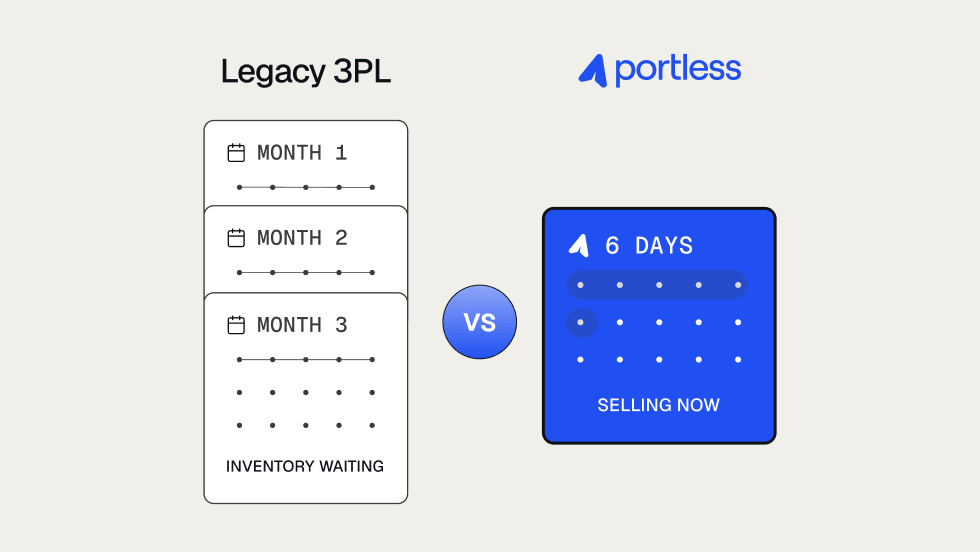
The traditional approach is to ship inventory by boat into domestic warehouses, then gradually add local warehouses as international demand grows. While you can get fast local delivery once stock arrives, it comes with long lead times, with inventory sitting on a ship for weeks.
Many businesses avoid this altogether by using a direct fulfillment approach. At Portless, for example, inventory is held in a central fulfillment center and shipped directly to customers in 85+ countries via air as orders come in. No local warehouse setup. No bulk inventory commitment per market. You launch, see how the market performs, and decide from there.
6. Review your launch and iterate
Once you’ve launched, make sure to gather all your early data. Using this, you’ll be able to decide whether to double down, change your approach, or leave the market altogether.
Signals that tell you whether the market is working include: Are visitors converting? Are orders coming in consistently or in short bursts? Are customers raising the same objections (price, delivery time)? Do margins still make sense once shipping and returns are included?
Markets with strong early traction are worth investing in further. That means deeper localization, more marketing spend, potentially a local support presence. Markets that aren't performing give you the data to pivot or exit without a sunk-cost hangover.
The benefits of international Ecommerce
Capital One found that cross-border makes up about 18.8% of online sales in 2025. So it’s safe to say that once the operational pieces are in place, the upside is significant. Here's what brands consistently gain from expanding internationally.
New revenue without new infrastructure
You already have the product. International Ecommerce lets you sell it to more people without building physical operations in every country you enter. The marginal cost of a new market, with the right fulfillment model, is mostly marketing spend.
Diversification against domestic risk
Selling into multiple regions reduces your exposure to any single market's economic conditions, regulatory changes, or platform shifts. If one market contracts, others absorb the impact. Given what 2025 looked like for US-based brands navigating tariff uncertainty, this isn't a theoretical benefit.
Year-round demand
Different markets peak at different times. A swimwear brand in the US sees a summer spike, then a drop after August. Expand into Australia or New Zealand and that drop turns into a second peak. Summer in the Southern Hemisphere starts in October. International expansion can smooth seasonal swings into more consistent revenue.
Better CAC efficiency on existing demand
Many brands are already getting international traffic. People in the UK and Canada are finding your site, browsing your products, and abandoning checkout because shipping doesn't work. Expanding internationally lets you convert demand you're already generating instead of paying to acquire more domestic customers.
Higher lifetime value in some markets
Depending on your category, certain markets support higher average order values or stronger repeat purchase rates. This is worth researching by category. Don't assume your domestic Customer Lifetime Value (CLV) benchmarks will hold everywhere.
Brand credibility
A global presence signals scale. For DTC brands competing on brand trust, the ability to say you ship to 70+ countries carries weight with both customers and wholesale or retail buyers who may discover you later.
“The future for DTC is running healthier businesses.” – Izzy Rosenzweig, CEO at Portless
🧠 If you're curious how your brand could benefit from international expansion, listen to our Modern Supply Chain episode with Jeremy Horowitz of Let’s Buy a Biz!, where he shares his predictions on how global will shift over the next five years.
Common challenges in international Ecommerce (and how to manage them)
Direct fulfillment solves the logistics problem. It doesn't solve everything. Here's where brands get into trouble, and what to do about it.
Localization and conversion
Flipping a switch to show your US store in British English is not localization. Real localization means adapting your copy to speak to local buyers, adjusting pricing for local purchasing power, using locally familiar sizing and measurement conventions, and running marketing that resonates with the culture rather than just translating it.
Brands that do this well see materially better conversion rates in new markets. Brands that skip it often blame the market when the real issue was never giving customers a reason to trust them.
Even with a low-risk direct fulfillment setup, bad localization will produce bad results. Do the work upfront.
Duties and taxes
Every market has its own rules. Duties, VAT, import taxes, and product classification can all affect your landed cost and your customer's checkout experience. Brands that don't account for this accurately either eat the difference on margins or surprise customers with unexpected charges at delivery — a fast way to generate returns and negative reviews.
Tools like OpenBorder handle classification and compliance automatically, which removes most of the manual burden. Our landed cost calculator is a good starting point for getting the numbers right before you launch.
Delivery experience
Customers in the UK expect a different delivery experience than customers in Brazil. Promising a delivery window you can't consistently hit destroys trust and drives up support tickets. Build market-specific delivery promises based on what you can actually deliver, and communicate them clearly at checkout.
With Portless, most international orders arrive in five to eight business days — fast enough to set a credible promise in most markets.
Returns and reverse logistics
International returns are expensive and complicated. A customer in Germany returning a product to your US warehouse can cost more than the margin you made on the order. Having a clear international returns policy before you launch protects both your margins and the customer relationship.
We don't currently offer a native returns solution, but we recommend Onward for brands managing cross-border returns. They handle the reverse logistics so you're not building that infrastructure yourself.
How Portless brands are winning in international markets
Spartan Kitchen: four new markets unlocked
Spartan Kitchen is a sustainable home goods brand making professional-grade kitchen tools. Founded by Shawn and Mikaela Numrich, they built strong domestic demand but hit a wall operationally. Inventory took six weeks to arrive from China, each shipment required upfront payment for freight, duties, and packaging, and fulfillment was consuming 20+ hours of founder time every week.
After partnering with Portless, lead times dropped by 90%. Orders shipped globally the next morning after placement. And internationally, markets that had been cost-prohibitive. The UK, Australia, and New Zealand became viable overnight. Spartan is now planning expansion into four additional international markets in 2026.
"Before Portless, international expansion just felt out of reach. Now it actually feels doable — and that's completely changed how we think about the future of the business." — Shawn Numrich, Founder at Spartan Kitchen
Craft Club: 3x growth through direct fulfillment
Craft Club launched in 2021 as a DTC craft kit brand with big ambitions. However, as demand increased, its traditional supply chain began to create friction.
Each product took weeks to manufacture and then another five weeks to arrive by ocean freight before even reaching their warehouse. During that time, cash was tied up in inventory sitting in transit. This led to the business frequently selling out while still waiting for containers to land. Testing new international markets was nearly impossible.
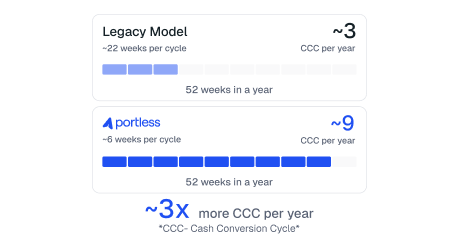
To solve this, Craft Club partnered with Portless. Now, instead of waiting for containers to arrive and stock to be received domestically, products move quickly from factory to fulfillment and fly directly to customers worldwide. As a result of this shift, Craft Club has reduced its cash conversion cycle and grown the business three times over.
Where to expand first
Not all markets are equal, and trying to launch everywhere at once is a reliable way to spread yourself too thin and learn nothing.
Emerging markets, particularly in Southeast Asia and Latin America, are among the fastest-growing sources of new Ecommerce demand. But fastest-growing doesn't mean easiest to enter. For most brands, the right starting point is a market where you already have demand signals and where the operational complexity is lower.
For English-language brands, the path of least resistance is other English-speaking markets. Canada, the UK, Australia, and New Zealand share your language, have similar consumer expectations, and allow significant marketing reuse. You're not translating anything. You're adapting: small copy tweaks, local currency, the right shipping option at checkout.
Once you've proven those markets, the next tier might be Western Europe where localization lift is higher but demand is strong and purchasing power is solid.
Markets like Brazil, Japan, and South Korea have enormous Ecommerce activity, but they come with higher localization complexity, distinct payment preferences, and in Brazil's case, a regulatory environment that takes real investment to navigate. These aren't wrong targets, they're later-stage targets.
A practical framework:
Tier 1 — start here: Markets where you have existing demand signals (traffic, abandoned carts), same language, and low operational complexity. For US brands: Canada, UK, Australia, New Zealand.
Tier 2 — expand next: Markets with strong demand and manageable localization lift. Western Europe, Singapore, Japan.
Tier 3 — longer-term: High-growth but higher-complexity markets. Brazil, India, Southeast Asia, Middle East.
Are you ready to go global?
Before you launch, run through this checklist. It's not about being perfect — it's about knowing where your gaps are before customers find them for you.
Area
Ready signal
Not ready signal
Demand
Traffic or abandoned carts already coming from target market
No existing international signal
Markets
First 1–3 countries selected with clear rationale
Plan is to "launch everywhere"
Landed cost
Shipping + duties + taxes calculated per market
Margins assumed, not modeled
Localization
Key pages adapted for local language, currency, sizing
Store is a direct copy of your domestic site
Payments
Local payment methods supported in each market
Only US card networks at checkout
Delivery promise
Region-specific ETA you can consistently hit
Same delivery window used for all markets
Tracking
End-to-end tracking customers can follow
Tracking drops off after customs
Returns
International returns policy defined and costed
No policy, or domestic policy applied globally
Support
Team can respond across time zones
Single time zone coverage only
If you have gaps in the middle columns, that's not a reason to wait — it's a list of what to solve before launch day.
Best practices for international Ecommerce
A few principles that separate brands that win internationally from those that stall.
Start with three to five markets, not 75. Going wide before you've proven a single international market is how you burn budget and lose confidence. Start focused, learn fast, then expand.
Chase existing demand first. If you're already seeing traffic from Australia and the UK, start there. You're converting interest that already exists rather than building it from scratch.
Model your landed costs before you set prices. Use our landed cost calculator to establish a margin floor for each market. If you can't price competitively after duties and shipping, that market isn't ready for you yet. Or you need to reconfigure your fulfillment model.
Build market-specific delivery promises. Don't apply your domestic delivery window globally. Set realistic ETAs for each region and communicate them clearly at checkout. Overpromising creates support volume and erodes trust.
Localize key policies, not just product pages. Your shipping, returns, and warranty policies all need market-specific versions. A returns policy that works domestically can be margin-destroying internationally.
Track everything from day one. Conversion rate by market, customer acquisition cost (CAC), refund rate, and delivery SLA per region. You can't optimize what you're not measuring, and international expansion decisions (double down vs. exit) should be data-driven.
Use a fulfillment model that matches your risk tolerance. If you're testing a new market, you don't need local warehousing. A direct fulfillment partner like Portless lets you launch, learn, and scale without the infrastructure commitment.
Ready to sell internationally?
International Ecommerce is one of the highest-return moves available to a growing DTC brand. New markets mean new revenue, lower seasonal risk, and better efficiency on demand you're already generating. The question is execution: choosing the right markets, getting the landed costs right, localizing properly, and setting up a fulfillment model that lets you test before you commit.
That's where we come in. Portless ships to 85+ countries directly from our Shenzhen fulfillment center, with no local warehouse setup required. You can launch a new market, see how it performs, and scale or stop based on real data, not forecasts made months in advance.
Talk to our team to see how direct fulfillment can support your international expansion.
FAQ
What is international Ecommerce?
International Ecommerce is the process of selling products online to customers in other countries. It involves localizing your store for each market, supporting local payment methods, managing cross-border logistics, and navigating duties and taxes. For DTC brands, it's one of the most capital-efficient paths to incremental revenue growth.
What are the biggest challenges in international Ecommerce?
The most common challenges are localization (adapting your store, marketing, and policies for each market), calculating and managing landed costs, delivering a reliable customer experience across borders, and handling international returns. Partnering with a direct fulfillment provider reduces the logistics complexity significantly, but localization work always sits with the brand.
How do I choose which countries to launch in first?
Start where you already have demand signals — traffic, abandoned carts, or existing customers from a particular country. From there, prioritize markets with lower operational complexity: same language, familiar buyer expectations, and payment preferences you can support quickly. For US brands, that typically means Canada, the UK, Australia, and New Zealand as first targets.
What's the difference between cross-border shipping and direct fulfillment?
Cross-border shipping usually means sending individual orders from your domestic location to international customers — slow and often expensive. Direct fulfillment means holding inventory in a central hub (like Portless's Shenzhen facility) and shipping from there to customers in 85+ countries as orders come in. The result is faster delivery, lower cost, and no need to pre-position inventory in multiple local warehouses.
What countries does Portless support?
We support delivery to 85+ countries across North America, Europe, Asia, Oceania, and Latin America. Contact our team to confirm coverage for a specific market.
How long does it take to set up with Portless?
Setup is fast, typically a few calls and minimal paperwork. Spartan Kitchen described the transition as straightforward enough that they were operational almost immediately. Once your inventory is in our Shenzhen facility, you're ready to start shipping globally.
Frequently asked questions
Heading
Lorem ipsum dolor sit amet, consectetur adipiscing elit. Suspendisse varius enim in eros elementum tristique. Duis cursus, mi quis viverra ornare, eros dolor interdum nulla, ut commodo diam libero vitae erat. Aenean faucibus nibh et justo cursus id rutrum lorem imperdiet. Nunc ut sem vitae risus tristique posuere.
Get operator-level supply chain insights
Thank you! Your submission has been received!
Oops! Something went wrong while submitting the form.









.jpg)
%20(1).jpg)
%20(1)%20(1).avif)