“We generated $70K in package protection revenue in a single quarter by adding a simple $4 protection option at checkout — plus an additional $12K from cashbacks. Customers get peace of mind, and we're making a profit on every protected order with zero effort."
“We generated $70K in package protection revenue in a single quarter by adding a simple $4 protection option at checkout — plus an additional $12K from cashbacks. Customers get peace of mind, and we're making a profit on every protected order with zero effort."
You can launch a store in an afternoon, run ads by algorithm, and hand fulfillment to software. Then you go to make the actual product, and it's 2010 again. You draft specs, dig through supplier directories, and fire off hundreds of messages across email, WhatsApp, and WeChat just to get one quote, wait on samples that miss, and set up factory inspections halfway around the world. Finding a reliable supplier can still take more than six months and thousands of hours of manual work. Sourcing is the last part of Ecommerce that software hasn't touched.
That's finally changing, and the reason is simple. Sourcing is really a data problem, and AI is the first tech that can handle the messy data it runs on. The brands that start treating sourcing like software, the way they already treat their store and their fulfillment, will move faster and spend less than the ones still doing it by hand. Here's what that shift looks like.
The hard part was never finding a factory
Most of the work in sourcing is invisible, so it's easy to underestimate. Turning a rough idea into a spec a factory can actually quote takes real work. So does figuring out which of 10,000 listings is the one supplier who can build it, then grinding through weeks of back-and-forth to confirm they can. Volume was never the problem. A directory can hand you thousands of factories in a second.
Anthony Sardain has lived on both sides of that gap. He's the founder and CEO of Cavela, an AI sourcing agent, and his family has been in global trade for three generations. Before that he was a data scientist building AI models for trade. His take on those directories is blunt.
You're not looking for 10,000 suppliers, you're looking for one supplier. — Anthony Sardain, CEO at Cavela
Getting from thousands of options down to that one factory is the hard part, and it's really a data job. You have to nail down exactly what a brand wants, know exactly what each factory can do, and match the two. That never looked like data, so software left it alone for years.
Why AI can finally do what earlier software couldn't
There's a reason sourcing never got automated. The information it runs on is a mess. Product specs, reference photos, sketches, diagrams, certifications, long threads of half-formed requirements. Older software could store a document or an image, but it couldn't read one, make sense of it, or notice what was missing. So a human had to do the reading, and humans are slow and expensive at it.
The data that goes into sourcing is very messy and heterogeneous. Every product is different. — Anthony Sardain, CEO at Cavela
Language models changed both halves of that. They can take a rough brief and turn it into a complete, factory-ready spec, catching the gaps and the redundant bits before you ever contact a factory. And the back-and-forth between brand and factory is high-volume but not complicated, which is exactly what AI is good at. Put those together and matching that used to take months can happen in days.
Tighter specs, the right factory, lower cost
When the spec is done before the first email goes out, everything after it speeds up. Fewer rounds of samples, because the factory isn't guessing at what you meant. Less time lost chasing bad quotes. And because AI can run outreach at a scale no in-house team can match, it tends to land better prices too. One AI sourcing agent reports cutting production costs by around 35% on average, and taking some brands from idea to production in under a month.
Going faster still means going narrow. The brands that get the most out of this stick with a small set of vetted factories they actually build relationships with, because that's where quality and coordination live. The idea is to “let factories be factories.” A factory wants to spend its time making product, and the more admin you take off its plate, the better a partner it becomes.
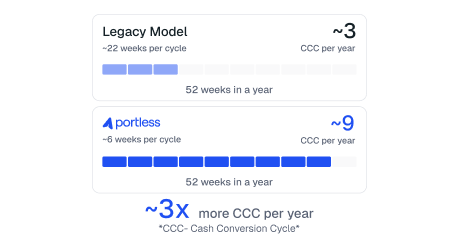
Faster sourcing just moves the bottleneck. Producing quickly only helps if the product gets to customers quickly too, which is why inventory lead time is what really decides how much cash you tie up. Good sourcing tools plan for it, keeping an eye on factory capacity so a crunch before Chinese New Year doesn't turn a great quote into a missed season.
From a service you hire to a system you use
The bigger change is what sourcing turns into. Today you hire a person to do it. Tomorrow you run it like software, telling the system what you want and letting it coordinate the factories in the background while you work on something else.
It is essentially an API into global manufacturing capacity. — Anthony Sardain, CEO at Cavela
The sourcing role sticks around, same as software engineers did when AI showed up. It just gets sharper and smaller. One person can run way more product, and the human hours move to the stuff machines are bad at, like judgment, relationships, and the calls that don't fit a template. The high-volume coordination that used to eat the week gets handed off.
More shots on goal
When making something gets cheap and easy, brands do it more often. That's the real prize. In DTC, one product can change a company's whole trajectory, and the brands that win are usually the ones taking the most swings. When a new product takes weeks to source instead of quarters, you get to take a lot more of them.
There is a world where you can go from prompt to physical product. We've seen prompt to image, prompt to video, prompt to app. We're going to see prompt to physical product. — Anthony Sardain, CEO at Cavela
We've seen this before with digital content. Cheap tools turned making video, audio, and writing from something only studios and networks did into something anyone can do, and the creator economy is now on track to hit roughly $480 billion by 2027, up from about $250 billion. The same thing is starting to happen with physical products. AI can now suggest a new product to a brand, write the spec, find the supplier, and price it out before anyone lifts a finger, so a sample can show up in a couple of weeks instead of a couple of quarters.
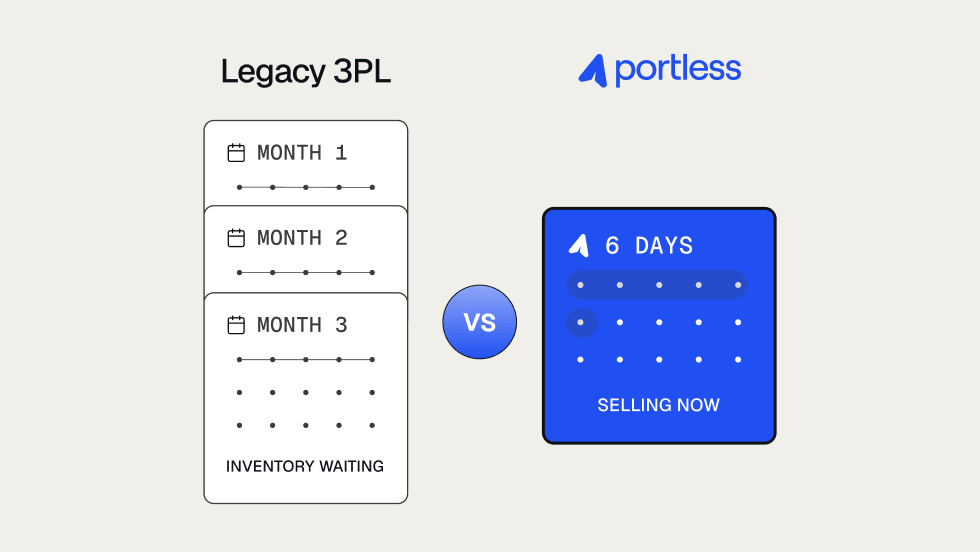
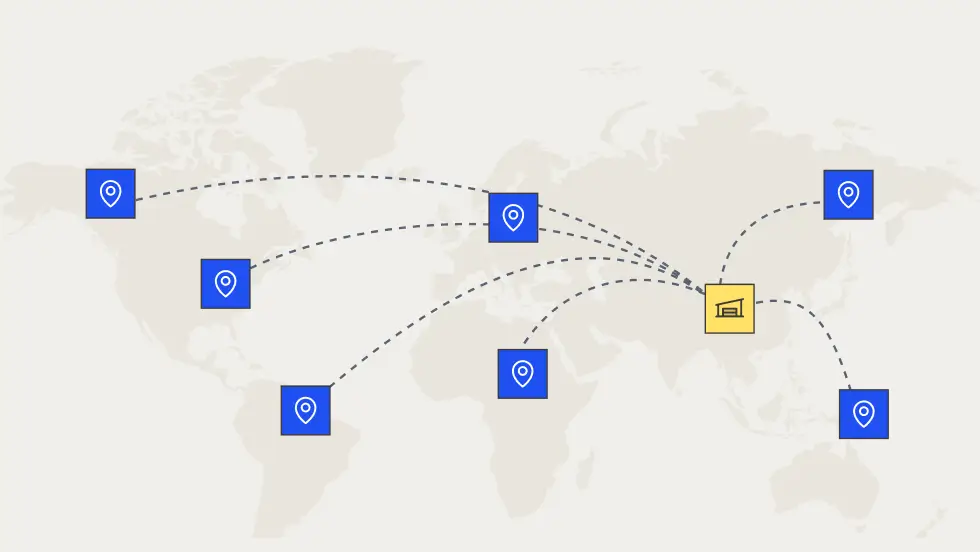
Making things fast only helps if you can sell and restock just as fast. You source a product in weeks, get it made, then get it in front of customers quickly enough to see what's actually selling and reorder. That last part is where fulfillment comes in. Shipping straight from the manufacturer, the way Portless works, closes the loop so you can test, learn, and restock in days instead of months. That speed means you react to what's actually selling.
Watch the full episode
Izzy Rosenzweig got into all of this with Anthony Sardain on The Modern Supply Chain. The full episode goes further on where Alibaba still fits, how AI changes the way brands negotiate with factories, how to plan around capacity crunches like Chinese New Year, and whether the head-of-sourcing job survives all this.
Lorem ipsum dolor sit amet, consectetur adipiscing elit. Suspendisse varius enim in eros elementum tristique. Duis cursus, mi quis viverra ornare, eros dolor interdum nulla, ut commodo diam libero vitae erat. Aenean faucibus nibh et justo cursus id rutrum lorem imperdiet. Nunc ut sem vitae risus tristique posuere.
Get operator-level supply chain insights
Thank you! Your submission has been received!
Oops! Something went wrong while submitting the form.








.jpg)
.jpg)
.jpg)