Last updated: May 2026
If you are reading this in November, BFCM is just around the corner. Most strategy decisions are behind you. The good news: you still have time to close the gaps that cost brands money every year.
This BFCM checklist focuses on what you can control right now: carrier capacity, inventory accuracy, returns, customer communication, supplier confirmations, and your financial floor.
How should you lock down carriers and logistics 18 days out?
Do this today
- Get written confirmation of capacity for BFCM week and the following two weeks.
- Confirm rate cards and any peak surcharges.
- List escalation contacts for exceptions and after-hours support.
Quick wins
- Pre-book backup capacity for 15-20% of volume with an alternate carrier.
- Create a one-page escalation sheet and share it with ops and support.
Why does this matter for BFCM?
Delays during BFCM trigger refunds and negative reviews. Delayed orders trigger refund requests at predictable rates. Convey's 2023 last-mile data shows 13.5% of late-delivery customers request a refund or chargeback. On 1,000 delayed orders with $50 average refund exposure, that's $50,000 in preventable cost. Backup capacity usually costs two to five thousand dollars. The math is simple.
How do you prevent overselling across Shopify, Amazon, and TikTok Shop?
Do this within 48 hours
- Audit live inventory counts across Shopify, Amazon, TikTok Shop, and marketplaces. Make one system the source of truth.
- Identify the top 20% of SKUs that drive 80% of revenue.
- Set a 20-30% buffer on those SKUs so spikes do not flip you to out of stock.
- Load test inventory sync. Create a burst of test orders. If updates lag more than 30 seconds, fix it now.
Why does it matter?
Overselling leads to cancellations, chargebacks, and expedited rework. Five hundred oversold units at one hundred dollars each equals fifty thousand dollars in preventable refunds.
How do you prepare returns flow before the BFCM spike?
Return rates climb sharply after BFCM. The NRF 2024 consumer returns report puts the post-holiday return rate at 17%, well above the 14.5% annual average, and apparel runs higher still.
Returns peak in January, not December. Online return rates climbed to 24.5% in 2024 according to the NRF and Happy Returns 2024 consumer returns report, with the post-holiday window driving the heaviest volume.
For brands manufacturing in China or Vietnam, cross-border returns are the expensive part. Shipping a $40 apparel item back to a US-based 3PL costs $8–$15 in return postage alone, before processing fees. A 25% return rate on 10,000 BFCM orders means $20,000–$37,500 in return shipping cost before you've inspected a single unit.
Three moves that cut the bill:
- Default to store credit with a 10-15% bonus. Brands using credit-first policies see refund rates drop 20-30% according to Loop Returns industry data.
- Route low-value returns (under $30) to refund-without-return. The math almost always favors refunding over paying to inspect and restock.
- For higher-value items, consolidate returns regionally instead of shipping each unit back to a single warehouse.
Quick wins
- Launch a self-service returns portal. Test it end to end in two clicks.
- Define where returns go for domestic and cross-border orders. Pre-clear bonded or customs documents.
- Decide the incentive. Store credit protects margin better than refunds.
- Publish the policy on product pages, checkout, and order confirmation emails.
Why it matters
Self-service reduces chargebacks and support tickets. It also gets inventory back into sellable stock faster.
How do you set customer delivery expectations to reduce support tickets?
Clear delivery promises lower ticket volume and refunds.
Quick wins
- Add shipping timelines to every product page. Example: ships within two business days, typical delivery to the US in five to nine days.
- Show estimated delivery dates before checkout.
- Prepare three templates now: order confirmed, processing delay, and customs hold.
- Publish your holiday cutoff date and add a simple countdown.
Why it matters
Transparent delivery timelines reduce "where is my order?" (WISMO) tickets significantly. AfterShip's 2024 post-purchase benchmarks report that proactive shipping notifications cut WISMO ticket volume by 30-40% across DTC brands.
Have you closed the loop with suppliers?
By November 15, get everything in writing: confirmed PO quantities, ship dates, carton specs, and backup SKU availability, especially for hero products where a stockout costs you the week. For broader inventory positioning logic, see our breakdown of BFCM stocking strategies that drive revenue growth.
Quick wins
- Confirm final quantities, QC dates, ship dates, and required documents.
- If QC is scheduled, follow up on results within 48 hours.
- Identify backup SKUs if your top seller slips. Know what you will promote instead. See BFCM stocking strategies that drive revenue growth for how leading brands sequence backup inventory.
- Upload customs documents to your broker early.
Why does BFCM timing matter so much?
Most slips occur after production during QC or at customs. A three to five day delay during BFCM can erase a week of planned revenue.
How do you set financial guardrails for BFCM?
Decide now which choices protect margin and which do not.
The math on margin erosion is specific. Peak season carrier surcharges add 15-30% to baseline rates, per UPS 2025 peak season surcharge announcements. Returns processing eats another 20-65% of the item's retail price, according to Optoro's 2024 returns cost benchmarks. Discount stacking on top of that is what flips a profitable BFCM into a write-off January.
Set three numerical floors before Black Friday week:
- Margin floor by SKU. Calculate landed cost using a landed cost calculator, returns reserve (15% of revenue is a defensible starting point), and minimum gross margin. Do not discount below that line.
- Air freight ceiling. If air freight costs more than 20% of product margin per unit, the unit shouldn't fly. Plan ground or sea backup for replenishment that doesn't clear the math.
- Refund and chargeback budget. Set a per-category cap. Track daily. When you cross 75% of the cap, escalate to the head of ops before the week ends.
For DTC brands doing $1-15M in revenue, a 3% margin swing is $30,000-$450,000. The guardrails take an afternoon to build and protect months of work.
Quick wins
- Calculate your air freight break-even. As a rule, air should not exceed 20% of product margin.
- Set a refund and chargeback budget by category.
- Know your support cost per ticket and reduce tickets at the source with better delivery messaging.
- Set a margin floor by SKU. Do not discount below that line during BFCM.
Why does BFCM margin erosion matter?
Loose guardrails swing 2-5% of annual profit during peak. Margin erosion during BFCM compounds across discounting, peak surcharges, and returns. Shopify's 2024 BFCM data shows the steepest margin pressure hits brands without per-SKU floors. On $10M in revenue, that's $200,000-$500,000.
What to do next
You cannot change what you did in August. You can still prevent the problems that erase margin in late November. Brands that win BFCM have the same thing in common: they lock capacity, keep counts accurate, make returns simple, set expectations, and know their margin floor.
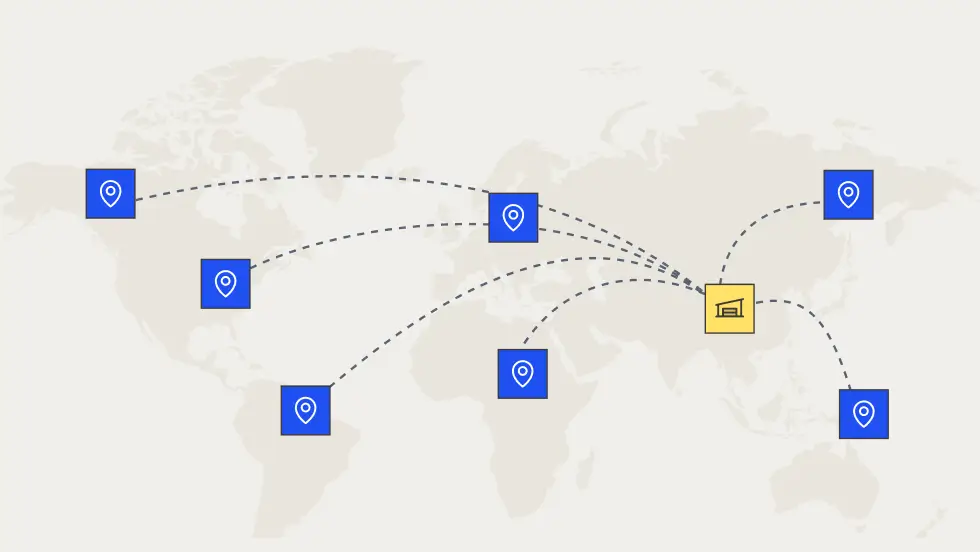
Direct fulfillment changes the BFCM ops checklist materially. When orders ship directly from the factory in China or Vietnam to the customer in five to eight days, three line items on the checklist get smaller or disappear:
- Inventory sync risk drops because there's one source of truth: the factory, not three warehouses.
- Air freight break-even calculations become irrelevant for the brands using direct fulfillment, because there's no domestic restock to expedite.
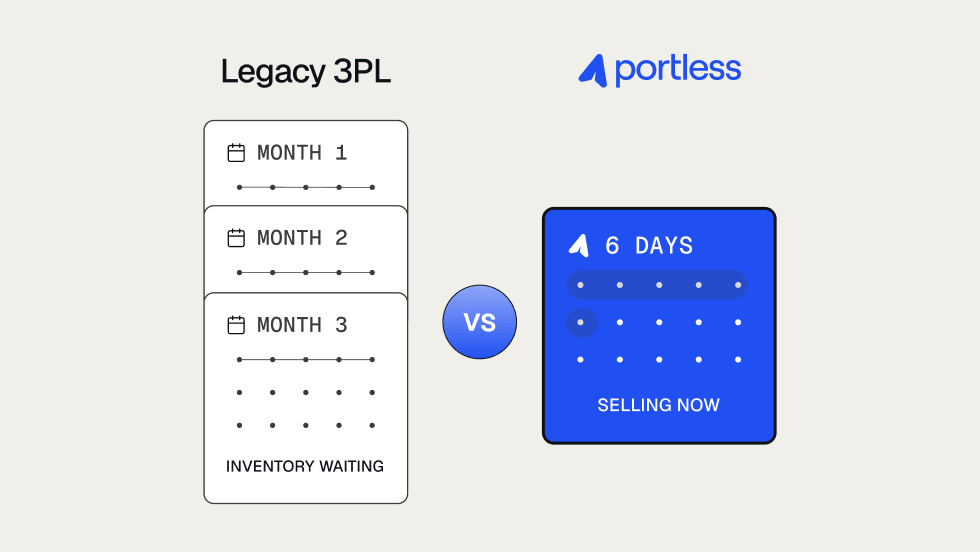
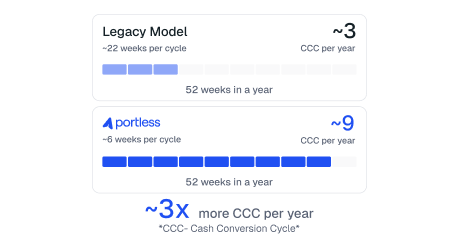
- Capital locked in pre-positioned BFCM inventory drops by up to 90%, freeing cash for ad spend in the highest-ROAS week of the year.
The brands running this model, including &Collar, which restocked 40,000 units in 30 days and grew revenue 35%, don't run BFCM scrambles. They run BFCM with weeks of operating buffer.
If you manufacture in Asia, there is another way to avoid the last-minute scramble. Orders ship directly from the factory to your customer in five to eight days. No domestic warehousing. Less capital locked in inventory. See how just-in-time fulfillment for BFCM works in practice.
Lock the gaps before peak hits
You can't redo August, but the next 18 days decide how much margin survives BFCM. The brands that protect profit are the ones that confirm capacity in writing, sync inventory across channels, simplify returns, set clear delivery promises, and hold their margin floor. If direct fulfillment from China or Vietnam fits your model, talk to our team about what would change for your peak season.
FAQ
What if inventory gets stuck in customs now?
Call your broker to request expedited processing. Ask your carrier about alternate ports. Activate backup SKUs. Send a delay email with a clear new ETA.
We use direct fulfillment from factory to customer. What changes?
Inventory sync is real-time, which removes a common failure point. You still need capacity confirmation, returns flow, clear customer messaging, and financial guardrails.
My carrier will not confirm capacity yet. What now?
Escalate to account management. If they will not put it in writing, book backup capacity today.
What should be on a BFCM checklist for Ecommerce brands?
A BFCM checklist should cover six areas: carrier capacity confirmation, inventory accuracy across channels, a self-service returns flow, clear delivery messaging on product pages, supplier and customs document confirmation, and margin floors by SKU. Each area maps to a specific revenue leak during peak.
How do I scale BFCM sales without breaking operations?
Lock written carrier capacity for BFCM week plus the two following weeks, pre-book 15-20% backup capacity, audit inventory sync across Shopify and marketplaces, and publish shipping cutoff dates. Operations break when capacity and inventory counts lag actual order volume.
When is the latest I can prepare for BFCM?
You can make meaningful operational improvements up to two weeks before BFCM. Strategy decisions are locked by then, but carrier confirmations, returns portals, customer messaging templates, and margin floors can all be set in the final 14-18 days.
What are the most common BFCM operational mistakes?
The five most common BFCM mistakes are unconfirmed carrier capacity, lagging inventory sync that causes overselling, unclear delivery promises that drive support tickets, no self-service returns flow, and discounting below margin floors. Each one is preventable in the final two weeks.








.jpg)
%20(1).jpg)
%20(1)%20(1).avif)