“We generated $70K in package protection revenue in a single quarter by adding a simple $4 protection option at checkout — plus an additional $12K from cashbacks. Customers get peace of mind, and we're making a profit on every protected order with zero effort."
“We generated $70K in package protection revenue in a single quarter by adding a simple $4 protection option at checkout — plus an additional $12K from cashbacks. Customers get peace of mind, and we're making a profit on every protected order with zero effort."
For a long time, free shipping felt like a cheat code. You added a banner. You set a threshold. Conversion went up. That math is changing.
In late August 2025, the US removed de minimis for parcels from every country, after starting with China in May 2026. It's still gone. The February 2026 Supreme Court tariff ruling did not bring it back. The EU has accelerated the removal of the €150 duty exemption. Per the European Council's November 2025 agreement, the interim implementation began in early 2026, with full rollout via the EU Customs Data Hub by mid-2028. Every parcel from a non-EU country now incurs duty plus VAT, regardless of value. Industry estimates put the per-parcel customs processing fee at €5–€10, though the final figure depends on the specific wording of the implementing regulation. Either way, every parcel will pay duty plus VAT plus a processing fee.
Your costs are going up. But customer tolerance for surprise costs is not.
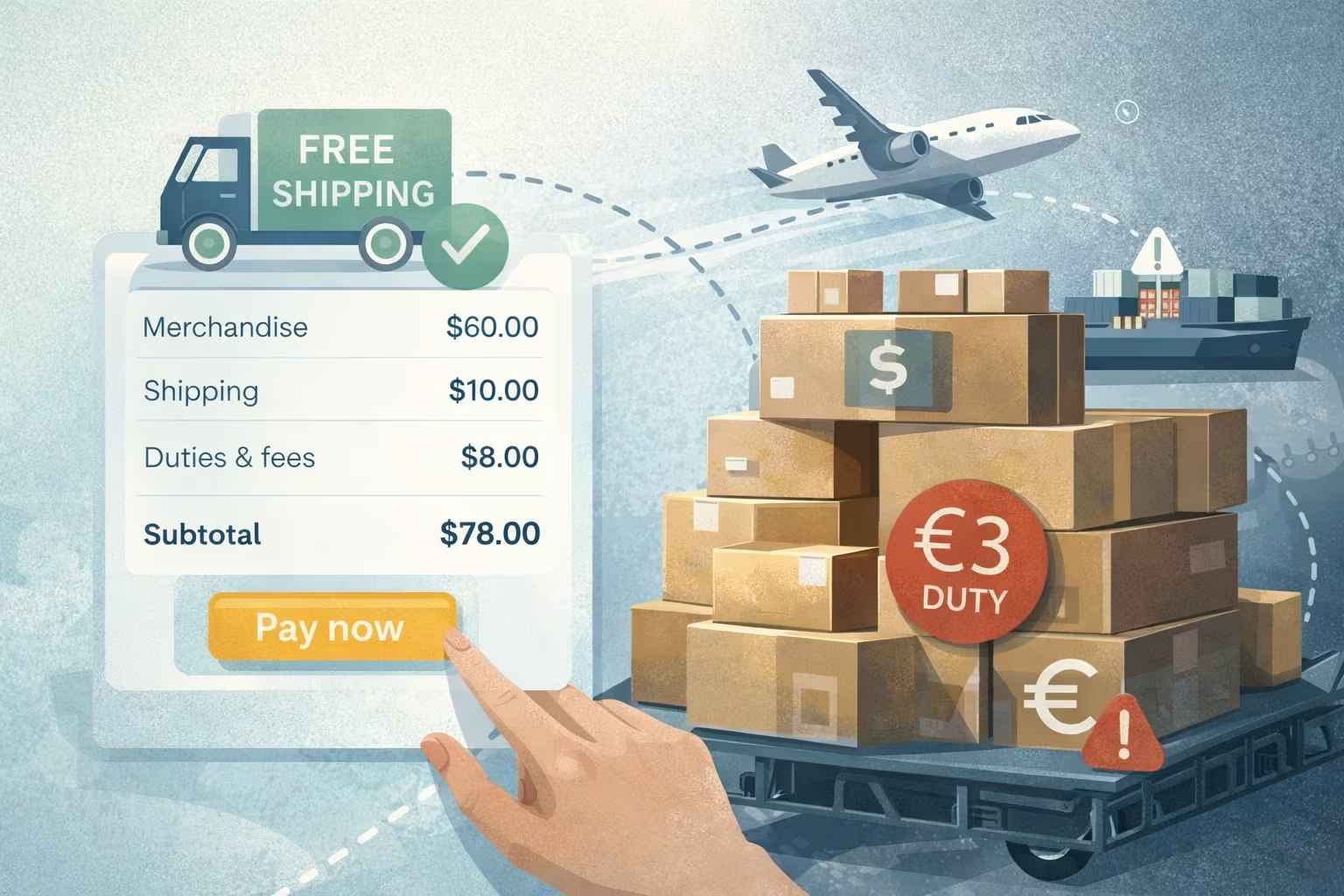
Customers still want free shipping. But when they can't get it, surprise costs at checkout are what kills conversion. Baymard Institute's 2025 research shows 39% of US shoppers abandon checkout because of extra costs: shipping, taxes, and fees. It's the single largest driver of abandonment, ahead of mandatory account creation, slow delivery, and complex checkout flows.
Free shipping still works. You just need to be more strategic about where you can afford to offer it and where you need transparent pricing instead. If you manufacture in Asia and sell to North America or Europe, here's how to rethink your shipping promise so it survives both rising costs and customer expectations.
Where free shipping still makes sense
Not every order can support free shipping anymore. The brands that navigate this well think about it in three decision layers, not a single blanket policy.
Layer 1: visibility prevents abandonment
Surprise kills conversion. Extra fees that appear only at checkout are the top reason shoppers abandon carts. Not slow shipping. Not complicated forms. Unexpected costs.
If you charge for shipping, show it early. Header banners, product pages, and cart previews consistently outperform pricing that only appears at the final checkout step.
Layer 2: price fairness shapes perceived value
Shoppers accept paying more when the cost feels proportional. They leave when it feels arbitrary.
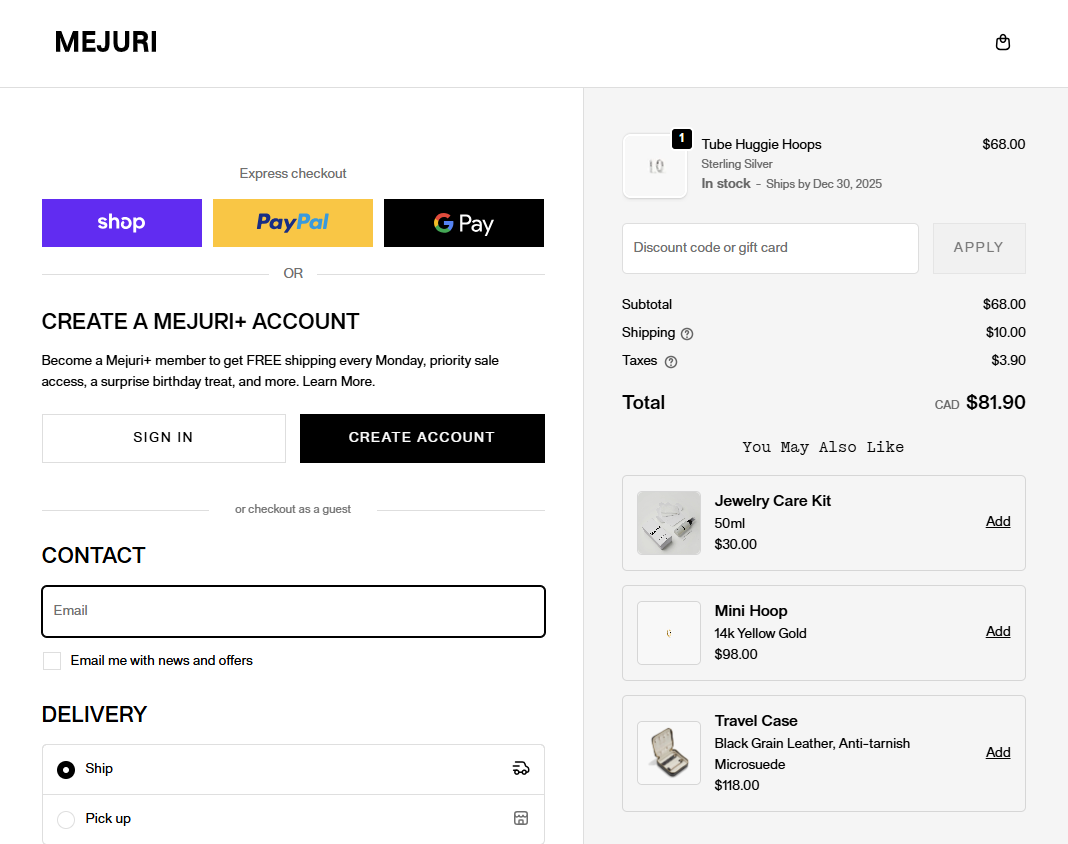
Example of upfront, proportional shipping costs relative to item price from Mejuri
A shipping fee that makes up most of the order value feels unreasonable. The same fee becomes acceptable when it represents a smaller share of the total, such as $10 on a $68 order.
That reaction is common. Checkout research shows shoppers abandon carts when shipping and fees feel too high or out of proportion to what they are buying, not because they refuse to pay for shipping at all.
Layer 3: simplicity builds long-term trust
A predictable shipping promise builds trust. A confusing mix of thresholds, exceptions, and regional surcharges erodes it.
Most brands perform better when shipping rules are simple and clearly communicated, rather than buried inside checkout flows or revealed late in the purchase process.
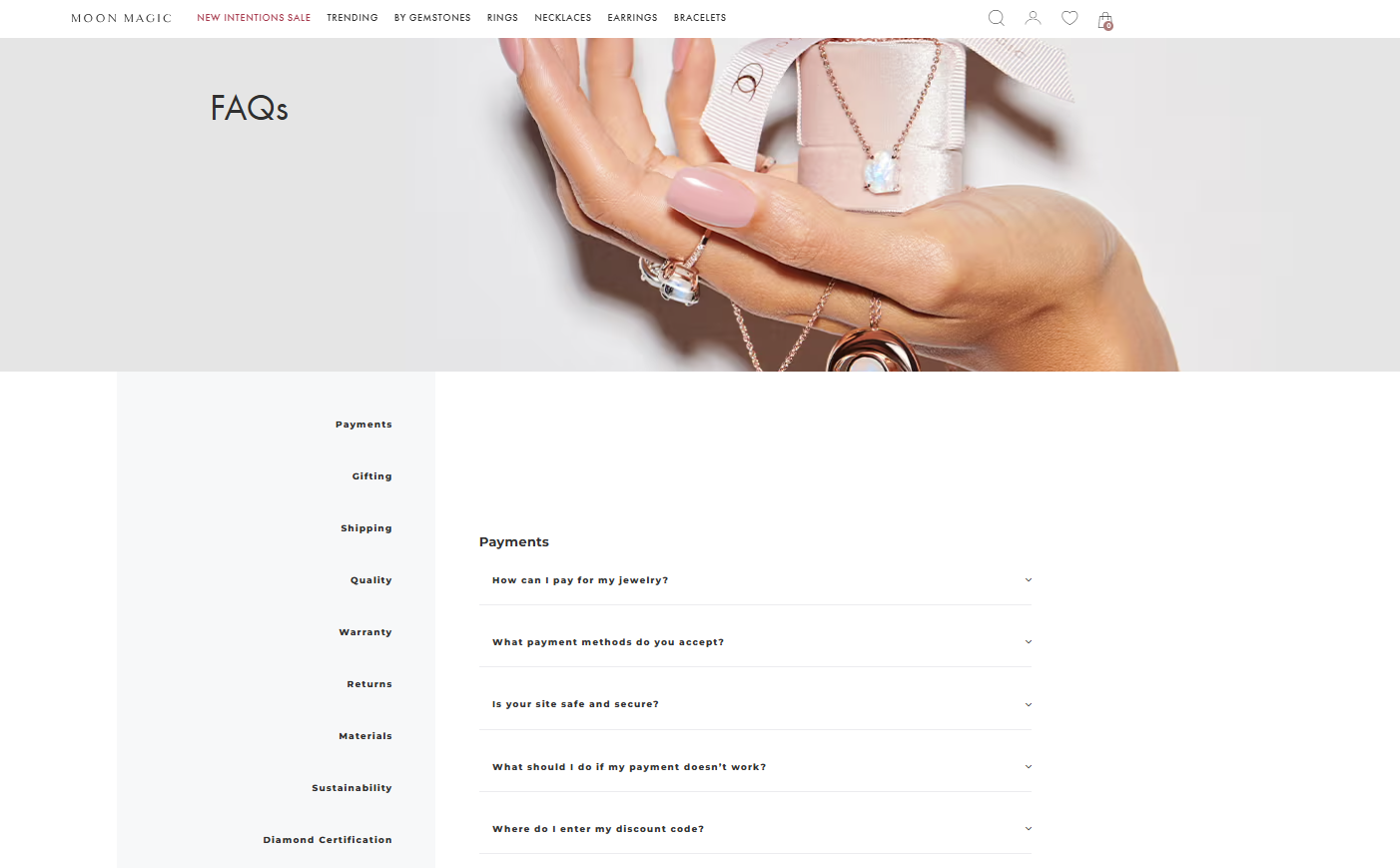
Practical recommendation: build a dedicated shipping FAQ page that answers the most common customer questions before they reach checkout.
Example of a centralized shipping FAQ that clearly explains origin, delivery timelines, tracking, and costs in one place
The goal is not to offer free shipping on every order. The goal is to offer it where your margin supports it and charge transparently where it does not.
Map your shipping costs first
Many brands skip this step and regret it later. Before you change anything on your site, it helps to understand what you actually pay.
Your shipping costs break into four buckets: fulfillment (pick, pack, storage), transportation (parcel rates, fuel surcharges), duties and taxes (import duties, VAT, and customs fees), and customer incentives (the portion you subsidize).
The brands that navigate this well pull their last six months of orders and calculate for each region:
Average order value
Gross margin after product cost
Average shipping and duty cost per order
Contribution margin after all costs
Here's what that calculation looks like in practice for a US-based brand shipping a $75 average order from a domestic 3PL:
::table
Cost component;Per-order cost
Product cost (35% of AOV);$26.25
Pick, pack, and storage allocation;$4.50
Domestic parcel rate (zone 5 average);$9.20
Customer subsidy (free shipping);$9.20
Contribution margin;$25.85
:table
Now run the same order shipping cross-border to the EU under the new rules:
::table
Cost component;Per-order cost
Product cost;$26.25
Cross-border parcel;$11.50
EU duty (12% textile rate, per the EU Common Customs Tariff);$9.00
VAT processing and handling fee;$7.00
Customer subsidy;$11.50
Contribution margin;$9.75
:table
Same order, same product. The EU version has 62% less margin to subsidize free shipping. This is the calculation most brands skip, and it's why a threshold that works in the US fails in Europe.
This shows you where you have room to subsidize and where you are already underwater. Industry surveys put the average DTC free shipping threshold between $50 and $75. The exact number matters less than whether it reflects your contribution margin after product cost, fulfillment, and duties.
For EU orders under the new rules, industry estimates put the per-parcel customs processing fee at €5–€10, though the final figure depends on the specific wording of the implementing regulation. Either way, every parcel will pay duty plus VAT plus a processing fee. See Portless's full breakdown of the EU de minimis changes. For US orders from China, assume tariffs apply unless you have confirmed exemption.
Three shipping models that work in 2026
Most brands find success with one primary model and a secondary option for edge cases.
Threshold-based free shipping remains the most practical option for many brands. The approach is to set free shipping at a point where gross margin stays positive after product cost, shipping, and duties.
Industry surveys put the average DTC free shipping threshold between $50 and $75. The exact number matters less than whether it reflects your contribution margin after product cost, fulfillment, and duties.
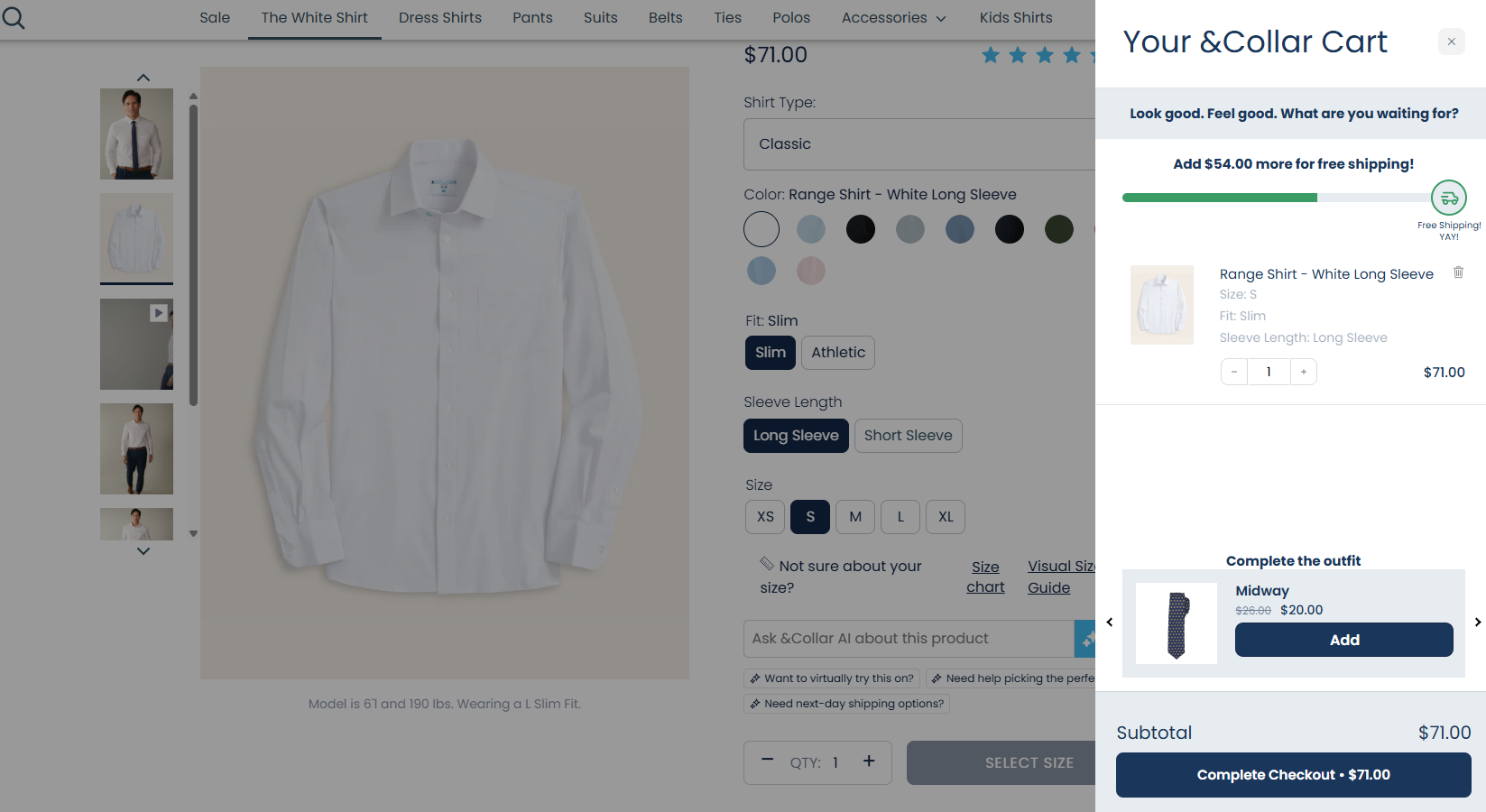
Example of a clear free shipping threshold with a cart-level progress indicator that shows shoppers exactly how close they are to qualifying
Brands that struggle often set thresholds based on round numbers or competitor behavior instead of their own data. Your historical orders will show where your real break-even point sits.
Regional pricing gives you flexibility to offer free shipping above $75 in the US while charging $8–12 for EU or UK orders, or setting a higher threshold like $150 for those markets. This keeps your promise generous where you compete hardest and realistic where new duty costs hit.
Transparent paid shipping works well if you compete on speed and reliability instead. Show delivery windows that are accurate, not aspirational. Charge $6–10 for standard shipping and make express a paid upgrade. The key is removing surprise by showing full landed cost including duties before checkout.
Here's how the three models compare on the dimensions that actually matter:
::table
Model;Best for;Margin protection;Conversion impact;Cross-border fit
Threshold-based free shipping;Brands with AOV near or above the threshold;Strong, if threshold reflects real unit economics;High: visible progress bars lift AOV;Weak unless thresholds are set per region
Regional pricing;Brands selling in three or more markets;Strong: each market priced to its own cost base;Moderate: requires clear messaging to avoid confusion;Strong
Transparent paid shipping;Brands competing on speed, reliability, or premium positioning;Strongest: every order priced to actual cost;Highest among shoppers who value clarity;Strongest, because landed cost is shown upfront
:table
The decision usually comes down to two questions:
Does your AOV consistently sit above the threshold where margin holds? If yes, threshold-based works. If your AOV is $40 and your break-even is $75, you're forcing customers to add items they don't want, and abandonment goes up, not down.
Are you selling into markets with different duty regimes? If yes, regional pricing or transparent paid shipping protects you. A single threshold across the US, EU, UK, and Canada will overpay subsidy in one market and underpay in another.
Most brands end up running a hybrid free shipping strategy: threshold-based free shipping for their core domestic market, transparent paid shipping for international, and regional thresholds for the markets in between.
How cross-border shipping costs are changing
Cross-border regulatory shifts directly affect your free shipping strategy, regardless of where in Asia you manufacture. The EU has accelerated the removal of the €150 duty exemption. Per the European Council's November 2025 agreement, the interim implementation begins in early 2026, with full rollout via the EU Customs Data Hub by mid-2028. Every parcel from a non-EU country now incurs duty plus VAT, regardless of value. This applies whether you ship from China, Vietnam, Thailand, or anywhere else outside the EU. Industry estimates put the per-parcel customs processing fee at €5–€10, though the final figure depends on the specific wording of the implementing regulation. Either way, every parcel will pay duty plus VAT plus a processing fee. See Portless's full breakdown of the EU de minimis exemption changes. For a $50 order, this adds roughly $6–8 in new costs.
The US removed de minimis worldwide by late August 2025, and the change is now permanent. The February 2026 Supreme Court ruling left the suspension in place, and US Customs has since codified it into federal regulations. Brands that haven't already adapted should review the cross-border duty strategies for DTC brands to understand the options.
These changes hit your ability to subsidize shipping in three ways:
Your landed cost per unit increases.
Small orders become unprofitable faster.
The gap between what you pay and what customers expect you to absorb widens.
When you rebuild your shipping promise, factor these costs into your threshold calculation. If duty plus a processing fee makes EU orders under $100 unprofitable, either raise your EU threshold or add transparent shipping fees for that market. Brands that build a tariff-resilient Ecommerce supply chain have more room to absorb these shifts without passing them straight to the customer.
A five-step framework for a free shipping strategy that holds up
Use this five-step process to rebuild your shipping promise. Pull the data, run the math, set the rules, then test.
Step 1: Pull six months of order data, segmented by region. Export every order from your last six months. Tag each order by destination market (US, EU, UK, Canada, rest of world). For each segment, calculate AOV, gross margin after product cost, average shipping spend, and duty exposure.
Step 2: Find your contribution margin inflection point per region. Run contribution margin at $50, $75, $100, $150, and $200 order values for each market. The inflection point is the order value where margin turns positive after all variable costs, including a duty buffer for cross-border orders.
Step 3: Set thresholds 10–20% above the inflection point. If your US break-even is $75, set the threshold at $85 or $90. The buffer absorbs carrier rate increases, fuel surcharges, and unexpected duty changes. Do this independently for each region. Do not apply a single threshold globally.
Step 4: Audit your fulfillment model against the new thresholds. If the only way to make the math work is to compress costs, the bottleneck is usually fulfillment. Pre-stocking inventory in destination warehouses ties up capital months before sales arrive. Direct fulfillment from your country of manufacture lets you pay duties and freight as orders ship, which frees room to either lower the threshold or absorb new duty costs without raising prices. Run the numbers against your own SKUs with the direct fulfillment ROI calculator.
Step 5: Show costs in three places, every time. Free shipping thresholds in the header. Cart-level progress bars showing distance to threshold. Full landed cost (including duties) shown before the customer hits the payment step. Baymard's 2025 cart abandonment research confirms 39% of US shoppers abandon when extra costs appear at checkout. Clarity is the single biggest conversion lever.
Why your fulfillment model determines your options
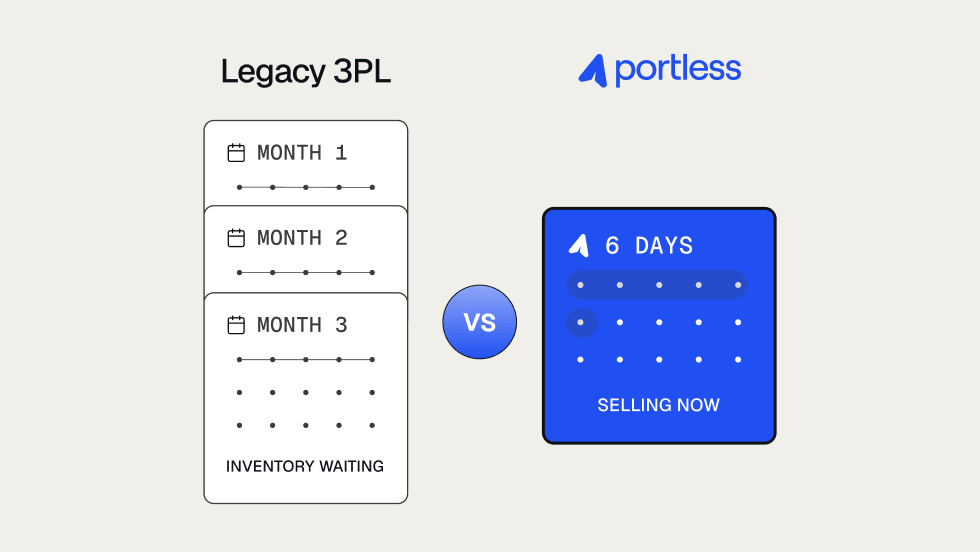
You can negotiate carrier rates forever. You will still feel squeezed if your fulfillment model forces you to pay duties and freight months before products sell.
The legacy model locks you in. You book sea freight from China to US or EU warehouses. You pay freight and duties on full containers before units sell. You offer free or discounted domestic shipping to compete. If tariffs rise or demand shifts after you ship, that container becomes a sunk cost eating your margin. This is the core problem behind Ecommerce fulfillment risk and reversibility. Once inventory lands, your options narrow.
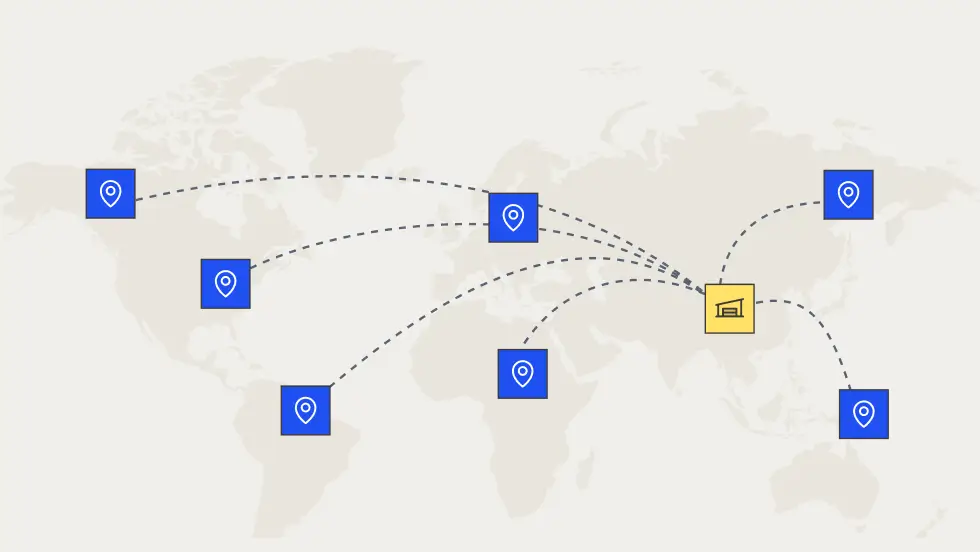
Direct fulfillment changes the timing. This is full fulfillment (your inventory, your branding, your packaging, your customer experience) and not dropshipping. The difference is geography, not control. Orders ship by air directly to customers in five to eight days. You pay duties and freight as orders leave, not three months early on a forecast.
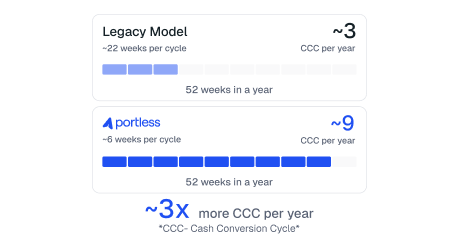
This matters for your free shipping strategy because you tie costs to real demand instead of predictions. When inventory is not trapped in the wrong warehouse eating cash, you have more room to be generous with thresholds or absorb new duty costs. For a deeper look at the cost dynamics behind this shift, see the 2026 inventory model. It lays out why warehouse location is now the single biggest variable in shipping promise math.
If you are weighing whether to keep stocking destination warehouses or switch to direct fulfillment from your country of manufacture, the deciding factor is usually how much working capital you want trapped in inventory that may not match next quarter's demand.
Rebuild your shipping promise around real unit economics
Free shipping isn't dead. The blanket version is. The brands that hold margin in 2026 will set thresholds against their own data, price each region to its actual cost base, and show landed cost before checkout instead of after.
If your current fulfillment model is forcing thresholds that don't match your unit economics, talk to our team and see how direct fulfillment changes the math.
FAQ
How do EU customs changes affect my costs?
The EU has accelerated the removal of the €150 duty exemption. Per the European Council's November 2025 agreement, the interim implementation begins in early 2026, with full rollout via the EU Customs Data Hub by mid-2028. Every parcel from a non-EU country now incurs duty plus VAT, regardless of value.
Should I charge for shipping on international orders?
It depends on your margin and how you compete. Many brands now use transparent paid shipping for international orders and focus free shipping on their core domestic market. Showing full landed cost including duties early in checkout prevents surprise abandonment. Some brands find they convert better with honest $10–15 shipping costs than with "free shipping" that hides those costs in product price.
Does shipping speed matter more than cost?
Clarity and reliability often matter more than absolute speed. Many customers prefer transparent delivery windows (7–10 days, shown upfront) and no surprise fees over express shipping that costs extra or arrives with unexpected duties. The brands that do well focus on setting accurate expectations rather than promising the fastest delivery.
How do you calculate a free shipping threshold?
Pull six months of order data and calculate gross margin after product cost, shipping, and duties at the $50, $75, $100, $150, and $200 order levels. Set your free shipping threshold $10–$20 above the point where contribution margin turns positive. The average DTC threshold sits around $64, but your number should reflect your unit economics, not a benchmark.
What is a good free shipping threshold for DTC brands?
Most US DTC brands set free shipping between $75 and $100. EU brands typically set it higher, $100 to $150, to absorb duties and VAT. The right number is the lowest order value where you stay profitable after fulfillment, duties, and a buffer for carrier rate increases.
How do you offer free shipping without losing money?
Offer free shipping above a threshold that protects your contribution margin, charge transparently below it, and show the full landed cost (including duties for international orders) before checkout. Brands lose money on free shipping when they set thresholds based on competitor behavior instead of their own unit economics.
Is free shipping worth it for Ecommerce brands?
Free shipping increases conversion when paired with a margin-safe threshold. It destroys margin when offered blanket on every order, especially cross-border where duties and VAT compound. The win is conditional free shipping with a visible threshold, not unconditional.
Frequently asked questions
Heading
Lorem ipsum dolor sit amet, consectetur adipiscing elit. Suspendisse varius enim in eros elementum tristique. Duis cursus, mi quis viverra ornare, eros dolor interdum nulla, ut commodo diam libero vitae erat. Aenean faucibus nibh et justo cursus id rutrum lorem imperdiet. Nunc ut sem vitae risus tristique posuere.
Get operator-level supply chain insights
Thank you! Your submission has been received!
Oops! Something went wrong while submitting the form.







.jpg)
%20(1).jpg)
%20(1)%20(1).avif)