"We generated $70K in package protection revenue in a single quarter by adding a simple $4 protection option at checkout — plus an additional $12K from cashbacks. Customers get peace of mind, and we're making a profit on every protected order with zero effort."
"We generated $70K in package protection revenue in a single quarter by adding a simple $4 protection option at checkout — plus an additional $12K from cashbacks. Customers get peace of mind, and we're making a profit on every protected order with zero effort."
It is 9:47am on a Tuesday in Shenzhen, and a pallet of yoga mats has just arrived from a factory two hours away. By 6pm, some of these mats will be packed, labeled, and loaded onto trucks headed to air freight. Within the week, they will land in Seattle, Toronto, and Austin.
Most DTC brands never see inside their fulfillment operations. Products disappear into a 3PL somewhere and reappear as tracking numbers weeks later.
Direct fulfillment makes the invisible, visible. When your fulfillment center sits close in proximity to your factory instead of two months away by ocean freight, you gain operational advantages that aren't possible inside legacy 3PL networks.
Here is what happens inside the Portless Shenzhen facility on a day-to-day basis.
Receiving: catching defects in hours, not weeks
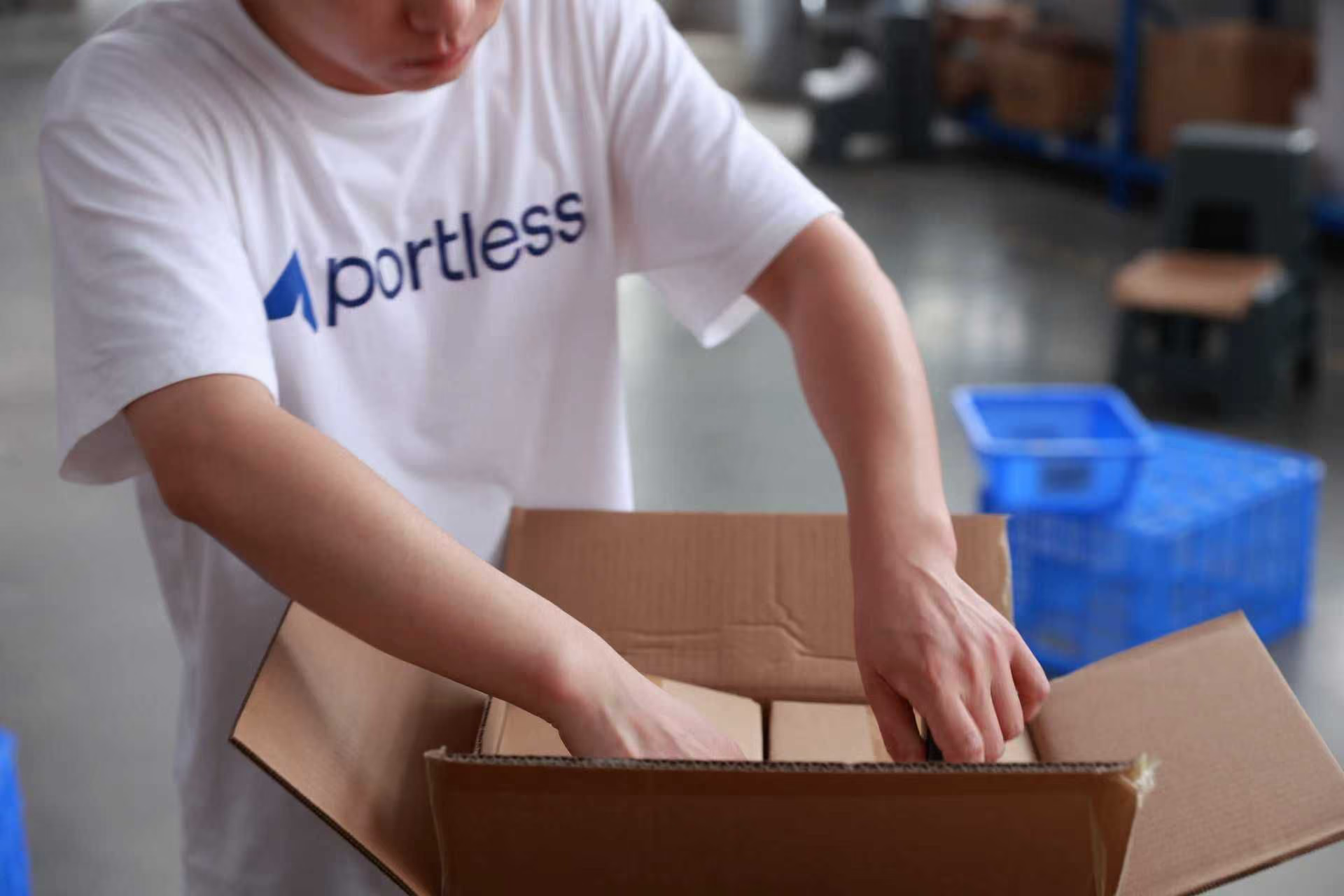
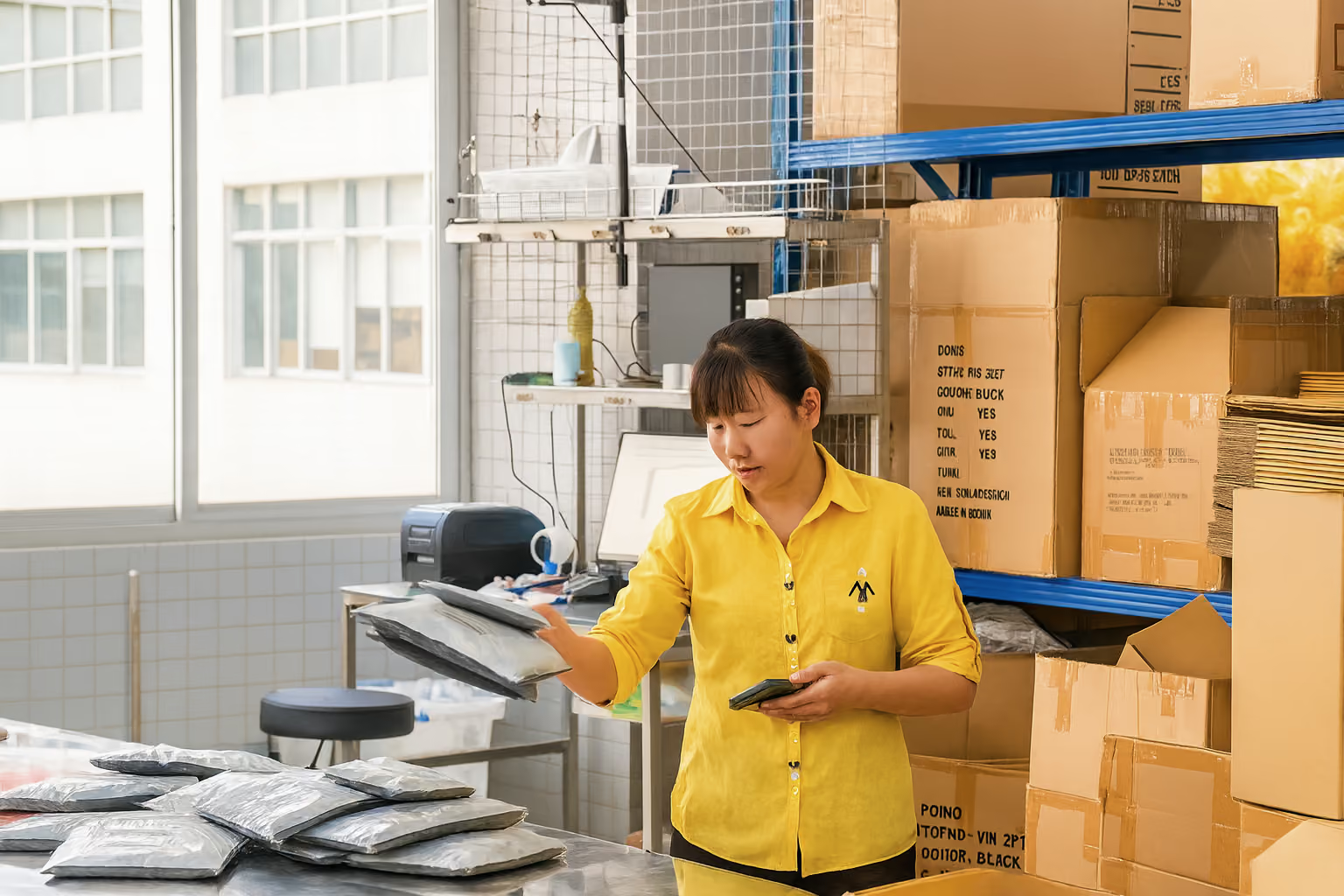
Quality control checks each unit during receiving to verify condition before inventory enters the system.
A pallet of product from one of the DTC brands we fulfill for arrives at the Portless Shenzhen facility. The receiving team unloads it, verifies items against the purchase order, and inspects every single unit. Products that pass receive barcodes. Anything defective enters a hold area.
This proximity matters. When a brand ships units with a fault, our team catches the defect at receiving. The batch goes back to the factory the same afternoon. Corrected units typically return the next day.
As our Solutions Engineer put it:
"Catching defects early is everything. If we find an issue at receiving in the morning, the factory can fix it before the day ends. That is impossible when inventory arrives six weeks later in a different country."
In the legacy import model, the same defect gets found six weeks later in a domestic 3PL — a pattern we've broken down in detail in how the legacy 3PL model breaks down at scale. Shipping it back is too expensive. Brands often scrap the inventory, liquidate it, or send it to customers and deal with returns.
What this means for your brand:
Defects get caught within hours instead of weeks
Quality issues stay inexpensive to fix
No write-offs or discounting entire batches
Your customers never see the problem
Shelf storage: SKU-level inventory accuracy in real time
After inspection, forklifts move pallets into the shelf storage area. The Portless warehouse management system (WMS) organizes inventory by SKU and tracks every movement through barcode scanning.
Every time a product moves, staff scan it. Every scan updates the system in real time. No manual entry means no transcription errors, no mistyped SKUs, and no quantity mistakes. When you log into your Portless dashboard, inventory counts reflect reality, not estimates.
The operational impact:
Your dashboard shows real, precise inventory levels
Stockouts and overselling become preventable
Inventory decisions shift from reactive to proactively data-driven
Picking area: fast mover zone for high-velocity SKUs
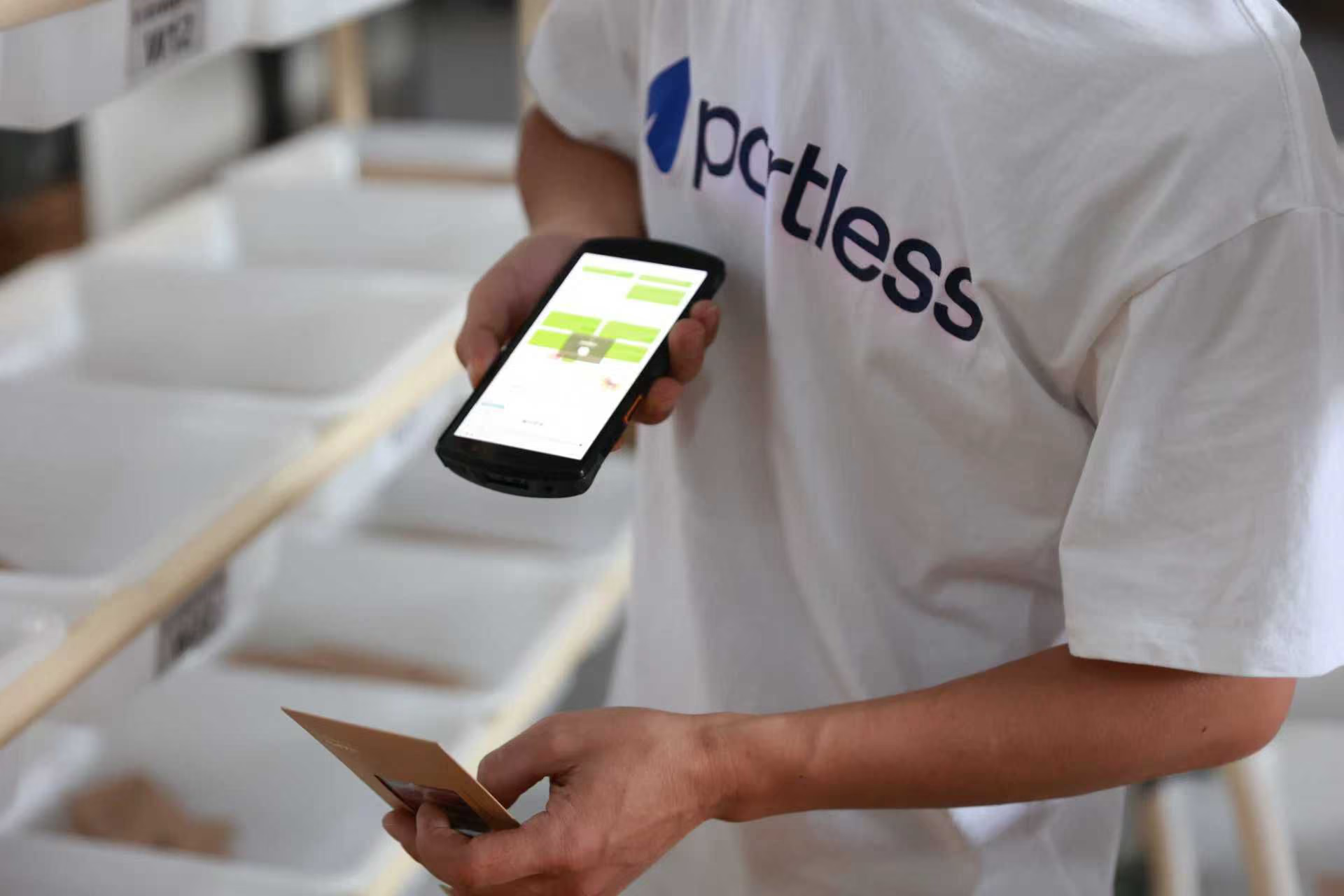
Pickers scan each item to verify accuracy and update real-time inventory.
High-velocity SKUs move from bulk storage into the picking area. The goal is to reduce walking distance and increase pick and pack throughput. A picker grabbing an item 10 feet away instead of 50 feet away seems small. Across 500 orders, that's four miles of walking eliminated per shift.
When stock runs low, the WMS triggers replenishment. Pickers scan each item into bins, with each bin representing a single customer order.
Why operators care:
Faster order processing during spikes and launches
Packers prepare each order according to brand-specific packaging requirements.
Bins arrive at packing stations. Packers scan items again to confirm accuracy. They follow each brand's specific packaging requirements:
Standard packaging that is lightweight, durable, and weather-resistant
Custom packaging that includes branded boxes, eco mailers, tissue, inserts, or special folding
Cameras monitor every packing station. If a customer reports a wrong item or damage, the team can pull the exact clip. Weight checks add a final safeguard. If a package weighs less than expected, the team flags it before it leaves the facility.
The real advantage:
Your unboxing experience stays intact
Custom packing creates a higher-quality end-customer experience
Accuracy improves and customer support volume falls
The team resolves issues with evidence
Returns and reship costs drop
Logistics area: dynamic carrier routing across 20+ networks
The outbound team loads sorted packages onto the truck for handoff to last-mile carriers.
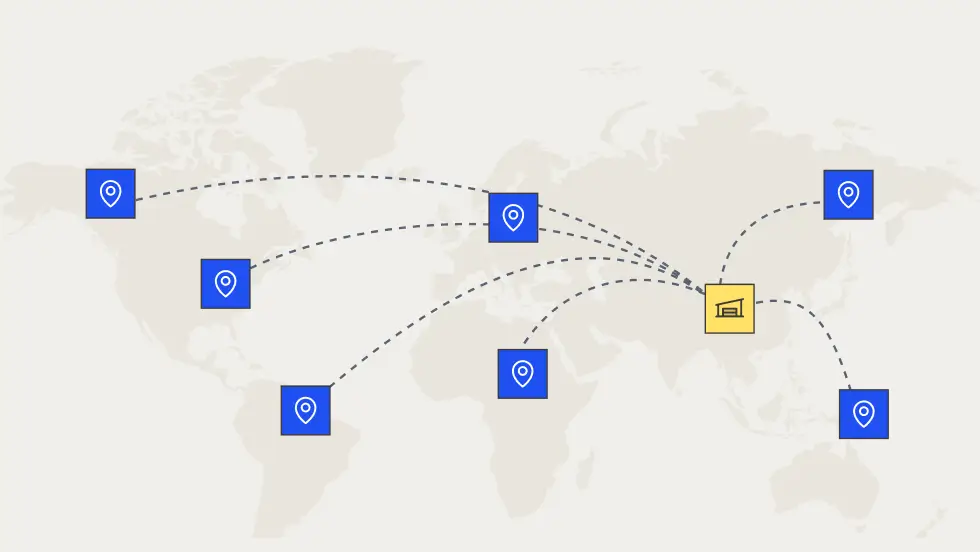
After packing, packages move down a conveyor to the logistics area where Portless sorts shipments across more than 20 last-mile carrier networks, including USPS, UPS, Canada Post, Royal Mail, Australia Post, Asendia, DHL Ecommerce, and regional specialists in each destination market.
Our internal order management system selects the carrier for each parcel based on three real-time signals:
Destination zip or postal code and known regional performance
Current carrier on-time delivery rates for that lane
Service-level requirements set by the brand (standard vs expedited)
A shipment to Vancouver, BC might route through Canada Post while a same-batch order to Miami goes via USPS, even if both got packed within minutes of each other. Most legacy 3PLs are locked into one or two contracted carriers, which means a single carrier disruption (weather, strike, holiday surge) becomes your brand's delivery problem.
How this improves your supply chain and package shipping:
Fewer delays from single-carrier limitations
Faster regional performance
Higher on-time delivery for international shipments
Loading to air freight: same-day outbound and the five to eight days delivery window
Between 5pm and 6pm local time, last-mile carriers and freight forwarders arrive at the Shenzhen facility to collect packages organized into woven logistics sacks. Orders picked and packed before the 6pm cutoff make same-day flights out of Shenzhen Bao'an (SZX) or Hong Kong International (HKG), two of the highest-volume air cargo hubs in the world. Hong Kong International alone handled 4.9 million metric tonnes of cargo in 2024, making it the world's busiest air cargo airport. This supports a typical five to eight days delivery window from Asia to North America and Europe.
Customs clearance happens in bulk at the destination country, not parcel-by-parcel. Portless operates a Delivered Duty Paid (DDP) model: duties are calculated and paid upfront so your customer never gets a surprise bill at the door. Once cleared, packages inject directly into domestic last-mile networks (USPS, Canada Post, Royal Mail, Australia Post, and regional carriers depending on destination). If you want to pressure-test the DDP math against your own SKUs, run them through a landed cost calculator before committing to a routing strategy.
Production inventory becomes available for sale within days, not months
Outbound timing becomes predictable
The cash flow math:
Day 1: Pay supplier
Day 3: Inventory lands at Shenzhen facility, QC and intake complete
Day 5: First orders ship
Day 12: Customer receives package, revenue recognized
Day 26: Cash collected (assuming standard payment processing)
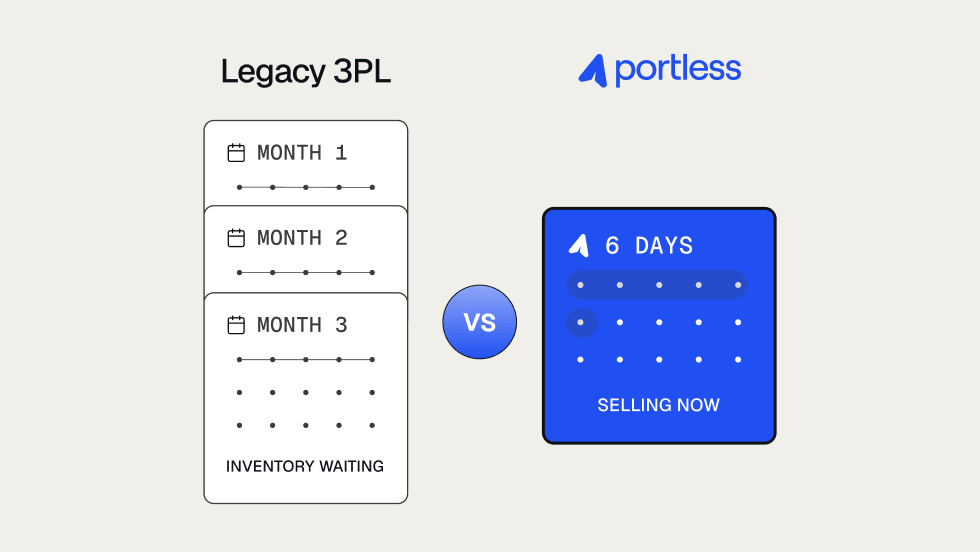
Compare that to the 60 to 90 day legacy cycle and you see why direct fulfillment is a cash flow strategy, not just a logistics strategy.
What customers see: a local delivery experience
Customers never see their order as an international shipment. Tracking activates immediately and hands off to familiar North American carriers for the last mile. For the customer, the experience looks and feels like a standard domestic delivery.
Many brands prefer not to reveal where products are sourced or manufactured. Direct fulfillment supports this preference. When packages land in-country, the team applies a domestic last-mile tracking sticker. Customers only see updates from their local carrier and not the overseas origin unless a brand chooses to disclose it. This matters for brands positioning themselves as premium or domestic-focused without explicitly stating manufacturing origin.
What this means for customer trust:
No perception of long-distance shipping
No visible reference to China or Asia in tracking
A clean, professional post-purchase experience
Fewer Where is my order? (WISMO) inquiries and higher confidence in delivery
What direct fulfillment from China changes on your P&L
Direct fulfillment from China changes three numbers on your P&L: cash conversion cycle, inventory carrying cost, and write-off rate from late-stage defects. Each of these gets worse the longer your goods sit in transit and storage.
Here's what the shift looks like for a brand doing 1,000 to 15,000 orders per month manufacturing in China:
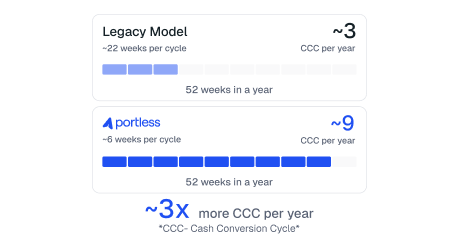
Cash conversion cycle. Legacy ocean freight plus a domestic 3PL runs 60 to 90 days from supplier payment to revenue collection. Direct fulfillment compresses this to roughly 20 to 30 days because inventory becomes sellable within five days of arriving at the Shenzhen facility, not six to eight weeks later. With $200K in working capital, that's the difference between four inventory turns per year and 12+. Model your own numbers with the Portless direct fulfillment ROI calculator.
Inventory carrying cost. Industry data puts annual carrying costs at 20 to 30% of total inventory value when goods sit in a domestic warehouse. Factory-adjacent inventory shrinks both the volume and the duration of stock you carry, since you fulfill against confirmed orders rather than forecasts. This directly addresses Ecommerce fulfillment risk for growing brands by reducing the inventory capital tied up in slow-moving stock.
Defect write-offs. A QC issue caught at domestic receiving means scrap, liquidation, or expensive reverse logistics back to the factory. Caught at our Shenzhen receiving dock, the same defect goes back to the factory the same afternoon, and the factory returns corrected units the next day.
When direct fulfillment from China is the right fit:
You manufacture in China and sell primarily to markets globally
Your products are lightweight (under 3.5 lbs): apparel, beauty, electronics, home goods, and toys
You can operate with a five to eight days delivery window to North America and Europe
You want to test new SKUs without committing to container-scale MOQs
The invoice isn't the cost
Direct fulfillment from China isn't simply cheaper or faster. It's a different operating model that compresses cash cycles, catches defects in hours, and shifts inventory from forecast-driven to order-driven. If locked working capital, late defect discovery, or container-scale MOQs are draining your margin, it's worth talking to our team about what direct fulfillment would change for your specific cost structure.
FAQ
How does direct fulfillment from China work?
Direct fulfillment from China ships individual customer orders from a factory-adjacent center (like Portless's Shenzhen facility) straight to the end customer. Orders bypass domestic 3PL warehousing. Packages clear customs in bulk, then enter local last-mile carriers in the destination country. Typical delivery: five to eight days.
How long does it take to ship from a China fulfillment center to the US?
Most orders ship from Shenzhen and arrive in the US within five to eight days. Packages picked before the 6pm cutoff make same-day flights through Shenzhen or Hong Kong airport, then hand off to USPS, UPS, or regional carriers for last-mile delivery.
Can I ship directly from a China manufacturer to my customers?
Yes. A direct fulfillment provider like Portless receives inventory from your factory, runs quality control at receiving, then picks, packs, and ships each order as it comes in. Your customers see a domestic tracking experience — not an international shipment.
Is direct fulfillment from China the same as dropshipping?
No. Dropshipping ships unbranded factory inventory with no quality control or custom packaging. Direct fulfillment runs unit-level inspection at receiving, custom-branded packing, and weight verification, then routes through more than 20 last-mile carriers. The customer experience matches a domestic 3PL.
How is direct fulfillment from China different from a legacy 3PL?
A legacy 3PL holds bulk inventory in a domestic warehouse after 45 to 60 days of ocean freight. Direct fulfillment from China holds inventory factory-adjacent and ships per-order. Cash cycles compress from 60 to 90 days down to days, and defects get caught in hours.
Frequently asked questions
Heading
Lorem ipsum dolor sit amet, consectetur adipiscing elit. Suspendisse varius enim in eros elementum tristique. Duis cursus, mi quis viverra ornare, eros dolor interdum nulla, ut commodo diam libero vitae erat. Aenean faucibus nibh et justo cursus id rutrum lorem imperdiet. Nunc ut sem vitae risus tristique posuere.
Get operator-level supply chain insights
Thank you! Your submission has been received!
Oops! Something went wrong while submitting the form.








.jpg)
.jpg)
.jpg)