Last updated: May 2026
Chinese New Year, recognized as the Spring Festival, is observed not only in China but across various Asian nations. This festive period is a time for family, celebrations, and travel. Yet, for brands dependent on imports from China, navigating the Chinese New Year supply chain disruption presents a unique set of challenges, with potential delays and disruptions throughout production, fulfillment, and last-mile delivery.
How Chinese New Year disrupts the supply chain
Production slows down, operations run on reduced hours, schedules slip, and transportation gets delayed, all of which cause significant supply chain disruptions. Let's break these down.
Factory shutdowns in China
Many manufacturing facilities, particularly in China and other East Asian countries, shut down for an extended period.
Chinese New Year falls on a different date each year, somewhere between late January and mid-February. In 2026, it falls on February 17th, with factory shutdowns typically running from early February through early March. Production halts one to two weeks before the holiday and resumes one to two weeks after, meaning you should plan for a three- to four-week production gap.
Easter typically falls between late March and mid-April, leaving a four- to six-week window between the end of CNY production gaps and your seasonal launch date. If you're producing Easter or spring inventory in Chinese factories, that timeline forces a decision: produce early and warehouse for months, or use a fulfillment model that lets you produce closer to launch.
Workforce shortages at factories and ports
As the Lunar New Year approaches, most of China's workforce takes a well-deserved break. Workers collectively pause for one to two weeks during the new year, which drops staffing levels and creates labor shortages at key ports.
Chinese New Year triggers the largest annual human migration on earth. An estimated 9 billion trips were made during the 2024 Chunyun (Spring Festival travel period) according to China's Ministry of Transport. Factory workers, port handlers, truck drivers, and customs staff all travel home, and many don't return on schedule.
The labor squeeze hits in three waves:
- Factories lose 60–80% of their workforce one to two weeks before the holiday as migrant workers travel home
- Ports and customs operate with skeleton crews during the official holiday window
- Post-holiday ramp-up takes two to four weeks as workers return staggered, and some don't return at all
At Portless, our fulfillment centers in China close for five days during the official holiday, matching local carrier schedules, and resume full capacity immediately after. We staff for the return ramp-up in advance, so the orders you receive during the shutdown ship within days of reopening, not weeks.
Shipping delays and freight rate spikes during the CNY backlog
As factories close for the holiday, a backlog of orders builds up waiting to ship when production restarts. Brace for a peak in shipping demand, which triggers delays and a temporary uptick in shipping expenses.
Plan production orders six to eight weeks early
Navigating the Chinese New Year hinges on planning. Start by understanding the holiday schedule and how it affects your supply chain. Since Chinese New Year doesn't follow a fixed date, early planning is key.
Work with your suppliers to plan production and shipping schedules. It can also help to place orders earlier than your usual timelines to guarantee production and shipment completion before the holiday period.
Most brands don't realize they're already late. By the time you read about Chinese New Year in November, factories are already prioritizing orders placed in October. This is the same logic that applies to Q4 inventory prep.
Here's the working timeline you should follow:
- 10–12 weeks before CNY: Confirm production capacity with factories. Get firm dates for the last QC window.
- 8 weeks before CNY: Place final purchase orders. Factories pad lead times in November and December.
- 6 weeks before CNY: Lock shipping bookings. Air freight rates spike 20–40% in the four weeks before the holiday, according to Freightos market data.
- 4 weeks before CNY: Confirm inventory positioning for the eight-week dark window where no new production is available.
- 2 weeks after CNY: Re-confirm restart dates. Many factories quote optimistic restart dates and miss them.
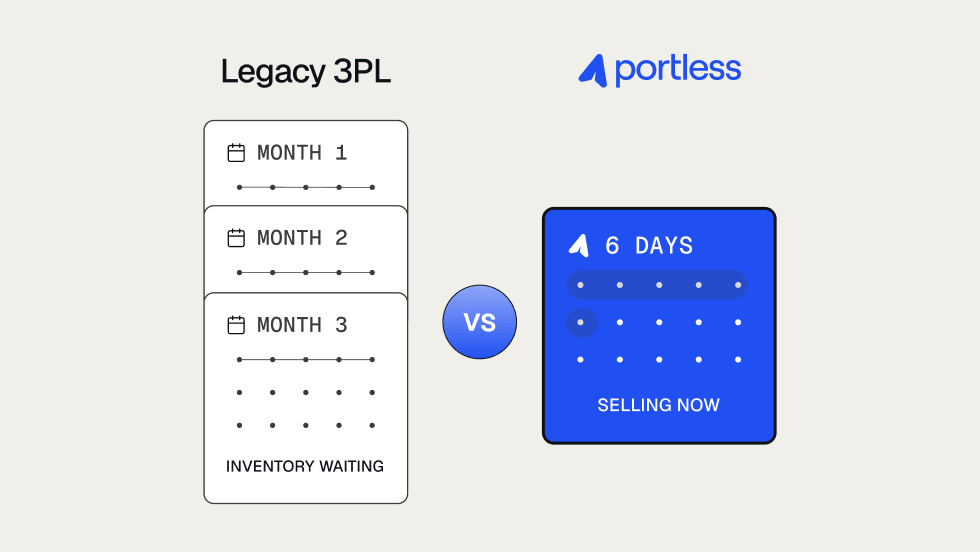
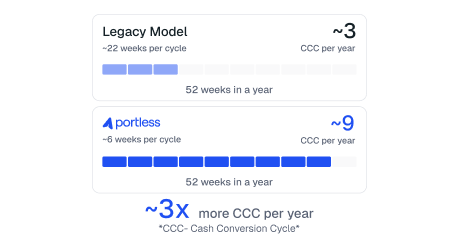
If you're running on a legacy 3PL model, you're betting on a six-month inventory forecast made before the shutdown. If you're running on direct fulfillment, your cash isn't locked into that bet. You order smaller batches more often, and the only inventory you "lose" to CNY is the production window itself.
Use historical order data to forecast CNY demand
Look at previous customer behavior and historical order patterns throughout the Lunar New Year season. This serves as a compass for your inventory planning, helping you forecast demand accurately and prepare additional stock.
Stock best-sellers and Easter or spring SKUs before factories close
Gear up for Chinese New Year by making sure your shelves carry top-performing favorites and seasonal products. Prioritize stocking up on your best-selling items to fortify your inventory and reduce strain on your suppliers post-Chinese New Year.
As factories wind down, gearing up for upcoming seasonal events like Easter and early spring becomes even more important. Easter typically falls between late March and mid-April, leaving a four- to six-week window between the end of CNY production gaps and your seasonal launch date.
Stocking up is the standard advice. It's also the most expensive way to handle Chinese New Year.
When you order three to four months of inventory ahead of the shutdown, you tie up working capital for the entire holding period. For a brand doing $500K/month in revenue with a 30% COGS, that's $450K–$600K in cash sitting in a warehouse instead of funding ad spend, product development, or the next production run. The same dynamic shows up every Q4. Here's how brands protect cash flow during peak season.
The financial cost of "stock up early":
- Working capital locked in inventory for three to four months
- Domestic warehousing fees for the holding period
- Upfront duties paid on inventory that may not sell
- Markdown risk if demand forecasts are wrong
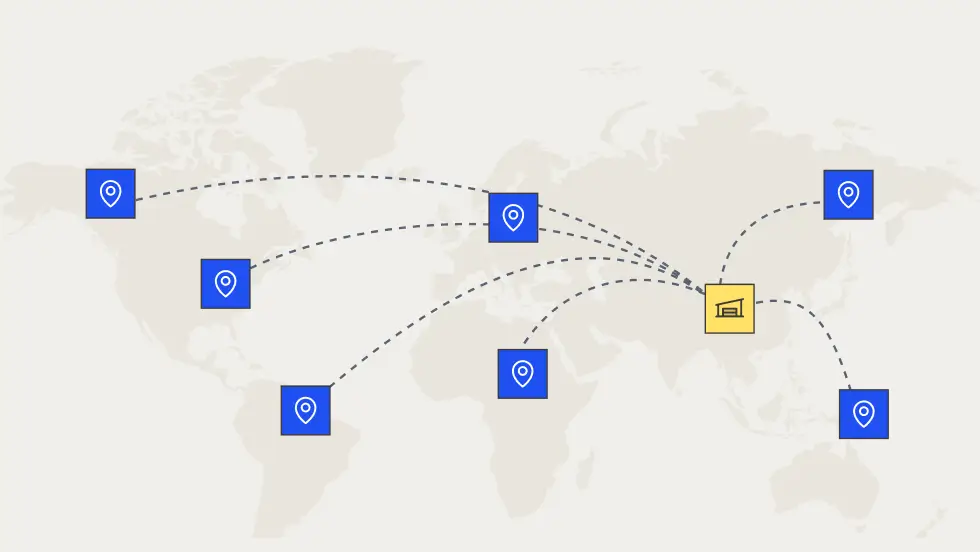
The alternative is to compress your inventory cycle so you're never carrying more than four to six weeks of stock. Direct fulfillment from the point of manufacture makes this possible: smaller, more frequent production runs ship to customers within days of being made. Your CNY exposure shrinks to the actual production gap, not a four-month inventory bet placed in October.
For seasonal SKUs (Easter, spring launches), the math is even sharper. If your spring product launches in March, a legacy supply chain forces you to produce in November, ship in December, warehouse through January and February, and hope demand matches your bet. Direct fulfillment lets you produce in February and start shipping in late February, closer to actual demand signal.
Plan your Chinese New Year supply chain strategy with Portless
Chinese New Year shutdowns don't have to mean four months of inventory bets and multi-week shipping delays. If you're rethinking how to keep your DTC brand shipping through the production gap, or looking to expand to markets where de minimis still applies, it's worth talking to our team about how direct fulfillment changes the calendar.
FAQ
How long do Chinese factories close for Chinese New Year?
Most Chinese factories close for two to four weeks around Chinese New Year. Production typically pauses one to two weeks before the holiday and resumes one to two weeks after. Workers travel home, and ramp-up is gradual even after factories reopen.
When should you place orders before Chinese New Year?
Place production orders six to eight weeks before Chinese New Year at the latest. This gives factories time to complete the run, conduct QC, and ship before workers leave. Late orders get bumped to the post-holiday backlog.
How does Chinese New Year affect shipping costs?
Shipping costs spike before and after Chinese New Year. Carriers face overflow demand as brands rush to move inventory ahead of the shutdown, and again as backlogged orders ship out post-holiday. Air freight is typically hit hardest.
How does direct fulfillment reduce Chinese New Year risk?
Direct fulfillment ships orders to customers as they're produced, instead of holding bulk inventory in domestic warehouses. You order smaller, more frequent batches and aren't locked into a six-month inventory bet placed before factories close.







%20(1).avif)
.jpg)
.jpg)