Last updated: May 2026
The legacy model of moving goods through container ships, port clearance, and domestic 3PLs is breaking down for Ecommerce brands that need speed and capital efficiency.
In the 1980s, China's manufacturing revolution reshaped the world economy, altering how goods were produced and consumed across the globe. Fast forward to today, and we stand on the brink of another shift: direct fulfillment from China, the operational engine behind modern DTC shipping.
What is DTC shipping?
DTC shipping (direct-to-consumer shipping) moves a customer's order from a factory or factory-adjacent fulfillment center directly to their door, without the bulk container, the domestic warehouse, or the multi-week inventory float in between.
For Ecommerce brands manufacturing in China or Vietnam, DTC shipping replaces three legacy steps (ocean freight, port clearance, and domestic 3PL intake) with one air freight handoff. The customer sees a domestic-style tracking experience. Brands see faster cash conversion, lower inventory risk, and fewer touchpoints to manage.
Our world is preparing to take a giant leap forward in connectivity. The strides in technology and logistics have paved the way for a shift that could rival the manufacturing upheaval of the 1980s. The signs are clear: DTC shipping is on the rise, and it's positioned to redefine how products reach consumers around the world.
Why DTC brands are moving off container freight and domestic warehouses
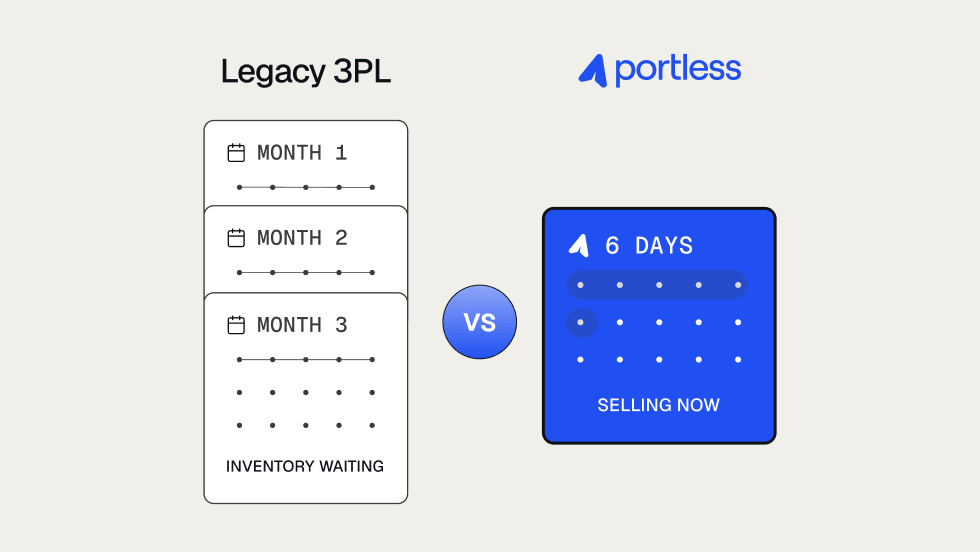
The legacy DTC shipping supply chain forces you to bet on demand 60 to 90 days before you sell a single unit. You manufacture a bulk order, pay tariffs and freight upfront, sit in a domestic 3PL, and hope your forecast holds.
For a brand doing $1M to $15M in annual revenue, that bet is brutal. Capital is locked in pallets. Slow-moving SKUs sit on shelves while bestsellers go out of stock. Storage fees compound. Markdowns and write-offs eat margin.
Direct fulfillment from China breaks the cycle:
- Inventory becomes available for sale within 48 hours of production, not 60 days
- You only ship what's sold, so you stop subsidizing demand forecasts that miss
- Duties are paid on items that actually sell under a Delivered Duty Paid (DDP) model, not on entire containers entering the country
No longer locked into the legacy model of bulk container shipping and forecast-based manufacturing, brands using direct fulfillment from China and Vietnam are cutting weeks of inventory float and passing the savings into margin and customer experience. See how direct fulfillment saves Ecommerce brands time and money for the underlying math.
The de minimis exemption that previously allowed duty-free imports under $800 ended on August 29, 2025, which removed one of the early tailwinds for direct-from-China fulfillment. The cash flow advantage didn't disappear with it; it shifted. Brands now pay duties as orders ship, not on bulk inventory sitting in a warehouse for months.
Other structural shifts are stacking on top: upcoming shipping fees on Chinese-built ships are reshaping ocean economics, and sustainable logistics for DTC brands is moving from nice-to-have to a procurement requirement.
Run the math on your own SKUs with the Portless ROI calculator to see what direct fulfillment does to your cash conversion cycle.
How fast does DTC shipping from China actually deliver?
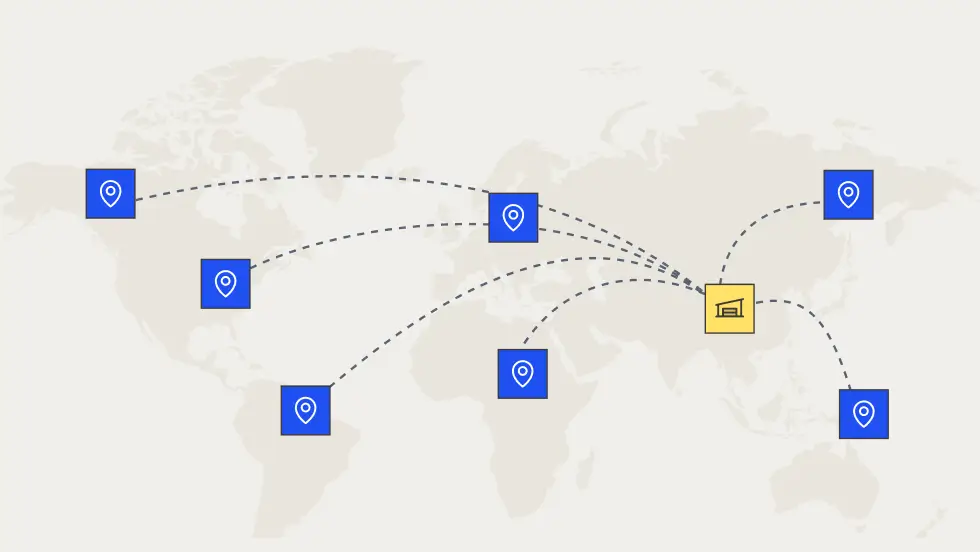
Direct fulfillment from China delivers to most North American addresses in five to eight days. That's the operational window from the moment an order is placed to the customer's doorstep: air freight from Shenzhen or Hong Kong, then domestic last-mile through familiar carriers like USPS, UPS, and Canada Post.
Here's the breakdown from a Portless facility:
- Day 0: order placed, picked, packed, and scanned to outbound by 6pm
- Day 1: cleared through Shenzhen or Hong Kong airport
- Days 2 to 4: air freight to a US or Canadian gateway
- Days 4 to 8: domestic last-mile delivery
The legacy alternative — manufacture, bulk container ship, port clearance, domestic 3PL intake, then last-mile — takes 30 to 60 days from production to first sale. That's six to eight weeks of working capital tied up in inventory you haven't sold yet. See how direct fulfillment saves Ecommerce brands time and money for the full breakdown, or run your own numbers in the Portless ROI calculator.
Speed isn't the only metric. The bigger story is what shrinks alongside it: inventory float, cash conversion cycles, and the cost of being wrong about demand.
How DTC shipping changes the competitive math for Ecommerce brands
Shein and Temu built their growth on direct fulfillment from China. They proved that a mid-size brand can hit domestic-level delivery expectations without the domestic 3PL footprint that big-box retailers depend on.
The advantage compounds in three places:
- Margin. Cutting domestic warehouse fees, inbound freight, and bulk duty prepayments shifts 8 to 15 percentage points back into gross margin for most brands we work with.
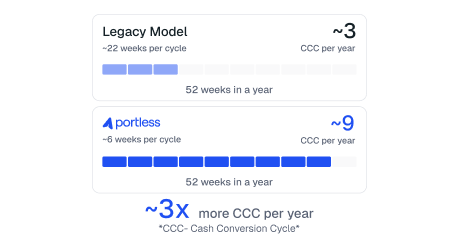
- Cash flow.Portless customers report 3x faster cash conversion cycles because inventory turns into revenue in days, not months.
- International expansion. You ship to 75+ countries from the same fulfillment node without building a domestic 3PL footprint in each market.
Direct fulfillment doesn't make you Amazon. It makes you fast and capital-efficient enough that you don't have to be.
The next move for Ecommerce brands evaluating DTC shipping
China's manufacturing revolution rewired global trade decades ago. DTC shipping is doing the same thing to fulfillment, collapsing the distance between factory and customer, and exposing how much working capital the legacy model wastes in transit and storage.
The brands moving first are already seeing the math work: faster cash conversion, lower inventory risk, and delivery windows that hold up against domestic 3PL benchmarks. The brands waiting are funding the gap with their own balance sheets.
Where DTC shipping fits for your brand
Direct fulfillment isn't a marginal optimization. It's a different operating model that rewires cash flow, inventory risk, and speed-to-market at the same time. If bulk container cycles and domestic 3PL fees are draining your margin, it's worth talking to our team about what direct fulfillment would change for your SKUs and order volume.
FAQ
How does DTC shipping work?
DTC shipping moves an order directly from a manufacturer or factory-adjacent fulfillment center to the end customer, skipping wholesalers, retailers, and domestic warehouses. For Ecommerce brands using direct fulfillment from China or Vietnam, inventory becomes available for sale within 48 hours of production and ships to the customer in five to eight days.
What's the difference between DTC shipping and dropshipping?
DTC shipping fulfills orders for a brand's own inventory, manufactured to the brand's specifications and shipped under its branding. Dropshipping resells generic, third-party inventory the seller never owns. Direct fulfillment is DTC shipping at scale — the brand controls product, packaging, and customer experience.
How long does direct fulfillment from China take?
Portless delivers in five to eight days from Shenzhen to most North American addresses via air freight and domestic last-mile carriers. Compare that to 30 to 60 days for ocean freight plus domestic 3PL processing.
Is DTC shipping from China still viable after de minimis ended?
Yes. The de minimis exemption ended in August 2025, but direct fulfillment still improves cash flow because brands pay duties only on items that actually sell, not on entire bulk containers sitting in domestic warehouses. Portless uses a Delivered Duty Paid (DDP) model with Type 11 informal entry.
What products work best for DTC shipping from China?
Lightweight products under 3.5 lbs in apparel, beauty, electronics, home goods, and toys ship most cost-effectively by air. Heavy or oversized items still favor ocean freight for the bulk leg.







%20(1)%20(1).avif)
%20(1).avif)
.jpg)