Last updated: May 2026
A defect caught in your factory costs roughly one dollar to fix. The same defect caught after it reaches the customer costs one hundred. Your quality control plan is what decides which side of that ratio you live on.
A quality control plan defines the standards your products must meet, where you check them, who is accountable, and what happens when a unit fails. Without it, quality becomes a hope. With it, quality becomes a process you can audit, improve, and prove.
Here's how to build one that actually holds up when you're manufacturing thousands of miles from your customers.
What goes into a quality control plan
A quality control plan answers four questions: what standard each SKU must meet, where in production you check it, who is accountable, and what happens when a unit fails. Skip any of these and the plan collapses into a wish list.
The industry standard for sampling is ANSI/ASQ Z1.4 (commonly referenced as AQL — Acceptable Quality Limit). Most DTC brands manufacturing in China and Vietnam use AQL 2.5 for major defects and AQL 4.0 for minor defects, meaning roughly 2.5% of a sample can show major defects before the lot is rejected. Source: American Society for Quality — ANSI/ASQ Z1.4.
A working plan typically includes:
- Product specifications with tolerances (dimensions, weight, color codes, and material grade)
- Inspection points: incoming materials, in-process production, and pre-shipment
- AQL sampling levels for each defect category
- Defect classification: critical, major, and minor
- Pass/fail thresholds for each SKU and each check
- Corrective action workflow when a lot fails
- Named accountability for each inspection point: factory QC lead, third-party inspector, and your fulfillment partner
The plan is useless if it lives in a Google Doc nobody opens. Tie it to your purchase orders so the factory acknowledges the spec before production starts, and to your receiving workflow so every inbound shipment is checked against it.
How automation reduces quality control errors in manufacturing
Automation reduces quality control errors by removing manual data entry, standardizing inspection steps, and creating an audit trail every time a unit moves. The point is not to replace inspectors. It is to make their work traceable.
Three layers matter for Ecommerce brands:
- Inspection automation. Vision systems and barcode scanning verify SKU, color, and quantity at receiving. Cameras at packing stations record every order, so if a customer reports a wrong item, you can pull the clip.
- Documentation automation. Inspection reports, defect photos, and corrective action records sync to a single system. No spreadsheets, no email threads.
- Reorder and exception automation. When a batch fails AQL, the system flags the SKU, holds outbound shipments, and notifies the supplier without anyone manually triaging it.
McKinsey research on supply chain digitization found that companies aggressively digitizing their supply chains can expect annual EBITDA growth of 3.2%, the largest increase from any business function. Source: McKinsey — Supply Chain 4.0.
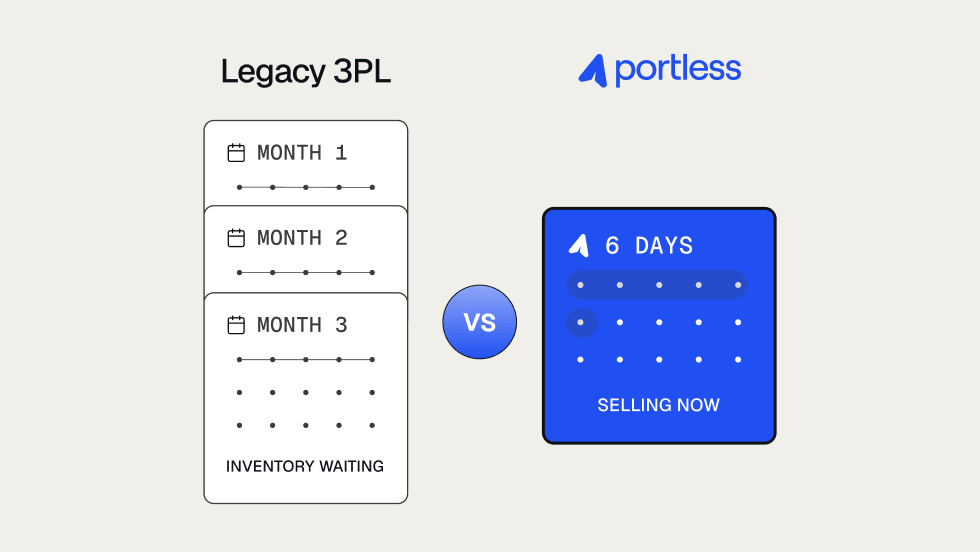
The deeper benefit is speed. When you detect a defect in real time and log it automatically, your factory can correct the issue on the next run. When a legacy 3PL halfway around the world catches it weeks later, you write off the inventory.
Computerized tracking that ties inspection data to every SKU
An ERP system is the perfect partner for your automated document management system. Integrating these systems paves the way for digital tracking of supplies, assembly, production, shipping, customer interactions, and beyond.
No more wrestling with spreadsheets. The computerized system does the heavy lifting for you. It tracks everything on the manufacturing side, which helps you:
- Assess your supplier's performance
- Spot trends in different processes
- Make improvements to scheduling and production
- Monitor quality issues
- Improve customer interactions
How to audit and improve your quality control process
Audit your quality control process quarterly against four metrics: defect rate by SKU, defect rate by factory, time from defect detection to corrective action, and cost per defect caught at each inspection point.
The cost-per-defect metric matters most. The 1-10-100 rule applies cleanly here: a defect caught at the source costs roughly one dollar to fix. The same defect caught during fulfillment costs 10. After it reaches the customer, it costs 100: refunds, return shipping, support time, and the review that lives on your product page for the next two years. Source: American Society for Quality — Cost of Quality.
A working audit answers:
- Which SKUs have defect rates above your AQL threshold?
- Which factories or production lines show the highest defect concentration?
- How long does it take to go from "defect detected" to "supplier corrected"?
- What percentage of customer complaints trace back to a defect that should have been caught in receiving?
If your detection-to-correction loop is longer than 14 days, the structure of your supply chain is the problem, not your inspectors. A third-party consultant can help, but only after you have the data to hand them. If part of your audit is reassessing where inspection happens, start with The complete 3PL evaluation checklist for growing DTC brands.
Turn quality into a process, not a hope
A quality control plan is how you turn quality from a goal to a guarantee. The brands that get this right move inspection closer to the factory, automate the data trail, and audit the loop on a fixed cadence. If you want to pressure-test what moving inspection closer to your factory is worth, talk to our team about what direct fulfillment would change for your specific cost structure.
FAQ
What is a quality control plan?
A quality control plan is a documented framework that defines how your products are inspected, tested, and verified against specific standards. It covers inspection points, acceptance criteria, responsible parties, and corrective actions when products fail.
How do you write a quality control plan?
Start by defining your quality standards and acceptance criteria for each SKU. Then document inspection points across receiving, in-process production, and pre-shipment. Assign responsibility for each check, set defect thresholds, and define the corrective action workflow when a batch fails.
What should a quality control plan include?
A quality control plan should include product specifications, inspection procedures, sampling methods (AQL standards), acceptance criteria, testing equipment, responsibilities, defect classification, and corrective action protocols. For Ecommerce brands, it should also include packaging and labeling checks before shipment.
How do you do quality control on products manufactured overseas?
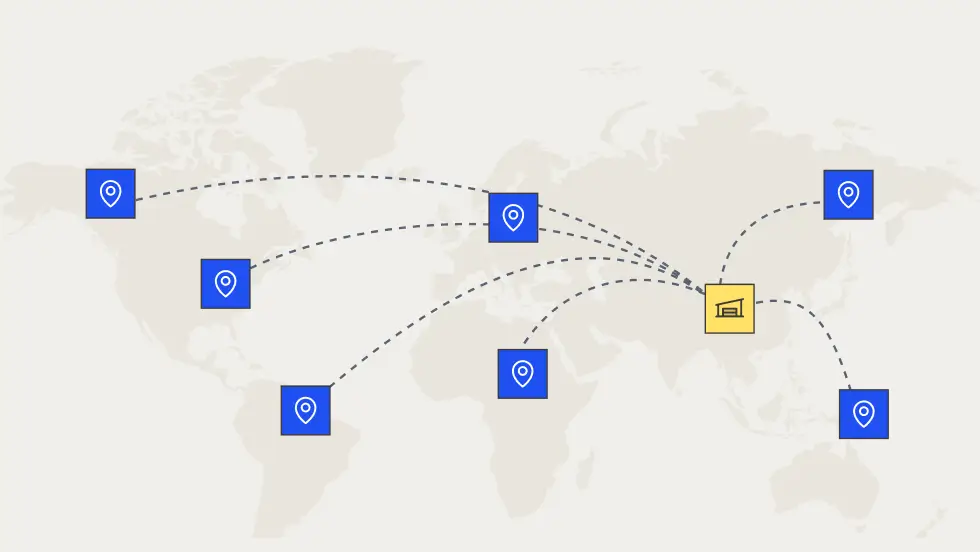
Remote quality control on overseas manufacturing relies on detailed product specifications, third-party inspection services, photo and video verification, and AQL-based random sampling. Factory-adjacent fulfillment centers let you re-inspect every unit before shipping to the customer, catching defects the factory missed.
What is the difference between quality control and quality assurance?
Quality assurance is the process you build to prevent defects (training, supplier vetting, and documented procedures). Quality control is the inspection step that catches defects that slip through. You need both.








.jpg)
.jpg)
%20(1).jpg)