“We generated $70K in package protection revenue in a single quarter by adding a simple $4 protection option at checkout — plus an additional $12K from cashbacks. Customers get peace of mind, and we're making a profit on every protected order with zero effort."
“We generated $70K in package protection revenue in a single quarter by adding a simple $4 protection option at checkout — plus an additional $12K from cashbacks. Customers get peace of mind, and we're making a profit on every protected order with zero effort."
You’ve probably heard of Nik Sharma — the guy AdWeek once called "the DTC guy." The article ranked, the name stuck, and as Nik puts it, "everybody else started to call me the DTC guy." Now if you Google it, it's just him.
Portless CEO Izzy Rosenzweig sat down with him on The Modern Supply Chain to get into what's actually driving growth right now, where brands are quietly bleeding cash, and what DTC strategy looks like heading into 2026. Here's what stood out.
Where are brands actually losing money in 2026?
Nik broke down the three places brands consistently lose cash without realizing it. Most founders obsess over ad spend and ignore the other two entirely.
Ads: the cost you can’t negotiate away
This one's "the one everybody knows," as Nik put it. And the thing is, you can't really defer or negotiate your way out of it. Meta’s even moving from credit card billing to ACH, so whatever float you've been using is going away.
Costs aren't letting up either. According to WordStream's 2025 benchmarks, cost per click increased for 87% of industries on Google Ads, with an overall average increase of 12.88% year over year. On Meta, cost per lead for Facebook Lead Ads rose 20.94% to $27.66 on average.
The floor keeps rising. But at least with ads you're spending and making at the same time. The next two buckets are less forgiving.
Inventory: why dead stock is your biggest cash drain
Capital sitting in a warehouse isn't earning anything. And if it's financed with a line of credit at 10, 12, or 18%, it's actively costing you. Sure, you can sometimes negotiate better payment terms or get away with a credit card buffer. But the reality is, most brands are carrying way more than they need to. The dollars are just sitting there doing nothing, and the cost of that tends to be invisible. Until it isn't.
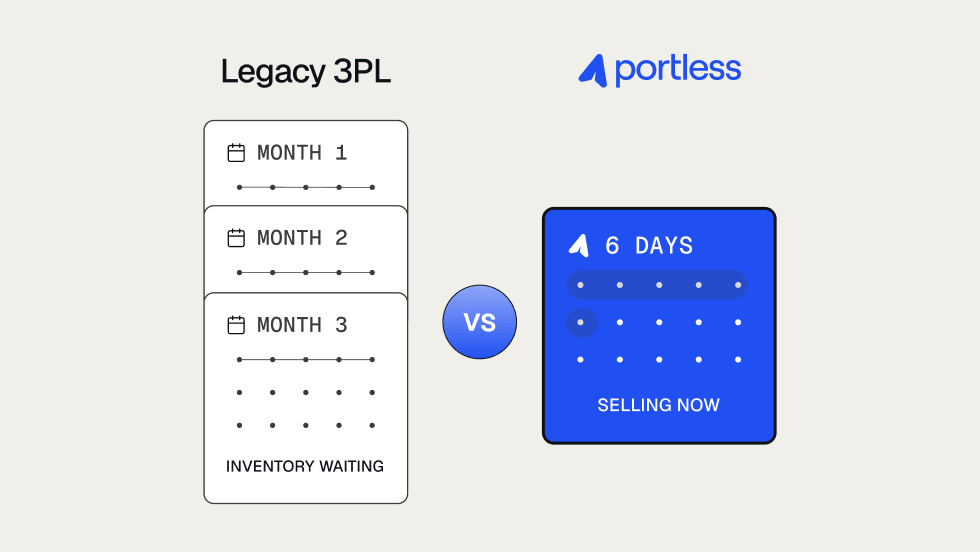
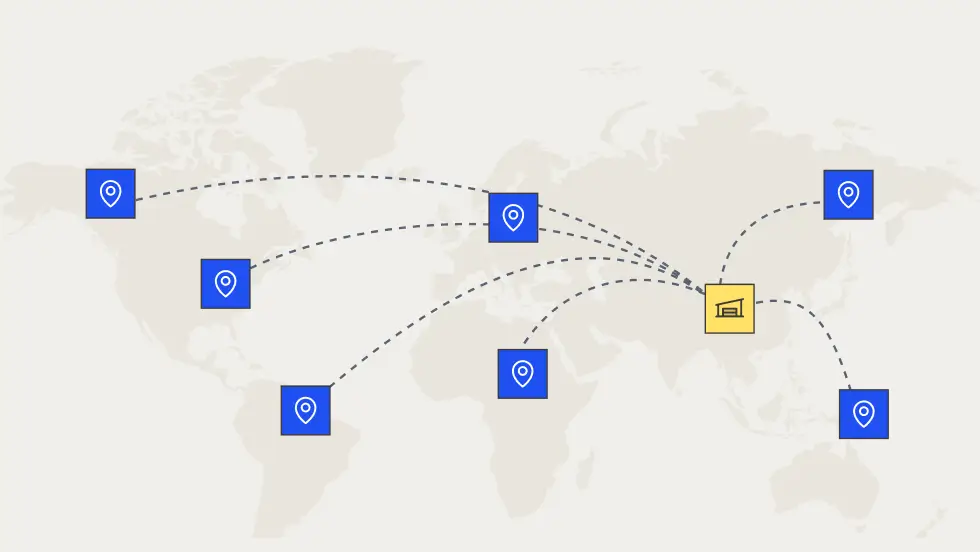
💡 Portless helps you stop sitting on dead stock Ship direct from your factory in Asia to your customer's door in 5-8 days — no bulk ocean freight, no domestic warehouse, no cash trapped in transit. See how it works.
Fulfillment and shipping: how hidden 3PL fees are eating your margins
This is the one that catches brands most off guard. As Nik put it, "The one that people don't really realize at all, because it's usually just hidden within gibberish, is everything related to 3PL and shipping. Most people are getting arbitraged on their shipping rates and they have no idea."
"When you look at Portless — for what you're doing with air freight directly from the source and delivering it here [to the US], compared to what some of these 3PLs are charging, it's insane. The hidden fees, tech fees, and all these random things."
At least shipping is variable. You're only paying as you sell. But if you haven't looked closely at what you're actually being charged per shipment, you're probably overpaying.
The takeaway here is if you haven't audited all three recently, you're almost certainly leaving money on the table.
What did tariffs actually reveal about DTC brands?
When tariffs hit, brands that were running bloated operations felt it fast. Most responded by quietly raising prices (91.7% of brands, in fact, per our Tariffs Benchmark Report), cutting agency and vendor relationships they'd kept on autopilot, and rethinking headcount.
Free reportTariffs have reshaped Ecommerce. Here's the data.Find out how 100+ Ecommerce operators are responding on pricing, inventory, and international expansion — and where you stand.Get the free report
But the more durable shift Nik observed was brands asking a harder question: "There's no reason that we should be bloated in the first place.”
Tariffs didn't create the inefficiency. They just made it impossible to ignore. The brands that came out better used it as a forcing function to get to a leaner, more deliberate operating model. And most of them aren't going back.
Performance marketing has a ceiling — here's what comes after
There's a pattern Nik sees constantly. Brands scale to $5-10M on pure performance marketing, whether that be Meta, static ads, or otherwise, and then hit a wall. The tactics that got them there stop working, but they keep doing the same thing harder.
"Once you hit your ceiling of performance, after that is your point of diminishing returns. So then it starts to go back downhill a little bit,” explains Nik.
The unlock is storytelling. Not billboards and brand budgets with no attribution, but rather what Nik calls "performance branding." The idea is to build brand equity through channels you can still measure: advertorials, creator whitelisting, targeted publisher partnerships.
You're still buying performance media, but you're running 15 different narratives for 15 different personas at the same time.
"Performance is constantly understanding what can you do better in the funnel, in subscription adoption, in email capture. But on the brand side, you have to do the same thing. What are the new stories we're telling? How do you make sure that every touchpoint from the ad to the website, to the email they get after the leave the site, to the Google search that they put in once they get the email, to the order thank you page, to the box and the tape on the box and the insert, and then the customer service… how do you make sure that all of them sound consistent and cohesive? That is really how you build a brand."
The lean team is the new competitive advantage
DTC teams went through a predictable arc. Early brands ran lean out of necessity, then the industry ballooned into sprawling org charts with a dedicated person for every channel. Now it's contracting again, only this time it's by design.
VC investment in DTC dropped 97% from 2021 to 2023, and average annual revenue growth for DTC brands slowed to just 10% in 2024, the lowest in five years. The era of hiring your way to growth is over.
The most common setup Nik sees now at brands doing $20-100M is two senior people onshore — one on growth and acquisition, one on retention and lifecycle — plus a couple of smart offshore hires and external vendors for the rest.
"We went from very small team, to very big team, and now we're back to very small. And I think the nuance going back into the small is going to be that measurement of how much context does this person have.”
That's the key difference this time around. Lean only works if those two people carry deep pattern recognition across the whole funnel: attribution, incrementality, how channels interact, what good creative looks like.
The narrowly specialized channel manager era is fading. What's replacing it is generalists who've seen enough to know what actually moves the needle.
Most Ecommerce brands are behind on AI and that gap matters
Nik's take on where most brand operators are with AI: behind where they should be, and running out of time to catch up.
"The people that are really at risk are the average Shopify Ecommerce manager or supply chain and logistics manager who is not immersing themselves in all these new tools. In six months time, there is going to be a new standard industry-wide that everybody's going to feel in terms of what your expected output is. And if you're at a brand and doing the bare minimum, you're about to be out of a job."
The data backs this up. 77% of Ecommerce professionals now use AI daily, up from 69% in 2024. But 67% of marketers cite lack of training as the top barrier to adoption — meaning most brands know they're behind and still aren't moving.
Nik’s advice for founders who haven’t started using AI
“Sit down, grab a drink, and just dedicate two hours. Play around with it.”
For Ecommerce operators specifically, Nik recommends starting with Claude and connecting it to wherever your context actually lives: call recordings, calendar, Slack, Google Drive. The goal is to give it enough of your business context that it shortens your decision-making loop.
"Most people think of AI LLMs as the brain, but it's really like a second brain of yourself that you have to constantly feed and constantly train."
A practical place to start is to pull your Shopify order data and current fulfillment invoices and ask Claude to calculate your total landed cost per order. Once you have that number, see how it compares to shipping direct with Portless using our landed cost calculator.
What does the future of DTC look like?
Nik's near-term prediction was concrete: "I think a year from now it's going to be a completely different world, both in terms of how brands are operating and what the team setup looks like inside the brand. And in the next two years, we're going to have a hundred million dollar brand run by two people.”
The future of DTC isn't bigger teams, more apps, or more ad spend. It's profitable businesses that run lean, move fast, and tell better stories. The operators who get there first are already building that way.
Watch the full conversation between Izzy Rosenzweig and Nik Sharma below. Or listen on Spotify and Apple Podcasts.
Frequently asked questions
Heading
Lorem ipsum dolor sit amet, consectetur adipiscing elit. Suspendisse varius enim in eros elementum tristique. Duis cursus, mi quis viverra ornare, eros dolor interdum nulla, ut commodo diam libero vitae erat. Aenean faucibus nibh et justo cursus id rutrum lorem imperdiet. Nunc ut sem vitae risus tristique posuere.
Get operator-level supply chain insights
Thank you! Your submission has been received!
Oops! Something went wrong while submitting the form.








.jpg)
.jpg)
%20(1).jpg)