“We generated $70K in package protection revenue in a single quarter by adding a simple $4 protection option at checkout — plus an additional $12K from cashbacks. Customers get peace of mind, and we're making a profit on every protected order with zero effort."
“We generated $70K in package protection revenue in a single quarter by adding a simple $4 protection option at checkout — plus an additional $12K from cashbacks. Customers get peace of mind, and we're making a profit on every protected order with zero effort."
The Ecommerce industry spent a decade chasing Amazon’s two-day delivery standard. Most DTC brands assumed that faster shipping was always better — that the only way to compete was to match Prime’s speed or lose the sale.
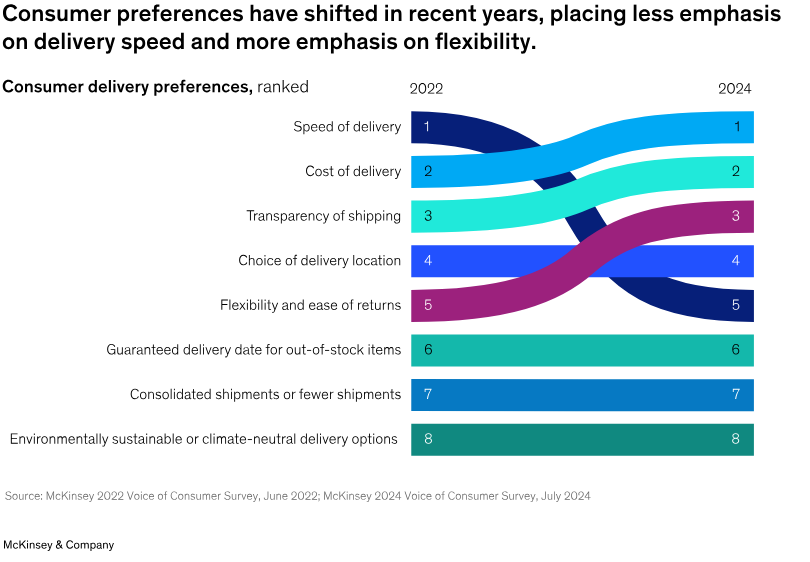
The data says otherwise. According to McKinsey’s 2024 consumer survey, delivery speed dropped from the #1 consumer priority in 2022 to #5 in 2024. It was passed by shipping cost, delivery transparency, flexibility and ease of returns, and choice of delivery location. More than 80% of consumers said they’re willing to wait four to seven days for a delivery — especially if it means avoiding shipping fees.
What replaced the speed obsession? Cost and reliability. Part of this is economic. Consumers are more price-conscious now than they were two years ago, and free shipping beats fast shipping when budgets are tighter.
But the bigger shift is expectational: customers don't need their order tomorrow. They need to know what it costs upfront and get it when you said it would arrive. The brands that win on shipping aren't the fastest — they're the most predictable.
What consumers actually care about (it’s not raw speed)
Multiple 2025 studies converge on the same conclusion: shoppers have moved past speed as the primary shipping metric. Here’s what actually drives purchase decisions and repeat loyalty.
1. Cost of shipping
Shipping cost is the #1 factor in purchase decisions. McKinsey found that more than 90% of consumers will abandon a cart if shipping costs are too high. A FedEx and Morning Consult study found that 75% of consumers prioritize free shipping over fast shipping, and 57% rank free shipping as the single most important factor when making an online purchase — ahead of finding the best price.
2. Reliability and on-time delivery
This is where most brands underinvest. Bringg’s 2025 Delivery Experience Study found that 72% of shoppers rate on-time arrival as an essential delivery experience factor — outweighing delivery cost. And the consequences of missing a promised delivery date are severe: 35% of consumers permanently abandon a retailer after a single late delivery.
That number climbs for high-value shoppers. Bringg found that power shoppers (11+ online purchases per month) have the highest expectations and the lowest tolerance for delivery failures. 55% of all shoppers stop buying from a brand after a single negative delivery experience.
3. Transparency and accurate delivery dates
Uncertainty causes more anxiety than wait time. Customers don’t panic about a five-day delivery window. They panic when they don’t know where their order is or when it’ll arrive. Research from Retail Insider found that 64% of shoppers are more likely to complete a purchase when they see estimated delivery dates on the product page. Clear shipping policies influence decisions for 74% of customers.
A Locus consumer survey (November 2025) backs this up: 93% of US consumers said a company’s delivery performance directly affects their overall perception of the brand. But fewer than one in ten said retailers consistently meet their delivery promises. The gap between what brands promise and what they deliver is the real problem — not how many days the package takes.
4. Flexibility
Bringg’s study found that 61% of shoppers abandon carts when delivery options aren’t flexible. Customers want to choose when, where, and how they receive orders. Multiple shipping tiers, in-store pickup, and reschedulable delivery windows all matter more than shaving a day off transit time.
5. Speed (as a baseline, not a differentiator)
Speed still matters — but as a minimum expectation, not a competitive advantage. The Locus survey found that nearly two-thirds of US shoppers consider two-to-three-day delivery to be standard. Anything within that window is fine. Anything far beyond it raises concerns. But the brands that try to win on speed alone are spending money solving a problem most customers don’t have.
What actually kills customer relationships
If speed isn’t the primary issue, what is? Three things drive customers away — and none of them require two-day delivery to fix.
Broken delivery promises
The #1 cause of a negative delivery experience is a late delivery — more than damaged items or wrong products, according to Bringg. And 62% of consumers blame the retailer for late deliveries, not the carrier. Your customer doesn’t care which logistics partner dropped the ball. They blame you.
The fix isn’t faster shipping. It’s a fulfillment model that delivers consistently within its promised window.
Surprise fees at the door
For brands selling internationally, surprise duties and taxes at delivery are one of the fastest ways to lose a customer. Baymard Institute’s research shows that 48% of shoppers abandon carts over unexpected additional costs. And FlavorCloud’s 2025 data found that roughly 10% of DDU parcels are refused or returned due to surprise customs charges.
This isn’t a speed problem. It’s a DDP vs DDU problem. Paying duties before delivery eliminates the surprise and keeps the customer relationship intact.
Lack of visibility
Customers check order tracking multiple times per shipment. When tracking is vague or goes dark for days, "where is my order?" (WISMO) tickets spike and trust erodes.
This is a specific problem for cross-border shipments. There's typically a two to three day gap between when an order ships from origin and when the local last-mile carrier (USPS, Royal Mail, Australia Post) first scans it. During that window, the customer sees zero movement — and that's when the anxiety and support tickets start.
Portless solves this with Parcel Delivery Network (PDN), a digital first-mile carrier that fills that quiet period with live tracking updates. PDN handles the first leg of the journey, then hands off to the local carrier. The customer sees one continuous tracking experience. No dead air, no "shipping label created" sitting there for three days. It's free for every Portless merchant, and we highly encourage using it because the difference in customer experience is immediate.
Proactive delivery updates — even if the package is five days away — reduce anxiety more than shaving a day off transit time.
The real competitive advantage: predictable delivery + transparent pricing
Here’s where the data reframes the shipping conversation for DTC brands manufacturing overseas.
You don’t need to match Amazon’s two-day delivery. You need to deliver within a window your customer finds acceptable, do it consistently, show the full cost at checkout, and give your customer visibility the entire way.
For cross-border DTC brands, the legacy bulk-import model actually makes all of this harder, not easier:
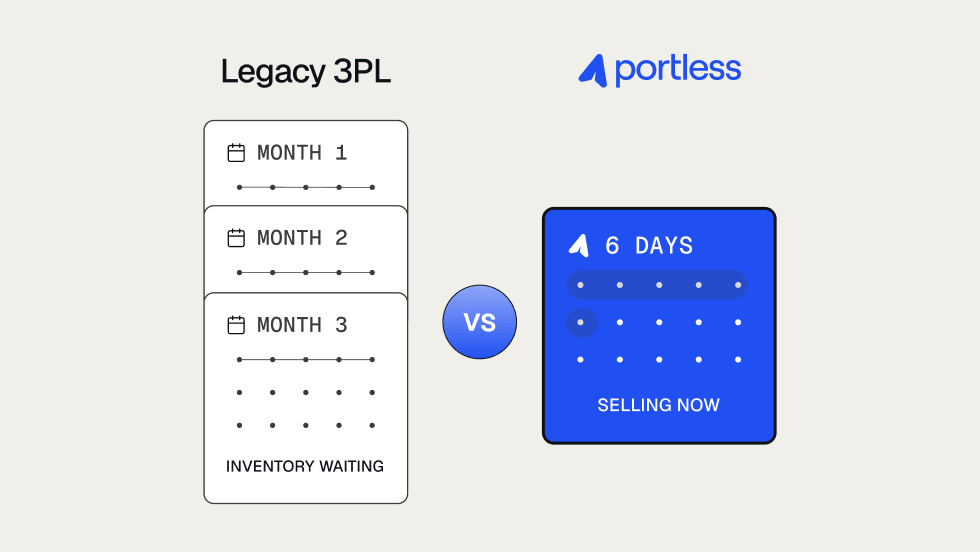
Unpredictable timing: Ocean freight takes 45–60 days. Add customs delays, warehouse receiving, and domestic transit and your total production-to-delivery window is 60–90 days. Any delay at any stage cascades — and the customer feels it.
Forecast-dependent inventory: You’re guessing demand months in advance. Guess wrong and you’re either out of stock (broken delivery promise) or sitting on excess inventory holding costs (20–30% of inventory value per year).
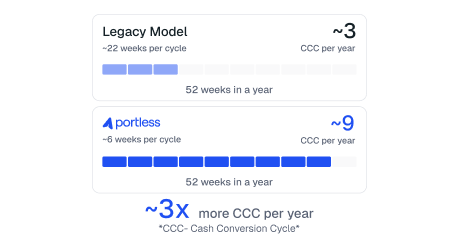
Cash trapped in the supply chain: A 90-day cash conversion cycle means your capital is locked in inventory that hasn’t generated a single dollar of revenue. That limits your ability to invest in the things that actually drive repeat purchases — marketing, product development, and international expansion.
WHAT'S YOUR SUPPLY CHAIN REALLY COSTING YOU?Run the numbers on direct fulfillment vs. your current model — including shipping costs, holding costs, and cash conversion cycle impact.Calculate your ROI
Seven strategies to improve shipping reliability (not just speed)
1. Promise what you can deliver — then deliver it
Show specific estimated delivery dates on product pages, not vague ranges. 64% of shoppers are more likely to buy when they see a concrete date. Then build your fulfillment process to hit that date consistently. A reliable five-to-eight-day delivery beats an unreliable two-to-three-day promise.
2. Use DDP shipping for international orders
Surprise duties at the door are one of the biggest drivers of refused deliveries and customer churn for cross-border brands. Shipping DDP means your customer sees one price at checkout and pays nothing extra on delivery. It removes the most common cause of cross-border delivery failures — especially now that de minimis thresholds are falling globally.
3. Ship from a model that gives you consistent transit times
Ocean freight is cheap per unit, but wildly variable in timing. A container that’s supposed to take 45 days can take 60. Air freight direct from origin gives you a tighter, more predictable delivery window — which means you can make a more accurate promise to your customer. That’s the reliability advantage.
4. Offer multiple shipping tiers at checkout
Give customers a choice between speed and cost. Most will choose the cheaper option — McKinsey found that 95% prefer free standard delivery over paid expedited. But offering the choice signals transparency and puts the customer in control.
5. Invest in proactive tracking and communication
Proactive delivery notifications reduce WISMO tickets and build trust. When customers know where their order is and when it’ll arrive, they tolerate longer delivery windows. The anxiety comes from uncertainty, not from wait time.
6. Benchmark reliability, not just speed
Track your on-time delivery rate as a primary metric. A 98% on-time rate at five days is worth far more than an 85% on-time rate at two days. The latter generates more customer service tickets, more refund requests, and more customers who never come back.
7. Offer package protection at checkout
One of the fastest ways to build confidence with customers, especially on cross-border orders, is to let them protect their purchase at checkout. Portless partners with Onward to offer package protection covering delays, loss, damage, and theft, plus free returns. Customers who opt in spend more (15% higher AOV on average) and file fewer support tickets because Onward handles all claims directly with a 97% approval rate.
Two in three customers choose protection when it's offered. For you, it's a revenue stream with zero cost — customers pay for their own coverage. For your customer, it's peace of mind that removes the last bit of hesitation before clicking buy.
How Portless delivers reliable, predictable shipping from China
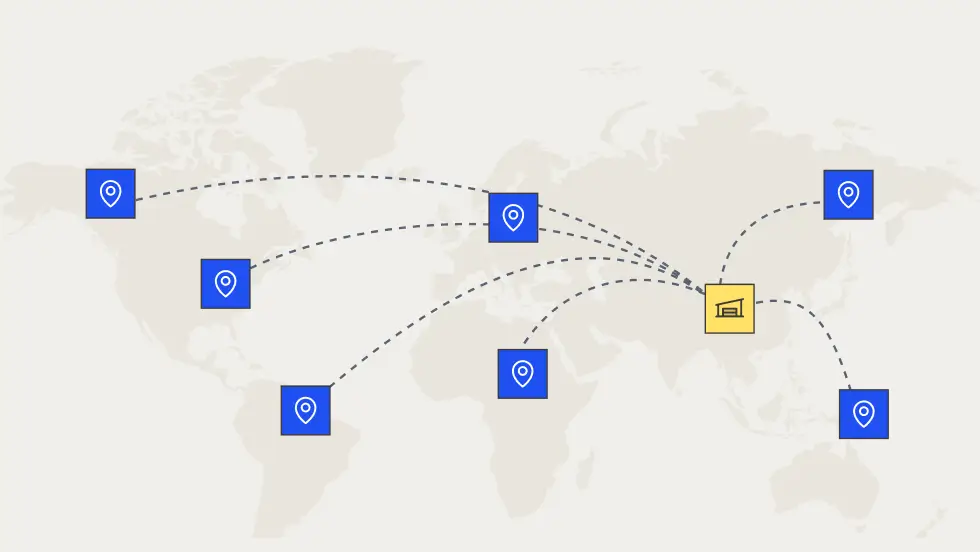
Portless fulfills orders directly from manufacturers in Asia to customers in 85+ countries. Delivery takes an average of five to seven days — consistently — because Portless uses direct injection: parcels fly from origin and feed straight into local carrier networks in the destination country, skipping the chain of hubs and handoffs that make traditional cross-border shipping unpredictable.
Here's how that translates into the delivery experience your customer actually cares about:
Consistent transit times: Air freight from origin plus direct injection into local last-mile networks gives you a tight, repeatable delivery window. No ocean freight variability, no port congestion delays, no domestic warehouse receiving backlogs.
DDP built in: Duties and taxes are calculated and prepaid on every order. Your customer sees one price at checkout and receives their package with nothing extra to pay. No surprise fees, no refused deliveries.
Transparent pricing: Because landed cost management is built into the fulfillment process, you know your exact per-unit cost before you set your price. No guessing on duties, no margin surprises.
Less inventory risk: You don't need to pre-buy months of stock and hope your demand forecast was right. Smaller, more frequent production runs mean fewer stockouts (broken promises) and less dead stock (wasted capital).
Shipping model comparison: what matters to your customer
Factor
Bulk import + domestic warehouse
Direct fulfillment (Portless)
Delivery promise you can make
2–5 days (after 60–90 days of upstream delays)
5–8 days (consistent, end to end)
Delivery reliability
Depends on ocean freight, port, warehouse, carrier
Direct injection into local carriers, fewer handoffs
Cost transparency at checkout
Duties paid upfront on bulk; customer sees product + domestic shipping
Full landed cost including duties shown at checkout
Surprise fees at delivery
None (domestic model)
None (duties prepaid in 85+ countries)
The legacy model gives you a faster last-mile delivery time — but only after months of upstream lead time, capital commitment, and demand forecasting risk. Direct fulfillment gives you a slightly longer last-mile window (still within what 80% of consumers find acceptable) with dramatically better reliability, transparency, and cash efficiency.
Ship reliably, price transparently, grow faster
The brands winning on Ecommerce shipping aren’t the fastest. They’re the ones that deliver when they say they will, show the full cost upfront, and keep their cash free to reinvest. Book a demo and find out if Portless is right for your business.
FAQ
Does shipping speed still matter for Ecommerce brands?
Speed matters as a baseline, not a differentiator. McKinsey’s 2024 consumer survey found that delivery speed dropped from the #1 priority in 2022 to #5 in 2024. More than 80% of shoppers will still complete a purchase when delivery takes four to seven days, provided shipping is free. What matters more is that you deliver within the window you promised.
What is more important than fast shipping?
Cost, reliability, transparency, and flexibility all rank higher than speed in recent consumer research. Bringg’s 2025 study found that 72% of shoppers rate on-time arrival as essential, and 35% permanently abandon a brand after a single late delivery.
How long is too long for Ecommerce delivery?
For domestic US orders, two to five days is the current expectation. For cross-border orders, five to seven days is well within the acceptable range — as long as the delivery date is communicated clearly at checkout and met consistently. McKinsey found that fashion shoppers in particular are willing to wait longer than three days.
Can DTC brands compete without two-day shipping?
Yes. Most DTC brands don’t need to match Amazon’s speed. They need to deliver reliably, show the full cost at checkout, and give customers visibility into their order status. A consistent five-to-eight-day delivery with transparent pricing outperforms an unreliable two-day promise.
How does DDP shipping improve delivery reliability?
DDP (Delivered Duty Paid) means all duties and taxes are paid before the package reaches the customer. This prevents customs holds, refused deliveries, and surprise charges — three of the most common causes of cross-border delivery failures.
What is the real cost of unreliable shipping?
Bringg found that 35% of shoppers permanently abandon a brand after one late delivery, and 55% stop buying after a single negative delivery experience. The cost of unreliable shipping isn’t measured in refunds alone — it’s measured in lost customer lifetime value.
Frequently asked questions
Heading
Lorem ipsum dolor sit amet, consectetur adipiscing elit. Suspendisse varius enim in eros elementum tristique. Duis cursus, mi quis viverra ornare, eros dolor interdum nulla, ut commodo diam libero vitae erat. Aenean faucibus nibh et justo cursus id rutrum lorem imperdiet. Nunc ut sem vitae risus tristique posuere.
Get operator-level supply chain insights
Thank you! Your submission has been received!
Oops! Something went wrong while submitting the form.







.jpg)
.avif)