“We generated $70K in package protection revenue in a single quarter by adding a simple $4 protection option at checkout — plus an additional $12K from cashbacks. Customers get peace of mind, and we're making a profit on every protected order with zero effort."
“We generated $70K in package protection revenue in a single quarter by adding a simple $4 protection option at checkout — plus an additional $12K from cashbacks. Customers get peace of mind, and we're making a profit on every protected order with zero effort."
Inventory holding costs typically run 20–30% of total inventory value per year. At the midpoint, that's $0.25 for every dollar of inventory you carry — and that’s before shipping, marketing, or returns.
That’s your inventory holding cost: the total expense of storing unsold goods over a given period. It includes the capital locked in stock, warehouse rent, insurance, labor, and the risk that products lose value before anyone buys them. You express it as a percentage of total inventory value, and for most businesses it lands between 20% and 30% per year.
That percentage hits DTC Ecommerce brands harder than most. You buy inventory months before customers order it, ship it across an ocean, store it in a domestic warehouse, and pay carrying costs every day it sits unsold. The longer inventory sits, the more margin it eats.
The four components of inventory holding cost
Every holding cost breaks down into four categories. Miss any one of them and you’re underestimating what your inventory actually costs.
Capital costs
Capital cost is the money trapped inside unsold stock. If you paid cash for that inventory, the capital cost is what you could have earned by putting that money to work elsewhere — your opportunity cost. If you borrowed to buy it, the cost is the interest on that loan.
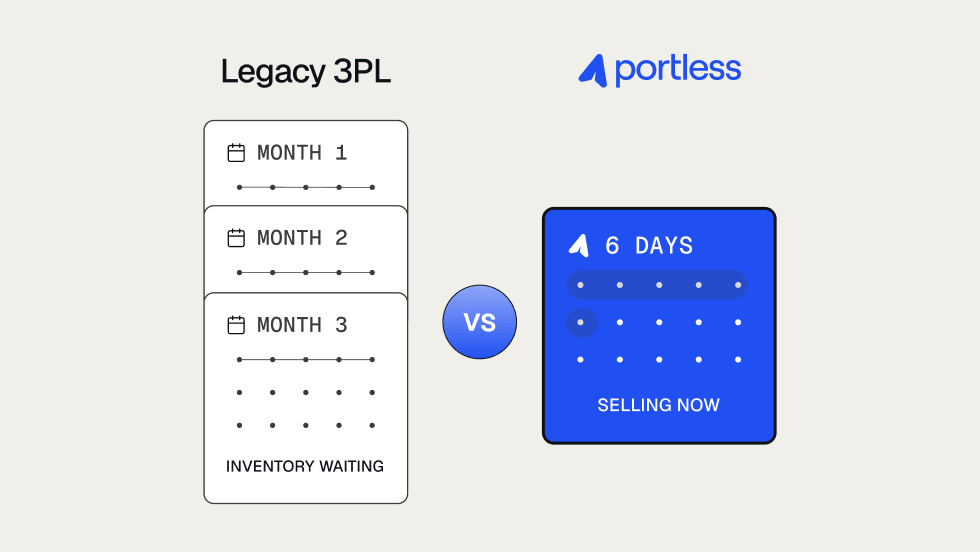
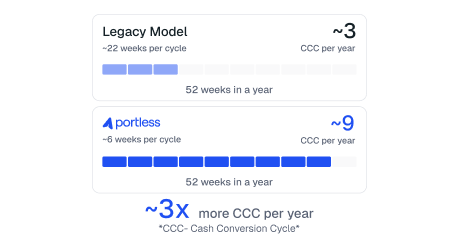
This is the largest component for most brands. The legacy Ecommerce model makes it worse: you commit capital to months of inventory based on a demand forecast, then wait 60+ days for it to reach a domestic warehouse before a single unit is available for sale. That overlap between production spend and first sale is also what drives your cash conversion cycle — the longer inventory sits, the longer your cash stays trapped.
Storage and warehousing costs
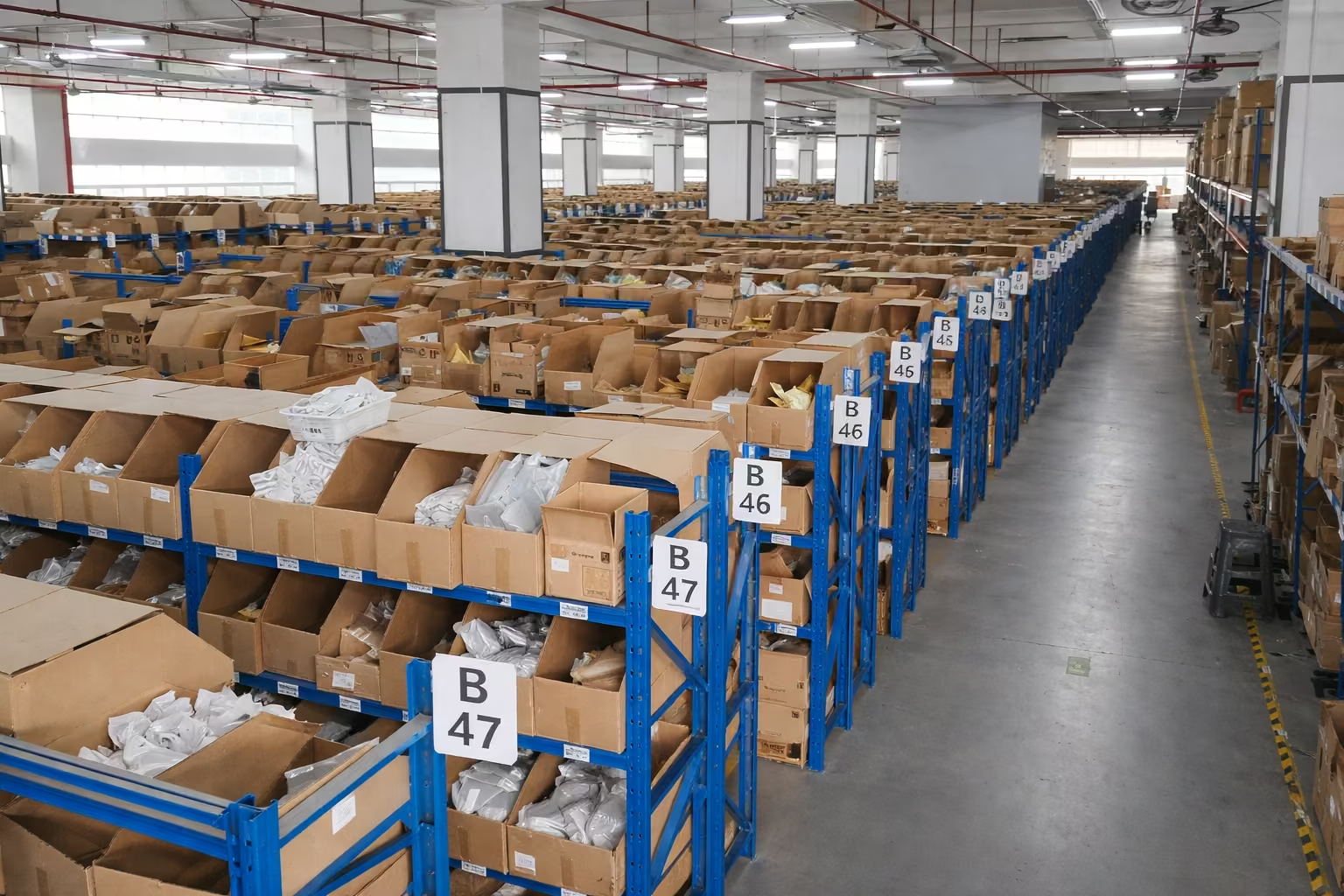
Storage costs include warehouse rent, utilities, climate control, maintenance, and the technology systems that run your facility. Ecommerce fulfillment tends to require more warehouse space per unit than traditional retail because of higher SKU variety and parcel-level picking.
Inventory service costs
Service costs cover insurance premiums on stored goods, inventory taxes where applicable, and the labor and software needed to track stock. These costs scale directly with volume — the more units you hold, the more you pay to insure, count, and manage them.
Inventory risk costs
Risk costs account for everything that can go wrong while products sit in storage:
Shrinkage covers theft, damage, and administrative counting errors. This is a bigger issue in brick-and-mortar retail than Ecommerce — warehouse theft rates are significantly lower than in-store shoplifting. That said, cargo theft is rising, particularly for electronics, so it's not zero risk
Obsolescence hits when products go out of style or get replaced by newer versions
Spoilage applies to perishable goods that expire before they sell
Markdowns are the discounts you take to clear aging stock that won’t move at full price
For fast-moving categories like apparel and consumer electronics, obsolescence risk alone can dwarf your warehouse rent. And for brands shipping internationally, rising duty costs from de minimis changes add another layer of risk to inventory you’ve already committed capital to.
How to calculate inventory holding cost
The inventory holding cost formula
The standard holding cost formula is:
Holding cost (%) = (Capital costs + Storage costs + Service costs + Risk costs) / Total inventory value × 100
Add up every dollar you spend across all four components over a set period, usually one year. Divide that total by the average value of inventory you held during the same period. Multiply by 100 to get your inventory holding cost percentage.
Inventory holding cost calculation example
Say you run a DTC apparel brand carrying an average of $500,000 in inventory over the past year.
::table
Cost component;Annual cost
Capital costs (opportunity cost at 10%);$50,000
Storage and warehousing;$40,000
Insurance and taxes;$10,000
Shrinkage, obsolescence, and markdowns;$25,000
Total holding cost;$125,000
:table
Holding cost = $125,000 / $500,000 × 100 = 25%
That means you spend $0.25 for every $1.00 of inventory you carry. Hold a product for six months before selling it and you’ve already lost 12.5% of its value to carrying costs — before shipping, marketing, or returns.
Common mistakes when calculating holding costs
Ignoring opportunity cost and only counting warehouse rent
Underestimating obsolescence for seasonal or trend-driven products
Using a single snapshot of inventory value instead of a time-weighted average
Forgetting handling labor and administrative overhead that don’t appear on a warehouse invoice
What is a good inventory holding cost percentage?
The general benchmark is 20–30% of total inventory value per year. But the number varies by category.
::table
Industry;Typical holding cost range
Fashion and apparel;25–35%
Electronics;25–40%
Home goods;20–28%
Beauty and personal care;20–30%
Perishable goods;30–50%
:table
If your percentage sits above 30%, you’re likely over-indexed on one or more components — too much inventory, too long in storage, or too much dead stock accumulating. Start by pulling your actual spend across all four components for the past 12 months. Compare against the ranges above. Focus reduction efforts on the largest component first.
The impact of high inventory holding costs
High holding costs don’t just reduce margin. They change how you can operate your business.
If you’re carrying $500K in inventory at a 30% holding cost, that’s $150K a year you’re spending just to store products — before a single customer buys one. That $150K could fund a full quarter of paid acquisition, a new product line, or expansion into three new markets.
The longer products sit in a warehouse, the higher the chance they never sell at full price. Seasonal products lose relevance. Trend-driven SKUs go stale. You end up marking down inventory just to clear space — or writing it off entirely.
And when you’ve committed capital to six months of inventory based on a forecast, you can’t pivot quickly. If a new product takes off, you don’t have the cash to lean into it. If a SKU underperforms, you’re stuck holding it. The legacy model of bulk purchasing and domestic warehousing makes all three of these problems worse.
WHAT’S YOUR INVENTORY REALLY COSTING YOU?Calculate your direct fulfillment ROI to see how much you could save by cutting holding time from months to days.→ Calculate your ROI
Eight strategies to reduce inventory holding costs
1. Improve demand forecasting
Use historical sales data, seasonal trends, and sell-through rates to align purchasing with actual demand. Better forecasts mean fewer excess units sitting in storage.
2. Adopt just-in-time inventory management
Just-in-time (JIT) inventory means ordering and receiving goods only as customers buy them — or as close to that as possible. JIT cuts holding periods but requires fast, reliable suppliers and fulfillment partners.
3. Optimize reorder points and safety stock
Calculate your Economic Order Quantity (EOQ) — the order size that minimizes the combined cost of ordering and holding. Balance the risk of stockouts against the cost of carrying extra safety stock.
4. Reduce lead times
Shorter lead times let you hold less inventory. The legacy Ecommerce model builds in 30–60 days of ocean freight before a unit even reaches a warehouse. Cut that leg and you cut the inventory you need to carry.
5. Ship directly from the source
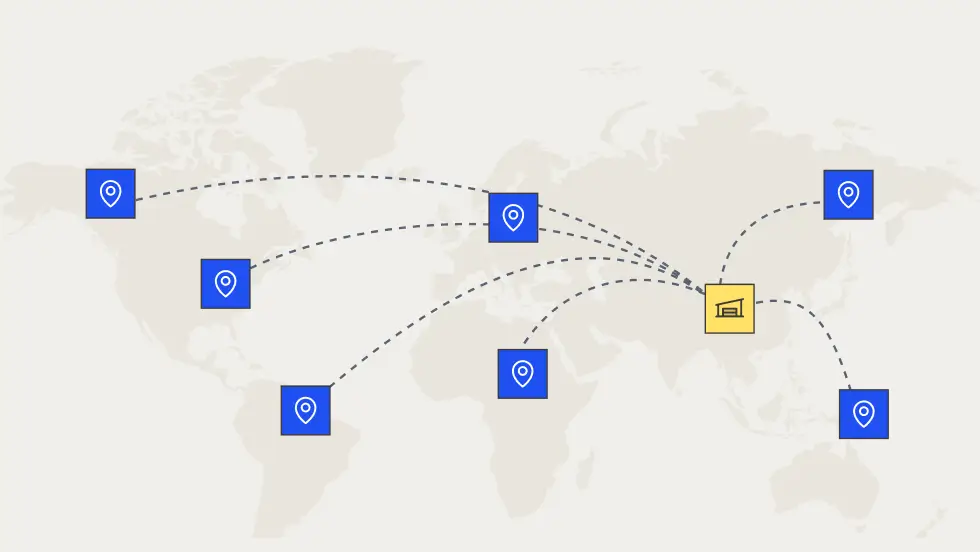
The bulk ocean freight model forces you to buy months of inventory upfront and pay holding costs the entire time. Direct fulfillment from your manufacturing region to end customers skips domestic warehousing entirely. At Portless, we fulfill orders directly from China and Vietnam with five to eight day delivery — cutting the time inventory sits idle from months to days.
This is the approach Foreign Resource took to scale their global streetwear brand. By moving to direct fulfillment they achieved near-negative cash conversion cycles, reduced per-unit fulfillment costs, and freed up the working capital that had been locked in warehouse inventory.
6. Use ABC analysis to prioritize inventory
Categorize SKUs by revenue contribution. Your A items (top 20% of SKUs driving 80% of revenue) deserve the tightest inventory management. Your C items (slow movers) are where holding costs quietly accumulate.
7. Negotiate better supplier terms
Smaller, more frequent orders reduce the amount of inventory you hold at any given time. Negotiate consignment arrangements where you pay for goods only after they sell, or explore vendor-managed inventory (VMI) programs where your supplier manages replenishment.
8. Use technology for real-time inventory visibility
Inventory management software that integrates with your sales channels gives you real-time sell-through data. Automated replenishment triggers help you reorder at the right time instead of over-ordering based on guesswork.
Inventory holding cost vs. ordering cost
Holding cost and ordering cost pull in opposite directions. Ordering cost is what you pay every time you place a purchase order — supplier setup fees, shipping charges, receiving labor, and quality inspection. Order more frequently and your total ordering costs rise. Order less frequently in bigger batches and your holding costs rise instead.
The EOQ formula finds the order size where the combined total is lowest. For DTC brands, the traditional answer was to order in bulk to reduce per-unit freight costs. But that math changes when you can fulfill directly from origin with no domestic warehouse. Smaller, more frequent replenishment becomes viable — and often cheaper — when you remove the ocean freight and 3PL storage legs entirely.
::table
;Holding cost;Ordering cost
What it covers;Storage, capital, insurance, risk;Shipping, setup fees, receiving, inspection
Goes up when you;Order large batches infrequently;Order small batches frequently
Goes down when you;Reduce inventory on hand;Consolidate into fewer, larger orders
How Portless helps brands cut inventory holding costs
The legacy model — bulk ocean freight, domestic warehousing, months of carrying costs — is the single biggest driver of high holding costs for DTC brands. Portless removes that model from the equation.
We fulfill orders directly from manufacturing regions in China and Vietnam. Your inventory moves from the factory to a Portless facility and ships to customers in five to eight days. No container ships, no domestic warehouse, no months of storage costs. You cut warehousing costs, capital costs, and risk costs at the same time because inventory spends days in storage instead of months.
That speed also means you can test new products without committing to bulk inventory. Launch a new SKU with a small batch, validate demand with real orders, and scale production only when you know it sells. This cuts obsolescence risk — one of the hardest holding cost components to control under the legacy model. You can calculate your direct fulfillment ROI to see the impact on your specific numbers.
Reduce your inventory holding costs
Your inventory holding cost is one of the largest hidden expenses in your Ecommerce business. The fastest way to reduce it is to reduce the time inventory sits unsold — and the most direct way to do that is to stop shipping it to a domestic warehouse in the first place. Book a demo with our team to see how direct fulfillment from origin changes the math for your brand.
FAQ
What is the difference between inventory holding cost and carrying cost?
There’s no difference. Holding cost and carrying cost are interchangeable terms that both refer to the total cost of storing unsold inventory over a given period.
Does inventory holding cost include warehouse labor?
Yes. Labor involved in managing, counting, and handling stored inventory falls under service costs — one of the four components of inventory holding cost.
How often should Ecommerce brands recalculate inventory holding cost?
Recalculate at least quarterly, or whenever you make a significant change to your supply chain — such as switching warehouses, changing order frequency, or entering new markets.
Can inventory holding cost ever reach zero?
In practice, no. Even dropshipping and made-to-order models carry some holding cost in the form of supplier lead time or work-in-progress inventory. The goal is to minimize holding cost, not eliminate it.
Why is inventory holding cost higher for DTC Ecommerce brands?
DTC brands typically buy inventory months in advance, ship it via ocean freight, and store it in domestic warehouses before a single unit sells. That long cycle increases capital costs, storage costs, and obsolescence risk compared to models with shorter inventory holding periods.
Frequently asked questions
Heading
Lorem ipsum dolor sit amet, consectetur adipiscing elit. Suspendisse varius enim in eros elementum tristique. Duis cursus, mi quis viverra ornare, eros dolor interdum nulla, ut commodo diam libero vitae erat. Aenean faucibus nibh et justo cursus id rutrum lorem imperdiet. Nunc ut sem vitae risus tristique posuere.
Get operator-level supply chain insights
Thank you! Your submission has been received!
Oops! Something went wrong while submitting the form.








.jpg)

.avif)