“We generated $70K in package protection revenue in a single quarter by adding a simple $4 protection option at checkout — plus an additional $12K from cashbacks. Customers get peace of mind, and we're making a profit on every protected order with zero effort."
“We generated $70K in package protection revenue in a single quarter by adding a simple $4 protection option at checkout — plus an additional $12K from cashbacks. Customers get peace of mind, and we're making a profit on every protected order with zero effort."
Your customer in Berlin pays €25 at checkout for a t-shirt. A week later, the carrier calls to collect another €6–8 in import duties before they’ll hand over the package. The customer didn’t expect it, doesn’t want to pay for it, and refuses delivery. You lose the product, the shipping cost, and the customer.
According to FlavorCloud's 2025 data, roughly 10% of DDU parcels are refused or returned due to surprise customs charges — and that number is climbing as de minimis thresholds fall globally.
That scenario plays out every day for brands shipping internationally under the wrong trade terms. According to Baymard Institute’s research, 48% of online shoppers abandon their carts when they encounter unexpected additional costs — and surprise duties at the door are one of the fastest ways to trigger it.
The fix starts with one decision: DDP or DDU.
What is DDP and what is DDU?
DDP vs DDU comes down to who pays the import duties and taxes when a package crosses a border. Under Delivered Duty Paid (DDP), the seller pays everything. Under Delivered Duty Unpaid (DDU), the buyer gets charged at the door.
Put yourself in your customer's shoes: would you rather see “customs and duty fees may apply” or just see the price and know that's it? That's the difference between DDU and DDP.
Both terms come from Incoterms (International Commercial Terms) — a set of standardized trade rules published by the International Chamber of Commerce. Every cross-border shipment operates under one of these terms, whether you’ve chosen one deliberately or not.
For DTC brands selling internationally, your Incoterm choice directly affects your landed costs, your customer experience, and whether your buyer gets hit with surprise fees on delivery.
How DDP shipping works
Under DDP, the seller handles everything from origin to the buyer’s door: shipping, export clearance, import customs clearance, duties, and taxes. The buyer receives the package with nothing left to pay.
Seller pays: all freight, customs clearance (export and import), import duties, and destination-country taxes
Seller carries risk: from origin until goods reach the buyer’s delivery address
Buyer pays: nothing beyond the checkout price
Here's what that looks like in practice. A DTC apparel brand manufactures t-shirts in Vietnam and sells to customers in Germany. Under DDP, the brand pays freight from Vietnam, clears German customs, and covers the 19% German VAT plus any applicable duty. The customer in Berlin sees one price at checkout and pays nothing extra.
How do brands absorb this cost? Most build duties and taxes into their retail pricing, either by raising prices slightly across all markets or by setting market-specific pricing that accounts for each country's duty rates. Some offer a discount at checkout to soften the impact and make the transition visible to customers.
The key is that the customer sees one number and never gets a second bill.
The slight price increase converts better than a surprise fee at the door — because 48% of shoppers will abandon a cart over unexpected costs, but almost none will abandon over a price that's a few dollars higher than they expected.
How DDU shipping works
Under DDU, the seller ships goods to the destination country but doesn’t pay import duties or taxes. The buyer handles customs clearance and pays whatever charges apply before receiving the package.
Seller pays: freight from origin, export customs clearance, and all transit costs
Seller doesn’t pay: import duties, taxes, or destination customs fees
Buyer pays: all import duties, taxes, brokerage fees, and any storage charges if the package is held
Same example, different outcome. The apparel brand ships t-shirts from Vietnam to Germany under DDU. The package arrives at German customs, and the carrier contacts the buyer to collect the 19% VAT plus duty before delivering. The customer expected to pay €25 at checkout — and now owes an additional €6–8 at the door.
Why DDU was replaced by DAP
The ICC replaced DDU with DAP (Delivered at Place) in the Incoterms 2010 update. The practical difference is minimal: under both terms, the buyer handles import clearance and pays duties. The industry still uses “DDU” in everyday conversation, and most logistics providers treat the two as interchangeable.
DDP vs DDU comparison
Feature
DDP (Delivered Duty Paid)
DDU/DAP (Delivered Duty Unpaid)
Duty and tax payment
Seller pays
Buyer pays
Import customs clearance
Seller handles
Buyer handles
Risk transfer point
Buyer’s delivery address
Destination, before import clearance
Cost predictability
Full cost known at checkout
Buyer faces unknown charges at delivery
Customer experience
No surprise fees
Surprise fees common
Refused delivery risk
Low
High
Best for
DTC Ecommerce brands selling internationally
B2B or shipments where buyer expects duties
How DDP and DDU affect the customer experience
Why unexpected fees drive cart abandonment
Surprise costs at delivery are one of the fastest ways to lose a customer. Baymard Institute’s research found that unexpected additional costs are the leading reason shoppers abandon carts — accounting for 48% of all cart abandonment. Under DDU, your customer discovers those costs after they’ve already paid you.
That damages trust and increases refund requests. For DTC brands building repeat purchase relationships, this is a direct hit to customer lifetime value.
Delivery speed and reliability
DDP shipments clear customs faster because the seller pre-arranges clearance and prepays duties. DDU shipments can sit in customs for days while the carrier contacts the buyer, collects payment, and processes clearance.
How DDU increases return and refusal risk
When a DDU package arrives with unexpected charges, some buyers refuse delivery. The package returns to origin at the seller's expense. You lose the product, the shipping cost, and the customer. DDP removes this risk entirely by removing the surprise.
Why most DTC brands choose DDP
DDP gives you control over the full customer experience. Your buyer sees one price, pays once, and receives their order without interruption. For DTC brands selling across borders, that consistency matters more than the marginal cost of prepaying duties.
The math supports it. A single refused DDU shipment typically costs $30–50 or more when you add up return freight, lost or damaged product, customer service time, and refund processing. The average prepaid duty on a DDP order under $100 might be $3–8 depending on the product and destination. That means one refused DDU delivery can wipe out the duty savings on 5–15 DDP orders.
ELIMINATE SURPRISE FEES FOR YOUR CUSTOMERSSee how DDP fulfillment from China and Vietnam works with Portless — duties and taxes included, five to eight day delivery to 85+ countries.Book a demo
When DDU might still make sense
DDU isn’t always the wrong choice. It can work for B2B shipments where the buyer has their own customs broker and expects to handle clearance as part of their standard import process. It also makes sense for high-value goods (industrial equipment, bulk raw materials) where the buyer has established duty drawback programs or trade zone benefits that reduce their effective duty rate.
For most DTC Ecommerce orders under a few hundred dollars — where your buyer is an individual consumer, not a procurement team — DDU creates more problems than it solves.
How DDP supports international expansion
Scaling to new countries under DDU means researching duty rates, customs processes, and carrier capabilities in every market. DDP with the right logistics partner handles all of that for you. You set your prices, your partner calculates and prepays duties, and your customers get a consistent experience in every market.
This is especially important as de minimis thresholds fall globally. The more countries that charge duties on low-value imports, the more DDU shipments will generate surprise fees — and the stronger the case for DDP becomes.
Cost implications of DDP vs DDU for sellers
Upfront costs vs hidden costs
DDU looks cheaper on paper because you’re not paying duties. But the hidden costs add up:
Customer service overhead: handling complaints about unexpected charges
Refused deliveries: return shipping plus lost inventory
Chargebacks and refunds: buyers disputing charges they didn’t expect
Lost lifetime value: customers who don’t come back after a bad delivery experience
DDP costs more per shipment upfront but reduces total cost of fulfillment when you account for these factors.
How to calculate landed cost under DDP
Your landed cost under DDP includes product cost, shipping, insurance, import duties, and destination taxes. To calculate duties, you need two things: the Harmonized System (HS) code for your product and the duty rate for your destination country.
Under DDU, the same costs exist. Your customer just pays them separately, with less transparency and no control from your side.
De minimis thresholds and DDP strategy
De minimis is the value threshold below which goods enter a country duty-free. These thresholds are shrinking fast:
United States: The $800 de minimis exemption was eliminated for goods from China and Hong Kong on May 2, 2025. As of August 29, 2025, de minimis was removed for all countries. Every shipment entering the US now faces duties regardless of value.
Both changes make DDP more critical, not less. Under DDU, your customers now face duties on orders that used to enter duty-free. Under DDP, you absorb those charges into your pricing and keep the checkout experience clean.
What happens when a customer returns a DDP order?
When you ship DDP and prepay duties, those duties are generally non-refundable if the customer returns the product. The cost of the prepaid duty stays with you as the seller. This is a real cost to factor into your return rate calculations.
That said, the economics still favor DDP for most brands. The duty you lose on a returned DDP order is typically a fraction of what you’d lose on a single refused DDU delivery — where you forfeit the product, the outbound shipping, the return freight, and the customer relationship.
Common pitfalls with DDP and DDU
Misclassifying products and HS codes
Every product you ship internationally needs an HS code — a standardized classification used by customs authorities to assess duties. The wrong code means the wrong duty rate. Underpaying triggers penalties; overpaying cuts into your margins.
Underestimating duty and tax obligations
Duty rates vary by product category and destination country. A t-shirt entering the EU faces a different rate than one entering Australia. If you’re shipping DDP, you need accurate rate data for every market you sell into — or a fulfillment partner that maintains it for you.
Compliance risks across markets
Some countries require specific import licenses, product certifications, or labeling standards. Shipping DDP means you’re responsible for meeting those requirements. Shipping DDU shifts that burden to your customer — who likely doesn’t know what’s required.
How to transition from DDU to DDP
1. Audit your current shipping and customs workflow
Map every shipment lane you currently run under DDU. Identify which countries generate the most customer complaints, refused deliveries, or support tickets related to customs charges. Those are your highest-priority markets to convert first.
2. Partner with a logistics provider that supports DDP
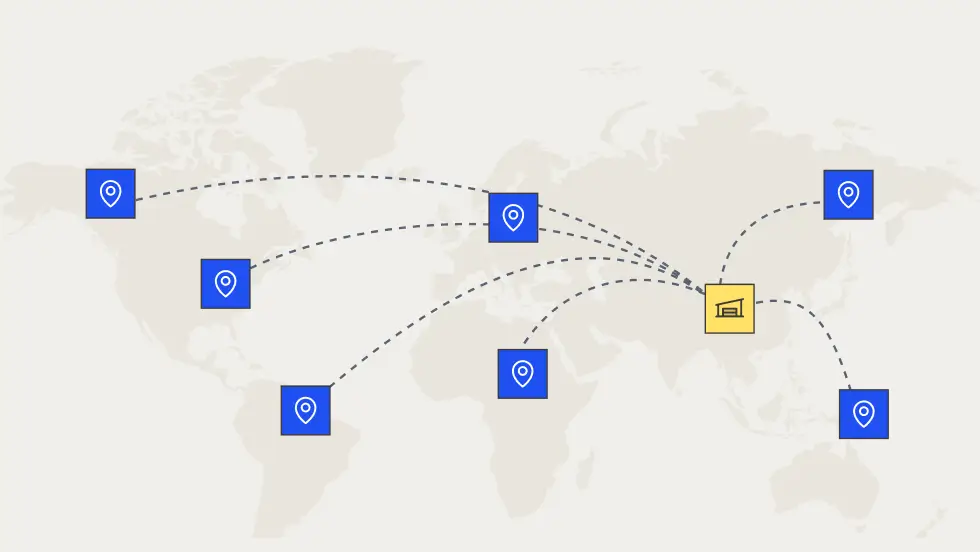
You need a partner that can calculate duties in real time, prepay them on your behalf, and clear customs in your destination markets. At Portless, we handle DDP fulfillment from Asia to 85+ countries — duties and taxes included, with five to eight day delivery and no surprise fees for your customers.
3. Integrate duty calculation into your checkout
Your checkout should show the full landed price including duties and taxes. This is what separates DDP from simply “paying duties yourself.” The customer needs to see the total at checkout — not discover an inflated price after the fact.
4. Communicate clearly with customers
Update your shipping policy page, order confirmation emails, and tracking pages to confirm that duties and taxes are included. Customers who’ve been burned by DDU surprise fees before will notice the difference.
Find out which shipping terms save you more
The DDP vs DDU decision comes down to simple math: does the cost of prepaying duties outweigh the cost of refused deliveries, customer complaints, and lost repeat buyers? For most DTC brands, it doesn’t come close. Book a demo with Portless and see how DDP fulfillment from China works for your product mix.
::dropdown
FAQ
What is the main difference between DDP and DDU shipping?
Under DDP, the seller pays all import duties, taxes, and customs fees before the buyer receives the package. Under DDU, the buyer pays those charges on delivery.
Is DDU the same as DAP in Incoterms?
Yes, for practical purposes. The ICC replaced DDU with DAP in the Incoterms 2010 update, but the buyer’s responsibilities — paying import duties and handling customs clearance — remain the same under both terms.
Who pays customs duties under DDP shipping?
The seller pays all customs duties, import taxes, and clearance fees. The buyer receives the package with nothing additional to pay.
Which Incoterm is better for DTC Ecommerce brands selling internationally?
DDP is the better choice for most DTC brands because it removes surprise fees, reduces refused deliveries, and gives you full control over the customer experience across every market.
What happens if a customer refuses a DDU package at customs?
The package returns to the sender at the seller’s expense. You lose the shipping cost, the product may be damaged or unsellable, and the customer typically requests a refund.
How does the end of US de minimis for China affect DDP vs DDU?
Since May 2, 2025, goods from China and Hong Kong are no longer eligible for de minimis treatment in the US. Under DDU, your US customers now face duties on every order. Under DDP, you prepay those charges and keep the checkout experience clean.
Are prepaid duties refundable if the customer returns a DDP order?
Generally, no. Duties prepaid under DDP are non-refundable if the customer returns the product. Factor this into your return rate calculations — but for most brands, the cost of non-refundable duty on returns is far lower than the cost of refused DDU deliveries.
:dropdown
Frequently asked questions
Heading
Lorem ipsum dolor sit amet, consectetur adipiscing elit. Suspendisse varius enim in eros elementum tristique. Duis cursus, mi quis viverra ornare, eros dolor interdum nulla, ut commodo diam libero vitae erat. Aenean faucibus nibh et justo cursus id rutrum lorem imperdiet. Nunc ut sem vitae risus tristique posuere.
Get operator-level supply chain insights
Thank you! Your submission has been received!
Oops! Something went wrong while submitting the form.








.jpg)
.avif)