Steve Hutt | 00:15
Hey there, welcome back to eCommerce Fastlne. I am your host, Steve Hutt. Now, today's conversation, I believe, is probably going to go down the cash flow way because I think that a lot of people's a lot of brands right now, a lot of the money is literally tied up in inventory. Some of it is sitting on a boat or maybe it's in a warehouse overseas. And I think that's quite a challenge for a lot of businesses right now. And so like if you're still or currently manufacturing overseas and you've never had maybe a fantastic sales month and that somehow left your bank account a little bit tighter, uh, instead of looser, uh, you know exactly what I'm talking about today. My guest is Izzy Rosenzweig, and he is the founder and CEO of a company called Portless, and they're at portless.com. This is actually third time's a charm.
Steve Hutt | 01:11
This is his third time on the show. Um, and I know every time I have Izzy on, he comes back with something a little bit different. I believe that the ground really has shifted a bit since our last kind of conversation. I think our last conversation was around the duty-free kind of shipping options we talked about a few years ago, and I believe that's now gone. And then like the whole cash and tariff kind of squeeze that's happening right now with brands, I believe is getting harder than ever right now. And I think Portless as a company and their process is really built for exactly this moment that's happening right now for brands. So Izzy, always great to have you back on the show. So welcome.
Izzy Rosenzweig | 01:50
Steve, thank you so much for having me. I know it's the 3rd time. I love the show and very excited. Every time I come here, we always have great conversations. And yeah, very, very excited to be here.
Steve Hutt | 02:00
Thank you. So let's talk about Portless because some people that may not have heard the other episodes, I'll put them in the show notes just to kind of lead up to who, like, who is Portless and why did you build this company? So let's do the high level first and then we'll kind of get into some of the changes.
Izzy Rosenzweig | 02:13
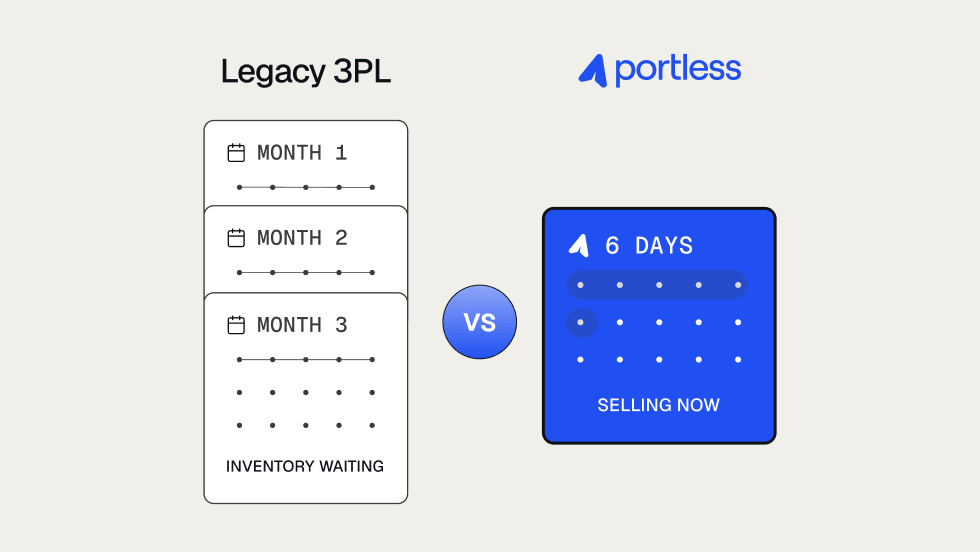
Amazing. So for people that don't know Portless, at a high level, it's a different way of running your supply chain. And if you think about traditional models, if let's say you're in the t-shirt business, you're manufacturing 10,000 t-shirts, that could be anything, cosmetics, jewelry, electronics, you manufacture probably 4 to 6 months of inventory at a time, 'cause you gotta go on a boat, wait 45, 60 days, then get your goods, then you start selling it across the US. That is a very hard cash flow model. You gotta lay out tons of money. Hopefully you're making all the right inventory bets. If you miss the bet, well, now you have excess inventory. If you have a, a great seller, but you're outta stock, well, you missed the season.
Izzy Rosenzweig | 02:51
Now what?
Steve Hutt | 02:52
Mm-hmm.
Izzy Rosenzweig | 02:52
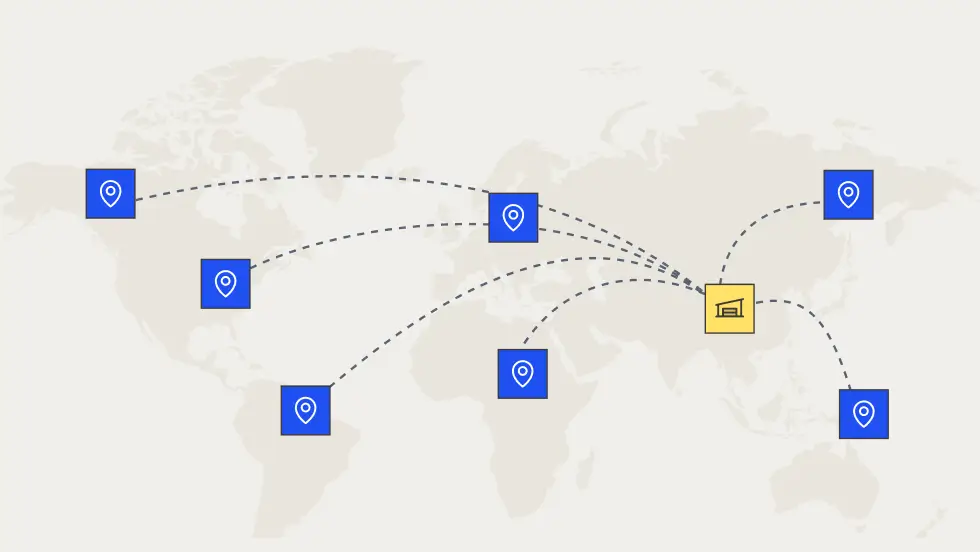
So it's just, it's, it's been around for a long time, but it's a very hard cash flow model. Portless takes a different mo— a different model for supply chains. Hey, Hey, don't put your goods on a boat. Keep it near your factories. We have 2 large ones in China and one in Vietnam, and we get your goods usually within 24 to 48 hours. Once we get it, you're ready to sell. Your customer makes an order within 24 hours. They get a local tracking label.
Izzy Rosenzweig | 03:16
Think USPS or one of the regional carriers. Uh, we service 75 countries and 5 days later on average to the US. Um, there's a, there's a package delivered at their front door, USPS label. Local experience. So while the consumer has the same experience, brands unlock massive cash flow because instead of putting 6 months of inventory or 4 months of inventory, because you're near the factory, you could buy 4 weeks of inventory, 6 weeks of inventory. So instead of 6 months, 6 weeks, that can unlock hundreds of thousands of dollars to larger companies, millions of dollars of inventory, and use that money to operate your business, to do marketing, to expand to global countries. And all this can be done at starting at $5 door-to-door. So it's not meant for everyone.
Izzy Rosenzweig | 04:01
We'll talk about it soon. It's not meant for retailers. It's meant for e-commerce players, call it under 3.5 pounds an order. But if you live in that world, there is a better way to run e-commerce.
Steve Hutt | 04:12
What's interesting though, I remember on our last recording, you said, hey, Steve, I have an idea. Why don't you pretend to be a customer? And I'm going to send you A portless journal. I have it in my hand right now. I wish we had video right now. I have it in my hand right now. It's so interesting how it arrived and how quickly it arrived with like, you know, with a domestic US label attached to it and how it got here so quickly. And I was just like, wow, like that is incredible. This was shipped from China, but kind of, but not really.
Steve Hutt | 04:44
It's so interesting how the whole process works. It's in my hand right now. Can you talk about what happened and how I got this book so quickly?
Izzy Rosenzweig | 04:49
But I totally forgot about that. I'm so happy I did it.
Steve Hutt | 04:52
Yeah.
Izzy Rosenzweig | 04:53
Exactly. To your point, it was a totally regional experience. From your perspective, you probably saw a USPS tracking number.
Steve Hutt | 04:58
Yep.
Izzy Rosenzweig | 04:59
From your perspective, it probably looked like— or if you're in Canada, Canada Post, and it probably got flown into either British Columbia or Ontario if you're in Canada, in your case, British Columbia. So what happens is the order comes in. Well, we get the orders, you know, tens of thousands of orders every day. We'll take the item off the shelf, we put it in a polybag, and we put a local label on it. So think Canada Post in your scenario. And then we have different pallets and we sort it depending where it's going. So if it's going to the West Coast of Canada, it'll go on a pallet and that pallet goes on a plane. And within 24 hours, it's on a plane to Canada.
Izzy Rosenzweig | 05:34
And if you think about China, sounds far, but it's really about 14 to 15 hours away.
Steve Hutt | 05:38
Right.
Izzy Rosenzweig | 05:39
So within 2 days, that item could be in your regional Canada Post facility. And then now it's out for local delivery because I'm not flying it to Ontario, I'm flying it to British Columbia. So we, in carrier terms, we call it zone skipping. injecting it far away from the customer. You're actually injecting it very close to the customer. Um, and that's how you get that experience. So from your end, oh, Canada Post tracking number, Canada Post label, literally within 2 days it could be in Canada, sometimes 3 days within Canada, and then 1 to 2 days later delivered at your front door. That is how it's done.
Steve Hutt | 06:10
Thank you.
Izzy Rosenzweig | 06:10
That's Canada, US. You know, we have more injection points. If you're in LA, we're flying to LAX, we're flying to 6 places across the US. So it's always once it hits the local port, It's delivered within 24 to 48 hours.
Steve Hutt | 06:22
Yeah, it's amazing. I, it's, yeah, I just thought it was such an epic experience, something like that. And that's why I wanted to have you on the show again, 'cause I wanna, I wanna talk about that. 'Cause I don't think a lot of people realize this service is even available. There's lots of people who do, but many who don't. And that's why you're on here today. So like, so what's actually changed then from manufacturing since the last time you were on? Like, 'cause you, you said you have a couple, a couple main locations in China, and I think you're in Vietnam, you mentioned. And so like, like, is there anything physically changed from the manufacturing process over the last year or so since the last time we spoke?
Izzy Rosenzweig | 06:53
Great question. I would say there was 2 major things that changed since we spoke. One was there was discussions when we spoke, oh, de minimis may go away. This import-free tax method may go away. And if it goes away, do people still use this model? And to answer that one first, fundamentally, yes. Our business has more than doubled since de minimis went away. Because while import tax— free import tax is great, no one's going to complain. The fundamental reason why people use this is for cash flow.
Izzy Rosenzweig | 07:21
Like I, as I said, I described the why we exist. Brands are putting out hundreds of thousands of dollars at a time. And where is that item? It's on the boat, right? It's not doing anything. And the example you gave, your best-selling month, you should be happy, but a part of you is scared. Why? Now you got to double the PO to your factory. You know, your million-dollar month of sales is now a, you know, $800,000 PO to the factory. That's, that's all out the door. That's a horrible way to run a business and a hard way to, to live life really, where We're in business, cash is oxygen.
Izzy Rosenzweig | 07:54
And if you're not running it, if you're running in a traditional way, you're always out of oxygen. So A, diminish and away, no difference in delivery times, no difference. You know, our business has more than doubled since then because cash flow is king. That is why brands use us.
Steve Hutt | 08:08
Yeah.
Izzy Rosenzweig | 08:09
And then I'll add one more thing.
Steve Hutt | 08:11
Sure.
Izzy Rosenzweig | 08:12
The thing that changed, people said, hey, and then there's the trade war. So like, okay, it was a fun year. I say, you know, You know, definitely not boring. So we had a lot of brands say like, hey, we're gonna move manufacturing to Vietnam and India, I think are the 2 common places.
Steve Hutt | 08:28
Mm-hmm.
Izzy Rosenzweig | 08:29
So we were already operating in Vietnam for about 2 years. And we're like, great, we can service you out of Vietnam. But we noticed was easier said than done. You could say, you could move a factory, you can't move supply chain just because you want to in 6 months. China has 50 years of manufacturing experience, 50 years of ecosystem, zipper suppliers, embroidery providers, different types of material. And a lot of the brands moved to Vietnam. They're like, hey, let's buy one roll of fabric so I could do a new line. Oh, in Vietnam, you can't buy one roll of fabric.
Izzy Rosenzweig | 09:01
You have to buy 400. Oh, man, I got to buy one roll of fabric from Guangzhou in China. Now that's a 10-day delay. And what we saw was while a lot of brands tried to go out, almost all of them came right back to China.
Steve Hutt | 09:13
Right. It's so interesting.
Izzy Rosenzweig | 09:16
You know, this—
Steve Hutt | 09:17
I want to go back to this duty-free situation because I really feel that that's a— that exemption, I think, you know, was a pretty big deal for a lot of businesses. And with that poof gone, like, what does that actually change now for a store owner, like, day to day?
Izzy Rosenzweig | 09:34
Great question. So practically, you're paying taxes now. So people will complain it's a loophole. I never took that position. I said it's literally the law. As long as it's within the law, then And it's you should follow the law and run the best business possible. So you had facilities in Canada, you had facilities in Mexico, you had facilities in China in our model. Well, the ones that that people that use the Mexico model to ship in daily orders to avoid de minimis, there was no reason to use Mexico.
Izzy Rosenzweig | 10:03
So really, the whole Mexico strategy or Canada strategy ended, and almost everyone left because if you don't have de minimis, if you're not saving import tax, then what are you doing in those countries? But in China. We kept growing because it was— the main advantage of our model was being close to your factory. So it was cash flow. So what did change? You have to understand you're going to pay import tax. So there's no getting around import tax. You're going to have to pay it. You're still paying it on FOB China on your cost of goods. They're— because the merchant's the IOR, therefore the merchant's paying it based on his transaction value.
Izzy Rosenzweig | 10:37
So let's just call it on a, you know, $100 sweatshirt that you're selling for retail. Let's say your cost of good is $20. You're going to pay import tax on $20.
Steve Hutt | 10:45
Right.
Izzy Rosenzweig | 10:46
So you have to understand you're going to pay that import tax, but A, you could defer it in our model. So A, you got to raise your price if you didn't assume— if you can't afford to eat that $2 to $5, you got to raise your price from, let's say, $95 to $99, which isn't a massive difference.
Steve Hutt | 11:02
Yeah.
Izzy Rosenzweig | 11:03
But in another interesting move, now that you are paying taxes, the big question is when, right? So if you're a brand in traditional model and you're bringing in $1 million of t-shirts, Once it hits the border, you're paying $400,000 to the CBP. You haven't sold a single t-shirt.
Steve Hutt | 11:20
I know.
Izzy Rosenzweig | 11:20
That million dollars is now actually $1.4 million out the door. You haven't collected a dollar. In our model, the goods stay outside of US until you sell it. So you're actually, you could sit on, hey, don't lay out a million dollars, lay out $100,000. And then when you sell your item, you haven't paid taxes on that. Only when that package crosses the border, then you're paying the import tax. So Fundamentally, what changes? You have to accept you will pay import tax. Big question is when and how do you be more strategic in other ways to have better cash flow?
Steve Hutt | 11:52
Yeah. So interesting. What about the folks that I guess try to bypass this whole system by building or manufacturing the end product? And I guess their legal out is they're saying, well, these 3 or 4 items, these 2 or 3 items, or this bottle, this chemical, this whatever, and all of a sudden we manufacture it. So now it's made in the US. Or made in Canada? Like, what, like, what's your thought on the manufacturing process individually to the final product? And does that work with your model, or is that just something completely different?
Izzy Rosenzweig | 12:26
It's a fascinating subject. It doesn't work in our model, but it's a fascinating subject. So there's actually 2 buckets I would unpack. Bucket number one is something called HS code engineering or country of origin engineering. And bucket number 2 is, could you actually onshore manufacturing? I'll first answer bucket number 2 because it's simpler. The answer is no. No, I don't know of anyone that onshored. It's just too expensive.
Izzy Rosenzweig | 12:48
Raw materials aren't here. You don't have expertise. So to make something USA is very tough. It is done. And some brands do it very well. You know, good for them. They pay a premium, but their market is people that want made in USA. So they charge a premium.
Steve Hutt | 13:02
Right.
Izzy Rosenzweig | 13:02
Great business model. You have a great segment of the audience, but majority of people want great product at great prices. And that is basically impossible to do for consumer goods. So I would say manufacturing locally practically does not happen. Now, what does happen, to your point, where some really large sophisticated brands, think like the Nike sizes of the world, they'll say, okay, what is the definition of country of origin? And the macro, I won't get into like specific trade law, but at a high level, it is where is the majority of value being created? And wherever that is being created in an item, That is where country of origin— that's where the country of origin is. So, for example, you can ask yourself, let's just say you sent— if you send a roll of fabric to Vietnam, the fabric is from China, but the t-shirt created was Vietnam. It's made in Vietnam. Okay.
Izzy Rosenzweig | 13:51
But what if I take the fabric and I cut it in China and then I sew it in Vietnam? All right. Now you're already getting pretty interesting, right?
Steve Hutt | 13:57
Mm-hmm.
Izzy Rosenzweig | 13:57
And that's where brands have worked with trade lawyers and say, you know, what could I do to— what is the maximum or the minimum I need to do for assembly, for final manufacturing to be considered manufactured either made in America or made in Mexico or made in Vietnam. It is a very complex topic. Trade lawyers need to be involved. But, you know, if you go a little— if you manufacture a little too much in China or overseas, then it's that country of origin. You do it just under, you know, you do it just the right amount and then do final assembly, then you could capture country of origin in another country. So I would say it is doable. It is legal. You just have to do it with a trade lawyer and know what you're doing.
Steve Hutt | 14:38
Right. So who do you think the sweet spot is of a business that works with portless? Because the reason I'm asking this question, because I definitely have a diverse range of listeners. There's thousands of people listening to this episode right now and they're like, they're trying to fit themselves in. Like, where's my— where am I at today and what could be the benefit of, of moving my production to a portless warehouse for fulfillment from there? I just want to make sure that we, you know, we don't leave people out if they're in their early stages trying to get product-market fit. But then what happens in the mid-market and enterprise Great question.
Izzy Rosenzweig | 15:11
So first off, the first thing, there's kind of like, I would say, 3 questions to ask yourself if this is relevant to you. One, do you manufacture in China and Vietnam or anywhere near there?
Steve Hutt | 15:21
Okay.
Izzy Rosenzweig | 15:22
Cambodia, et cetera. If you manufacture in that area, you know, that is bucket number one. This could work for you. Bucket number 2, do you have items that are under, your orders under 3.5 pounds on average? If it is, you're very likely, highly likely a candidate for this, you know, for this model to work for you. And then from a pain point perspective, you can ask yourself, does cash flow matter to you? Like, or maybe some people have tons of cash. I would imagine most don't. Like, it's very hard to start up even at $50 million, at $100 million. Cash is the oxygen of the business.
Steve Hutt | 15:53
Mm-hmm.
Izzy Rosenzweig | 15:53
Are you out of stock often? If you're out of stock, then the ability to restock quicker is fundamental. That is an easy sign that you should be looking at this. And the last thing I would ask is, Are you global? Are you selling outside of core country? That could be US, that could be UK. On average, when brands join Portless, they start usually with 100% of their business being the USA. 6 months later, they're in 7 countries and 40% of their business is outside the US. That is called diversification. That is called getting affordable customer acquisition costs in other countries. Your customers live around the world.
Izzy Rosenzweig | 16:29
You know, you gotta think outside your country and there's great buyers there and they want your product. So Portless enables that cuz now you can ship to all these countries and Portless has returns. You have a return, no problem. Portless has, you know, 8 return centers around the world to help you with that return process.
Steve Hutt | 16:44
Mm-hmm.
Izzy Rosenzweig | 16:45
So, and, and I guess from the size of a business, as long as you're doing, as long as your GMV is about over $1 million a year, then it, it could get interesting. Under that, I would say it's, it's a little early. First, like nail your product, nail your marketing.
Steve Hutt | 16:57
Right.
Izzy Rosenzweig | 16:57
But once you're at $1 million a year plus, call it $1 million to $100 million, that is usually the sweet spot where we engage with brands. That's amazing.
Steve Hutt | 17:05
Are there any products that you find are more popular on your network?
Izzy Rosenzweig | 17:10
It's a great question. We have quite diverse types of brands. I would say we have apparel is usually, I would say, 40%. Then after that, we have so many different types of brands from jewelry to cosmetics to electronics to accessories. You know, what I've learned was, and I get shocked every week when I connect with my team, It's such a big world out there and people sell really interesting things. And like, I have no idea these brands— toys, you know, plushies, like, you know, just it's endless. It really is an incredible dynamic world out there. People building incredible businesses with great stories and great brands.
Izzy Rosenzweig | 17:48
And what we say is like, you own your brand, you own your great product. All you need to do is unleash the scale side of it and we can help you do that. With cash flow and and lead time and going global. But yeah, I would it is anything under three and a half pounds. I would say at a minimum you owe yourself to get educated. And like we're we're nice people reach out. We'll meet you know people and say like hey what's your business? This is a good fit. This is not a good fit.
Izzy Rosenzweig | 18:13
We're happy to educate you. In general, we look at ourselves as partners with people, not just a service provider.
Steve Hutt | 18:21
Interesting. Are there any products that maybe would be like forbidden? Like like and the reason I say this is obviously there's there are some regulations. things of like alcohol and CBD and cannabis. Um, and then there's some products, some supplements that require lots, uh, you know, like first in, first out or last in, first out, whatever. So what's your thought on the, on the regulated or kind of banned list?
Izzy Rosenzweig | 18:44
Quick question. So we don't do food today. Like we have people that want to send like, like, you know, candy and stuff. We don't do that stuff. However, supplements is a huge space and we are doing that. So this first in, first out is expiration tracking. You need your FDA registration with the factory. You need your docs in place.
Izzy Rosenzweig | 19:00
But if you have your documents in place, we could help you, um, in our model. Because again, I keep getting surprised. So much of the raw materials like creatine and, and stuff like that— 95% of creatine comes from China. That's just where the raw material is, right?
Steve Hutt | 19:14
Interesting.
Izzy Rosenzweig | 19:14
So there's just so much supplements out of China, and we, we do help brands there. Uh, we have a line, uh, around supplements. But I would say food, we don't do anything dangerous. We can't do weapons, we can't do knives. Um, those are stuff, you know, examples of stuff we can't do. Yeah.
Steve Hutt | 19:30
Now, what about, uh, marketplaces? How do you, how do you deal with that? Like, like Amazon and Etsy and things like that where, um, you know, they're clearly manufactured overseas and like, so a lot of people are, I have like a friend just 2 doors down, it's massive Etsy shop. Um, and, but they import wholesale all the stuff they need and they physically manufacture here in Canada and then worldwide fulfillment through DHL is what I think what their current model is here. But like, Like, how does Portless or can Portless help with some kind of like an Amazon fulfillment option?
Izzy Rosenzweig | 19:58
Great question. So Amazon, I'll give Amazon, 'cause it's the biggest. There's 2 buckets of Amazon. There's Amazon FBA and Amazon FBM. FBA, I mean, we help if brands need help. Like we actually have facilities in Chicago, Vegas, and Atlanta, 'cause brands need wholesale. Brands sometimes want express orders. So if we help a brand, we help them with their whole business.
Izzy Rosenzweig | 20:18
So if you need injection in FBA, no problem. Our US facilities could do that. But you can't do the cross-border model. FBM, let's say you're sold out on FBA and, or you have a big FBM business where, you know, you want to sell FBM in the UK because your product is on fire.
Steve Hutt | 20:34
Right.
Izzy Rosenzweig | 20:34
We do FBM a lot. So it's not usually our core model. We usually assist on the Amazon side. But if you think about Etsy or let's say Walmart Marketplace or these other marketplaces, in that case, we do, we help them, you know, all the time. So as long as it's not FBA, there we can assist with injection out of our US facilities, but FBM or Etsy, where you basically, you ship on your own and Amazon doesn't control the pick and pack, then we can help. Absolutely.
Steve Hutt | 21:00
I see. So then you bring up a good point about wholesale because, I mean, it's been like a big narrative I've had over the last few months where people are, and even Shopify too has added a, a B2B component to their core offering. Right. And so what's your thought? How does, how does supportless fit into? Because you know how different B2B is from pallet size and how you actually buy. It's so interesting. So what's your thought process on that? Yeah.
Izzy Rosenzweig | 21:25
So we find brands usually start thinking wholesale at roughly $50 million. That's what we've seen. And I know the, the trend is to go earlier, but that's when brands often we see it. And what we do is it's a separate facility, right? So in China, we can help with like packing lists, we can help with getting things organized, but then we will send it to a US facility and that US facility they do this all day, every day, right? Because it's a different muscle for wholesale. Yeah. So, um, our US facilities are built for that muscle, you know, for express orders as needed, you know, next-day delivery or wholesale. Uh, but it is a different muscle and we don't do bulk out of China. Rather, we'll send it to the US facility and then the US facility will do the FBA injection.
Steve Hutt | 22:04
I see. Okay. That's cool. Now let's talk about the Shopify connection because that's something that I think people would love to understand, like the, the actual So if someone says, hey, this is very interesting to me, and yes, I'm fulfilling in China right now, and, you know, we, you know, someone on your team, you or another team member, we talk about their business model, we figure it out. What happens when you connect the Shopify store and an order comes in? Can you kind of follow through what's going on in the back office? And then, like, what does the, I don't know, the operations team get to see kind of in their Portless dashboard?
Izzy Rosenzweig | 22:35
Yeah, absolutely. So it, it, it, the setup, 'cause if you're a Shopify customer, merchant, it's amazing. Shopify just makes life a lot easier.
Steve Hutt | 22:43
Yeah.
Izzy Rosenzweig | 22:43
So let's say you're getting set up, you really download a Shopify app, um, we set you up with order routing logic, right? Because Portless is like a location, right, in their backend. So it's similar to like, if you have 2 facilities in the US, um, we're a 3rd facility. Or you have 1 facility in the US, now you have a 2nd facility. And now when you have 2 facilities, there's order routing logic. We say like, okay, do you want all orders to come? Do you want certain orders to come? Do on certain SKUs. And we work through that on the call with the merchant. But once it's integrated, it really is like a 30 to 45-minute call during onboarding. We have a whole onboarding team.
Izzy Rosenzweig | 23:16
We have a hypercare team. Your first 90 days, you have a hypercare specialist that works super closely with you. So we're very white glove. We help— we run the integration end to end. But when you're on Shopify versus like a European or custom tech stack, Okay.
Steve Hutt | 23:33
Wicked. Um, you mentioned returns early in our, in our recording here. Um, and I, you know, obviously returns is an incredibly important part of the customer experience. Um, and you know, there's lots of great tools there, Loop and Narvar and all these different things that are out there. What's your thought about this existing technology that current brands are using to make it easy for exchanges or refunds? And then how does Portless fit into that mix? Great question.
Izzy Rosenzweig | 23:56
So there's 2, 2 ways that we think about returns. parts of returns. There's the RMA, which is the software where you manage returns, where you print the labels, where the website is. We don't get involved there. So we're like, hey, you like Loop? Great. You like Narva?
Steve Hutt | 24:07
Great.
Izzy Rosenzweig | 24:07
You like Aftership? Great. Whatever you want, that's fine.
Steve Hutt | 24:10
The—
Izzy Rosenzweig | 24:10
what we find the harder problem is, is the physical aspect. Like, okay, I got a label. Where is it going? Who's inspecting it? Are we taking pictures? Am I forward shipping the good quality stuff after it gets graded? That's where Portless helps. And so So we love people to have their own return solutions.
Steve Hutt | 24:25
Great.
Izzy Rosenzweig | 24:25
If you don't recommend one, we don't run it. That's an RMA provider. We actually run the physical partnerships with these facilities around the world. So let's just say you sold an item to Australia, the person returns it, it comes in, there's different grading. It could be picture, it could be picture plus grading. Once it's graded, you could put it on the shelf and you could forward fulfill it. Because if you want to build a global business, you need the full infrastructure. And then includes returns, right?
Steve Hutt | 24:52
Yeah. I always thought, and then a lot of people, you know, talk about, about being a, a, a significant cost, uh, to having returns of, and that actually is funny. I actually worked with a brand, a fashion brand out of LA when I was the merchant success manager for them. And there was a whole separate dedicated section in their warehouse. Um, literally like a 40-foot container would show up like every week. Oh, wow. And like with, with, you know, and, you know, in fashion and apparel, it's, it's one of those things where, yeah, to kind of figure it out. What are you going to do? And, you know, what if it's stained and used? And like, and then, you know, it's— and, and sometimes you see some brands, it's taken them a really long time.
Steve Hutt | 25:23
Even my wife had a return of a brand that we all know of, and she couldn't understand why it took 3 weeks for her, her return to be processed. I'm like, wow, they must have a lot of returns, or they have a very poor return, uh, exchange, um, like process, right?
Izzy Rosenzweig | 25:37
Totally. And I think that's where brands, like, very often like, oh, I have an operation, I'll just do it in my own operation. Return muscle, you know, ship-out muscle, very different muscles, which is why we partner with return specialist providers in these countries.
Steve Hutt | 25:50
Right.
Izzy Rosenzweig | 25:51
Because it's a whole different muscle. You gotta bring it in. It's very hands-on. You gotta take pictures. You have to inspect. And to do that right is part of the customer experience.
Steve Hutt | 26:00
Yeah, it's amazing. Do you have any case studies? I mean, anecdotally or anything that's public that you know of that, you know, the longest they've You're not under NDA, but brands that are using you, because I always like to hear the warm and fuzzy and saying, here's what their life was without Portless. Now they, now they use us and here's the upside. Here's the story I've heard from that founder now based on making the decision to work with you guys.
Izzy Rosenzweig | 26:24
Absolutely. We're huge on case studies. We're very fortunate. Our customers, they don't like us, they love us. So, and we, we, we, and we strive for that. We're big on customer experience. So, if you go to portless.com, we've got dozens of case studies. One example is Craft Club.
Izzy Rosenzweig | 26:38
They're a, like, a craft company. Prior to going with us, there was only so much they could grow because there's only so much cash you could outlay. When they came to us, they 3x'd their business within 3 months because, A, they can now start investing their money. They were selling it instead of just Australia. Now they're in the US, they're in Canada, in the UK. And the ability to go global just like unleashed them and they're incredible. Founder, their incredible business. And that's just one example.
Izzy Rosenzweig | 27:05
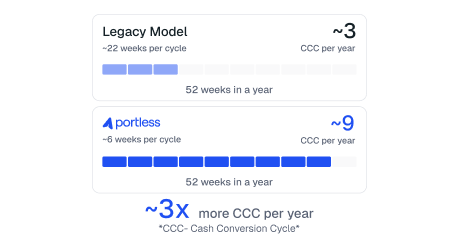
We have another company called Memo Bottle. They cut their conversion cycles. It used to be 3 to 4 months to get your dollar back from your investment. Now that's 4 to 6 weeks. And these are, you know, just 2 examples of dozens of case studies, real-life examples, real brands that this, you know, and I may have mentioned back in the day, I built this solution myself. I ran a $100 million brand. over 10 years. And once you go this model, consumers get the same experience and sometimes better.
Izzy Rosenzweig | 27:35
If you have like one West Coast facility, we'll deliver faster because we don't skip. And the shipping rates, if you're, if you're on the lightweight stuff, starts at $5. And as a brand, your life changes from where you could ship to and how much cash comes in through the door when you need to lay out tariffs. It's just, it's just a healthy way of running a business. I say whenever there's supply— sorry, whenever there's demand, there will be supply.
Steve Hutt | 27:57
Yeah.
Izzy Rosenzweig | 27:58
But how you operate your supply will be the difference of if you have— if you're going bankrupt or if you're scaling aggressively. And that's a whole— and that's what we're here to empower, here to power those brands.
Steve Hutt | 28:09
It's amazing.
Izzy Rosenzweig | 28:10
Talk about demand.
Steve Hutt | 28:11
I mean, I think, I think you power the MrBeast store, I believe. Yes.
Izzy Rosenzweig | 28:14
MrBeast is one of the brands we do. We've done their football, not their chocolates.
Steve Hutt | 28:17
We don't do food.
Izzy Rosenzweig | 28:18
No, no. We've done their footballs, their sweaters, their basketball back in the day. And yeah, and hundreds more around the world.
Steve Hutt | 28:24
That's so cool. All right. So I think, I think that the narrative that I'm getting right now, it really is, uh, one of the, one of the core benefits of Portless is, is really is cash flow.
Izzy Rosenzweig | 28:34
Yeah.
Steve Hutt | 28:34
You talk about these containers and, and ships sitting out there, and then there's this larger demand, and then all of a sudden you're forking over all this money, uh, for something that you can't sell. And you're saying that, hey, no, no, no, uh, you can still have all the demand you want and you're close to the factory. So, you know, and I think I think that's the other thing we never really talked about. It's like, what happens if there is great forecasting and then there is demand and then all of a sudden, or you didn't forecast correctly, but you're so close to the factory, you can, you know, these MOQs we talk about, those can change on the fly and all of a sudden, you can supply that demand because you are so close to the factory. Absolutely.
Izzy Rosenzweig | 29:12
Absolutely. So, I say that being out of stock is literally lost revenue. It just won't show up on your P&L because it's out of stock.
Steve Hutt | 29:19
Right.
Izzy Rosenzweig | 29:20
People are losing— they can increase their business. And we've, we've done studies on our customers, how much their revenue increases in core market because of not being out of stock. It's anywhere between 20 to 35%.
Steve Hutt | 29:31
Wow.
Izzy Rosenzweig | 29:32
Like, how do you measure money that you didn't, you know, because you didn't have out of stock? So we can measure it because we see how their core markets did prior and post joining us. Yes, out of stock is lost revenue. It's just not on your books.
Steve Hutt | 29:44
Yeah, it's so sad. I see that so many times, like, you know, and I do appreciate that brands have at least have some some kind of technology on their PDP page and saying, hey, you know, email me when back in stock. So, it kind of— at least there's some kind of a trigger of demand of like that particular swatch or that color. But on the flip side, there's lots of other brands that say it's out of stock and they don't give any opportunity. It's, you know, you've sent this traffic to the website.
Izzy Rosenzweig | 30:06
Yeah.
Steve Hutt | 30:07
The size is out. You're not giving an opportunity to push back and let them know when it is back in stock. But then, flip side on, you know, your advantage is that you are so close to the factory. And, uh, yeah, things can flip literally on a dime. Um, you have these relationships and, uh, and your, and your fulfillment is there. So.
Izzy Rosenzweig | 30:24
Absolutely.
Steve Hutt | 30:24
This is great. All right. So what do you think some of the next steps are? So we, oh, we know the sweet spot of merchant. Um, and, um, so if someone's interested in saying, hey, yeah, I, I wanna see, uh, I'd like to have better cash flow overall net. And you clearly, you know, if you're under 3.5 pounds, clearly this system works. And, uh, and, you know, apparel being your largest, but, you know, you do a lot of everything. What do you want people to do next to learn more?
Izzy Rosenzweig | 30:48
Yeah, poorless.com. We got case studies, we got videos explaining it, we got write-ups, blogs. We have links to articles on Forbes and Bloomberg. And we just encourage yourself to learn. If it is intriguing, we're very nice people. I'm Canadian as well, Steve.
Steve Hutt | 31:03
I'm in Toronto.
Izzy Rosenzweig | 31:04
We have people around the world, the US, UK, Australia. We have teams all over the world. And you can just book a call, like do an inbound. There's a Contact Us page. You could just tell us about your business, and then someone will reach out immediately to book a call just to educate yourself at a minimum, say like, hey, this is interesting. What does it mean? What it could mean for me? And obviously, you know, if it's not for you, no worries. We're a nice bunch. Feel free to reach out.
Izzy Rosenzweig | 31:29
Okay.
Steve Hutt | 31:30
I also give you a shout out to the Modern Supply Chain podcast you have. You had a lot of notable peers on your show, and I think that's really cool that you're really Um, yeah, just being open to learning what, what others are doing in the space, other, like, you know, big operators. And, uh, absolutely. Uh, it's really cool.
Izzy Rosenzweig | 31:46
We're passionate about— there's a better way of doing business. Um, and I think Portless is a piece of that, but there's many amazing companies that help this model work.
Steve Hutt | 31:54
Yeah, this is amazing. All right, portless.com. Izzy, thank you so much again for recording number 3. I guess we'll have to get something on the books for number 4, uh, next year.
Izzy Rosenzweig | 32:03
I look forward to it.
Steve Hutt | 32:04
All right, have yourself a great afternoon.
Izzy Rosenzweig | 32:06
You too.
Steve Hutt | 32:06
Thank you so much. All right, take care.