
Portless vs. ShipBob

Buy, sell, ship. In that order.

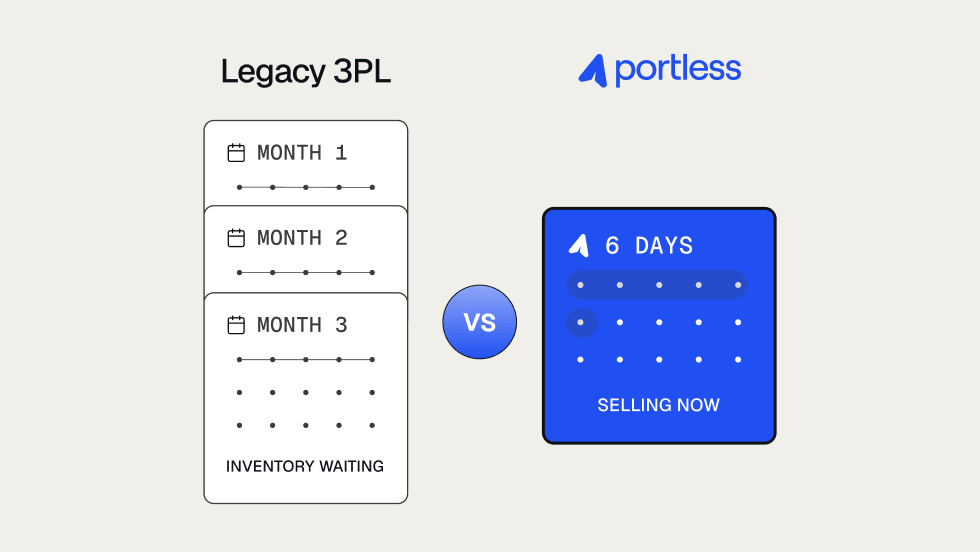
The legacy model runs buy, ship, store, sell, and holds 90 days of your cash before the first order goes out. Direct fulfillment ships from the point of production, one business day after your stock leaves the line.

Trusted by hundreds scaling ecommerce brands

White fluffy cloud with irregular edges on a transparent background.

Model Comparison

Legacy 3PLs like ShipBob were built for sea freight. Your brand isn't.

A 3PL is the last step in a chain that started three months earlier. You forecast, you fund the PO, you freight it across an ocean, you wait on customs, you wait on receiving. Only then does the warehouse get to be fast.

Detailed comparison

Direct fulfillment vs. the legacy 3PL model

Same orders, same customers. The difference is the sequence in front of them.

Fulfillment model

Model

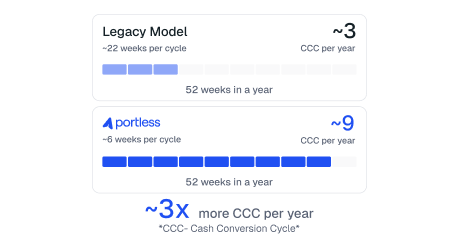
Cash conversion cycle

~90 days

~6 weeks

International expansion

Sign up for more warehouses in each new region.

Built into our operations from day one.

Inventory model

Split across regions

Unified

Operations

Reorders

Commit 90 days out, per region, on a forecast

Reorder against what's selling now

Express delivery

Domestic transit from the nearest stocked warehouse

5–8 days to the door

Data compiled on September 14th, 2026

Model

Cash conversion cycle

~90 days

~6 weeks

International expansion

Sign up for more warehouses in each new region.

Built into our operations from day one.

Inventory model

Split across regions

Unified

Operations

Reorders

Commit 90 days out, per region, on a forecast

Reorder against what's selling now

Express delivery

Domestic transit from the nearest stocked warehouse

5–8 days to the door

Customer Story

100+

Days off lead times

How Memobottle cut a 128-day cash cycle by consolidating six ShipBob warehouses into one with Portless

Read the Story

"Six regional warehouses, six forecasts, and 128 days between paying for stock and selling it. Jesse moved all of it into one pool with Portless."

Jesse Leeworthy

Co-founder • Memobottle

Why brands switch

Four reasons brands choose Portless over ShipBob.

01

One inventory pool for every market.

One number to forecast, one place to restock, one box to the customer. No regional splits, no stock stranded in the wrong country.

02

Cash that moves with your orders.

You pay as orders ship instead of funding a quarter of inventory up front. Most brands go from a ~90-day cash conversion cycle to ~6 weeks.

03

One path, one accountable partner.

Production line to doorstep, one team on the hook for all of it. No handoffs between a freight forwarder, a 3PL, and three carriers when something goes wrong.

04

A supply chain built for speed.

Stock is sellable 1 business day after it leaves the production line, not 6–8 weeks later.

Honest answers

Portless vs ShipBob: the questions buyers actually ask

Is Portless a fit for international D2C brands?

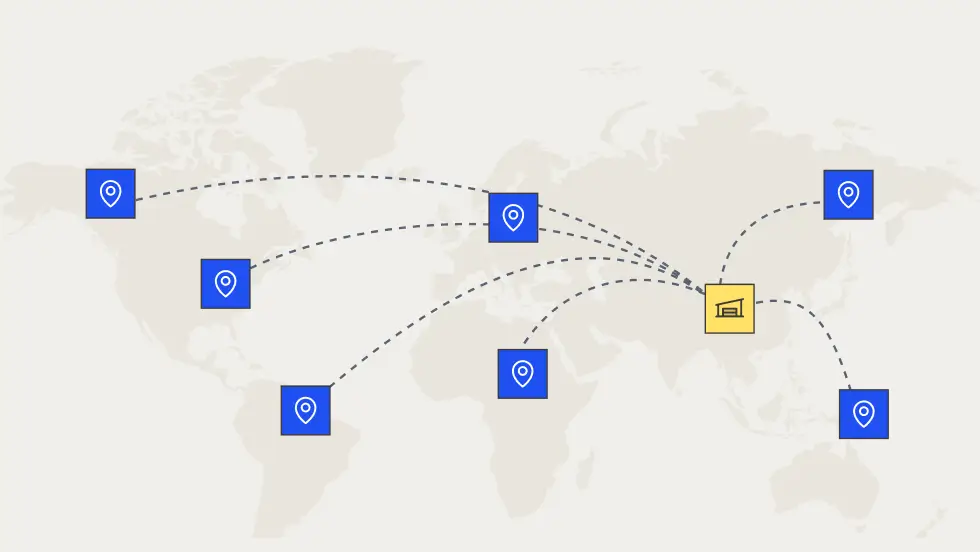
ShipBob is built for selling into the United States. That's what its network is designed around, and it does that job well. If your growth is coming from outside the US, that model has you moving inventory into a US warehouse and then back out again. Portless ships direct from the point of production to 78 countries, so opening a new market doesn't mean opening a new warehouse.

What's the difference between Portless and traditional fulfillment?

ShipBob is domestic warehousing. You buy inventory, freight it in, store it, and ship from it. Portless is direct fulfillment. Your stock is inbounded the day it leaves the production line and ships straight to your customer anywhere in the world, with no domestic warehouse in the middle.

How long does delivery take?

5 to 8 days to the door on express, to 78 countries. Orders placed before 16:00 China time ship the same day.

What happens when a product takes off?

You reorder against live sales instead of a 90-day forecast. New stock is sellable one business day after it leaves the line, and because it lands in one pool, it serves every market at once.

When is ShipBob the right choice?

When 90%+ of your volume is US domestic and you have no international plans. When you need automated EDI for wholesale. When Amazon is a major channel. And when your products are heavy, bulky, or sensitive: pet food, frying pans, supplements. Those economics favor sea freight and domestic storage, and ShipBob handles them well.