“We generated $70K in package protection revenue in a single quarter by adding a simple $4 protection option at checkout — plus an additional $12K from cashbacks. Customers get peace of mind, and we're making a profit on every protected order with zero effort."
“We generated $70K in package protection revenue in a single quarter by adding a simple $4 protection option at checkout — plus an additional $12K from cashbacks. Customers get peace of mind, and we're making a profit on every protected order with zero effort."
Most DTC brands treat international expansion like a major initiative. Dedicated market research. Local creative teams. Sequential country launches, one per quarter. By the time they've planned it, a year has passed and nothing has shipped.
That model is obsolete. The infrastructure that makes global expansion genuinely accessible — direct fulfillment, AI-powered ad translation, automated tax compliance — already exists. The brands using it are generating 30 to 40% of their revenue from outside their home market within 18 months of going global.
Darwish Gani knows this better than most. As a founder, he built two DTC brands to a nine-figure run rate in three and a half years, with 50% of revenue coming from international markets. He now runs OpenBorder, which helps brands handle the tax, compliance, and regulatory side of selling globally. Portless CEO Izzy Rosenzweig sat down with him on The Modern Supply Chain to break down exactly how brands are doing it in 2026.
“We actually hit the nine figure run rate mark in about three and a half years. 50% of our revenue is international.” — Darwish Gani, CEO at OpenBorder
The crawl, walk, run framework for international Ecommerce expansion
The fastest path to international revenue doesn't require a new team, a new tech stack, or a new strategy. It requires running what already works in a bigger market.
Start with English-speaking markets at scale. Canada, UK, Ireland, New Zealand, Benelux, Nordics, Dubai, Singapore, Hong Kong. Target them as a single English-speaking audience and run your existing creative, funnel, and offer. You don't need to localize yet — but a light touch helps. Think Canadian English spelling, imagery that reflects local skin tones, or swapping a US-specific reference for something more neutral. This is localization lite: almost no effort, meaningful lift.
If it works, you've found your first 20 to 30% of international revenue with almost no operational change. If it doesn't, you have real data to inform whether the brand has international legs before investing further.
Once English markets are validated, layer in Western Europe. Use Meta's English-language targeting to reach high-propensity buyers in France and Germany before committing to full localization, then use auto-translation to capture the broader audience.
Only invest in real localization once you know the market wants the product. At that point, localization is a multiplier, not a prerequisite.
Free playbookWhat would three new international markets do for your revenue this year?The International Expansion Playbook covers the data, the framework, and the 90-day plan to enter your first three international markets — without opening a single warehouse.Get the free playbook
The CPM advantage is real — but it's not the whole story
CPMs are cheaper outside the US. It's part of why global markets are wide open for DTC brands still concentrating all their spend domestically. But cheap CPMs alone aren't the real case for going global.
Customer acquisition cost (CAC) tends to equalize across markets over time. As you scale in any country, you bid up against more competition and the easy customers get more expensive to reach. So yes, CPMs are cheaper internationally — but that advantage compresses as you grow.
The real case for going global is different. It's about CAC efficiency in your core market. Once a US brand saturates its most addressable audience, every new customer costs more to acquire than the last. Opening a new market resets that curve. A brand stuck at $15M in the US with a rising CAC can enter the UK and find a fresh audience at the same acquisition cost they had two years ago. 59% of global shoppers already buy from retailers outside their home country — the demand exists, it's just not being met.
“The incremental CAC of the one millionth customer in the US is more expensive than the first customer in the UK.” — Izzy Rosenzweig, CEO at Portless
That pattern is already showing up in the data. Jeremy Horowitz, an Ecommerce P&L expert who has analyzed hundreds of consumer brand exits, predicts that within five years a $5–10M brand will routinely ask "what is the next major market we move into?" — the same question that used to be reserved for $50M+ brands. "I think brands are just going to be global way, way earlier," he said on The Modern Supply Chain. The infrastructure is there. The question is whether you use it before your competitors do.
Why the old international Ecommerce playbook is obsolete
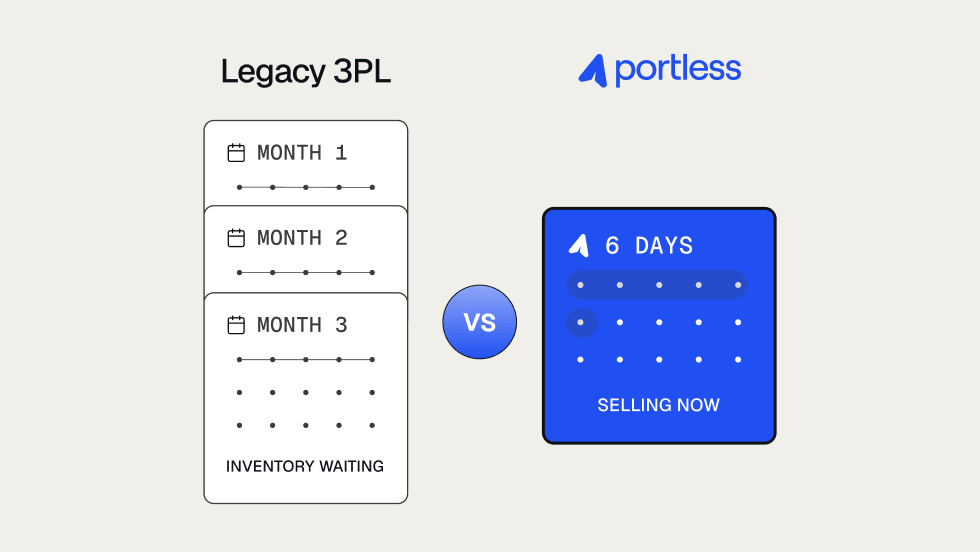
The old way of going global looked like this: six to twelve months of market research per country, dedicated local creative teams, new warehouses, sequential market launches rolling out year over year.
Digital-first DTC has inverted almost all of it. You don't need to rebuild anything. Run your existing funnel in new markets and see what works. The cost of testing is low. The cost of not testing is 30% of your potential revenue sitting untapped.
“The cost of test relative to the reward of it working ends up being very, very high.” — Darwish Gani, CEO at OpenBorder
Founders with less history tend to get this faster. Younger DTC operators who came up through dropshipping think global by default. It's brands with more legacy assumptions baked in that still treat international like a separate initiative requiring a separate team and a separate budget. Canada has the highest cross-border purchase rate in North America, with 55.5% of online shoppers buying from a foreign retailer in the past year — a reminder that global customers are already looking.
How to localize without over-engineering it
Once you've validated the English-speaking markets, the instinct is to invest heavily in localization before pushing into non-English markets like Germany, France, Japan, or Korea. Most brands over-engineer it, especially early. The lift you get from full localization is real — but it's a lot smaller than you'd expect.
At one of his brands, Darwish ran an experiment. They hired local performance creative teams in Spain, France, Germany, and Hong Kong, briefed them on the same USPs the US team was running, and asked them to produce their own localized versions. The result surprised them:
“The US team ads dubbed 80% of the time would beat the local." — Darwish Gani, CEO at OpenBorder
The explanation makes sense in hindsight. The US creative team had run a thousand iterations to find what converts. The local teams were doing it for the first time. Story structure and problem-solution framing tend to be universal. The localization that matters is the language layer, not a complete rebuild.
Meta's auto-translation feature, which rolled out to ads in 2025, has made this even more accessible. The feature uses AI to translate primary ad text, headlines, and descriptions automatically when Meta detects a significant segment of your audience speaks a different language. Darwish and Izzy both noted it captures 80 to 90% of the sales lift you'd get from fully localized creative, with essentially no incremental production cost.
On the storefront side, one rule worth following: don't send international traffic to your homepage. If you've built a conversion flow that works in the US, send international visitors to the same experience. Minimize the variables. Once a market is working, then test localized adjustments.
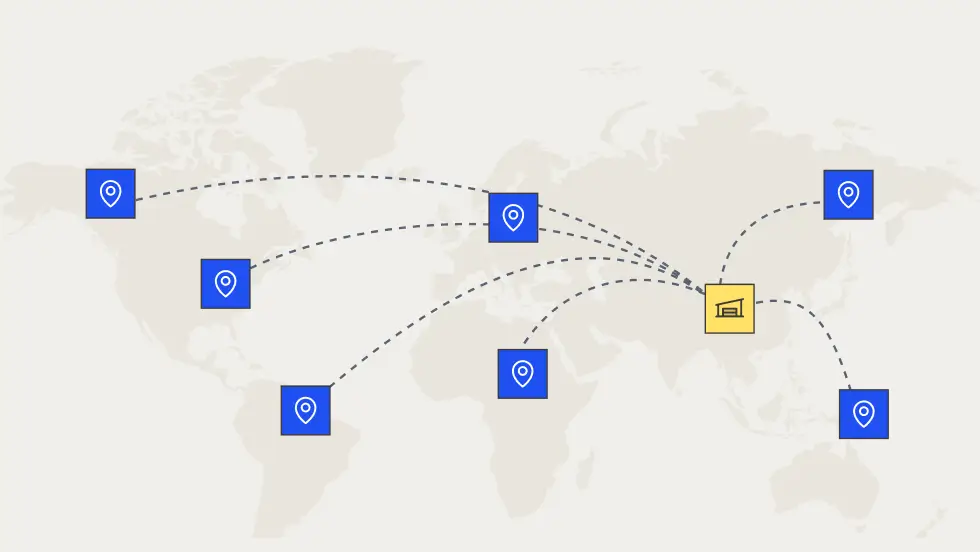
The first thing he addresses is the entity question. If you're shipping from a single origin, you generally don't need to set up legal entities in each country you sell into. What certain markets require are tax registrations — meaningfully lighter than entities, with no audits, no local books, no corporate overhead. The UK, EU markets, Norway, and Australia are the main ones where this comes up.
Izzy and Darwish cover a lot more ground in the full conversation, including how brands should think about global inventory strategy, what product compliance looks like from a China-based QC operation, and why US founders are structurally behind their Canadian and European counterparts on international thinking. Watch it below, or listen on Spotify and Apple Podcasts.
Frequently asked questions
Heading
Lorem ipsum dolor sit amet, consectetur adipiscing elit. Suspendisse varius enim in eros elementum tristique. Duis cursus, mi quis viverra ornare, eros dolor interdum nulla, ut commodo diam libero vitae erat. Aenean faucibus nibh et justo cursus id rutrum lorem imperdiet. Nunc ut sem vitae risus tristique posuere.
Get operator-level supply chain insights
Thank you! Your submission has been received!
Oops! Something went wrong while submitting the form.








.jpg)
.jpg)
.jpg)