You’re shipping 2,000 packages a week to California, and every one of them crosses five or six zones before it arrives. Each zone adds cost. Each hub adds handling time. By the time those packages reach your customers, you have paid a premium for distance and touched each box half a dozen times.
Zone skipping flips that equation. Instead of sending every package on its own journey across the country, you consolidate shipments headed to the same region into a single bulk load, move it directly to the destination zone, and inject it into the local carrier network. That last step is called direct injection, and it is the mechanic that makes the whole strategy work.
This guide breaks down how zone skipping works, when it makes sense, and how it compares to other strategies — including direct fulfillment from your manufacturing source, which applies the same direct injection logic on a global scale.
What is zone skipping?
If you ship a high volume of packages across the country, you already know that distance drives cost. Carriers like UPS, FedEx, and USPS divide the US into shipping zones — numbered regions based on how far a package travels from its origin. The more zones a package crosses, the more you pay.
Zone skipping is a freight consolidation strategy that cuts those costs. Instead of handing each package to a carrier individually and letting it travel zone by zone, you group packages headed to the same region into a single bulk shipment. That shipment moves by truck or rail directly to a carrier facility in the destination zone, where packages are injected into the local delivery network for last mile delivery.
The result: your packages skip the expensive middle zones entirely. You pay bulk freight rates for the long haul and local rates for the final leg — not cross-country parcel rates for every single order.
Discover how direct fulfillment works and see what it could save your brand.
How does zone skipping work?
Zone skipping follows three steps:
- Consolidation. You collect all packages destined for the same region and load them onto a single trailer or container. This is the freight consolidation stage — you are replacing hundreds of individual parcel shipments with one bulk move.
- Direct transport. The consolidated shipment travels directly to a carrier sort facility in the target zone. It bypasses every intermediate hub and zone along the way.
- Direct injection. At the destination facility, packages are handed off to the local carrier network for last mile delivery. From the carrier's perspective, each package is now a local shipment — priced accordingly. This handoff is known as direct injection, and it is the step that unlocks the cost savings.
Here is what that looks like in practice. Say you are a brand based in Georgia shipping 1,000 orders to customers in California. Without zone skipping, each package crosses multiple zones at full parcel rates. With zone skipping, you consolidate those 1,000 packages into a truckload, ship it directly to a California hub, and inject locally.
::table
;Individual shipping;Zone skipping
Cost per package;$15;$10 ($3 freight + $7 local)
Total cost (1,000 packages);$15,000;$10,000
Transit time;Five to seven days;Three to five days
Touchpoints;Six to eight;Two to three
:table
That’s $5,000 saved on a single lane — a 33% reduction on the cost of moving 1,000 packages. Fewer touchpoints also mean fewer chances for damage or delay.
What are the benefits of zone skipping?
With supply chain costs rising above inflation and carrier rates climbing year over year, brands need every cost lever they can find. Zone skipping delivers on several fronts.
- Lower shipping costs. You replace cross-country parcel rates with bulk freight plus local delivery rates. On the example above, that is a 33 percent reduction on a single high-volume lane — the kind of saving that can turn an underwater lane into a profitable one.
- Faster transit times. Packages move directly to the destination zone without stopping at intermediate hubs. Fewer stops mean fewer days in transit.
- Reduced package damage. Every touchpoint is a chance for a package to get lost, delayed, or damaged. Zone skipping cuts touchpoints from six to eight down to two or three.
- Better profit margins. Lower shipping costs go straight to your bottom line. For brands spending six or seven figures annually on shipping, a meaningful per-package reduction on key lanes is material. You can calculate your potential savings to see the impact on your margins.
More Ecommerce brands are turning to zone skipping as carrier rates rise and customers continue to expect fast, affordable delivery.
When does zone skipping make sense for your business?
Zone skipping is not for everyone. It works best when you have enough volume concentrated in the right places.
- High lane density. You need a consistent, high volume of orders going to the same region. Filling a trailer to California every week makes zone skipping viable. Sending 20 packages a month does not.
- Concentrated customer base. If 40 percent of your orders go to three or four zones, you have strong candidates for zone skipping lanes. The more concentrated your demand, the better the economics.
- Predictable shipping patterns. Zone skipping requires planning. You need to consolidate packages before shipping, which means your order flow should be steady enough to fill trailers on a reliable schedule.
Zone skipping does not make sense if your order volume is low, your customers are spread evenly across every zone, or your business is too seasonal to maintain consistent lane density. In those cases, you will pay for half-empty trailers and lose the cost advantage.
Try the ROI calculator to see how your shipping costs compare across fulfillment strategies.
What are the alternatives to zone skipping?
Zone skipping is one approach to reducing shipping costs, but it is not the only one. Here are three alternatives worth evaluating.
- Distributed fulfillment. Instead of shipping from one central domestic warehouse, you stock inventory in multiple warehouses across the country. Each order ships from the nearest location, reducing zones crossed. The tradeoff: you need more inventory, more warehouse leases, and more operational complexity. Distributed fulfillment works for brands with large, diverse catalogs and enough capital to hold inventory in multiple locations.
- Regional carriers. Rather than relying on national carriers for every shipment, you partner with regional delivery providers who specialize in specific zones. Regional carriers often offer lower rates and faster delivery within their coverage area. The limitation is coverage — you may need several regional partners to reach all your customers, which adds management overhead.
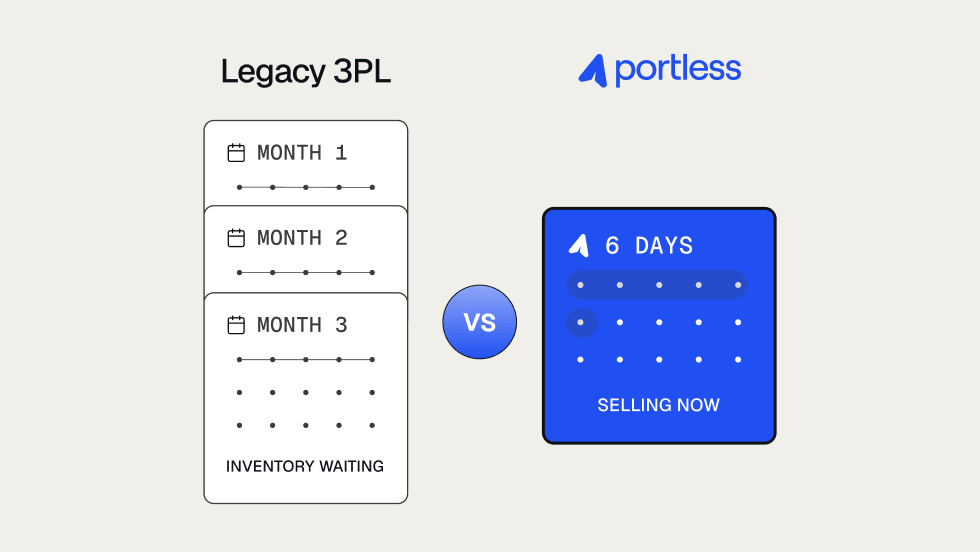
- Direct fulfillment from origin. For brands manufacturing overseas, there is a third option: skip the domestic warehouse entirely and ship directly from production warehouses near your factories to end customers worldwide. This eliminates the domestic warehouse leg, the ocean freight, and the weeks of transit time that come with the legacy model. This is the approach Portless enables — fulfillment from warehouses in China, delivered to customers in 85+ countries in five to eight days, using the same direct injection model that powers zone skipping.
Each strategy fits different situations. Zone skipping optimizes domestic shipping costs. Distributed fulfillment reduces distance within a domestic network. Direct fulfillment removes the domestic network from the equation altogether and applies direct injection at global scale.
Direct injection, but global
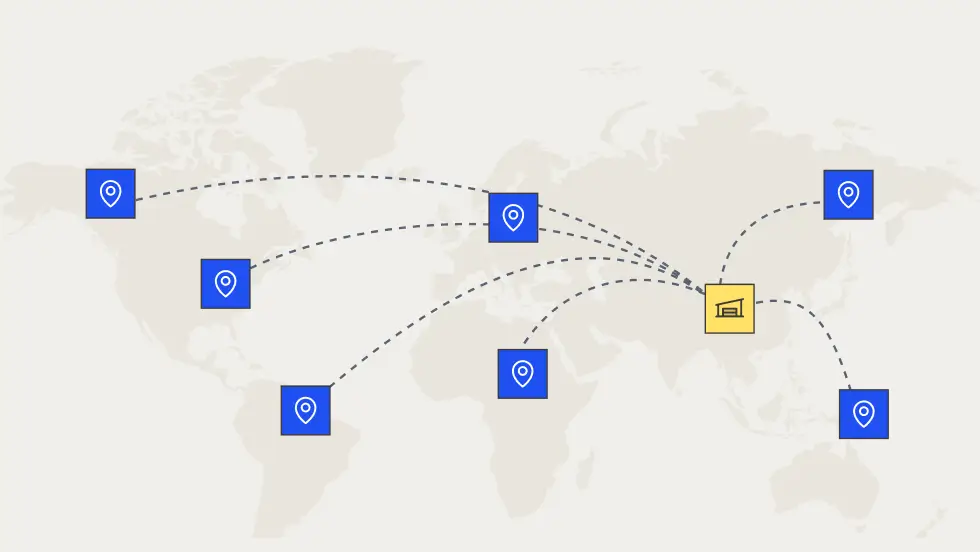
Zone skipping works because of one core mechanic: consolidate packages, move them in bulk to the destination, then inject them into the local carrier network. Portless runs that same playbook — just at global scale, from the manufacturing source.
Portless operates warehouses near major manufacturing hubs in China. When your products come off the production line, they move to a Portless warehouse where they are picked, packed, and shipped directly to your customers in 85+ countries. Orders are consolidated by destination, flown to the destination country, and injected into the local carrier network — USPS in the US, Royal Mail in the UK, Canada Post in Canada, and dozens more — for last mile delivery in five to eight days.
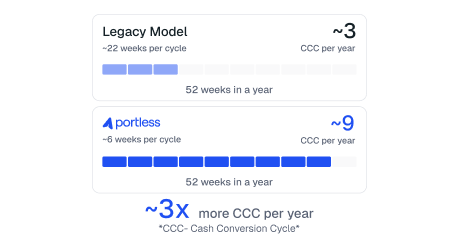
The difference from domestic zone skipping is not the mechanic. It is where you start. Zone skipping optimizes the leg from your US warehouse to your US customer. Portless removes the US warehouse from the equation entirely — no ocean freight, no domestic warehouse lease, no weeks of inventory sitting in transit. You only pay for what you sell.
For brands sourcing from Asia, that is a fundamentally different cost structure — built on the same direct injection logic, applied at the source.
Book a demo and find out if Portless is right for your business.
FAQ
What does zone skipping mean?
Zone skipping is a shipping strategy where you consolidate packages headed to the same region into a bulk shipment, transport them directly to the destination zone, and inject them into the local carrier network for last mile delivery. It lets you bypass intermediate shipping zones and avoid the per-zone surcharges that carriers apply.
What is direct injection in shipping?
Direct injection is the step in zone skipping where packages are handed off from the consolidated bulk shipment to the local carrier in the destination region. Instead of moving through the carrier's national sort network, packages enter the carrier's system at the local level and are priced as local deliveries. Direct injection is what makes zone skipping cost-effective.
How much can zone skipping save on shipping costs?
Savings depend on your volume, lane density, and carrier contract. The worked example above shows a 33 percent reduction on a single high-volume lane (1,000 packages from Georgia to California). The more packages you consolidate per shipment, and the more zones you skip, the greater the savings.
Do all carriers offer zone skipping?
Not all carriers offer zone skipping as a formal program, but UPS, FedEx, and USPS all support it for qualifying shippers through standard or dedicated parcel programs. You can also work with third-party consolidators who handle the freight leg and inject into multiple carrier networks.
What is the difference between zone skipping and distributed fulfillment?
Zone skipping moves packages in bulk from one origin to a destination zone, bypassing intermediate zones to reduce per-shipment cost. Distributed fulfillment places inventory in multiple domestic warehouses so orders ship from a location closer to the customer, reducing distance across your entire network but requiring more inventory and infrastructure.
Does Portless use zone skipping or direct injection?
Portless uses direct injection at global scale. Orders are consolidated by destination country in our warehouses near manufacturing in China, flown to the destination country, and injected into the local carrier network for last mile delivery. It is the same mechanic that powers domestic zone skipping, applied internationally and from the manufacturing source rather than from a US warehouse.








.jpg)
.jpg)
.jpg)