Supply chain
The term "supply chain" is often used loosely to mean shipping or logistics. It means more than that. Your supply chain is a financial system as much as a physical one. It determines how long your cash is tied up in inventory, how exposed you are to stockouts, and how quickly you can react when demand shifts. For an Ecommerce brand, it covers every step: sourcing, manufacturing, inbound freight, warehousing, order fulfillment, last-mile delivery, and returns. Each stage adds time and cost. How well you manage each one determines your margins, your delivery speed, and your ability to scale.
How a supply chain works
Most Ecommerce supply chains run through seven distinct stages. Each has its own cost structure, failure modes, and optimization levers.
::table
Stage;What happens;Key variable
Sourcing;Raw materials or finished goods are procured from suppliers;Supplier lead time, MOQ, quality
Manufacturing;Goods are produced and prepared for shipment;Production time, QC pass rate
Inbound freight;finished goods move from factory to fulfillment location;Mode (air vs. ocean), transit time, landed cost
Warehousing;Inventory is stored until orders are placed;Holding cost, days of inventory outstanding
Order fulfillment;Orders are picked, packed, and dispatched;Pick-and-pack accuracy, fulfillment speed
Last-mile delivery;Packages move from carrier hub to customer door;Carrier performance, delivery zone, cost per shipment
Returns;Rejected or unwanted goods flow back through the chain;Return rate, restocking cost, reverse logistics speed
:table
A disruption at any single stage cascades downstream. A delayed factory run pushes back inbound freight. Late freight empties warehouse stock. Empty stock causes stockouts on your sales channels. Supply chain visibility, knowing where your inventory is at every stage, is one of the most operationally valuable capabilities an Ecommerce brand can build.
Ecommerce supply chains differ from traditional retail in one fundamental way: they move individual orders to individual customers, not bulk shipments to store shelves. That raises SKU count, increases the complexity of demand forecasting, and means the delivery itself is the customer experience. There's no store visit, no sales associate, just the package at the door.
Why your supply chain structure directly affects profitability
Every node in your supply chain adds cost. Freight moves money from your margin to a carrier. Warehousing converts inventory into a holding expense. Each handling touchpoint, receiving, pick-and-pack, re-labeling, is a fee. By the time a product reaches your customer, the landed cost can be meaningfully higher than the price on your purchase order.
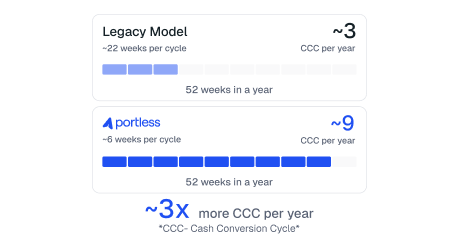
Your supply chain structure also governs your cash conversion cycle, the time between paying for inventory and collecting revenue from it. A brand shipping ocean freight from Asia into a domestic 3PL can have cash tied up for 60 to 90 days before a sale clears. That gap is a working capital drain that compounds as you scale.
The brands that win on supply chain aren't necessarily the ones with the lowest unit costs. They're the ones with the shortest feedback loops, able to reorder based on real demand, respond to disruptions without stockouts, and move inventory into cash faster than competitors.
What breaks a supply chain
Supply chains break in predictable patterns. The most common failure modes for Ecommerce brands are:
- Demand forecasting errors. Over-ordering creates dead stock and holding cost. Under-ordering creates stockouts and lost revenue.
- Single-source dependency. Relying on one supplier, one freight carrier, or one 3PL creates fragility. Any disruption has no backup path.
- Long, opaque lead times. The longer your lead time, the further ahead you need to commit to inventory, and the less accurate those buys will be.
- Tariff and regulatory exposure. Changes to de minimis thresholds, new tariff schedules, or customs classification errors can add landed cost overnight.
- Weak returns infrastructure. Reverse logistics is often the last thing brands build and the first thing that creates customer service problems at scale.
Resilient supply chains aren't accident-free. They're designed to absorb shocks. That means redundant suppliers, real-time visibility, shorter inventory commit horizons, and fulfillment structures that can flex with demand.
How Portless approaches the supply chain
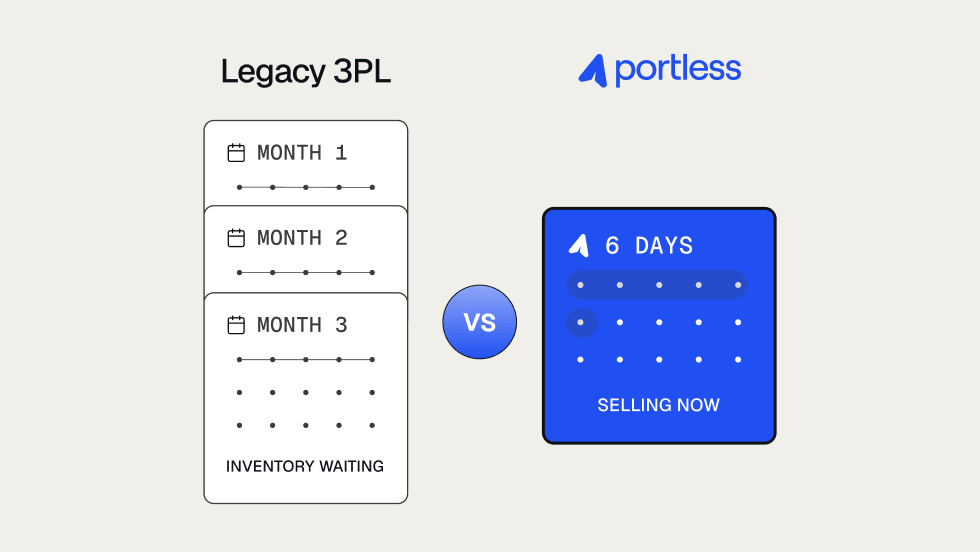
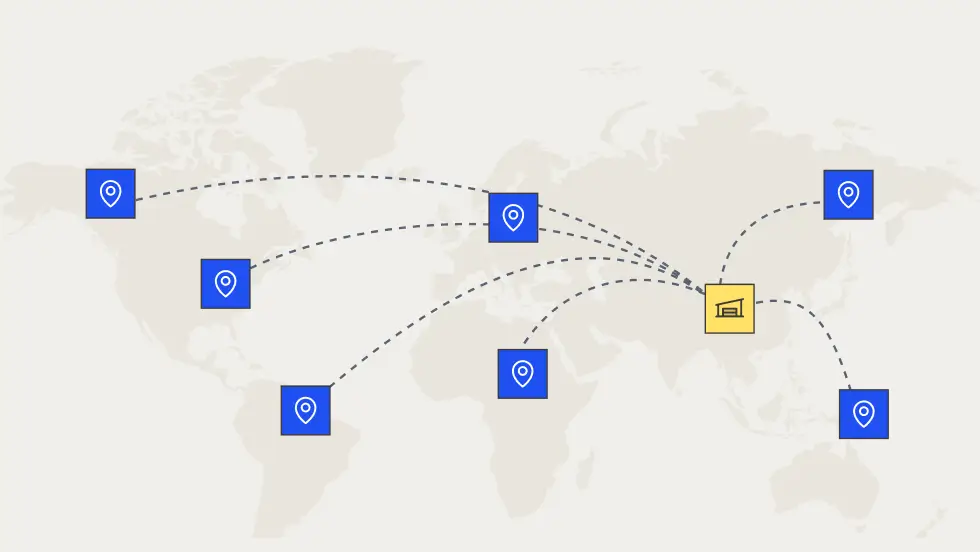
Portless's direct fulfillment model shortens the supply chain by shipping orders from manufacturer to customer without a domestic warehousing stop, cutting both cost and cash cycle time for Ecommerce brands sourcing from Asia. See how it works.
← Back to the Ecommerce supply chain glossary