Landed cost
Landed cost is the total cost of getting a product from the factory to your customer's door, including unit cost, freight, insurance, duties, taxes, and fulfillment fees. It's the real number behind your gross margin — not what you paid the factory, but what it actually costs to deliver one unit.
Most DTC brands underprice their products because they confuse unit cost with landed cost. The factory invoice says $6.20. The Shopify product cost field says $6.20. Margin looks healthy on paper. Then duties, freight, warehousing, and last-mile delivery quietly compound, and the actual cost to deliver that unit is closer to $14. Margin disappears, and nobody can pinpoint where it went.
Landed cost is the antidote. It forces you to account for every dollar between production and delivery, so you can price with confidence, forecast accurately, and identify where your supply chain is leaking money. After the end of US de minimis in August 2025 and the EU's planned removal of its €150 exemption in 2026, landed cost is no longer a back-office calculation — it's the number that determines whether your brand is profitable.
What landed cost includes
Landed cost is the sum of every cost incurred to get a product from the point of manufacture to the end customer. The standard formula is:
Landed cost = Product cost + Freight + Duties and taxes + Insurance + Fulfillment and handling + Other fees
Each component breaks down as follows:
According to US Customs and Border Protection, duty is calculated on the transaction value of the goods — typically your factory invoice price — not the retail price. Getting this wrong is one of the most expensive mistakes in cross-border Ecommerce, as we cover in our breakdown of customs valuation after de minimis.
Why landed cost matters more after de minimis
Before August 29, 2025, US imports under $800 entered duty-free under de minimis. Many DTC brands shipping direct from China could ignore duties entirely in their landed cost models. That era is over.
Every parcel entering the US now triggers duty. The EU is following the same path, with its €150 exemption set to disappear in 2026. The structural impact:
If you haven't recalculated your landed cost since these policy shifts, you're running on outdated numbers. Use our landed cost calculator to get an updated picture per SKU.
How landed cost differs by fulfillment model
The same product can have wildly different landed costs depending on how it moves through your supply chain. Here's the side-by-side:
::table
Cost component;Legacy bulk freight + 3PL;Direct fulfillment
Product cost;Same;Same
Freight;Lower per unit (ocean);Higher per unit (air)
Duty timing;Paid upfront on bulk import, before sale;Paid per parcel, after customer purchase
Warehousing;Domestic storage fees, 20–30% of inventory value annually;None
Last-mile shipping;Zone-based premiums, up to 52% more for far zones;Domestic carrier injection, no zone penalty
Inventory risk;Duty paid on unsold units;Zero duty on unsold units
:table
The legacy model often looks cheaper on a per-unit freight basis but quietly accumulates carrying costs, zone premiums, and duty on inventory that may never sell. We break this down further in the 2026 inventory model.
How to calculate landed cost: a worked example
Say you're shipping a 1.5lb apparel item manufactured in China and sold in the US at $45.
Direct fulfillment landed cost:
Now compare the legacy model with duty paid upfront on 5,000 units sitting in a domestic warehouse for 60 days before sale. Add carrying costs, zone premiums for cross-country shipping, and the cash flow drag of duty paid months before revenue arrives, and the picture changes — even if the freight per unit looks lower.
The point isn't that one model is universally cheaper. It's that you can't compare them without modeling landed cost across both.
Landed cost and cash flow
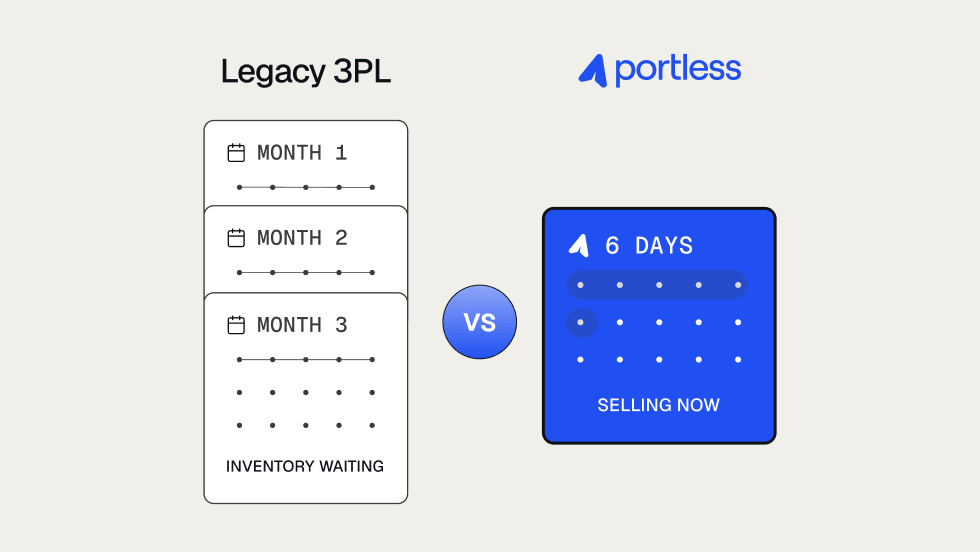
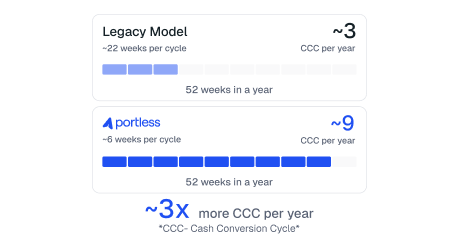
Landed cost isn't just a margin number. It's a cash flow number. Under the legacy model, you pay the product cost, freight, and duty months before you collect revenue from the customer. That gap — the cash conversion cycle — can run 60 to 90 days for brands using bulk ocean freight.
Direct fulfillment compresses that cycle. Duty is paid per parcel as orders ship, matched to incoming revenue. There's no warehouse full of pre-paid duty waiting to be sold through.
For a brand with $200,000 in working capital:
Model your own cycle with the direct fulfillment ROI calculator.
Common landed cost mistakes
Why Portless brands run leaner landed cost models
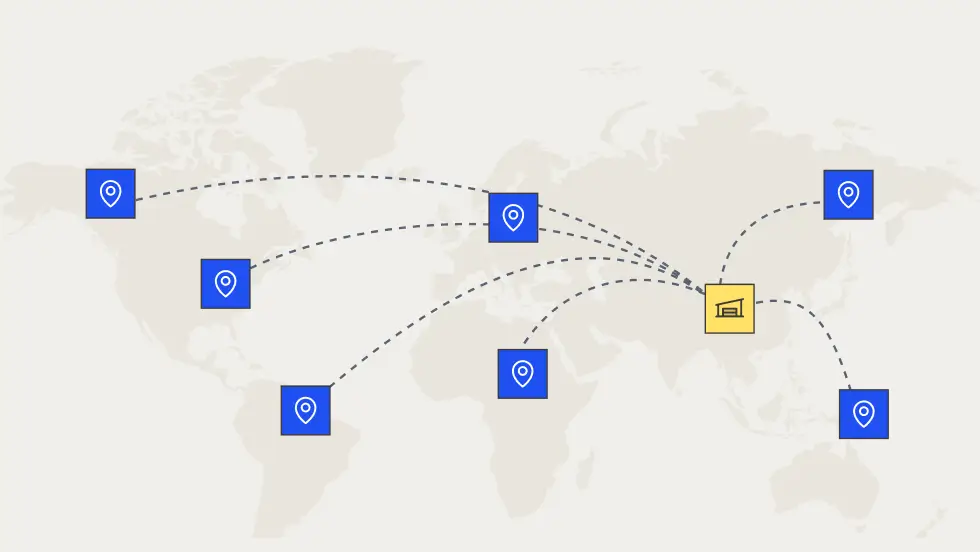
Portless eliminates the largest hidden costs in legacy landed cost calculations: domestic warehousing, zone premiums, duty paid on unsold inventory, and the working capital drag of a 60-to-90-day cash cycle. By fulfilling individual orders direct from manufacturers in Asia, brands match duty payments to actual sales, skip the domestic warehouse layer, and price with full visibility into per-order economics. If your current landed cost model has more guesswork than precision, contact us and we'll model your numbers against ours.
← Back to the Ecommerce supply chain glossary