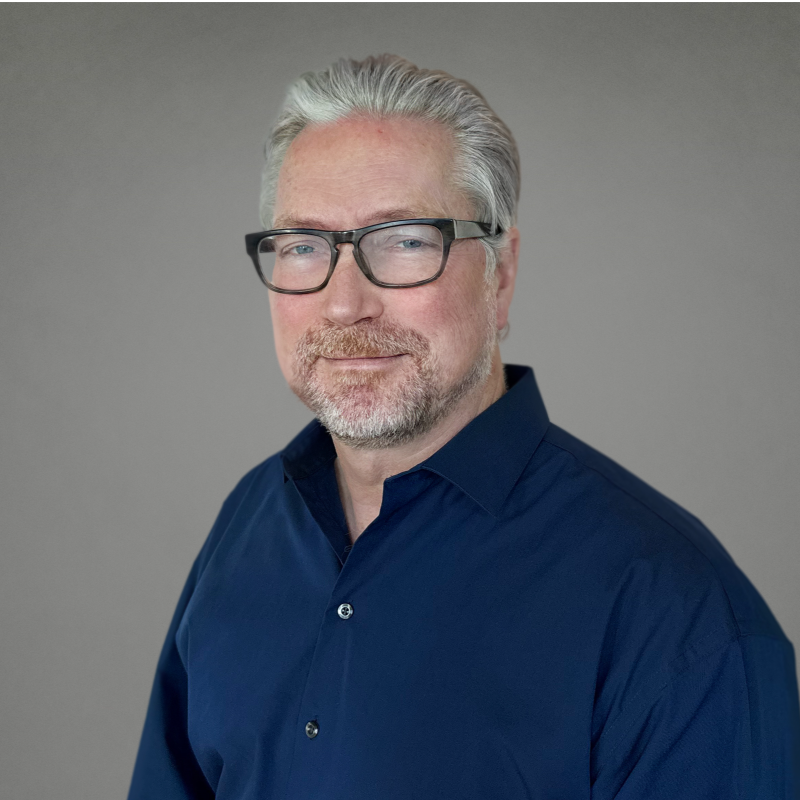
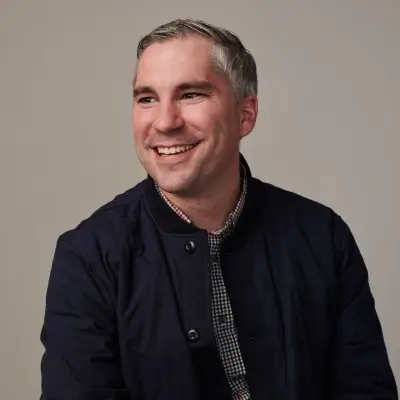
Claus Lauter | 00:03
Hello! Welcome to another episode of the E-commerce Coffee Break podcast. For many ecommerce brands, international expansion feels like the next logical step. But there is one big problem the traditional playbook often means tying up cash and inventory, opening warehouses and taking more risk before you know, if a new market even will work. So today, we're tackling a critical question can DTC brands scale globally without opening warehouses around the world?
Claus Lauter | 00:27
To break this down, I'm joined by Izzy Rosenzweig. He's the founder and CEO of Portless. His company ships millions of orders each year directly from manufacturers to customers in over 75 countries. Is it great to have you on the show?
Izzy Rosenzweig | 00:27
Thank you so much for having me. I'm very excited to be back.
Claus Lauter | 00:27
Let's jump right in. A lot of brands dream about selling globally.
Claus Lauter | 00:45
What's the biggest mistake they make when they try this without any experience?
Izzy Rosenzweig | 00:45
I think the biggest misconception of the space is specifically if you're still doing traditional supply chain, meaning you're manufacturing in China or somewhere in Southeast Asia, bring it to one location in the States. And they say going global is too hard. I don't want to think about it.
Izzy Rosenzweig | 01:03
And we actually see this very common in American companies because America is a big, big country. And it's a great market, probably still the best market to be doing e-commerce. But it's a very big world. There's a lot of people around the world that would want your product if you just give them the opportunity to buy it. So I would say the biggest misconception is it's not that hard.
Izzy Rosenzweig | 01:23
People think it's hard. It isn't. So specifically for Portless customers, we now serve as hundreds of brands, you know, anywhere from brands from Australia to Europe to us to, you know, we don't care where you're based. A first we service your core market. But when brands come to us, they almost never service countries outside of the core market.
Izzy Rosenzweig | 01:41
And within 12 months, 40% of their revenue is outside of core market. That is same true for US brand, a UK brand and Australian brand. Because once you come bring your goods to a Portless facility, which we have two in China and Vietnam, you can now service the world at very cost effective rates starting at $5 and a local experience for the customer.
Izzy Rosenzweig | 02:03
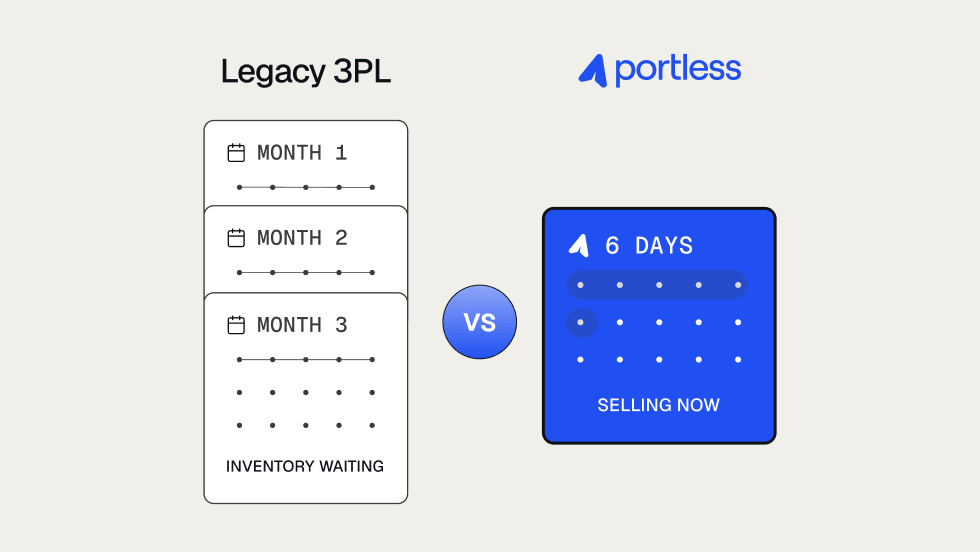
So customer makes an order in the US average. Six days later it's at the front door. Same brand has a customer in the UK. Average five and a half days as of front door world mail USPS. So I would say the biggest misconception and the biggest risk is not doing it. You got to be expanded beyond your borders in 2026 and beyond.
Claus Lauter | 02:21
I totally agree in this, but still, many brands assume that they need warehouses in every market that so they can expand. Why do you think this is?
Izzy Rosenzweig | 02:21
It's a great point. And that's because that has the way it's been done forever. Like until I would argue until Portless existed, if let's say you were based in the US and like I love the UK market, I love the streaming market, English speaking countries.
Izzy Rosenzweig | 02:43
It should be so easy. Canada. But now I got to find a different three people. I got to have a different contract, different billing systems. How do I get my goods there? Once it's there, what if the market doesn't do well? How do I pull it back? These are really hard questions. And and rightfully a brand says like, oh man, I got to open up four warehouses to do business in the core English speaking countries.
Izzy Rosenzweig | 03:05
Different negotiations, things go wrong. That is really hard. And I get it. So to answer that question, how do you do it differently? Well, there's a better way to run e-commerce. So instead of bringing all your goods to, let's say your US, you know, Vegas warehouse or US new Jersey warehouse, don't do that. You could store your goods in our Portless facilities.
Izzy Rosenzweig | 03:24
We have massive facilities. We get all your goods in our facilities instead of two months by water, two days. It's in our facility and once it's in our facility, we're able to service 75 countries. Every consumer in each country has a local experience. Use last mile carriers. Delivery times are as fast as four and a half days, up to ten days across these markets.
Izzy Rosenzweig | 03:44
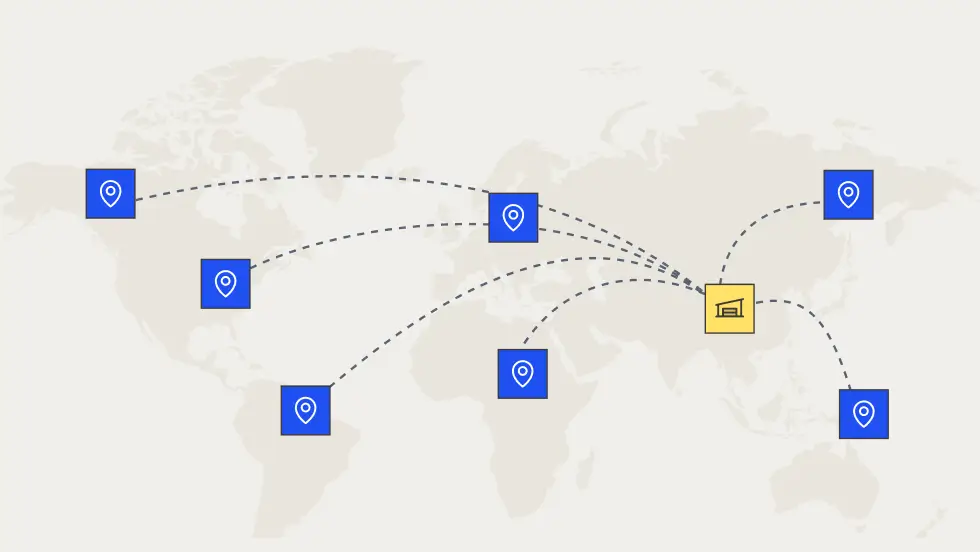
And you can have one hub. So you have one inventory hub. We get the order, we put the last mile label on it. They go in different pallets, they go in different planes out of Hong Kong or mainland China, and they're delivered in as fast as five days to then customer. And all of a sudden what you could do is like, hey, I don't need to split my inventory.
Izzy Rosenzweig | 04:00
I don't need to have inventory in different countries around the world and deal with different contracts. No one location, one contract could service your core country with the same delivery times you're getting today, and you could service another 70 countries from that same location, same inventory. Canada is not doing well. Just stop selling their that same inventory you're using now to Australia. Right? So that's the answer to give people credit. It was hard. And if you're doing the traditional model it continues to be to be hard. But we live in a new world. We live in a world where you could run a healthier business, better cash flow and service millions of customers that are perfect for your brand just outside of your core market.
Claus Lauter | 04:41
Obviously time, customer service and having everything in one facility huge benefits. But at the end you mentioned cash flow, and I want to dive a little bit into this because I think that's also a huge benefit there. If you have more than one warehouse, you're tying up your inventory. Let's talk about how does that look in the traditional way?
Izzy Rosenzweig | 04:59
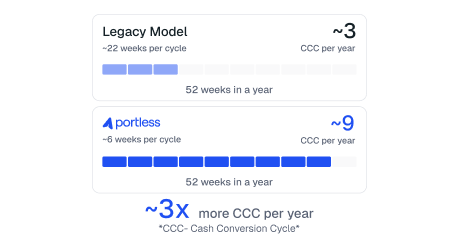
Yeah, I would say it comes in three major buckets. The first one is how much inventory should I buy traditional brands to say, well, two months on water, I want enough inventory to buffer me for at least four months, plus two months in water. For the next batch, let's buy six months of inventory. They have to write anywhere between, depending on the size of the brand.
Izzy Rosenzweig | 05:19
$1 million check to a $10 million check. That is insane. That is so much money. And in the Portland model is like, hey, maybe don't buy six months. We're right next to your factory by six weeks. By four weeks, depending how long your fracture takes to produce. So all of a sudden you're going to free up what would have been a $5 million check to maybe $1 million check, or if it was going to be a million, maybe it's 200 grand.
Izzy Rosenzweig | 05:42
All of a sudden you got all that money to work on your business. Cash is oxygen for startup, for ecommerce brand, and the the dumbest place it is. It's just park is dead inventory most likely on the water or inventory that's meant for four months now. No stupid by less inventory, be more agile. And then all of a sudden what happens is one second you're in, you're in the season.
Izzy Rosenzweig | 06:06
Let's call your summer brand selling, you know, swimsuits and a certain color that you thought wasn't going to be good is crushing it because there's a TikTok trend. Well, in the traditional model, too bad you're sold out. Maybe next year the trend will exist. No, we're living in a new world, and if you're doing that, your business will die.
Izzy Rosenzweig | 06:25
You cannot compete against the people that are working in the new way of e-commerce. What do you do? You see the demand generation go into manufacturing and sell in season. Chase the demand. Do not let demand go to a website out of stock. If you have an out of stock item on your website in your season, you're losing money.
Izzy Rosenzweig | 06:43
You're simply giving to competitor. And and what we tell customers are, you have to look at this model, open up cash, chase the best sellers. And that's just one bucket. Having less money in inventory in a given time and scaling the good stuff. But then is, you know, when you avoid putting inventory around the world, you avoid the most likely scenario where you'll have debt inventory because not every country will sell your stuff properly.
Izzy Rosenzweig | 07:07
And then US might be a 4 to 8 week timeline on water versus Canada might be longer. It's more complex. Australia is a little less. So fundamentally, I agree with you. Cash flow is your oxygen of any business. And if you're a business that is not optimizing to run a better cash flow business, your competitor will and they will beat you.
Izzy Rosenzweig | 07:29
So yeah, that is our strong opinion in that space.
Claus Lauter | 07:29
Yeah. DTC businesses definitely cash flow driven. And I think you gave a good example is like your product becomes a trend. It goes viral. Your agency has figured out meta ads. And one of a sudden you sell like hotcakes. And obviously this works for a lot of industries and verticals.
Claus Lauter | 07:49
Can you give some examples of what kind of verticals brands benefit the most?
Izzy Rosenzweig | 07:49
Absolutely. We'll service. I think I had at least eight different types of verticals. The biggest one is apparel. If you're in the business, think about it. You're small, you're lightweight. Anything that's under 5 pounds per order is could be interesting for this model. Apparel is great for that.
Izzy Rosenzweig | 08:07
We have a lot of cosmetic brands. We have a lot of accessory brands. People sell different accessories can be anything from jewelry to small toys, small do really well earbuds. Anything that is not very large or not very heavy is perfect for this model.
Claus Lauter | 08:07
I want to talk a little bit about paperwork because usually if you send it out, that's a question for everyone.
Claus Lauter | 08:31
Is there a customs? Is there any kind of whatever external fees coming? How does that work? How do you find out? Or if we work with you with portals, how has that been handled?
Izzy Rosenzweig | 08:31
Great question. So the answer is yes. We do everything end to end. And depending what market you're sending into, if it's the US market, there is import tax on your cost of goods and we will do it as a flow through.
Izzy Rosenzweig | 08:53
So like hey, there's no word to minimus to the US. Used to be miss. It was nice. But brands are still getting the cash flow out of it. And what's interesting to to additional cash flow. That's not to mention last time if you were in the traditional model, you bought a million t shirt, $1 million worth of t shirts, and you brought it to the CBP, to inbound it to your biggest facility, you need to write a check now for 300 to $500,000 to the CVP.
Izzy Rosenzweig | 09:15
You haven't sold a single shirt yet. In our model, you still got to pay the taxes, but you don't need to pay the taxes upfront. You sell the item, the money goes in your bank account and only when the parcel crosses the border do you need to pay those import tax. So you got to pay it. It's a flow through for us.
Izzy Rosenzweig | 09:30
We just pass whatever we get charged. But you don't need to lay all that money up front. So not only less inventory, you're deferring taxes. Take that money and operate your business. That money. And then for most other markets, they're still diminishes. You could ship a up to 1000 Australian dollar order into Australia import duty free. So all of that we take care of everything.
Izzy Rosenzweig | 09:51
If there is import duties, we take care of it. We pass the cost to you. If there's zone for duties, take advantage of it. As long as it'll exist eventually, we believe the minimum will go away to most countries and you'll just pay traditional import tax but exist now. So like you should be leveraging it. And then also local sales tax.
Izzy Rosenzweig | 10:07
So if you do business in Europe you got to do VAT right. You need an iOS number. We take care of all that. We take care of all tax compliance. We give we help you figure out the tax calculation. We do the filing with the government. So we take every complex part of this business in our hands and we deal with it.
Izzy Rosenzweig | 10:26
And all you got to do is you have a great product, you're great at marketing. Just scale. And to your point, the last thing you want to do when something's scaling on meta is to turn off the ad. Does that ad ever come back? I mean, if the people that, you know, history maybe I maybe know like when something's cruising, ride that wave.
Izzy Rosenzweig | 10:44
Right. And the last thing you want to turn off and not only why ride the wave to your core market, open up other markets. It's riding meta got amazing. And understanding your customer, understanding the product to customer matching. Ride the waves. Don't go out of stock and sell to global markets.
Claus Lauter | 10:44
Yeah, I see you speak from experience. Obviously as a marketer, never change a running system.
Claus Lauter | 11:06
And if meta works and you're running out of stock you have a problem. Now let's let's talk about you mentioned before. There is obviously a huge growth opportunity there. At what stage should a brand start looking at global expansion?
Izzy Rosenzweig | 11:06
It's a great question. So I would say in general brands that are under a million, we always see like first like nail your business.
Izzy Rosenzweig | 11:25
Like the first thing you want to do is make sure your product customers like it. Make sure that when you sell it, the the cash to LTV or the cat to revenue is all working over $1 million. That's when, you know, we don't talk to brands hundred million. It does not get fit for us. But once you're over a million now it's a question how fast can you scale while remaining cash flow efficient?
Izzy Rosenzweig | 11:47
Start then there's no reason not to. And by the way. Another thing I've not to mention a common question is, well, what do we do about returns or Portland's global return centers? We have return centers in Canada, US, UK, Europe, Australia, so pretty much any major market we can handle the return. And then what we do is we could do the inspection, we could grade it.
Izzy Rosenzweig | 12:04
Do you want to keep it and forward ship it to the next customer that buys this item. So really is a full ecosystem experience. And I will add you know, we're also expanding different markets. So like our core business is cross-border. But you have brands that are larger like hey I need do wholesale. I want a certain business part of my business express no problem.
Izzy Rosenzweig | 12:23
With three locations in the US we have Vegas, Chicago, Atlanta. We can handle express orders, wholesale orders, etc. we're opening similar facilities in Europe, UK and Australia because end of the day we live in a global global e-commerce world. Like if you're thinking within your borders, you will fail against your competitors. But to solve that problem, Louis has to grow with our customers.
Izzy Rosenzweig | 12:46
So a cross border does so much cash flow advantage. Access 71 markets. But for some of the bigger markets, not only do you need return centers, you might need some wholesale help. And for us, at least, we look at ourselves as your consultants. From a supply chain perspective, how can we help you run a more efficient business? You do the marketing, you do the branding.
Izzy Rosenzweig | 13:06
We'll help you run a healthy business at the back end.
Claus Lauter | 13:06
You already answered my question is about returns. Now, can you share some success stories or case studies of businesses that you worked with? And you don't need to name the brand and what kind of results they saw?
Izzy Rosenzweig | 13:06
Yeah, we have a bunch of case studies. There's a great one called Natural Patch.
Izzy Rosenzweig | 13:24
They're actually an Australian brand, incredible founders, incredible product. Today they're in target and all these amazing stores. And when they got started they had a US facility that a UK facility and Australian facility. But demand was everywhere. We now have them over 70 countries. We now do all their logistics to the US market. We still have a US warehouse because for them, because they have to do wholesale, they have to do right, support FBA and that's fine.
Izzy Rosenzweig | 13:50
And for us, Portland, we look at ourselves as global supply chain orchestration. Right. It's not enough just to do logistics. Cross-border got wholesale. You have different markets. You need return services. So that's just one example of an incredible brand. I'm a huge fan of the brand itself. You've got kids and you hate mosquitoes and all this incredible stickers on your clothes.
Izzy Rosenzweig | 14:10
It's an incredible brand, but we're fortunate to work with those amazing founders and just help them and empower them to grow really quickly around the world, as well as running much more agile inventory for the core markets.
Claus Lauter | 14:10
We talked about the perfect customer. Walk me through the typical onboarding process for a new client. What steps are involved? How long does it take?
Izzy Rosenzweig | 14:29
100%. So we'll first start off with a meeting with a sales rep. Right. We have to make sure the right fit. We you know, we have certain minimums. We got to make sure that your product makes sense. We don't do food. We don't want to ship food. That's not for us. We'd have to qualify the customer. So once the customers qualified, they move into any discussion.
Izzy Rosenzweig | 14:46
How does this work? Discovery. What tech stack are you on? We have a solutions team. They understand your tech stack. Once we align on the contract and you're all excited and we understand your tech stack and your product, then you move it on to the onboarding team. We have a team that does it's very white glove. We'll onboard you make sure you're fully set up successfully.
Izzy Rosenzweig | 15:04
We have a launch date. First we do the tech integration. Then your next batch of inventory comes to the facility. We have factory pickups as part of our service. So your product is done. We have a send a truck to pick it up from your factory, inbound it into our facility, and then you go live. Right. So you think of us, you know, you have to say some inventory in your current location in Shopify.
Izzy Rosenzweig | 15:23
That's multi location inventory. So we're now a new location. And then you go live and you start selling from that new inventory like oh this is great. Let's keep keep scaling even once you're live. We have something called the hyper Care. We have a team that just focuses on the first 90 days of you go live. We want to make sure everything is run successfully and smoothly.
Izzy Rosenzweig | 15:41
And then once you live, you have an account manager or customer success manager and 24 over seven customer support. Anything around with, you know, why is this order missing or this order is missing a unit number queue edit it, go on the portal, you can edit it or you got your 24 over seven support. We have a one hour response time.
Izzy Rosenzweig | 15:59
We're very white glove. We're very we're very close to our customers and we want and that's why we have to make sure it's a good fit with the customer. But if it's a good fit, white glove onboarding, customer success, etc.
Claus Lauter | 15:59
I wish I have had that when I was selling actively because for me it was handling more than one warehouse and it was a nightmare.
Claus Lauter | 16:17
And portals, obviously it makes it so much easier. Let's talk about your pricing. How do you charge for your services?
Izzy Rosenzweig | 16:17
There's only three line items. The customer has to think about the shipping door to door. So let's say starts a $5 call it a quarter pound, five bucks door to door on the side, which we don't make any money on is the import duties to the US.
Izzy Rosenzweig | 16:34
So we'll build that as well. So let's say there's your shipping fee and duties, pick and pack cost and then warehousing. Those are the only three lines we don't charge for inbounding. We have our poly bag. It's not branded but default is free. If you want branded. We have a team to help you source factories to get you branded product.
Izzy Rosenzweig | 16:52
We don't make your money on it. It's a pass through. But those are the three main line items. Again, we have other services. We have pickup from factory. Do you want VAT collection in Europe? All those other things to return services. But the core of the business pick and pack, warehousing, shipping and this is a white glove service.
Claus Lauter | 17:08
So you literally from the consulting from the first step to find out the best way for a merchant up to delivery. You do the whole flow.
Izzy Rosenzweig | 17:08
Correct.
Claus Lauter | 17:08
Very cool. Is it before our coffee break comes to an end today, is there anything you want to share with our listeners that we haven't covered yet?
Izzy Rosenzweig | 17:08
No, I think for us it's like I recently had a discussion with an e-commerce leader and I asked him, like, what is going to be different in the next five years?
Izzy Rosenzweig | 17:33
And I share the same passion as this topic. Brands will think about going global much earlier. People think, I got to be an enterprise. Business got to be a fortune 500. How else could I manage inventory around the world? No, it's a huge world. You're leaving money on the table, and if you don't do it, your competitors will.
Izzy Rosenzweig | 17:51
So that is, you know, the one thing I push and I'm very passionate about as your business. You're north of. North of a million. Once you're north of a million, there's nothing stopping you from turning on the button. And to what you mentioned before, Shopify exists. You know, back when I started e-commerce, I was building custom on top of Magento.
Izzy Rosenzweig | 18:09
It was a nightmare. Shopify exist. They could take care of everything from a software perspective. Port-Louis, we could help you. Everything from a supply chain perspective. Just do what you do best. Take a great product, do the marketing behind it and we'll make sure you're servicing the global market. So go global earlier or think about it a minimum.
Izzy Rosenzweig | 18:25
Look into it. Otherwise you believe in money on the table. And if you don't do it your competitors well
Claus Lauter | 18:25
absolutely right. I think AI will help make it easier for merchants to go global. But one thing doesn't change and that is getting the product from A to B, and that's where you come in. Where can people go and find out more about you
Izzy Rosenzweig | 18:25
so you can learn all about the business.
Izzy Rosenzweig | 18:44
You can see the case studies you could book in a call with with our sales team. I post a lot of content on LinkedIn. So you want to follow me on LinkedIn is he Rose and swag. You know anything about e-commerce customs? That's kind of my area of passion. Supply chain manufacturing, small batch manufacturing that's, you know, talk about that in LinkedIn.
Claus Lauter | 19:03
Perfect. I would put all the links, as always in the show notes. Then you just want to link away. Izzy, thanks so much for giving us an overview. I think portals is for any merchant, any size, the perfect platform to go global and to get the products to their clients. Thanks so much for your time today.
Izzy Rosenzweig | 19:03
Thank you so much for having me once again.