"We generated $70K in package protection revenue in a single quarter by adding a simple $4 protection option at checkout — plus an additional $12K from cashbacks. Customers get peace of mind, and we're making a profit on every protected order with zero effort."
"We generated $70K in package protection revenue in a single quarter by adding a simple $4 protection option at checkout — plus an additional $12K from cashbacks. Customers get peace of mind, and we're making a profit on every protected order with zero effort."
Chinese New Year closes most Chinese factories for two to four weeks and slows ports, carriers, and customs on both sides of the holiday. For DTC brands that manufacture in China, that's the longest production gap of the year. Brands that plan for it keep shipping. Brands that don't spend February and March waiting on stock.
The holiday moves every year, because it follows the lunar calendar. It always falls between January 21 and February 21, so every planning date in this guide counts back from the holiday itself.
How Chinese New Year affects shipping
Chinese New Year affects shipping before, during, and after the holiday. Freight demand spikes before it, capacity drops during it, and a backlog clears slowly after it. Flexport expects ocean and air freight rates to rise significantly ahead of the holiday, as early as mid-December, and to ease one to two weeks after it.
The slowdown doesn't end when the holiday does. DHL notes that China's export engine takes up to two weeks to ramp up again after the official break. Goods that weren't moving before factories closed can sit for weeks.
Single parcels feel it too. Carriers and customs run on reduced staff during the official holiday, so transit times stretch even on fast services. Our guide to how long shipping from China takes covers normal transit times by method.
How long Chinese factories close
Most Chinese factories close for two to four weeks around Chinese New Year. Production halts one to two weeks before the holiday and resumes one to two weeks after, so plan for a three- to four-week production gap. Full capacity can take another two to three weeks as workers return, backlogs clear, and suppliers catch up.
Spring launches feel this most. Easter typically falls between late March and mid-April, which leaves four to six weeks between the end of the production gap and your seasonal launch. If you make Easter or spring inventory in Chinese factories, you have a choice to make. Produce early and warehouse it for months, or use a fulfillment model that lets you produce closer to launch.
Workforce shortages at factories and ports
Chinese New Year triggers the largest annual human migration on earth. China recorded a record 9.41 billion inter-regional trips during the 40-day Spring Festival travel rush in 2026, according to the Ministry of Transport. Factory workers, port handlers, truck drivers, and customs staff all travel home, and many don't return on schedule.
The labor squeeze builds before the holiday and lingers after it.
Factories lose much of their workforce one to two weeks before the holiday as migrant workers travel home
Ports and customs run with skeleton crews during the official holiday
The post-holiday ramp-up takes two to four weeks as workers return in waves, and some don't return at all
At Portless, our fulfillment center in China closes for five days during the official holiday, matching local carrier schedules, and returns to full capacity right after. We staff for the ramp-up in advance, so orders that come in during the shutdown ship within days of reopening, not weeks.
How to plan inventory around Chinese New Year
Plan inventory around Chinese New Year by placing final production orders eight weeks before the holiday and stocking enough to cover the production gap. Most brands don't realize they're already late. By November, factories are prioritizing orders placed in October. The same logic applies to Q4 inventory prep.
Work back from the holiday date with this timeline.
10 to 12 weeks before: Confirm production capacity with your factories and get firm dates for the last quality control window.
Eight weeks before: Place final purchase orders. Factories pad lead times in November and December.
Six weeks before: Lock shipping bookings before rates climb.
Four weeks before: Confirm you have stock positioned to cover the gap, when no new production is available.
Two weeks after: Reconfirm restart dates. Many factories quote optimistic restart dates and miss them.
Size the buffer from your own history. Pull your order data from the same weeks last year, starting a week before the holiday and running four weeks after it, and use those sell-through rates as the floor for each SKU.
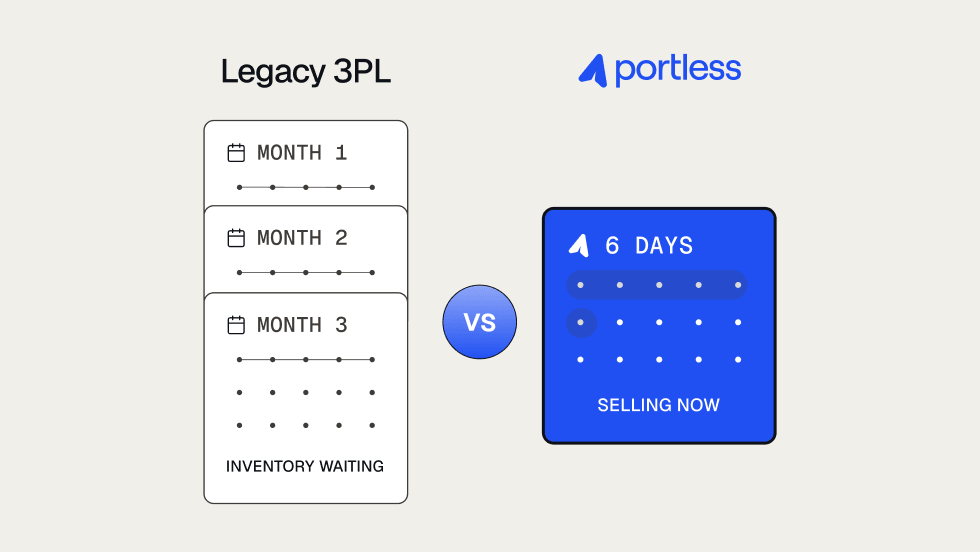
If you're on a legacy 3PL model, you're betting on a forecast made months before the shutdown. On direct fulfillment, you order smaller batches more often, and the only time you lose to Chinese New Year is the production gap itself.
What it costs to stock up early
Stocking up is the standard advice, and it's the most expensive way to handle Chinese New Year. When you order three to four months of inventory ahead of the shutdown, you tie up working capital for the whole holding period.
For a brand doing $500,000 a month in revenue at 30% cost of goods, three to four months of stock is $450,000 to $600,000 in cash. That money sits in a warehouse instead of funding ads, product development, or the next production run. The same pattern shows up every Q4, and our guide to protecting cash flow during peak season covers it.
Stocking up early adds these costs.
Working capital locked in inventory for three to four months
Domestic warehouse fees for the whole holding period
Duties paid upfront on inventory that may not sell
Markdowns if the forecast turns out wrong
How direct fulfillment shrinks the gap
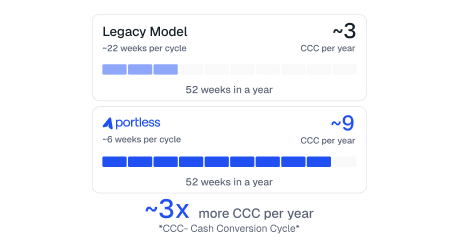
Direct fulfillment shrinks your Chinese New Year exposure to the production gap itself. You compress your inventory cycle so you never carry more than four to six weeks of stock. Smaller, more frequent production runs ship to customers within days of being made, from a fulfillment center near the point of manufacture.
Seasonal SKUs show the difference most clearly. If your spring product launches in March, a legacy supply chain forces you to produce in November, ship in December, warehouse through January and February, and hope demand matches your bet. Direct fulfillment lets you produce in February and start shipping in late February, closer to real demand. The direct fulfillment ROI calculator shows what that change frees up for your catalog.
See how Portless works
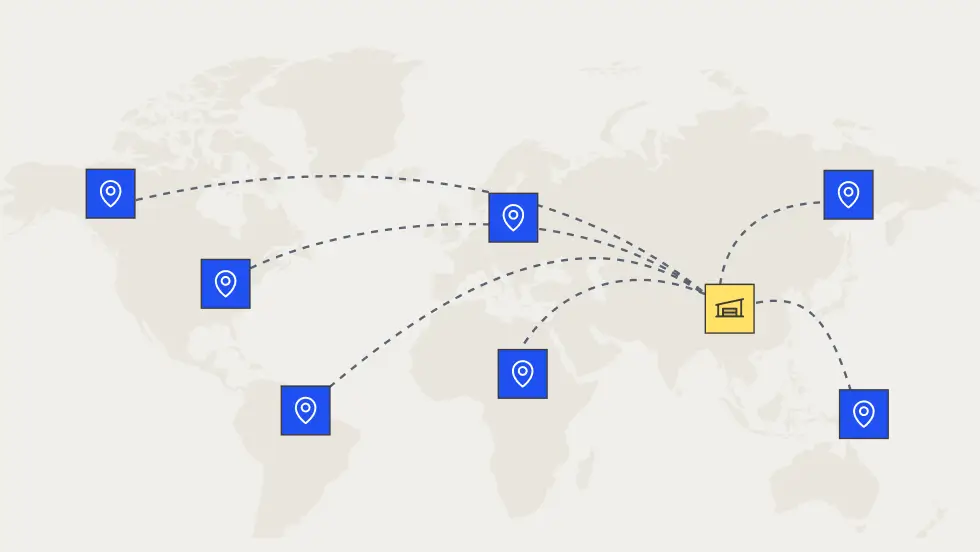
Portless ships each order direct from our own bonded warehouse in Shenzhen to customers in 85+ countries, usually in five to eight days. That keeps your Chinese New Year exposure to a few weeks of stock, not a four-month inventory bet. Talk to our team about planning around the next shutdown, or read how brands are adapting now that the US has closed de minimis for China.
Do Chinese government offices and carriers close for Chinese New Year?
Yes. Government offices, schools, and many companies close from Spring Festival Eve to the seventh day of the first lunar month. Carriers and customs keep running on reduced staff, so expect slower transit during that week.
Does Chinese New Year affect shipping from Vietnam?
Yes. Vietnam's Lunar New Year, called Tet, falls on the same day as Chinese New Year, which in 2027 is February 6. Factories in both countries slow down at the same time, so plan Vietnamese production on the same timeline.
How does direct fulfillment reduce Chinese New Year risk?
Direct fulfillment ships orders to customers as they're produced, instead of holding bulk inventory in domestic warehouses. You order smaller batches more often, so you aren't locked into a four-month inventory bet placed before factories close.
Frequently asked questions
Heading
Lorem ipsum dolor sit amet, consectetur adipiscing elit. Suspendisse varius enim in eros elementum tristique. Duis cursus, mi quis viverra ornare, eros dolor interdum nulla, ut commodo diam libero vitae erat. Aenean faucibus nibh et justo cursus id rutrum lorem imperdiet. Nunc ut sem vitae risus tristique posuere.
Get operator-level supply chain insights
Thank you! Your submission has been received!
Oops! Something went wrong while submitting the form.