“We generated $70K in package protection revenue in a single quarter by adding a simple $4 protection option at checkout — plus an additional $12K from cashbacks. Customers get peace of mind, and we're making a profit on every protected order with zero effort."
“We generated $70K in package protection revenue in a single quarter by adding a simple $4 protection option at checkout — plus an additional $12K from cashbacks. Customers get peace of mind, and we're making a profit on every protected order with zero effort."
That decision usually comes down to a channel choice. Do you stay on Alibaba? Build a direct factory relationship? Hire a sourcing agent? The right answer depends on where you are in your product line, how specialised your hero SKU is, and how much volume you can commit.
This guide walks through each path, the quality-control step most brands skip, and the material-sourcing decision that quietly determines your unit economics.
When Alibaba is the right starting point
For most brands testing a product or running their first few production runs, Alibaba is the right channel. It gets a worse reputation than it deserves. The platform protects buyers in three ways that most alternatives don’t.
Verified-supplier badges mean a third party has checked the factory’s size, export records, and certifications.
Auto-escalation kicks in if a supplier doesn’t respond to a dispute within three days, so claims don’t get buried.
The protection only works when you use it. Where brands get burned isn’t Alibaba itself, it’s misuse. Filing the order against the wrong product category. Setting an unrealistic delivery date. Or paying off-platform via wire transfer to chase a 3-5% discount, which strips away every Trade Assurance protection in one move. Stay inside the platform, file orders accurately, and pay through Alibaba’s rails. That’s the difference between a safer channel and a wire-and-hope.
“Alibaba actually gets a bad rap. People think Alibaba is like this place that you go on to get scammed. I would say that Alibaba is actually a really great place for someone who's new to product sourcing to go on because it's the least likely place for you to get scammed.” — Isaac Hetzroni, Founder at Imprint Genius
When to graduate to a direct factory relationship
Graduate from Alibaba when one product is working at meaningful volume and you want deeper specialization, better unit economics, or material innovation that a generalist supplier can’t support. The signal isn’t a revenue number, it’s a product depth signal.
The best factories in the world aren’t on Alibaba. Their production schedules are filled by outbound sales teams pitching brands like Nike and Lululemon, by referrals from existing customers, or by a single industry trade show a year. They don’t want to absorb the volume of small inbound inquiries the platform generates. If you’re sending cold emails to factories you found in import records and hearing nothing back, that’s usually not disinterest. It’s the wrong channel for the relationship.
“The best factories in the world, a lot of them aren't on Alibaba. That's because they don't want the type of customer that typically comes from Alibaba. The Nikes of the world aren't going on Alibaba to find their next factory.” — Isaac Hetzroni, Founder at Imprint Genius
When you do find the right factory, stay with them on the product they specialize in. Specialization matters more than most brands realise. A single factory typically owns one process, often final assembly, while components, dyeing, or material processing happen at separate suppliers. Walk into a factory pitching pants and see a production floor full of jackets and backpacks, and you’re looking at a generalist. You won’t get the best pricing or quality there.
When a sourcing agent or trading company is worth the markup
Default DTC advice says go direct to the factory. That advice breaks down in two specific situations, and missing them costs brands a lot of operational pain.
You’re expanding your product line into new categories
The brand that built itself on one hero T-shirt eventually wants jackets, pants, accessories. The T-shirt factory will almost always offer to make all of them. Most brands say yes. Most brands shouldn’t.
Your T-shirt factory isn’t a jacket factory. If they take the order, they’re acting as an agent — running your jackets through a sister factory they don’t fully control — and you’ve lost both visibility and quality leverage. The better move is either to build separate factory relationships for each category, or to work with an agent who specializes in your space and already has them.
Your product line is wide but volume per SKU is low
Imagine you’re sourcing 30 different SKUs for a single product line. You can spend months building 30 individual factory relationships, juggling 30 different MOQs, and trying to consolidate everything into one container. Or you can work with an agent who has the relationships pre-built, can often access lower MOQs, and can standardize quality across the whole product set so you don’t end up with pro-level components next to entry-level ones.
The markup is the trade. For lower-volume, multi-category, multi-SKU sourcing, the markup is usually worth it. For single-product depth at scale, go direct.
::callout
PORTLESS SOURCING IS A FLAT-FEE ALTERNATIVE TO AGENT MARKUP
Most sourcing agents get paid twice — once by you, and again by the factory — with hidden commissions of 10% to 30% baked into your unit cost. Portless Sourcing is a flat-fee service that takes no money from suppliers. You get 2-3 vetted suppliers in about a week, raw quotes, and a clean handoff. Available exclusively to Portless merchants. Learn more.
:callout
::table
Sourcing channels at a glance
Channel;Best for;What it gets you;Trade-off
Alibaba;Brands testing a product, low- to mid-volume orders, new categories;Trade Assurance, verified suppliers, low friction to start;Top-tier factories aren’t listed, trading companies often pose as factories
Direct factory;One hero SKU at scale, or innovation on materials and construction;Better unit economics, deeper specialisation, direct quality control;Hard to find without referrals, low response rates on cold outreach
Sourcing agent or trading company;Multi-SKU product lines, expanding into new categories, lower MOQs across products;One relationship across many factories, standardised quality, category expertise;You pay a markup, less control over factory selection unless the agent is transparent
:table
Run a pre-shipment inspection on every production run
Third-party quality control is the highest-ROI step in product sourcing, and the one most brands skip. Pre-shipment inspections in China typically run $199 to $320 per man-day, or roughly a full day of inspection by a category-specialised inspector. The upside is catching defects, miscounts, or substituted materials before goods leave the factory — when fixing them is still cheap.
Two things make third-party QC structurally better than your own employees doing it. First, inspectors specialise in the product category, so they know what to test and how to test it. Second, when the QC firm tells the factory the production failed inspection, that’s a very different conversation than you, the buyer, refusing the order. Factories almost always fix the issue, because a neutral third party — not you — is pointing to the spec they agreed to.
“Quality control is the highest ROI thing you can do within product sourcing by a mile. 90% of horror stories I hear about sourcing, in the back of my mind, I'm like — if you would've used QC, this wouldn't have happened.” — Isaac Hetzroni, Founder at Imprint Genius
Run an inspection on every production run, not just the first. Factories swap in new line workers, change material suppliers, and adjust processes between runs. Ten perfect orders in a row tells you nothing about the eleventh. The $300 to insure a $30,000 order is one of the easier ROI calculations in your supply chain.
And what QC catches is often unexpected. One eight-figure home goods brand learned this the hard way when an inspection revealed the factory had been quietly underfilling bottles by 10–20%. The defect was invisible from the outside of the opaque packaging. A $300 inspection caught a margin leak no one knew existed.
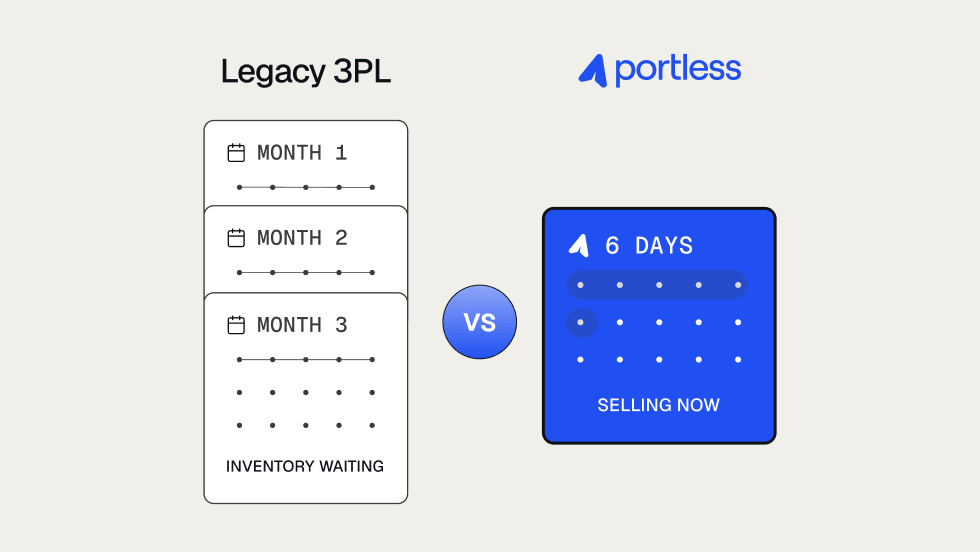
Even with QC in place, defects still slip through. That’s where proximity to the factory matters. Brands using direct fulfillment get a 48-hour feedback loop on defects rather than the six-week wait that legacy 3PL models force, because every unit is inspected on arrival at a fulfillment center near the factory. Defective product can be returned same-day and replaced within days — without losing a season.
Decide who sources the fabric and components
For apparel and any material-driven product, the question of who sources the fabric is a structural decision that affects pricing, quality, and innovation. There are two models.
Factory-sourced. The factory buys fabric or components from its existing suppliers. This is simpler, often the default, and works when fabric is a commodity input rather than a differentiator.
Separately sourced. You source fabric directly from a mill and ship it to the factory for cut-and-sew. More complex, but you get full control over what you’re actually getting.
Source fabric separately when fabric is part of your value prop. If you’re innovating on activewear with non-polyester or non-synthetic fabrics, a generalist factory won’t deliver that innovation for you — fabric R&D isn’t their job. Working directly with a mill is the only way to make it happen.
The benefit goes beyond innovation. You get more pricing leverage on construction because the factory isn’t carrying liability on the fabric. You know exactly what fabric you’re paying for. And from a cash flow perspective, factories can often be more competitive when they’re quoting on construction alone.
Specialization cuts the same way at every layer of your supply chain. Mills do fabric. Factories do construction. Trading companies coordinate multi-SKU programs. Inspection firms verify quality. Collapsing all of those roles into one relationship usually means paying a generalist premium to do every job worse than a specialist would.
Get the fulfillment right, too
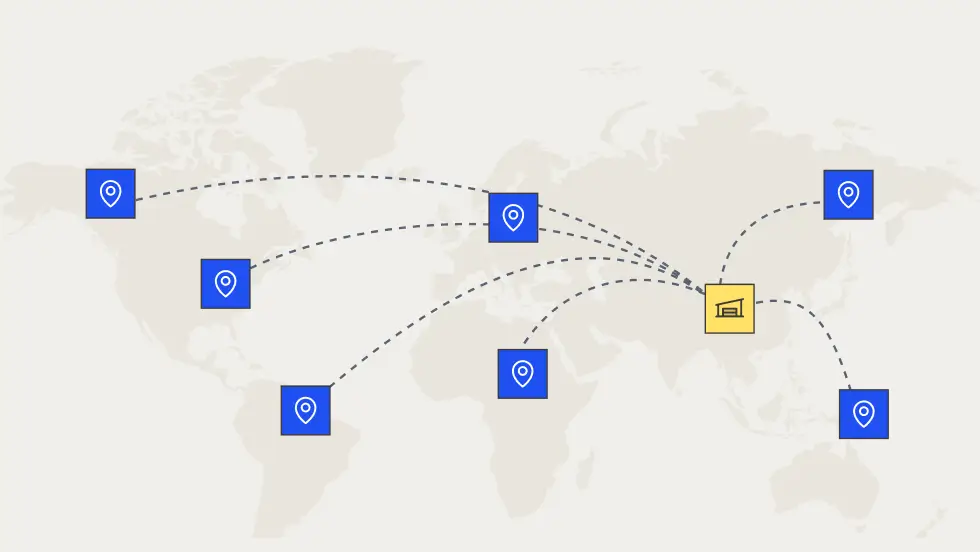
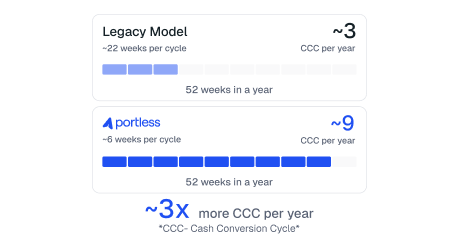
Sourcing decides what you sell. Fulfillment decides how fast that cash comes back to you. Brands that nail sourcing but ship through legacy 3PLs still see their cash conversion cycles balloon to 60–90 days, with capital trapped in ocean freight containers and domestic warehouses. Direct fulfillment compresses that to under 10 days by shipping from a fulfillment center next to your factory directly to customers in 85+ countries. Same factories, same products, different cash flow.
Talk to our team to see how direct fulfillment pairs with your sourcing strategy.
Watch the full episode
Portless CEO Izzy Rosenzweig sat down with Isaac Hetzroni of Imprint Genius on The Modern Supply Chain to dig further into how to spot trading companies posing as factories on Alibaba, why apparel sourcing communication runs through Zalo and WeChat instead of email, and how AI is changing the way tech packs get made.
Lorem ipsum dolor sit amet, consectetur adipiscing elit. Suspendisse varius enim in eros elementum tristique. Duis cursus, mi quis viverra ornare, eros dolor interdum nulla, ut commodo diam libero vitae erat. Aenean faucibus nibh et justo cursus id rutrum lorem imperdiet. Nunc ut sem vitae risus tristique posuere.
Get operator-level supply chain insights
Thank you! Your submission has been received!
Oops! Something went wrong while submitting the form.






.avif)

.jpg)

.avif)