“We generated $70K in package protection revenue in a single quarter by adding a simple $4 protection option at checkout — plus an additional $12K from cashbacks. Customers get peace of mind, and we're making a profit on every protected order with zero effort."
“We generated $70K in package protection revenue in a single quarter by adding a simple $4 protection option at checkout — plus an additional $12K from cashbacks. Customers get peace of mind, and we're making a profit on every protected order with zero effort."
Vietnam has quietly become one of the most important manufacturing countries in the world. It’s the largest supplier of wooden furniture to the US, accounting for 40% of all US wooden furniture imports. It’s consistently in the top three footwear producers globally, with $20 billion in footwear exports in 2025. And its apparel industry employs roughly two million people across an estimated 6,000 factories, according to Cosmo Sourcing.
For DTC brands looking to diversify their supply chain, Vietnam is a logical next step. But sourcing from Vietnam works differently than from China. The MOQs are higher because most factories are contract manufacturers that set up dedicated production lines, the factory discovery process is harder, and you need to come more prepared. Brands that understand the differences find a manufacturing partner that’s reliable, cost-competitive, and increasingly sophisticated.
This guide covers how to approach Vietnam product sourcing practically: which product categories make sense, what to expect on MOQs and lead times, how to find factories, and the mistakes that cost brands the most time and money.
Where Vietnam manufacturing excels
Vietnam isn’t a replacement for any single country in your supply chain. It’s a complement. The categories where Vietnam has the deepest manufacturing infrastructure and the strongest track record are specific, and they’re worth knowing before you start reaching out to factories.
Apparel. Vietnam's garment industry is one of the most developed in the world. Nike, Lululemon, Patagonia, and other major brands have manufactured there for years. The industry has evolved well beyond low-end production. Modern Vietnamese apparel factories run cameras at every workstation, quality-injection systems at every stitching stage, and modern electronic equipment. Manufacturers like UnAvailable, a Ho Chi Minh-based garment producer that's worked with global streetwear and fashion brands since 2004, also offer end-to-end services from development and procurement through printing, sewing, and quality control — the kind of full-stack partner DTC brands need when sourcing from a new country.
Footwear. Vietnam is one of the top three shoe-producing countries globally. Factories produce everything from athletic shoes to dress shoes. Some components, like custom soles, are sometimes sourced from other countries and shipped to Vietnam for final assembly.
Furniture and wood products. Vietnam is the largest furniture exporter to the United States. Furniture exports to the US reached $9.4 billion in 2024. The country has natural access to hardwoods, which gives it a cost advantage on raw materials. Major US retailers including Ashley Furniture, Pottery Barn, and IKEA source heavily from Vietnamese factories. Understanding how goods are stored and moved post-production also affects your total landed cost.
Bags and accessories. Backpacks, handbags, and accessories are a growing category. These are often component-heavy products where zippers, hardware, or fabrics may be sourced from other countries and shipped to Vietnam for assembly.
VIETNAM’S SWEET SPOTVietnam is strongest in apparel, footwear, furniture, and bags. For categories outside these, do your research before assuming Vietnam has the factory base to support your product. Electronics and plastic injection molding are developing but not yet at the same depth.
What to expect on MOQs
Higher minimum order quantities are the most consistent difference between sourcing from Vietnam and sourcing from other manufacturing hubs. The reason is structural: most Vietnamese factories are contract manufacturers. They set up a dedicated production line for your product, which means there’s a fixed overhead cost before a single unit is produced.
For apparel, expect minimum orders of at least 500 to 1,000 units per style to get started. Some factories can go lower, but the options narrow significantly below 500. For footwear, minimums are similar or higher depending on the complexity of the sole and upper construction. For furniture, MOQs vary widely by product but tend to be higher than apparel.
There’s also a fabric component. Vietnamese factories typically don’t keep large fabric inventories in stock. They purchase fabric rolls for each production run, and those rolls come in large quantities. If your order doesn’t meet the minimum yardage for a fabric purchase, the factory may not be able to accommodate it.
“You definitely need to have established capital and higher MOQ expectations. We can get samples prior to production, but you definitely need to commit to a larger purchase order.” — Jim Kennemer, founder at Cosmo Sourcing
As a general guideline, brands doing seven figures or more in annual revenue are the best fit for Vietnam sourcing. If you’re still at the stage of testing with 10 to 50 units, Vietnam probably isn’t the right starting point for manufacturing. Start smaller elsewhere, validate your product, then bring Vietnam into the mix when your volumes justify it.
Lead times are longer, and here’s why
First-time orders from Vietnam typically take longer than what brands are used to sourcing from China. The reason isn’t that factories are slow. It’s that raw materials often need to be sourced from outside the country before production can begin.
For a component-heavy product like a backpack, expect roughly 30 days from when the purchase order is placed until production actually starts. Zippers, hardware, and specialty fabrics may need to be shipped in from other suppliers. Once everything arrives, production begins.
Vietnam’s domestic supply base is growing. Jim notes that YKK has opened a zipper factory in Vietnam, and new microfiber production facilities have been set up in recent years. But for now, some components still come from abroad.
The important thing: Vietnamese factories tend to give you realistic lead times upfront and then deliver on them. Budget for the extra time on your first order, and subsequent orders will usually move faster as the factory has your materials and patterns on file.
Your tech pack is your most important asset
A tech pack is a technical specification document that tells a factory exactly how to build your product. It includes detailed sketches, measurements, fabric and trim specs, stitching details, color codes, labeling and packaging requirements, and a bill of materials. Think of it as the blueprint a factory needs to quote accurately, source materials, and produce a sample that matches what you actually want.
In many manufacturing hubs, you can find factories that will work from a rough brief or a reference sample. In Vietnam, that approach doesn't work well. Vietnamese factories are contract manufacturers, which means they build to your specification. If the specification is vague, the output will be too.
A detailed tech pack does two things. First, it gets you more factory options. Factories are far more willing to quote and commit to your project when they can see exactly what they're building. Without a tech pack, some factories won't even respond.
“If they had a full tech pack, they probably would have had double or triple the factories willing to work with them.” — Jim Kennemer, founder at Cosmo Sourcing
Second, a good tech pack dramatically reduces your time to market. One brand Jim worked with used AI-generated designs for a line of plush toys. Because the designs were static images with no technical specifications, it took four months of back-and-forth with the factory to get to a production-ready sample. A detailed tech pack from a professional designer could have cut that timeline to six weeks.
AI tools can help you get initial product concepts on paper, but they aren’t a substitute for a professional tech pack. Use AI to generate your initial design, then work with a product designer or engineer to turn it into a factory-ready specification. Platforms like Upwork and Fiverr have designers who specialize in tech packs for specific product categories.
How to find factories in Vietnam
Factory discovery in Vietnam is harder than in more established sourcing ecosystems. The tools and platforms that work well for other countries are significantly less useful here.
Don’t rely on Alibaba. By Cosmo Sourcing’s estimate, only 10 to 15% of Vietnamese factories are listed on Alibaba, and many of those listings are inactive. The platform is built around a different manufacturing model. If you limit your search to Alibaba, you’re seeing a fraction of what’s available.
Customs databases have limitations. Tools like Import Yeti are useful for identifying factories, but they skew heavily toward the largest producers. If you’re a DTC brand with MOQs of 500 to 1,000 units, the factories showing the most shipments — the ones making product for Nike or IKEA — are unlikely to take your order. You need to look further down the list at mid-size factories that match your volume.
Relationships matter more. Vietnam’s manufacturing industry is still heavily relationship-driven. Factories are more responsive to introductions, in-person visits, and messaging apps like Zalo (Vietnam’s equivalent of WhatsApp) than they are to cold emails. If you’re reaching out by email alone and hearing nothing back, that’s normal. It doesn’t mean the factory isn’t interested. It means you haven’t connected through the right channel.
Trade shows are your best DIY option. If you want to find factories on your own, attending a trade show in Vietnam is the most effective approach. The three biggest are clustered in Ho Chi Minh City between February and April:
VIATT in late February (apparel and textiles, ~460 exhibitors)
SaigonTex in April (the largest at 1,000+ exhibitors, strongest for fabric and materials)
Global Sourcing Fair Vietnam also in April (500+ suppliers across fashion, home, and accessories, often a strong fit for DTC brands given its focus on flexible MOQ exhibitors and a 1:1 buyer-supplier matching program)
Plan a week after whichever show you attend to visit factories in person. The booth conversation is the introduction, the factory visit is where you decide whether to commit.
Sourcing partners remove the friction. Companies like Cosmo Sourcing specialize in Vietnam factory discovery. They maintain on-the-ground teams, relationships with vetted factories, and transparent pricing models where you’re introduced directly to the factory with full contact details — no middleman markup on production.
The five most common mistakes brands make sourcing from Vietnam
1. Taking the first quote. Brands frequently commit to the first factory that responds with a quote, without doing a broader search. A thorough factory search takes 50 to 70 hours of professional sourcing work. Most brands spend 20 to 30 hours and think they’ve covered the market. A single factory quote is a starting point, not a decision.
2. Submitting vague product specs. A mood board or AI-generated image is not a tech pack. Factories in Vietnam need detailed technical specifications to quote accurately, plan production, and source materials. Vague specs lead to long sample cycles, quality mismatches, and factories declining to work with you.
3. Expecting the same MOQs as other countries. If you’re looking to start with 10 to 50 units to test the market, Vietnam isn’t the right manufacturing partner for that stage. Handmade samples and small-batch production exist, but the quality and finish will differ meaningfully from a factory production line.
4. Only using email to reach factories. Email response rates from Vietnamese factories are low. Factories communicate primarily through Zalo and in-person meetings. If you’re sending email blasts and waiting for replies, you’re getting responses from a small, unrepresentative subset of available factories.
5. Not visiting the factory. Boots on the ground matters in Vietnam more than in most sourcing environments. The gap between what a factory looks like on paper and what it looks like in person can be significant. If you can’t visit yourself, work with a sourcing partner that visits on your behalf.
Izzy sat down with Jim Kennemer on The Modern Supply Chain to go deep on Vietnam sourcing, including how AI is being used for tech packs, what factory quality control looks like on the ground, and how to build a diversified supply chain across multiple countries. Watch below, or listen on Spotify and Apple Podcasts.
Start with the right fulfillment partner
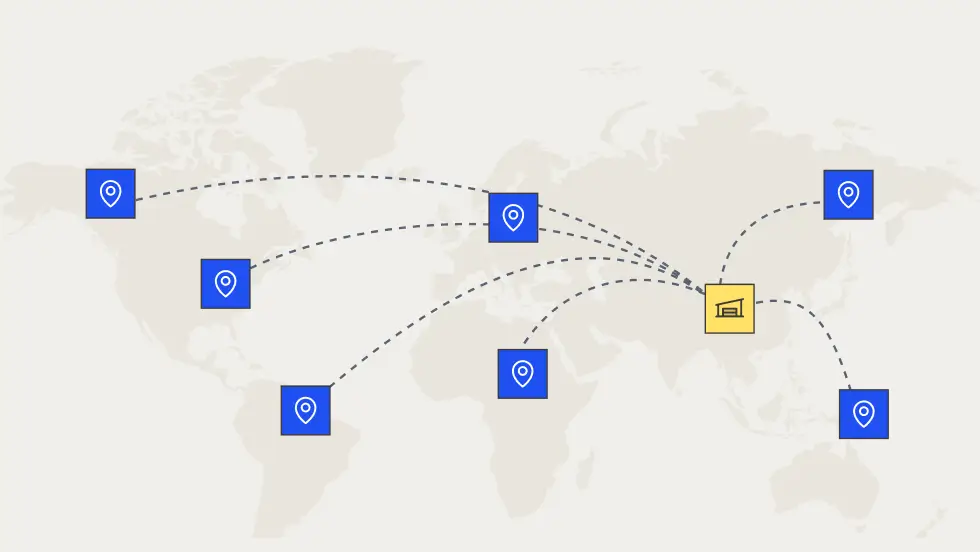
Sourcing from Vietnam is one decision. Getting your products from the factory to your customers globally is another. Portless operates fulfillment centers Asia, shipping to 75+ countries through direct fulfillment.
Spartan Kitchen Products, a sustainable home goods brand, reclaimed 20+ hours per week and unlocked four new international markets after partnering with Portless. Whether you’re manufacturing in one country or diversifying across both, your fulfillment model should match your sourcing strategy.
Vietnam is strongest in apparel, footwear, furniture, wood products, and bags. These categories have deep factory infrastructure, experienced workforces, and proven track records with major global brands. Categories like electronics and plastic injection molding are developing but not yet at the same depth.
What are the minimum order quantities for Vietnam manufacturing?
For apparel, expect MOQs of 500 to 1,000 units per style. MOQs are higher in Vietnam than in many other countries because most factories are contract manufacturers that set up dedicated production lines for each order. Brands doing six figures or more in annual revenue are the best fit.
How do I find reliable factories in Vietnam?
Don’t rely on Alibaba alone — by Cosmo Sourcing’s estimate, only 10 to 15% of Vietnamese factories are listed there. The most effective approaches are attending trade shows in Vietnam, using messaging apps like Zalo to contact factories directly, or working with a sourcing partner like Cosmo Sourcing that maintains on-the-ground relationships with vetted factories.
Do I need a tech pack to source from Vietnam?
Yes. Vietnamese factories are contract manufacturers that build to your specification. A detailed tech pack gets you more factory options, faster quoting, and shorter sample cycles. Without one, many factories won’t respond to your inquiry at all. AI tools can help generate initial concepts, but a professional designer should finalize the technical specification.
How long does a first order from Vietnam take?
Expect roughly 30 days from purchase order to the start of production for component-heavy products, because raw materials often need to be sourced and shipped in before manufacturing begins. Production time is on top of that. Subsequent orders are typically faster as the factory has your materials and patterns on file.
Does Portless fulfill orders from Vietnam?
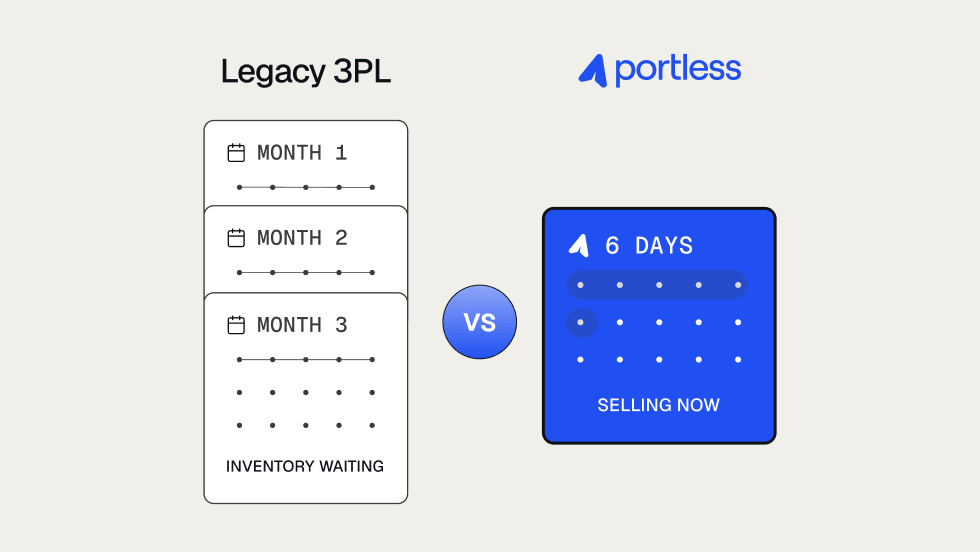
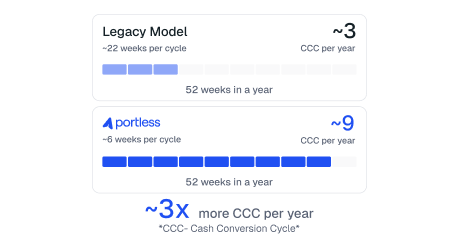
Yes. Portless operates fulfillment centers in both China and Vietnam, shipping to 75+ countries. Brands manufacturing in Vietnam can use Portless for direct fulfillment to customers globally, with the same duty-timing and cash flow advantages as the China-based model.
Frequently asked questions
Heading
Lorem ipsum dolor sit amet, consectetur adipiscing elit. Suspendisse varius enim in eros elementum tristique. Duis cursus, mi quis viverra ornare, eros dolor interdum nulla, ut commodo diam libero vitae erat. Aenean faucibus nibh et justo cursus id rutrum lorem imperdiet. Nunc ut sem vitae risus tristique posuere.
Get operator-level supply chain insights
Thank you! Your submission has been received!
Oops! Something went wrong while submitting the form.






.avif)

%20(1).avif)
.jpg)
.jpg)