“We generated $70K in package protection revenue in a single quarter by adding a simple $4 protection option at checkout — plus an additional $12K from cashbacks. Customers get peace of mind, and we're making a profit on every protected order with zero effort."
“We generated $70K in package protection revenue in a single quarter by adding a simple $4 protection option at checkout — plus an additional $12K from cashbacks. Customers get peace of mind, and we're making a profit on every protected order with zero effort."
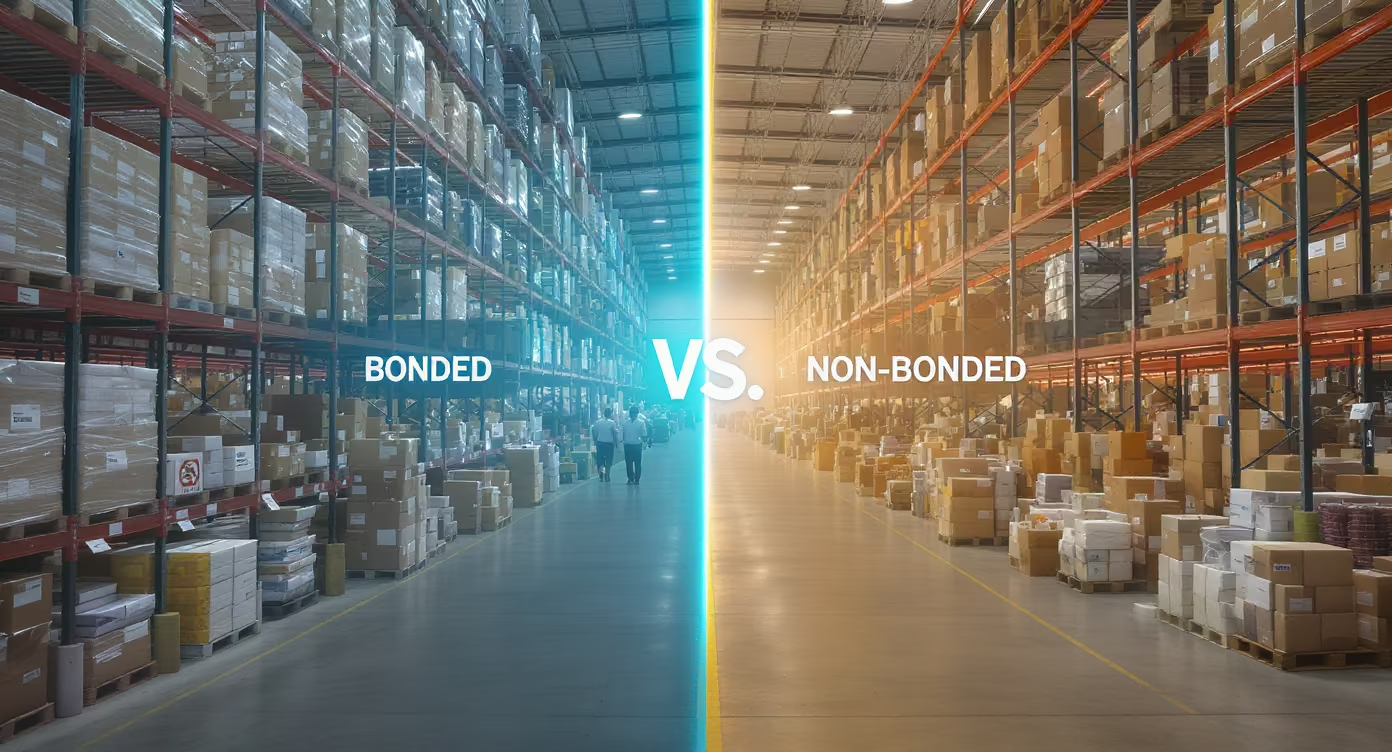
The bonded vs non-bonded warehousing in China decision is a cost of goods question first, and a logistics question second. The warehouse model your factory uses determines whether you’re absorbing a 13% VAT charge on every unit — or avoiding it entirely.
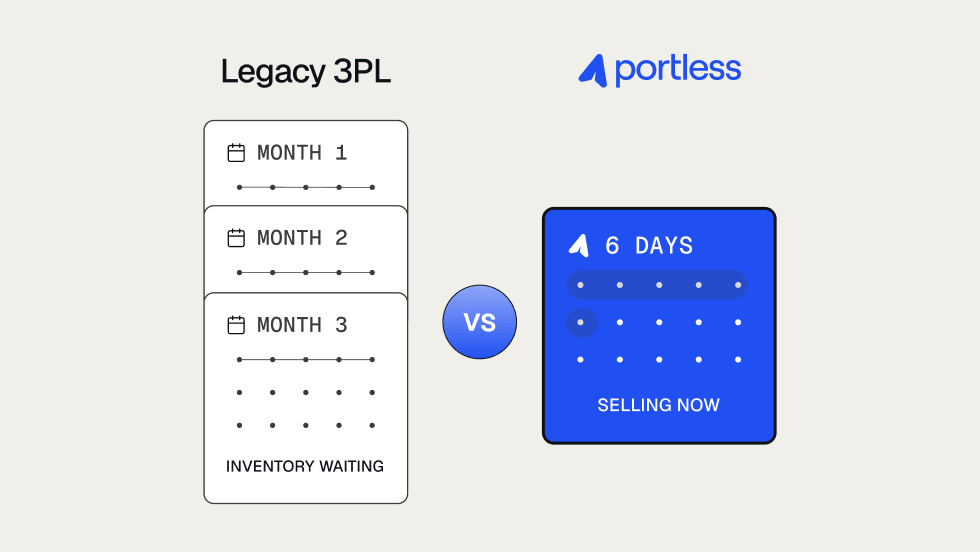
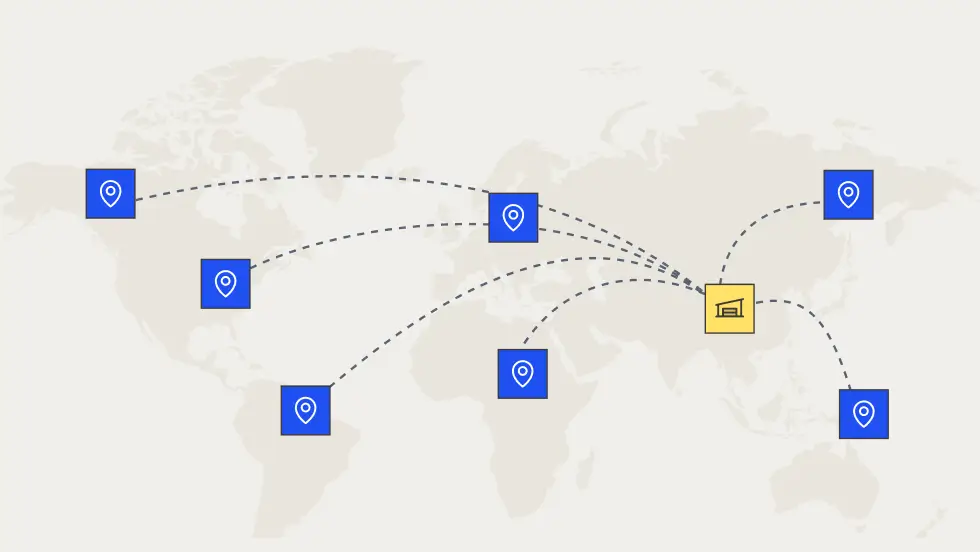
But cost of goods is only part of the picture. The bigger question for most DTC brands is time to market: how many days between finished production and a live, sellable unit? Traditional importing takes 60+ days. Direct fulfillment from China can cut that to one or two days. Which warehouse model you choose affects how quickly inventory moves, how fast you get cash back out, and how much risk you’re carrying at any given time.
This guide breaks down how each warehouse type works, what the real cost differences are, and how to choose between them — whether you’re running direct fulfillment from China or evaluating your current setup.
What is a bonded warehouse and how does it work?
A bonded warehouse is a storage facility in China that lets factories treat goods as if they’ve already left the country. By moving finished products into a bonded facility, the manufacturer can process them as “exported” and claim back the 13% VAT they’d otherwise have to charge you.
China’s standard VAT rate on most manufactured goods is 13%. In practice, moving goods into a bonded warehouse means the factory gets reimbursed for the VAT they’d otherwise pass on to your invoice. The brand doesn’t pay it, and the factory doesn’t eat it.
WHY THE 13% MATTERSChina’s standard VAT rate on most manufactured goods is 13%. If your factory uses a non-bonded facility, they can’t claim the export VAT rebate — so that 13% gets passed directly to your invoice. Your cost of goods increases by 13% before a single unit ships.
This is why the bonded vs non-bonded decision is a cost of goods question first, and a logistics question second.
How does a bonded warehouse work?
Goods move from your factory to a bonded facility. Once they arrive, Chinese customs treat them as exported. The factory files for the VAT rebate, and your goods sit in a duty-suspended zone until they’re shipped to end customers.
For goods held in a China bonded warehouse for export, PRC Customs Law does not impose a time limit on storage duration. You can hold inventory in bond indefinitely while you wait for the right market conditions, replenishment cycle, or demand signal. This is a meaningful advantage for seasonal products or SKUs with unpredictable demand patterns.
Bonded warehouses in China can also receive goods manufactured in other countries. Products imported into a bonded facility from outside China aren't subject to Chinese import duties or VAT, as long as they're re-exported. This means brands sourcing from multiple countries can consolidate inventory in one bonded location in China and ship direct to customers globally — without paying Chinese taxes on the non-China goods.
Bonded in China vs bonded in the US: two different things
If you’ve researched bonded warehousing before, you’ve probably seen it discussed in the context of US customs. A US bonded warehouse lets importers defer duties on goods entering the country for up to five years. That’s a different concept from what we’re talking about here.
A bonded warehouse in China serves the factory’s side of the equation. It lets your manufacturer treat goods as exported so they can claim back the 13% VAT from the Chinese government. The US version defers import duties on arrival. The China version unlocks an export tax rebate at origin. They solve different problems at different points in the supply chain.
For DTC brands shipping direct from China, the China bonded vs non-bonded question is the one that affects your cost of goods. The US bonded warehouse question only applies if you’re importing bulk inventory into a domestic warehouse first — which is the traditional model, not the direct fulfillment model.
Types of bonded warehouses
Public bonded warehouse: Shared facility open to multiple companies. Lower commitment, but less control over operations and scheduling.
Private bonded warehouse: Leased or owned by a single company for exclusive use. Higher investment, but full control over inventory, security, and warehouse processes. At Portless, we use a private bonded warehouse for our clients.
Providing export documentation to your manufacturer
One of the most practical benefits of bonded warehousing: your factory gets the export documentation they need to release goods and claim the VAT rebate. Your goods move out of your manufacturer and into fulfillment — with the export documentation your factory needs and the 13% VAT rebate unlocked.
What is a non-bonded warehouse?
A non-bonded warehouse is a standard warehouse storage facility in China where goods aren’t treated as exported. Your factory can’t claim the VAT rebate, so the 13% gets baked into your cost of goods. The tradeoff: non-bonded facilities are cheaper to operate in, and they unlock faster, more flexible shipping routes.
Once your products enter a non-bonded warehouse, they’re considered part of the local Chinese market. They can move freely without customs involvement — which removes a layer of complexity from your fulfillment operations.
Cheaper shipping and warehousing
Non-bonded facilities are less expensive across three line items: shipping rates, warehousing fees, and pick-and-pack. Non-bonded facilities ship from any mainland China airport. Bonded goods must route through Hong Kong, where air freight costs from China are higher. According to industry benchmarks, bonded warehouse storage costs run 40–60% higher than non-bonded equivalents, before accounting for the airfreight premium.
For most DTC brands, those three cost differences — shipping, storage, pick-and-pack — outweigh the 13% VAT saving. The breakeven point depends on your cost of goods. A product with a $10 COG incurs $1.30 in VAT at the non-bonded rate. If the combined non-bonded savings on shipping, storage, and pick-and-pack exceed $1.30 per unit, non-bonded wins. For most low-to-mid COG products, it does.
Faster international shipping
Non-bonded facilities can ship from any mainland China airport. You’re not locked into Hong Kong routing. That means faster access to flights, more scheduling flexibility, and shorter lead times on international orders. If you run time-sensitive campaigns — product launches, flash sales, peak season pushes — non-bonded removes a meaningful constraint on how quickly orders leave China.
WHY BONDED GOODS ROUTE THROUGH HONG KONGBonded goods are classified as exports under Chinese customs, which limits available shipping routes. Most bonded air freight routes through Hong Kong rather than mainland airports — adding a transfer leg, higher freight rates, and extra transit time. Non-bonded goods don't have this restriction and can ship from any mainland China airport.
Faster cash flow and smaller inventory bets
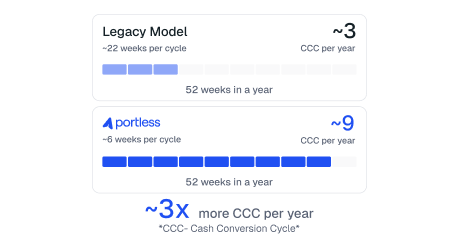
The speed advantage of non-bonded isn’t just about delivery times. It changes how you invest in inventory. When your time from post-production to live sale drops from 60+ days to one or two, you don’t need to buy six months of inventory upfront. You can order smaller batches, test new products faster, and get cash back out of inventory before you need to reinvest it.
That’s the real unlock. Inventory is the largest cost in most Ecommerce businesses. The faster your inventory turns, the less working capital you need tied up at any given time. Non-bonded fulfillment — with its cheaper shipping rates and mainland airport access — keeps that cycle as tight as possible.
Bonded vs non-bonded warehouse comparison
Here’s how the two models compare across the factors that actually affect your costs and operations:
Feature
Bonded warehouse
Non-bonded warehouse
VAT treatment
Factory claims 13% export VAT rebate
Factory cannot claim rebate; 13% passed to brand
Export documentation
Provided (goods treated as exported)
Not available (goods treated as local, not exported)
Shipping routes
Must route through Hong Kong
Any mainland China airport
Storage costs
40–60% higher than non-bonded
Standard warehouse rates
Pick-and-pack costs
Higher (bonded facility premium)
Lower (standard facility rates)
Storage duration
No time limit under PRC Customs Law for export goods
Standard lease terms
Time to market
Slower (Hong Kong routing adds transit time)
Faster (any mainland airport, shorter lead times)
Best for
High-COG products (above ~$40–50) where VAT savings exceed logistics premium
Low-to-mid COG products where logistics savings exceed 13% VAT
How to choose: bonded or non-bonded
The short answer for most brands: use non-bonded. The math works out in non-bonded’s favor for the majority of DTC product categories. The 13% VAT on cost of goods is real, but the combined savings on shipping, warehousing, and pick-and-pack typically exceed it.
Roughly 90% of brands using Portless operate on the non-bonded model. The remaining 10% are typically selling high-COG products where the VAT savings outweigh the logistics premium.
Quick decision guide
Does your factory require export documentation to release goods? If no, non-bonded is almost always the better option. If yes, continue below.
What’s your average cost of goods? Multiply by 0.13 to get your VAT exposure per unit.
Is your VAT exposure greater than the estimated savings from cheaper non-bonded shipping and warehousing? If yes, bonded makes sense. If no, non-bonded.
As a rough rule of thumb: products with a COG above ~$40–50 are where bonded starts to make financial sense. Below that threshold, non-bonded almost always nets out cheaper.
This is exactly what happened with Foreign Resource. They moved to the non-bonded model and achieved near-negative cash conversion cycles while scaling their global streetwear brand. Faster inventory turns, lower per-unit fulfillment costs, and less capital locked up in unsold stock. The warehouse model was the lever that made it possible.
NOT SURE WHICH MODEL FITS YOUR BRAND?Most DTC brands shipping from China save more with non-bonded fulfillment. Talk to our team to run the numbers on your specific product mix and order volumes.
Other factors to consider
Product type and handling requirements: Some products need bonded storage for regulatory reasons. Check whether your category has specific customs requirements in your target markets.
Seasonal demand patterns: If you need to hold inventory for extended periods without paying duties, bonded’s unlimited storage duration is an advantage.
Number of destination countries: Portless ships to 85+ countries. If you’re scaling internationally, the shipping flexibility of non-bonded — any mainland China airport, no Hong Kong bottleneck — matters more.
Factory preference: Some factories strongly prefer working with bonded facilities because of the export documentation and VAT rebate process. If switching to non-bonded means switching factories, factor that cost into your decision.
Find out which warehouse model saves you more
The bonded vs non-bonded decision comes down to simple math: does the 13% VAT saving exceed the combined logistics premium? For most DTC brands, it doesn’t. Talk to our team to run the numbers on your product mix and see which model nets out cheaper for your business.
FAQ
What’s the difference between bonded and non-bonded warehousing?
A bonded warehouse treats goods as exported, allowing your factory to claim the 13% VAT rebate. A non-bonded warehouse treats goods as local, meaning no VAT rebate — but lower shipping, storage, and pick-and-pack costs. For most DTC brands, non-bonded nets out cheaper.
Why would a brand choose bonded over non-bonded?
Bonded makes sense when the 13% VAT saving on cost of goods exceeds the combined logistics premium — higher shipping rates, higher storage costs, higher pick-and-pack fees. This typically applies to products with a COG above ~$40–50.
What happens if my factory requires export documentation?
If your factory needs export documentation to release goods, a bonded warehouse provides that. But most factories don’t require it. Ask your factory directly — if they don’t need export docs, non-bonded is the simpler, cheaper path. If they do, you’ll need to reimburse them the 13% VAT they’d normally claw back from the government, or use a bonded facility.
How long can you store goods in a China bonded warehouse?
For goods held for export, PRC Customs Law does not impose a time limit. You can store inventory indefinitely. This differs from the US, where bonded storage is capped at five years.
Does Portless use bonded or non-bonded warehouses?
Portless operates both. About 90% of brands on the platform use non-bonded because the logistics savings exceed the VAT cost for their product mix. The remaining 10% use bonded, typically for higher-COG products. Your account team can help you model which option is cheaper for your specific setup.
Is a bonded warehouse in China the same as a bonded warehouse in the US?
No. A US bonded warehouse lets importers defer customs duties on goods entering the country for up to five years. A China bonded warehouse lets your factory treat goods as exported so they can claim back the 13% VAT from the Chinese government. They solve different problems at different stages of the supply chain. For DTC brands shipping direct from China, the China bonded vs non-bonded question is the one that affects your cost of goods.
Does a US bonded warehouse help you avoid US tariffs on China imports?
No. A US Customs bonded warehouse defers US import duties, including Section 301 China tariffs, for up to five years. It doesn't erase them for goods that ultimately enter US commerce. The duty rate applied is the one in effect at withdrawal, not at import. So it's a timing and cash-flow tool, not a rate cut. Goods re-exported straight from the warehouse, never entering US commerce, generally owe no US import duties. The $800 de minimis no longer applies to China-origin goods, and a bonded warehouse doesn't restore it. Rates on China goods have shifted repeatedly in 2025 and 2026, so confirm current rates and treatment with a licensed US customs broker.
Frequently asked questions
Heading
Lorem ipsum dolor sit amet, consectetur adipiscing elit. Suspendisse varius enim in eros elementum tristique. Duis cursus, mi quis viverra ornare, eros dolor interdum nulla, ut commodo diam libero vitae erat. Aenean faucibus nibh et justo cursus id rutrum lorem imperdiet. Nunc ut sem vitae risus tristique posuere.
Get operator-level supply chain insights
Thank you! Your submission has been received!
Oops! Something went wrong while submitting the form.







.jpg)
.jpg)
.jpg)