Last updated: May 2026
Returns are now one of the largest uncontrolled line items on a DTC P&L. Online return rates run roughly triple in-store rates, processing costs have climbed faster than revenue, and most brands are still routing reverse logistics through a domestic legacy 3PL that wasn't designed for it. Outsourcing product returns, to the right kind of partner, is one of the few levers that meaningfully moves the math. Pair it with the right return policy, and you start recovering margin that's currently leaking out of the back end of your operation.
Why Ecommerce return rates are higher than retail
Ecommerce return rates run roughly three times higher than in-store rates. The National Retail Federation's 2024 Consumer Returns in the Retail Industry report puts the average online return rate at 16.9%, compared to 6.6% in-store. In apparel, online return rates regularly hit 24.4%.
The cost of processing those returns has climbed alongside volume. NRF data shows retailers lose roughly $0.166 on every dollar of returned merchandise once you factor in reverse shipping, inspection, restocking, and lost resale value. Part of the pressure comes from the expectations set by fast shipping — see the hidden cost of fast deliveries for how speed-at-any-cost feeds higher return rates.
Three forces are driving the cost up:
- Peak-season carrier surcharges push reverse shipping costs into the 15-30% range above standard rates during Q4. See our breakdown of BFCM returns and reverse logistics for the holiday-specific math
- Warehouse labor for returns processing competes for the same staff handling outbound peak volume
- Bracketing, where customers order multiple sizes or colors with the intention of returning most, adds volume without adding revenue
For DTC brands manufacturing in China or Vietnam, the picture gets worse. Returned units sit in a domestic legacy 3PL with no cost-effective way to ship back to the factory for inspection or rework. Most brands liquidate, scrap, or reship to customers and absorb the resulting complaints.
How outsourcing product returns reduces reverse logistics costs
Outsourcing returns to a fulfillment partner shifts three cost categories off your books: labor, warehouse space, and carrier negotiation.
Labor. Returns processing requires inspection, grading, restocking, and refund initiation. In-house, that's at least one full-time hire by the time you hit 1,000 returns per month. An outsourced partner absorbs that headcount and charges per unit, which turns a fixed cost into a variable one.
Warehouse space. Returns occupy floor space twice: once on intake, once during inspection. For brands renting domestic legacy 3PL space at $0.75-$1.50 per cubic foot per month, that's measurable margin leakage. An outsourced partner already has the space allocated.
Carrier rates. A returns partner moving millions of packages negotiates rates no individual brand can match. The savings show up most on reverse shipping labels, which carry no negotiating leverage when bought one at a time.
The harder question is which kind of partner. A legacy domestic 3PL returns management setup solves the labor and space problem but leaves the structural problem in place: returned units sit in a warehouse far from your factory, and defective goods can't be cheaply sent back for rework.
How direct fulfillment changes the returns math
Direct fulfillment from China and Vietnam reduces the number of returns you process in the first place, and lowers the cost of the ones you do.
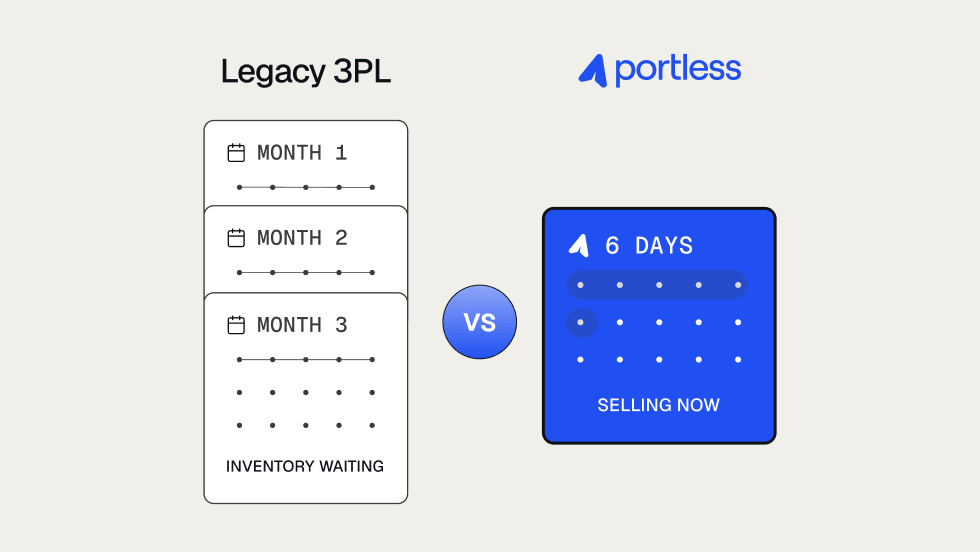
Quality issues that would normally surface six weeks later in a domestic legacy 3PL surface within hours at a factory-adjacent fulfillment center. Defective units never ship. Customers never see them. Returns volume drops at the source.
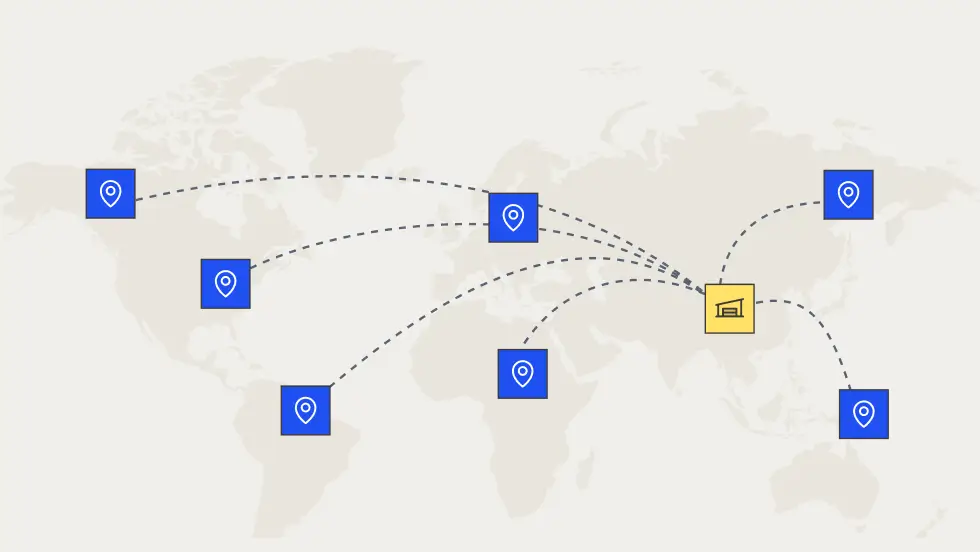
For the returns that still happen, direct fulfillment partners route returned units back through the same network the inventory came from. That means rework, repackaging, or factory-side resolution becomes economically viable instead of impossible.
The shift in math:
- Defects caught at receiving instead of at the customer's door
- Returned units that can be reworked and resold instead of liquidated
- Reverse logistics costs spread across air freight density, not absorbed by a single domestic legacy 3PL
- Cross-border returns documentation handled by the partner, not your finance team
For DTC brands doing 1,000 to 15,000 orders per month manufacturing in China or Vietnam, the returns line item is one of the most under-optimized parts of the P&L. The model you use to ship outbound determines what's possible on reverse.
The returns line is a fulfillment model decision
Returns aren't a customer service problem or a warehouse problem in isolation — they're a downstream symptom of the fulfillment model you've chosen. If your defective units are reaching customers, your returned inventory is stranded thousands of miles from the factory, and your reverse shipping is being priced one label at a time, the leak isn't in your returns process. It's in the system feeding it. If that sounds like your P&L, it's worth running the numbers with us on what direct fulfillment would change for your returns cost structure.
FAQ
Why should you outsource returns management?
Outsourcing returns management lowers handling risk, removes overhead from hiring and training in-house staff, and gives your brand access to processing infrastructure most DTC operators can't build internally. It also speeds refund cycles, which is the top driver of negative post-purchase reviews.
What is returns management in Ecommerce?
Returns management is the end-to-end process of handling refunds, exchanges, and returned merchandise — including reverse shipping, inspection, restocking, fraud screening, and disposition of damaged or unsellable items. Average return rates range 20-30% by category, with apparel and electronics on the higher end.
What are the benefits of outsourced returns management?
Outsourcing returns reduces in-house labor cost, recovers more value from returned merchandise through faster processing, and shifts variable cost off your books. For brands selling cross-border, an outsourced partner also handles customs documentation on returned units.
When does outsourcing returns make sense for your brand?
Outsourcing returns makes sense when your monthly return volume exceeds what one or two in-house staff can process accurately, or when returns processing pulls your team away from higher-value work like product development and customer experience. Most DTC brands hit this threshold between 1,000 and 5,000 orders per month.
How do you reduce Ecommerce return rates?
You reduce return rates by improving product accuracy at fulfillment, catching defects before they ship, setting clear customer expectations on product pages, and avoiding the cognitive dissonance that comes with deliveries that arrive faster than the customer expects.






.jpeg)

.jpg)
.jpg)
%20(1).jpg)