Bill of lading (BOL)
A Bill of Lading (BOL) is a legal document issued by a carrier to a shipper that serves three functions at once: a receipt for goods received, a contract of carriage, and — depending on the type — a document of title that proves ownership of the cargo in transit.
If you're moving inventory across borders, the BOL is the single document standing between your goods and a customs hold, a payment dispute, or a lost shipment claim. It's not paperwork to delegate and forget. The BOL governs who owns the cargo, who's liable if it's damaged, and who can legally release it at the destination. For Ecommerce brands manufacturing in Asia and selling globally, understanding how the BOL works — and where it breaks down in the legacy ocean freight model — directly affects cash flow, lead times, and risk exposure.
This guide breaks down what a BOL contains, the main types you'll encounter, why inaccuracies cost money, and how the document fits into a modern direct fulfillmentsupply chain.
What a bill of lading actually does
A BOL performs three distinct jobs in a single document:
- Receipt: Confirms the carrier received the goods in the stated quantity and condition.
- Contract of carriage: Defines the terms under which the carrier agrees to transport the goods, including liability limits and delivery obligations.
- Document of title: In its negotiable form, the BOL represents legal ownership of the cargo. Whoever holds the original document controls the goods.
That third function is what makes the BOL different from a regular shipping label. According to Cornell Law School's Legal Information Institute, a negotiable bill of lading can be transferred from one party to another, effectively transferring ownership of the goods while they're still in transit.
What's on a bill of lading
A standard BOL includes:
- Shipper name and address (the party sending the goods)
- Consignee name and address (the party receiving the goods)
- Carrier name and details
- Description of goods, including quantity, weight, and packaging type
- Harmonized System (HS) code for customs classification
- Port of loading and port of discharge
- Vessel or flight details
- Freight terms (prepaid or collect)
- Incoterms governing the shipment
- Date of issue and signature
Every field matters. A wrong consignee name can stop a release at the destination port. A misclassified HS code can trigger customs fines or duty disputes. A weight discrepancy can flag the shipment for inspection.
Types of bills of lading
Different shipment scenarios call for different BOL types. The most common:
Straight (non-negotiable) BOL
Names a specific consignee who is the only party authorized to receive the goods. Ownership doesn't transfer in transit. Common for shipments where payment has already been made.
Order BOL (negotiable)
Issued "to order" of a named party, typically the shipper or a bank. The original document must be endorsed and physically presented to take delivery. Used heavily in letter-of-credit transactions where the bank holds title until payment clears.
Bearer BOL
Whoever physically holds the document owns the goods. Rare in modern practice because of fraud risk, but still recognized.
Sea waybill
A non-negotiable alternative to the BOL. Faster to process because no original document needs to be couriered to the destination, but it can't be used to transfer title in transit.
House BOL vs master BOL
A master BOL is issued by the actual ocean carrier (Maersk, MSC, CMA CGM) to the freight forwarder. A house BOL is issued by the freight forwarder to the actual shipper. If you ship through a forwarder, you'll see a house BOL — the master sits one layer above you in the chain.
Telex release
Not a BOL type, but a related process. A telex release allows the carrier to release goods at the destination without the original BOL being physically presented, once the shipper confirms payment has been received.
Why BOL inaccuracies cost money
The BOL is a legal document. Errors aren't typos — they're liabilities. Common mistakes that drive up carrier costs include misdeclared weights, vague product descriptions, and incorrect consignee information.
Real consequences of BOL errors:
- Customs delays. Inaccurate descriptions or wrong HS codes trigger inspections that can hold containers for days or weeks.
- Fines and penalties. Misclassification can result in duty back-payments plus penalties. Under the False Claims Act, undervaluation can trigger fines up to three times the duties owed.
- Liability disputes. If the BOL doesn't accurately describe the goods or their condition at handoff, you lose leverage in damage claims.
- Payment delays. In letter-of-credit transactions, a discrepancy between the BOL and the LC terms can freeze your payment.
- Release problems. A wrong consignee name or a missing endorsement can prevent your goods from being released at the destination port — even after they've arrived.
The fix isn't complicated: build a review checklist, verify every field against the commercial invoice and packing list, and audit your shipping documents regularly to catch patterns.
Why the BOL matters less in a direct fulfillment model
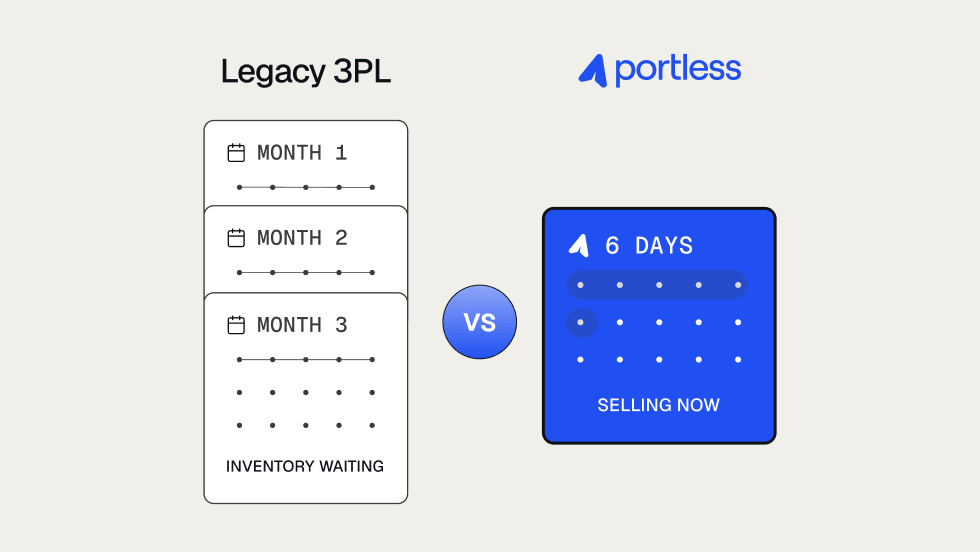
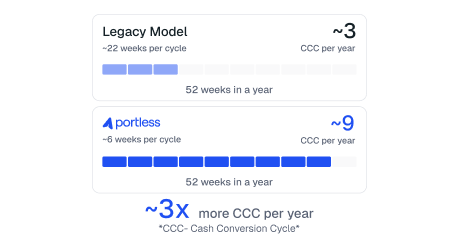
The BOL was built for an era of bulk ocean freight, where shipments of thousands of units sit in containers for weeks and ownership transfers along the way. That model is structurally slow and capital-intensive. You're paying for goods months before they sell, your duties get paid on unsold inventory, and your cash conversion cycle stretches to 120 to 180 days.
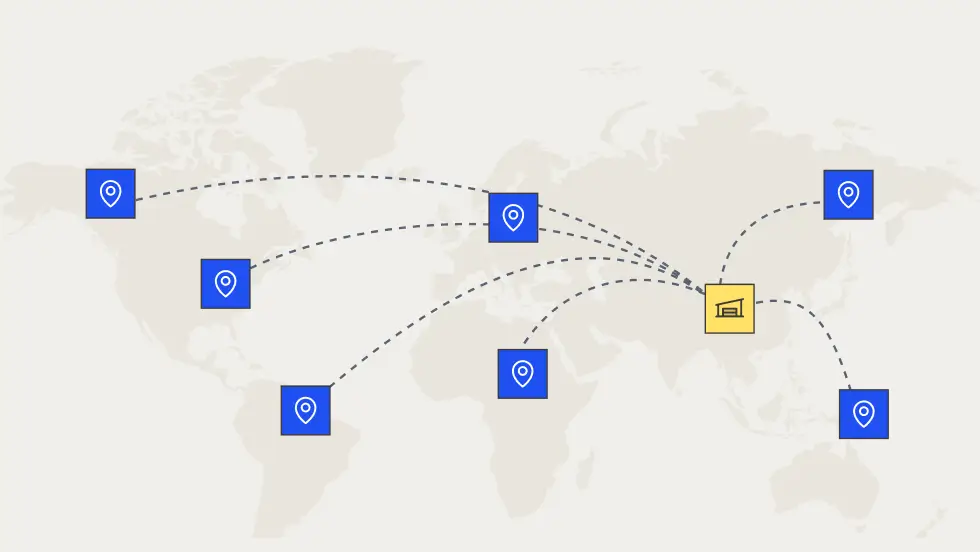
Direct fulfillment changes the equation. Instead of one massive ocean shipment governed by a single BOL representing months of inventory, Portless ships individual orders directly from manufacturing partners in Asia to end customers worldwide via air. Each parcel moves under an air waybill — the air freight equivalent of a BOL — and clears customs as a per-order shipment, not a bulk import.
The result: inventory becomes available for sale within days of production rather than months. Duty is paid per order, on goods you've already sold, not on warehouse pallets waiting to move. You preserve the speed-to-market and capital efficiency that bulk freight — and the BOL paperwork that governs it — can't deliver.
Modernize the documents, modernize the supply chain
The BOL isn't going anywhere for brands still moving bulk freight. But if your shipping documentation is the bottleneck in your supply chain, the document isn't the problem — the model is. Talk to the Portless team to see how direct fulfillment from Asia removes the bulk-freight overhead from your operation.
← Back to the Ecommerce supply chain glossary