CPM
CPM stands for cost per mille (cost per thousand impressions) in digital advertising, and cost per mile in freight and trucking. Both metrics measure unit economics, but they sit on opposite ends of the Ecommerce P&L — one drives customer acquisition cost, the other drives landed cost.
CPM is one of those acronyms that means different things depending on who's saying it. If you're a CMO, CPM is what you pay per 1,000 ad impressions on Meta, TikTok, or Google. If you're a logistics manager, CPM is what a carrier charges per mile to move a truckload of freight. Both definitions matter to a DTC brand because both feed directly into your contribution margin. Misread either number and your unit economics fall apart.
This page covers both meanings, how they're calculated, and how each connects to the broader supply chain decisions you're making — from ad spend allocation to fulfillment model selection.
CPM as cost per mille (advertising)
In digital advertising, CPM is the price you pay for 1,000 ad impressions. It's the standard pricing model for awareness-stage campaigns on platforms like Meta, TikTok, YouTube, and programmatic display networks.
The formula is straightforward:
CPM = (Total ad spend ÷ Total impressions) × 1,000
If you spend $5,000 to generate 1,000,000 impressions, your CPM is $5. According to Investopedia's overview of cost per thousand, CPM is most useful for top-of-funnel campaigns where the goal is reach, not immediate conversion.
Why CPM matters for DTC brands
CPM is rising across most paid social channels. When CPMs climb, your customer acquisition cost (CAC) climbs with them — unless conversion rate and average order value rise to offset it. For a brand doing 1,000 to 15,000 orders a month, even a $2 increase in CPM across a million impressions adds $2,000 in ad cost with no guaranteed return.
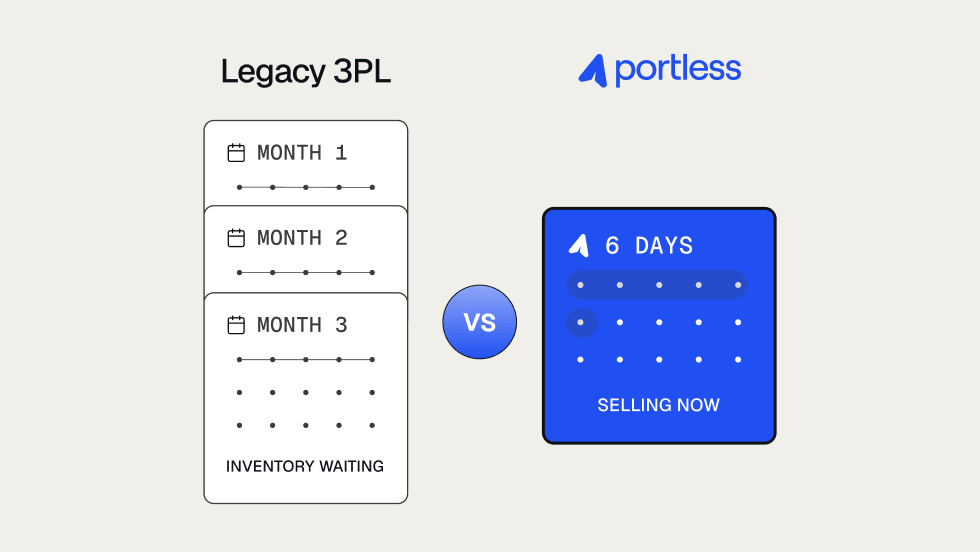
This is where supply chain decisions intersect with marketing math. Capital tied up in bulk inventory at a domestic 3PL is capital you can't deploy into paid acquisition. Brands using just-in-time fulfillment free up that capital and can outspend competitors during high-CPM windows like BFCM.
Benchmarks worth knowing
CPMs vary widely by platform, audience, and season:
CPM as cost per mile (freight)
In freight and trucking, CPM is the rate a carrier charges per mile to move a shipment. It's the core unit cost in any FTL (full truckload) negotiation and a major line item in your landed cost.
The formula:
Freight CPM = Total freight cost ÷ Total miles
A truckload moving 2,000 miles at a total cost of $5,000 has a CPM of $2.50. This number drives carrier selection, lane planning, and the build-versus-buy decision on private fleet operations.
Why freight CPM matters for Ecommerce brands
If you're running the legacy model — bulk ocean freight to a US port, drayage to a warehouse, then truckload distribution to regional 3PLs — freight CPM compounds at every leg. According to the US Bureau of Transportation Statistics, trucking accounts for roughly 70% of US freight tonnage, and rates have been volatile since 2020.
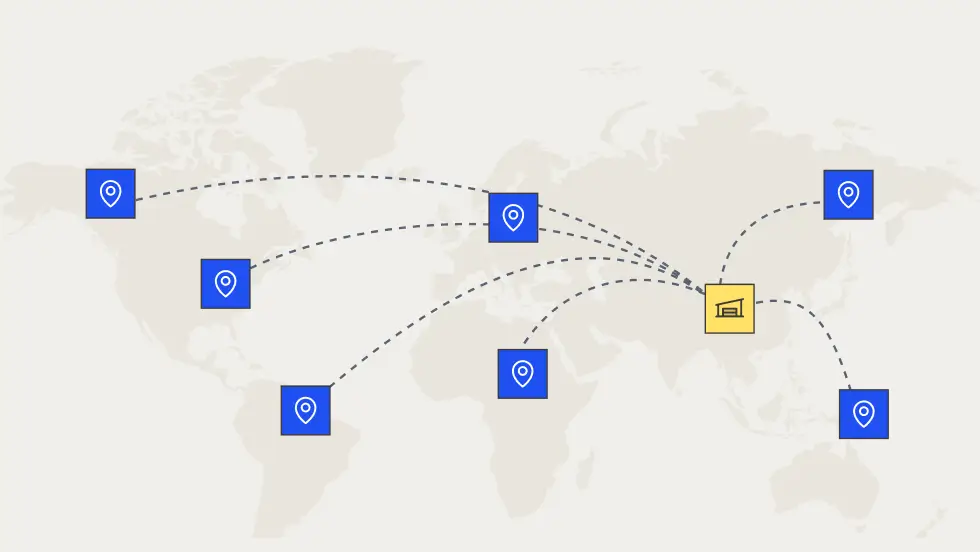
Direct fulfillment from manufacturers in China and Vietnam skips most of this. Goods move by air injection from factory to customer, bypassing the long-haul trucking legs that drive up freight CPM in the legacy model.
What drives freight CPM up
How the two CPMs connect
These two metrics live in different parts of your business, but they're linked by one thing: cash flow.
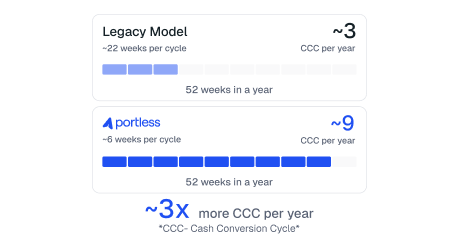
When you commit $300,000 to bulk inventory three months before a sales window, that's $300,000 you can't spend on ads when CPMs are favorable. If CPMs spike during your sales window and you can't outbid competitors, you lose share. If you over-order and demand softens, you're stuck with markdowns that erase margin.
Brands using direct fulfillment break this cycle. Inventory is paid for as it sells, freight CPM is absorbed into a single per-order shipping cost, and the capital that would have funded bulk inventory stays available for paid acquisition during high-intent windows.
How Portless changes the CPM math for DTC brands
CPM matters on both sides of your P&L, but the legacy supply chain forces you to optimize one at the expense of the other. Portless ships orders directly from manufacturers in China and Vietnam to customers in 85+ countries, removing the bulk freight, drayage, and warehousing legs that inflate landed cost. The capital you free up funds paid acquisition when ad CPMs are working in your favor.
Contact us to see how direct fulfillment changes the unit economics of both your freight CPM and your ad CPM.
← Back to the Ecommerce supply chain glossary