EBITDA
EBITDA (earnings before interest, taxes, depreciation, and amortization) is a measure of a company's operating profitability that strips out financing decisions, tax structures, and non-cash accounting charges. For Ecommerce brands, it's the cleanest read on whether the core business actually makes money before capital structure muddies the picture.
For DTC Ecommerce brands, EBITDA is the number investors, lenders, and acquirers care about most. It tells you whether the business itself is profitable, separate from how it's financed, taxed, or how its assets depreciate on paper. A brand can have strong revenue growth, healthy gross margin, and still produce weak EBITDA if operating costs (fulfillment, warehousing, marketing, headcount) eat the contribution before it lands as profit. That's where supply chain structure quietly decides the outcome.
The acronym was popularized in the 1980s by leveraged buyout investors looking for a clean view of operating cash generation across companies with very different capital structures. Today it shows up in lender covenants, M&A multiples, board decks, and investor updates. For brands doing $1M to $15M in revenue, EBITDA is usually the metric that determines whether you can raise debt, attract a strategic buyer, or fund the next phase of growth from operations alone.
How EBITDA is calculated
There are two common formulas, and they produce the same answer:
The top-down version is what most DTC operators actually use because it maps cleanly to a P&L. You start with revenue, subtract COGS to get gross profit, subtract operating expenses (marketing, fulfillment, payroll, software, rent), and the result before depreciation and amortization is your EBITDA.
Worth flagging: EBITDA is a non-GAAP metric. The Securities and Exchange Commission (SEC) requires public companies that report it to reconcile it to net income, because the calculation can be adjusted in ways that obscure real performance. Private brands have more latitude, which is why investors scrutinize the inputs.
Why EBITDA matters for DTC brands
Three reasons EBITDA gets weighted so heavily in Ecommerce:
EBITDA vs. EBIT, gross margin, and net income
These metrics get used interchangeably and they shouldn't be:
For a brand with limited fixed assets (most DTC operators), EBITDA and EBIT are often close. For brands with significant warehouse infrastructure, equipment, or capitalized software, the gap widens.
Where EBITDA breaks down
EBITDA gets criticized, fairly, for what it leaves out:
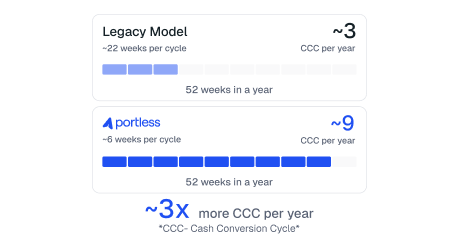
This is why sophisticated investors look at EBITDA alongside free cash flow, the cash conversion cycle, and net working capital — not in isolation.
How supply chain structure drives EBITDA
This is where the legacy model quietly destroys margin. Under bulk ocean freight and domestic 3PL warehousing, several costs land in operating expenses and depress EBITDA:
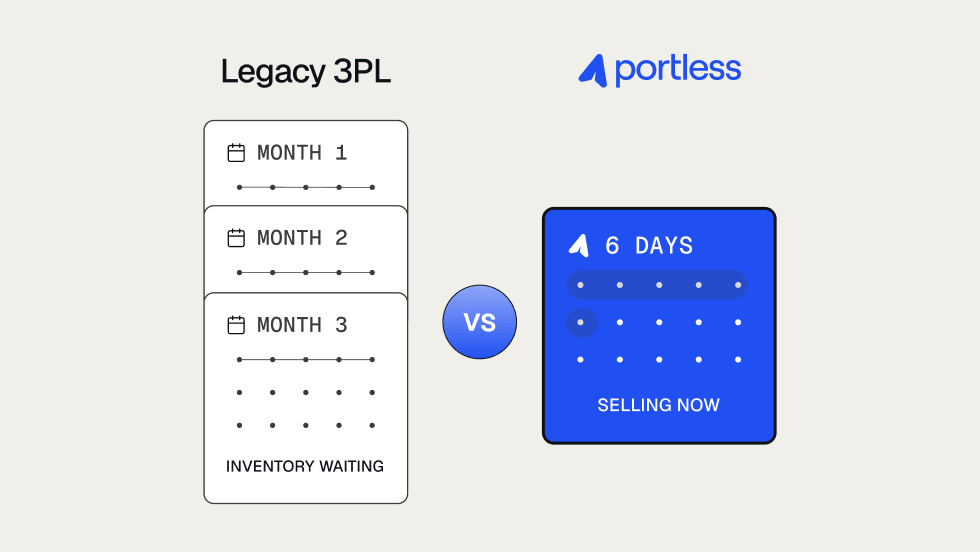
Brands shipping bulk ocean freight from China or Vietnam typically sit on 60 to 90 days of inventory in a domestic warehouse before it converts to revenue. That inventory generates carrying costs every day it sits. None of those costs go away because you ignored them — they show up as operating expenses, and they pull EBITDA down.
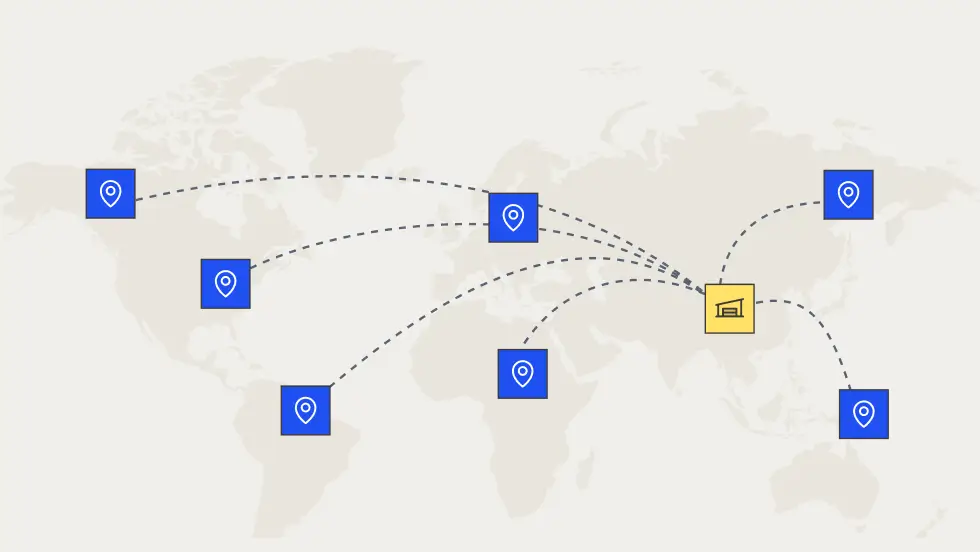
Direct fulfillment from the manufacturer restructures the cost base. You skip domestic warehousing, you fulfill against confirmed orders rather than forecasted ones, and duties apply per parcel at the point of sale rather than upfront on bulk imports. The operating expense line gets lighter. EBITDA improves not because you cut a vendor, but because the structure underneath the P&L is more efficient.
EBITDA margin: the benchmark to know
EBITDA margin is EBITDA divided by revenue. It tells you how many cents of operating profit you keep on every dollar of sales.
The brands hitting 15%+ EBITDA margins consistently are usually the ones that have gotten their supply chain structure right — not the ones spending more on marketing.
Improve EBITDA by fixing the supply chain underneath it
You can't improve EBITDA by cutting your way to profit forever. At some point you have to restructure the cost base. For DTC brands manufacturing in China or Vietnam, the biggest unaddressed lever is the supply chain — bulk freight, domestic warehousing, and upfront duties on unsold inventory all sit in the operating line and compress margin every quarter. Portless replaces that structure with direct fulfillment from the point of manufacture, which removes domestic 3PL costs, eliminates duty exposure on unsold goods, and frees the working capital that bulk inventory locks up. The result shows up where it matters: in EBITDA, in valuation, and in your ability to fund the next phase of growth from the business itself. Talk to our team to see how the math works on your numbers.