Last updated: May 2026
The de minimis exemption is gone. On May 2, 2025, the Trump administration ended duty-free treatment for Chinese and Hong Kong goods under Executive Order 14256. On August 29, 2025, Executive Order 14324 extended the suspension to all countries.
Every commercial shipment entering the US, regardless of value, now requires a formal or informal customs entry and carries applicable duties. Reciprocal tariff rates vary by country of origin and have shifted multiple times since the April 2025 announcement. CBP's Harmonized Tariff Schedule tracks current rates, and you should verify them per HTS code before pricing decisions.
Here's what changed for DTC brands manufacturing in China:
- Sub-$800 parcels no longer enter duty-free. Every shipment carries the full tariff burden for its country of origin.
- Section 301 tariffs on Chinese goods still apply on top of any baseline duty rate.
For a deeper look at the duty-side levers still available, read cross-border duty strategies to save your DTC brand millions in 2025 and where do US tariffs stand now: a guide to de minimis, Section 321, and Type-86.
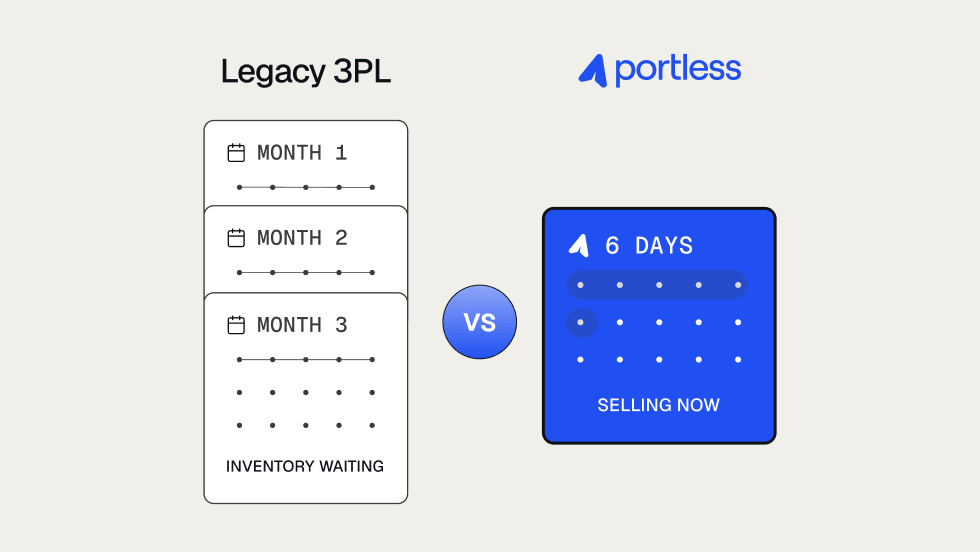
The reflexive response — pull back to domestic 3PLs, pay duties upfront on full containers — is the wrong move. Running the legacy playbook locks up working capital on inventory that may never sell. Tariff deferment through direct fulfillment is what survives this policy shift intact.
Paying duties after the sale is the real edge
Legacy retailers pay duties upfront, whether their inventory sells or not. Brands like Shein and Temu only pay tariffs after an item is purchased. That means:
- No cash tied up in unsold inventory
- Lower risk and healthier margins while competitors bleed working capital
- Same fast shipping with more flexibility
This isn't just about fast fashion. Any US DTC brand using this model will keep thriving while legacy retailers struggle under the weight of upfront duties.
What the inventory math actually looks like post–de minimis
The brands built around direct fulfillment didn't lose their advantage when de minimis closed. They lost one financial lever and kept the bigger one. Shein and Temu still pay duties only when an item sells, because their goods don't enter the US until a customer has already paid for them. That structure is independent of de minimis.
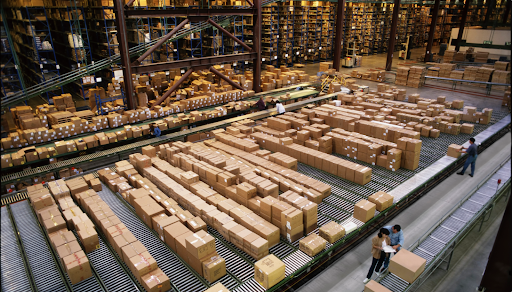
Legacy retailers carrying months of inventory in domestic warehouses now pay duties upfront on every container, whether the goods sell in two weeks or two years. According to NRF supply chain data, US retail inventory-to-sales ratios have hovered between 1.30 and 1.45 through 2025, meaning roughly a third of capital sits in unsold inventory at any given time. Apply a 25% to 50% tariff on that working capital and the math gets ugly fast.
Tariffs won't level the playing field — they'll widen the gap
The new tariffs might look like a win for US businesses, but the financial advantage for agile, Chinese brands isn't disappearing. It's just shifting.
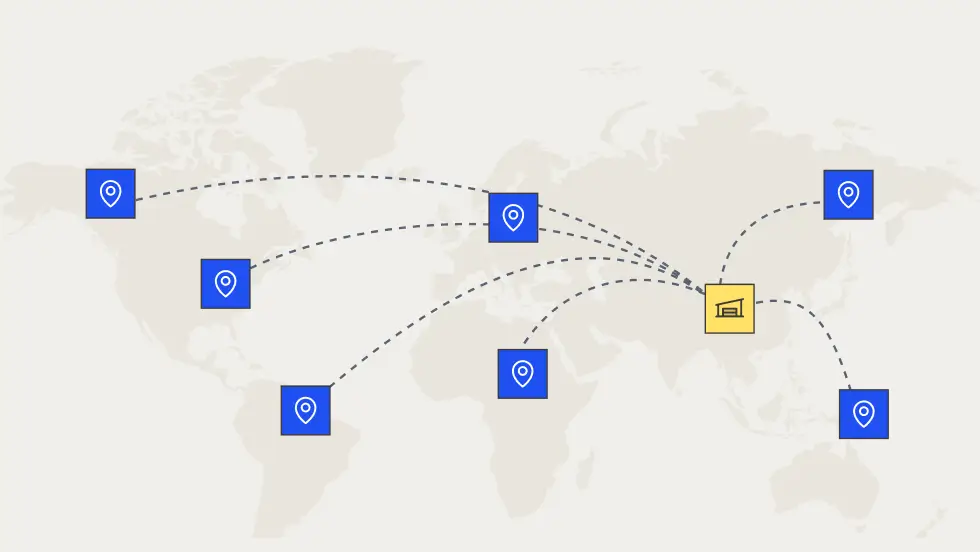
If you're an Ecommerce or DTC brand manufacturing in Asia, running the legacy playbook — bulk sea freight, domestic warehouse, duties paid upfront on every unit — locks up working capital on inventory that may never sell. Direct fulfillment from the point of manufacture flips that math. You should be using direct shipping and tariff engineering instead.
How to prepare your DTC brand for the de minimis closure
- Don't overhaul your factory mix yet. Reciprocal tariff rates have shifted multiple times since April 2025 and continue to move. Country-of-origin decisions made on this week's rate sheet may not hold next quarter. Verify current rates per HTS code via the Harmonized Tariff Schedule before repricing or resourcing.
- We have you covered. From the moment the Biden administration announced proposed changes to the de minimis exemption, we spent hundreds of hours with cross-border lawyers, customs brokers, and cargo space providers to prepare for this moment. Thanks to the time invested with our partners to understand the rules, our product and engineering teams to implement them into the merchant portal, and our ops team to find compliant shipping solutions, your goods continue to ship as usual.
- Help us help you. To ensure your goods pass through customs quickly and efficiently, we need your Cost of Goods and HTS codes for all SKUs we service at Portless. Please ensure your Cost Per Item and HS Code fields on your Shopify Product page are correctly filled.
- How this works. Using the data in your merchant portal, we lay out the tariffs on your behalf and invoice you with the final rates once we receive them. As long as you provide the necessary data, you should not need to do anything else.
- Expect intermittent CBP delays. After the February 4 brief removal of de minimis, CBP saw massive volume spikes that led to three to five day clearance delays. Capacity has since adjusted, but build a few days of buffer into your customer-facing delivery promises during periods of policy change.
- For deeper reading, see the US tariffs FAQ.
Where tariff deferment frees up cash flow for Ecommerce brands
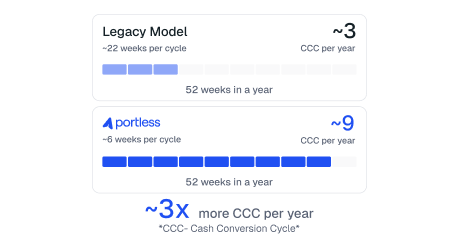
Tariff deferment changes when you pay duties, not whether you pay them. In a legacy supply chain, you pay duties the moment a container clears US customs — often 60 to 90 days before the inventory sells through. With direct fulfillment from China, the duty event happens at the point of sale, after the customer has already paid you.
For a deeper look at the mechanics, see what is tariff deferment and how can your Ecommerce brand leverage this and defer tariffs for your Ecommerce brands using First Sale.
Here's what that looks like in practice for a brand shipping 10,000 units per month at a $15 landed cost and a 25% tariff rate:
::table
Model;Duty timing;Working capital tied up in duties
Legacy 3PL (bulk freight);Upfront on full container;~$112,500 for 90+ days
Direct fulfillment (Portless);Per order, after sale;$0 upfront; duty paid from revenue
:table
For a brand doing $1M to $15M in revenue, that's six figures of working capital freed up to reinvest in inventory, marketing, or international expansion, instead of sitting at CBP as a prepaid tax on goods that may not sell.
To run the numbers for your own SKU mix and order volume, use the Portless landed cost calculator or the direct fulfillment ROI calculator.
The deferment edge is what survives
De minimis is gone, but the cash flow advantage of paying duties only after a sale isn't. Brands running direct fulfillment from Asia keep working capital out of CBP and inside the business, where it can fund inventory, ads, and new markets. If you want to see what tariff deferment would look like against your own SKU mix and order volume, talk to our team.
FAQ
When did the US de minimis exemption end?
The US de minimis exemption ended for Chinese-origin goods on May 2, 2025, and was extended to all countries on August 29, 2025, under Executive Order 14324. Shipments under $800 from any country now face full import duties.
What does the closure of the de minimis loophole mean for DTC brands?
Every parcel entering the US now triggers duties, regardless of value. DTC brands shipping directly from Asia face higher landed costs unless they use tariff deferment to pay duties only after a sale, rather than upfront on bulk inventory.
How can DTC brands reduce the impact of the de minimis closure?
Three options work today: shift fulfillment to a direct model that defers duties until sale, use bonded warehouses to delay duty payment, and expand into markets where de minimis thresholds still exist, such as the UK ($135), EU ($150), and Australia ($1,000 AUD).
Does tariff deferment still work after de minimis ended?
Yes. Tariff deferment is independent of de minimis. It works by deferring duty payment until a product is sold to the end customer, which means brands never pay tariffs on unsold inventory. Direct fulfillment from China keeps this advantage intact.
What's the difference between de minimis and tariff deferment?
De minimis was a duty-free exemption for shipments under $800. Tariff deferment is a cash flow strategy that delays when duties are paid, not whether they're paid. De minimis is gone for US imports; tariff deferment still works.







.jpg)
.jpg)
%20(1).jpg)