Last updated: May 2026
If your business relies on legacy container freight from China, it's time to pay attention. Shipping costs are about to take a significant leap. Brands should prepare for an additional $600–$800 per container in expenses, a range that reflects carrier pass-through estimates at the lower fee tier. Source: CNBC. And that's on top of the current Section 301 and IEEPA tariff stack on Chinese-origin goods. Check current rates with the landed cost calculator before pricing in port fees on top. See our guide to current US tariffs and de minimis rules and the breakdown of 2025 China tariffs and what they mean for Ecommerce brands.
Yes, you read that right.
For Ecommerce and direct-to-consumer (DTC) brands, this is a big deal. Shipping costs are a critical part of your bottom line, and these increases could squeeze margins further. Before you panic, let's walk through what's happening, why it's happening, and what you can do about it. Start with our take on why DTC shipping is replacing container freight.
Why USTR port fees on Chinese-built ships are raising container costs
Leading ocean carriers are sounding the alarm: USTR fees on Chinese-built ships, and the companies that operate them, could drive container rates up by 20% to 25%.
In late February, the Trump administration introduced a plan to impose escalating fines on companies using Chinese commercial ships. The goal: reduce China's dominance in the maritime industry and encourage more US products to move on American vessels.
The USTR fees stem from a Section 301 investigation into China's dominance in shipbuilding, logistics, and maritime sectors. The rule took effect October 14, 2025, with a phased schedule of fee increases over three years. Source: Office of the US Trade Representative.
Here is what carriers and shippers face under the final rule:
- Chinese-owned or Chinese-operated vessels: $50 per net ton per US voyage, rising in scheduled increments. Source: Reuters
- Non-Chinese operators of Chinese-built ships: $18 per net ton or $120 per container, whichever is higher. Source: CNBC
- Foreign-built vehicle carriers: a separate $150-per-vehicle fee. Source: USTR
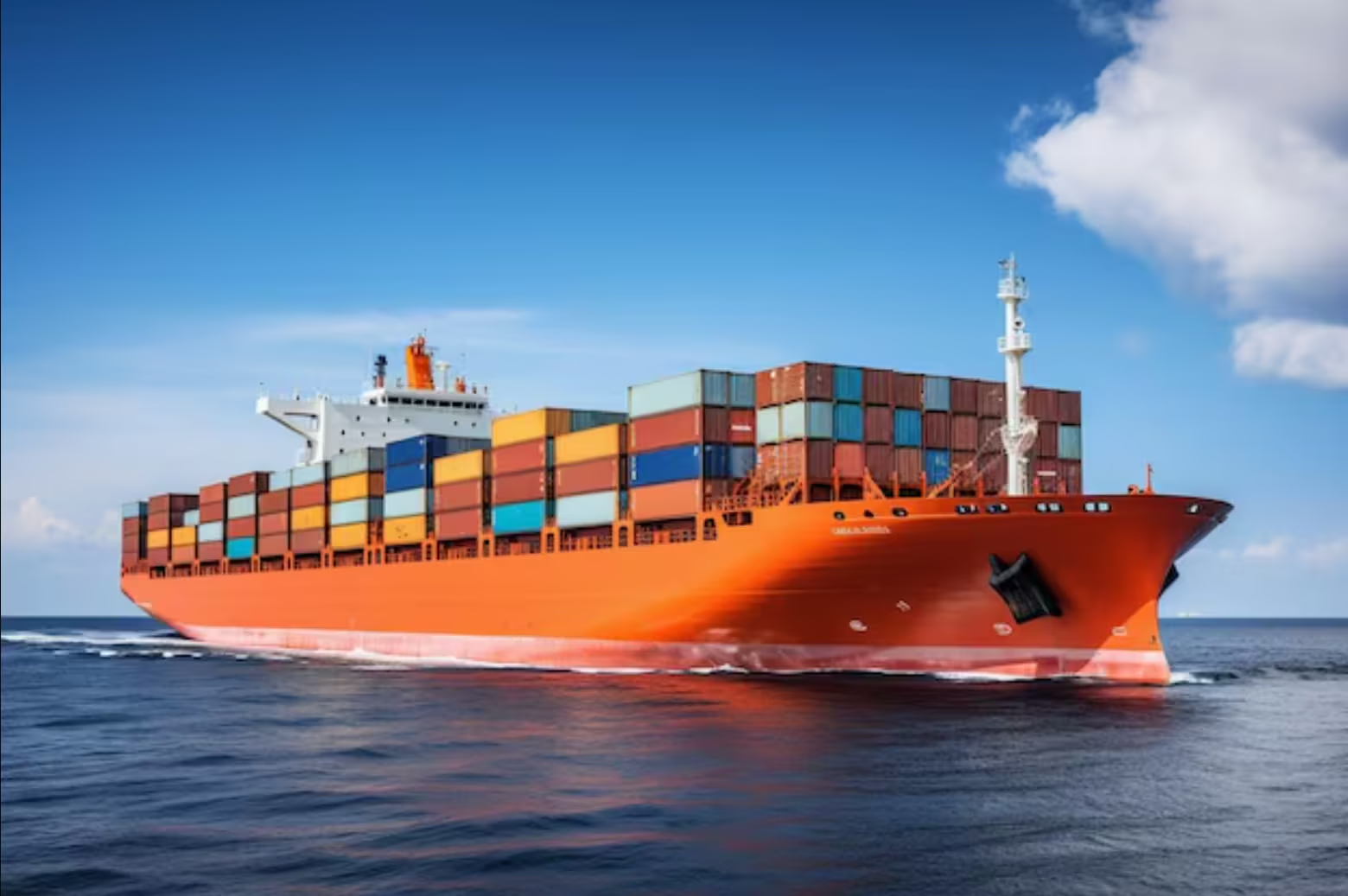
Carriers pass these fees through. A 14,000 TEU vessel carrying mixed cargo could face millions in fees per call, and ocean carriers have publicly warned that container rates will rise 20% to 25% as a result. Source: CNBC.
In November 2025, the US suspended the fees as part of a trade negotiation with China. The suspension is temporary and the framework remains in place, which means DTC brands relying on container freight from China are exposed to reinstatement at any point. Source: New York Times.
Carriers also restructure routes to minimize port calls. Smaller US ports lose service, which forces brands into longer inland transit and higher drayage costs even when the headline fee is suspended. This is part of the broader shift driving why DTC shipping is replacing container freight.
Under the final rule, fees are calculated per net ton or per container: $50 per net ton for Chinese-owned vessels, and $18 per net ton or $120 per container for non-Chinese operators of Chinese-built ships, whichever is higher. Carriers will likely redesign their routes to cut stops, dropping smaller ports entirely.
For example, if a cargo ship typically stops at the Port of Long Beach and the Port of Oakland, carriers facing per-call cost escalation will likely skip smaller ports like Oakland altogether.
This means brands will face higher costs as additional transportation moves cargo that would have otherwise been offloaded at those smaller ports.
How direct fulfillment from China sidesteps USTR port fees on Chinese-built ships
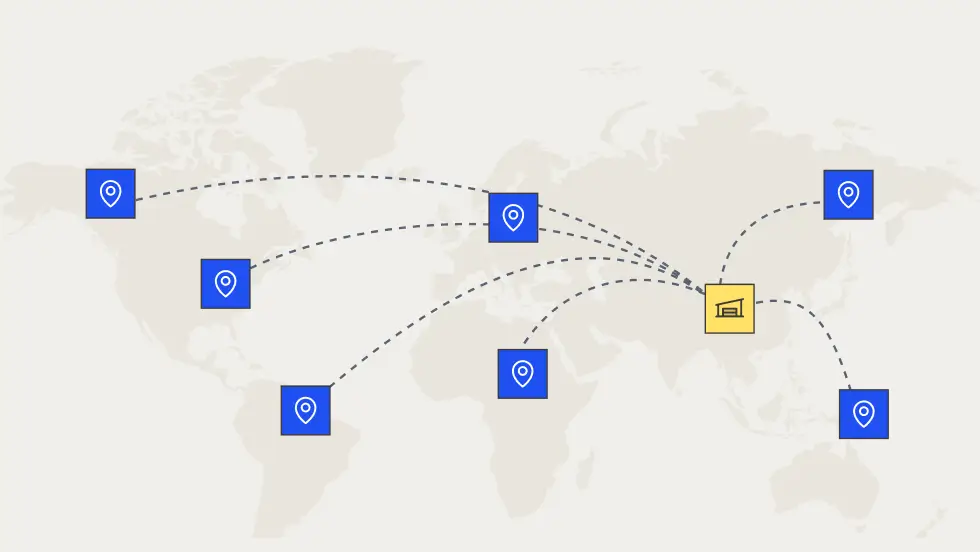
Direct fulfillment moves your inventory by air, not by sea, and ships orders one parcel at a time directly from the manufacturing country to the customer. The USTR port fees only apply to vessels calling at US ports, so air parcels are outside the rule entirely. For context on the broader shift, see why DTC shipping is replacing container freight.
Three structural advantages for Ecommerce and DTC brands manufacturing in China or Vietnam:
- Skip vessel-based fees. Air parcels never touch a US port call, so no USTR Annex I or Annex II fee applies to your goods.
- Pay duties after you sell. Direct fulfillment ships one order at a time, so duty is paid per parcel as it clears US customs, not on a full container that may sit unsold for months. See our breakdown of tariff deferment for DTC brands and CBP's $2,500 informal entry limit for Chapter 99 goods.
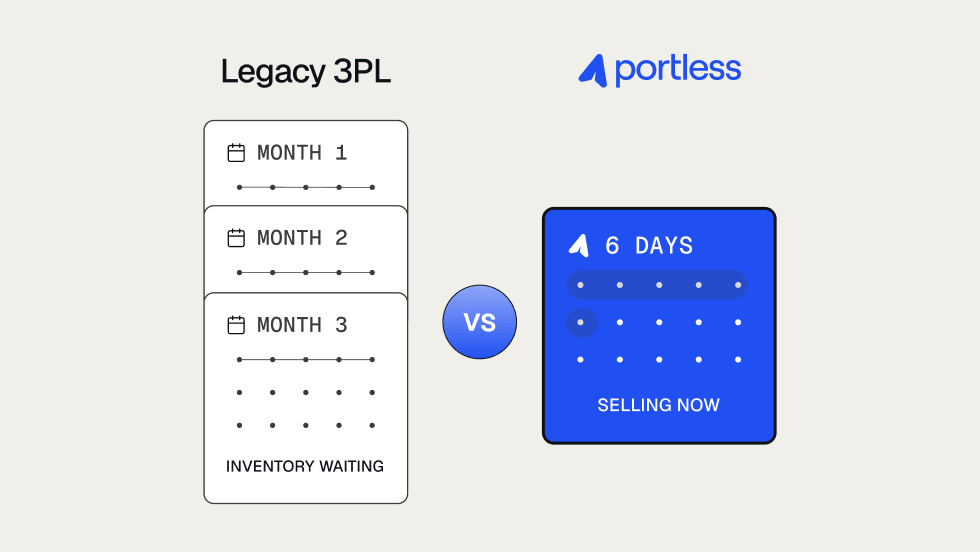
- Cut lead times by up to 90%. Inventory becomes available for sale within days of production rather than the 30 to 60 days a legacy container cycle requires.
Brands hit by both port fees and the existing tariff stack benefit from layering strategies. Combine direct fulfillment with tariff engineering to reduce duty costs, and consider expanding internationally to escape US tariff exposure as a parallel lever.
This is the same playbook Shein and Temu used to scale. The difference: Portless makes it available to US-based DTC brands without the operational lift. Run your numbers with the direct fulfillment ROI calculator.
Concretely, direct fulfillment delivers:
- Avoidance of USTR port fees entirely. Legacy container freight from China is exposed to the per-net-ton and per-container fees whenever the rule is reinstated. Air parcels are not.
- Pay tariffs only when you sell. With direct fulfillment, you only pay tariffs when an item actually sells, instead of paying tariffs on the entire container the moment it enters the US. That matters most when goods sit in inventory for months, or never sell.
- Operational benefits of fulfillment from China:
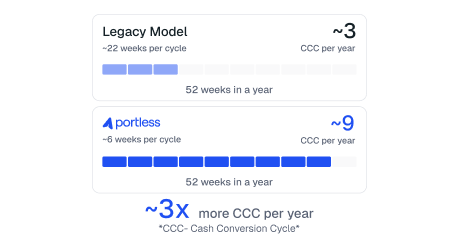
- Improve cash flow: sell your goods 48 hours after production.
- Reduce inventory risk: produce only what's needed to fulfill actual demand.
- Higher margins: cut the freight, drayage, and legacy 3PL handling costs baked into the container model.
Plan your next move
The world of supply chain is changing fast, and USTR port fees on Chinese-built ships are just one more variable on top of an already shifting tariff stack. For Ecommerce and DTC brands, staying ahead means adapting quickly and pressure-testing every link in the legacy 3PL model.
With direct fulfillment, DTC brands can also:
- Grow brand revenue by optimizing retail shipping logistics
- Stay in stock, reducing both overstock and stockouts
- Improve cash flow by compressing the cycle from three months to a few days
- Improve margins
- Ship to 75+ countries
What direct fulfillment changes for your cost structure
USTR port fees may be suspended today, but the framework is still on the books and the legacy container model is exposed every time policy shifts. If port fees, locked capital in unsold inventory, or tariff stacking are eroding your margin, it's worth talking to our team about what direct fulfillment would change for your specific cost structure.
FAQ
How much are the new US port fees on Chinese-built ships?
Vessels owned or operated by a Chinese entity face a flat fee of $80 per net ton per US voyage. Non-Chinese operators of Chinese-built ships are charged $18 per net ton or $120 per container, whichever is higher. Source: Reuters, CNBC.
Are US port fees on Chinese ships still in effect?
The US suspended the port fees on Chinese-built ships in November 2025 as part of a broader trade negotiation. The framework remains on the books and can be reinstated, so DTC brands relying on container freight should treat the suspension as temporary. Source: Yahoo Finance, New York Times.
Which ships are exempt from the new US port fees?
US-flagged vessels, US-built ships, and ships entering for repair or to a Great Lakes or Caribbean port are exempt. Some categories of US-owned operators of Chinese-built ships also qualify for exemptions under the final USTR rule. Source: FreightWaves.
How do US port fees affect Ecommerce shipping costs?
Carriers pass the per-ton or per-container fee through to shippers, which raises landed cost on every unit moving in legacy ocean freight. Industry estimates put the cost increase between $120 per container at the low tier and several million dollars for a single large vessel call. Source: CNBC.







.jpg)
.jpg)
.jpg)