“We generated $70K in package protection revenue in a single quarter by adding a simple $4 protection option at checkout — plus an additional $12K from cashbacks. Customers get peace of mind, and we're making a profit on every protected order with zero effort."
“We generated $70K in package protection revenue in a single quarter by adding a simple $4 protection option at checkout — plus an additional $12K from cashbacks. Customers get peace of mind, and we're making a profit on every protected order with zero effort."
How Moana Bikini turned months of inventory lead time into weeks
<1 Day
From manufacturer to FC
2,722 orders
To 38 countries in 180 days
<0.5%
Exceptions across tracked orders
Industry
Apparel
Products
Apparel
Headquarter
Australia / NZ
A conversation with
Ryan Jones
Operations Manager
The challenge. When US tariffs landed in 2025, demand in Moana Bikini's largest market cooled almost overnight and growth stalled. The fix, a North American 3PL, split the brand across two warehouses, two demand plans, container-sized buys committed months ahead of any sale, and thousands of dollars a month in freight across the Pacific.
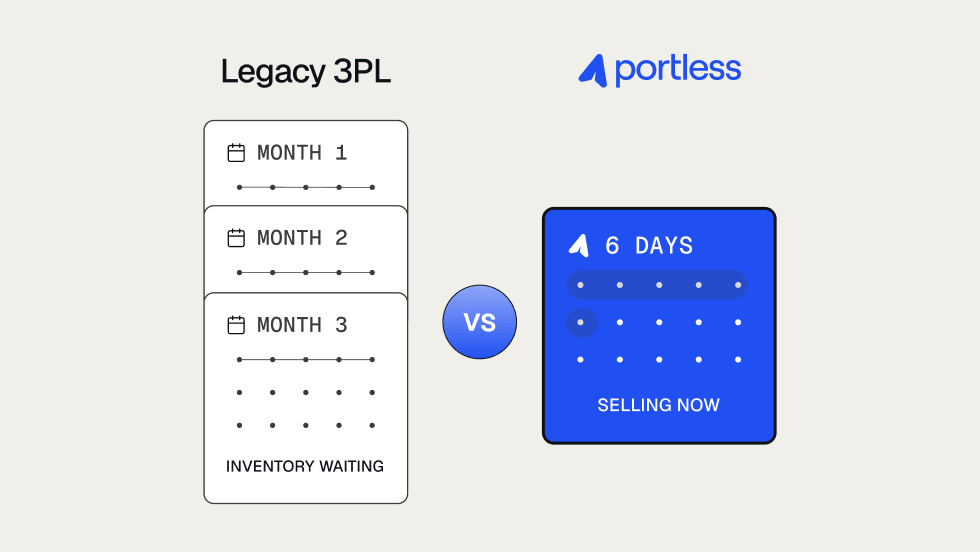
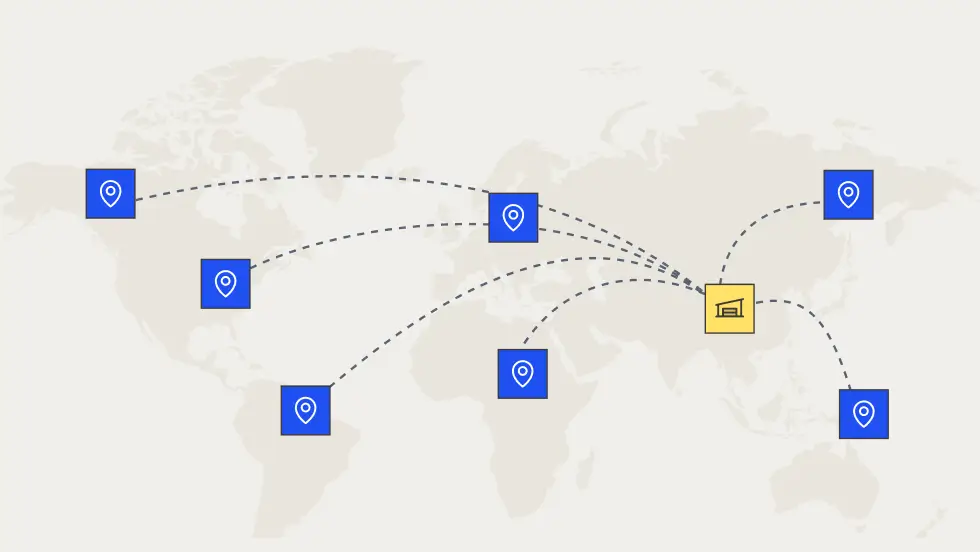
The solution. Moana moved fulfillment to Portless and now ships direct from China. New product reaches the fulfillment center in under a day, restocks land in weeks instead of months, and tariffs are paid per order shipped instead of upfront on every bulk shipment.
About Moana Bikini
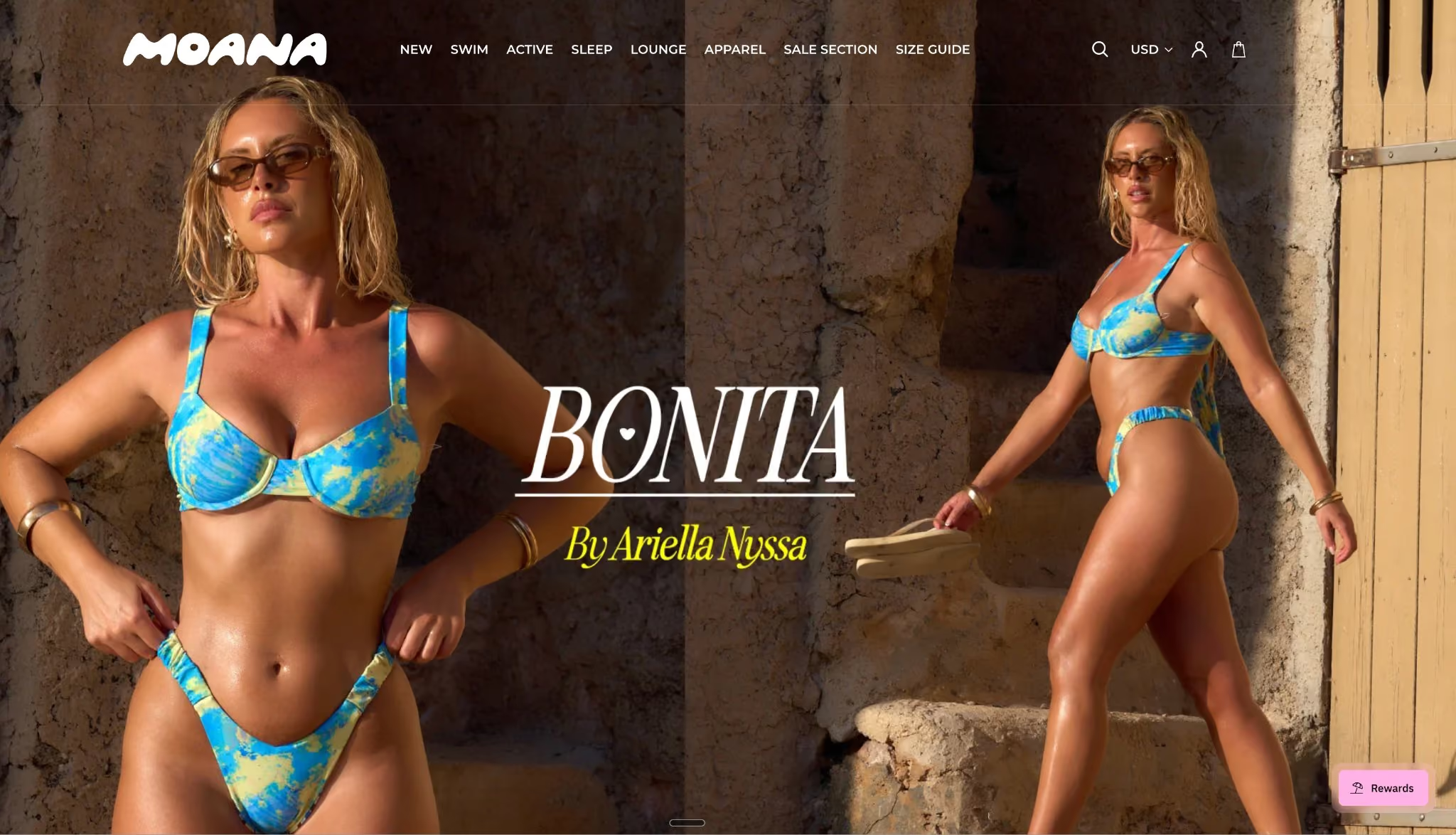
Karina Irby started Moana Bikini in 2011 because she couldn't find what she wanted to wear. Bright prints, cheeky cuts, and swimwear that didn't take itself seriously weren't on the Australian market, so she designed her own. Fifteen years later, the Gold Coast brand is one of Australia's most recognizable DTC swim labels, built on unretouched imagery, a fiercely engaged community, and the conviction that everybody has a bikini body.
The brand has always been global. Many of Moana's first orders came from North America, and the US and Canada remain core markets alongside a growing base in the UK, Europe, and the Middle East. Half of all orders now ship to the USA.
Moana has also outgrown swim. After testing new categories under a sister brand, The Smile Club, the team folded everything back into one storefront in early 2026. Tees, loungewear, and pajamas now sit beside the swim range across roughly 150 styles, with drops landing monthly rather than two or three times a year.
"We pride ourselves on product and marketing. That's our specialty. Warehousing and fulfillment is something we could do, but it definitely wasn't a specialty of ours."— Ryan Jones, Operations Manager, Moana Bikini
That distinction became expensive in 2025.
The challenge: one warehouse became two, and demand planning became a guessing game
Before 2025, everything was warehoused and fulfilled from HQ on the Gold Coast, including the North American orders that made up half the business.
Then the US liberation day tariffs launched in April 2025. The team held off on reacting, expecting the policy to soften. It didn't.
"We saw our US sales diminish quite rapidly, maybe over the period of four to six weeks. We couldn't blame the customer either, for not wanting to pay an extra 50 to 100% on top of the retail value."
Growth stalled through the back half of 2025, in a season the team had already bought and planned for. The product was never the problem. The cost of getting it across the border was.
The fix created its own problems. Moana stood up a North American 3PL, boxed up stock from HQ, and redirected half of each new collection from its manufacturers to the US. Domestic orders shipped from Australia. International orders shipped from North America. Two locations, two forecasts, one seasonal product.
"Not only did it take a lot more time and cost a lot more money, but it was also quite confusing to have to forward demand plan. How much are we going to sell globally, how much are we going to sell in Australia?"
The misses went both ways. Sell out in one location, sit on storage fees in the other. Freight from China to the US mainland cost far more than freight to Australia, adding thousands a month in fixed cost for inventory that might not move. And every bulk shipment into the US meant a tariff bill due on arrival, months before the stock sold.
"The general trend for that period of time was just a heightened level of risk, and uncertainty."
The decision: one inventory pool to serve a global market
There were only two real options. Keep fulfillment in-house with a complicated Australia Post and duty-collection setup, which pushed cost onto either the customer or the brand. Or hand fulfillment to specialists and accept a longer trip across the Pacific.
"In such a competitive and quite scary landscape in Ecommerce at the moment, any extra costs either on the customer or on the brand are just too risky to take on."
Direct fulfillment removed the trade-off. Two things stood out immediately. The first was inbound lead time, the trip from factory floor to fulfillment center.
"When I first heard of Portless, there was a part of me that thought this seems too good to be true. Literally it takes half an hour to get product from our manufacturer to you guys, which is incredible."
The second was how tariffs get paid.
"Being able to not have to pay a bulk tariff on entry into a North American 3PL, and be able to pay as you go, you can't understate how important that is to a small business in terms of cash flow. Not everyone can front up tens of thousands of dollars on tariff costs and then potentially not sell that product and just have to sit on that cost."— Ryan Jones, Operations Manager, Moana Bikini
The results: live after one phone call
Onboarding took a single call. The only delay was on Moana's side, since the team was still running down old stock in a second location and wanted its split shipment flows set up perfectly first.
"From a Portless end, they were ready to go. It only took one phone call to onboard us. As soon as we could get product to you guys, you were ready to ship. So it was basically us that was dragging the chain."
Ryan braced for slower delivery in the USA, where the local 3PL had been running two to four days. Portless standard SLA is 5-8 days in North America, which Ryan considered a fair trade for everything else he was gaining. Then he checked his dashboard.
"We're sitting just over five days from order to delivery, which to me seems quite unbelievable. To know that our orders are made and they're getting from Portless in China straight to North America in under five days, and in many cases faster than we were delivering from our North American warehouse." — Ryan Jones, Operations Manager, Moana Bikini
The impact: faster restocks, unlocked cash, and happier customers outside the US
Six months in, Moana has shipped 2,722 orders to 38 countries, with fewer than 0.5% hitting an exception. The bigger change sits upstream, in how quickly the brand can put product in front of a customer.
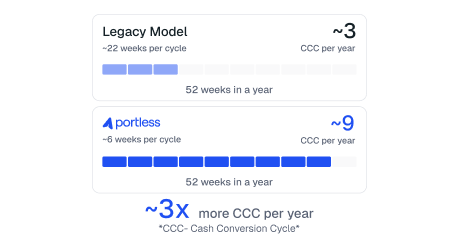
Getting product from the manufacturer into the fulfillment center now takes under a day. A restock that once meant producing enough volume to justify a container, then waiting months for it to cross the ocean, now takes weeks.
"Maybe we've made a mistake and we haven't ordered enough for our North American summer. We can super quickly action our manufacturer to place a reorder, have it produced and dropped into Portless in a matter of weeks. The ability to be really nimble and work with our manufacturers and work with Portless to get product to market as fast as possible is a huge win."
That nimbleness is what makes monthly drops and a wider catalog viable for a brand competing against fast fashion.
The secondary markets improved most. Orders to the UK, France, Spain, Portugal, and the Middle East now arrive faster than Moana ever managed from either Australia or North America.
"We're getting feedback in our DMs, over email, or in our private Facebook group saying, 'I ordered two, three days ago and it's already arrived. It used to take more than a week when it was shipping from Australia.' Someone could potentially be going away on the weekend, order on Monday or Tuesday, and have their new swimwear for their trip."
New customers followed.
"We're seeing happier customers and a lot more new customers via word of mouth through those regions, because of the ability to land product so quickly."
In North America, the win was that nothing changed. The customer experience in that market hasn't changed at all, Ryan says. Six months in, with tariffs now paid per order, Moana is selling down its remaining warehouse stock and putting the freed-up cash into restocking the styles customers keep asking for.
Moana's advice for other apparel brands
Ryan's advice is about timing, not diligence.
"Don't drag the chain. If you're thinking about fulfilling from Portless and warehousing with Portless, just take the plunge, even if it's with one collection. Dip your toe in and trial it out. You'll see there won't be any negative customer feedback. You'll be seeing a lot more efficiency and speed, and the ability to restock and re-merchandise your best sellers at a much faster pace."
For any brand still weighing a regional warehouse as the answer to tariffs, he's blunt about what he'd do differently.
"If I could go back in time, I wish I'd found Portless before we'd made the call to initially warehouse in North America. That would have saved us so much hassle and time and money."— Ryan Jones, Operations Manager, Moana Bikini





.svg)
.webp)
.avif)
.avif)
.avif)
.avif)


.svg)