“We generated $70K in package protection revenue in a single quarter by adding a simple $4 protection option at checkout — plus an additional $12K from cashbacks. Customers get peace of mind, and we're making a profit on every protected order with zero effort."
“We generated $70K in package protection revenue in a single quarter by adding a simple $4 protection option at checkout — plus an additional $12K from cashbacks. Customers get peace of mind, and we're making a profit on every protected order with zero effort."
How Ugly Sleep Club turns inventory into cash in days
See how Ugly Sleep Club ships 5,000 orders a month to four countries and funds every production run out of the revenue from the last PO.
5,000
Orders shipped per month
4 markets
US, Canada, UK, and Australia from one fulfillment footprint
Days
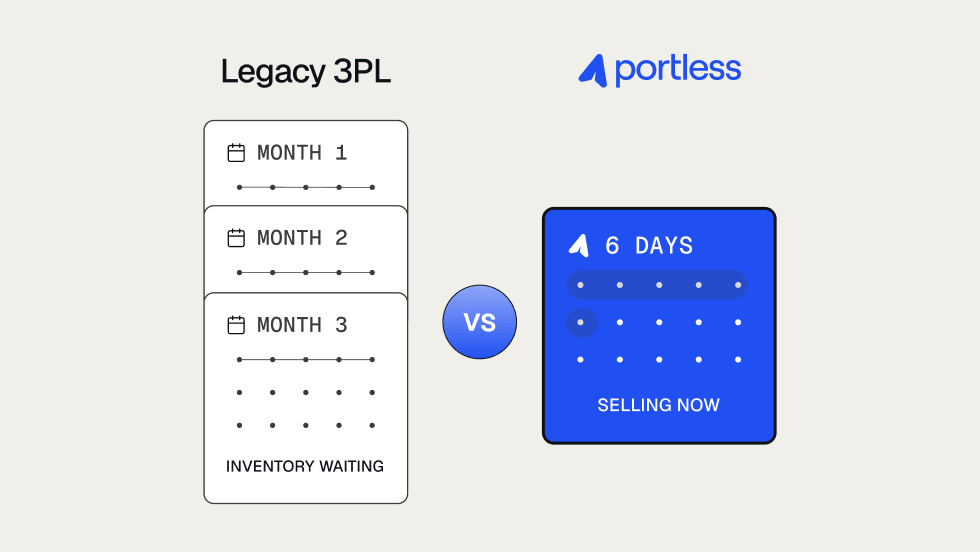
Inventory lead time, down from three to four months
Industry
Beauty
Products
Skincare
Headquarter
United States
A conversation with
Grace Clark
Founder
The challenge: Ugly Sleep Club manufactures a chemist-formulated skincare line in China and sells it direct to consumers across four markets. The conventional route — bulk-producing, freighting into a US warehouse, and waiting — would have locked months of cash into unsold stock and put a full quarter between every product decision and the market.
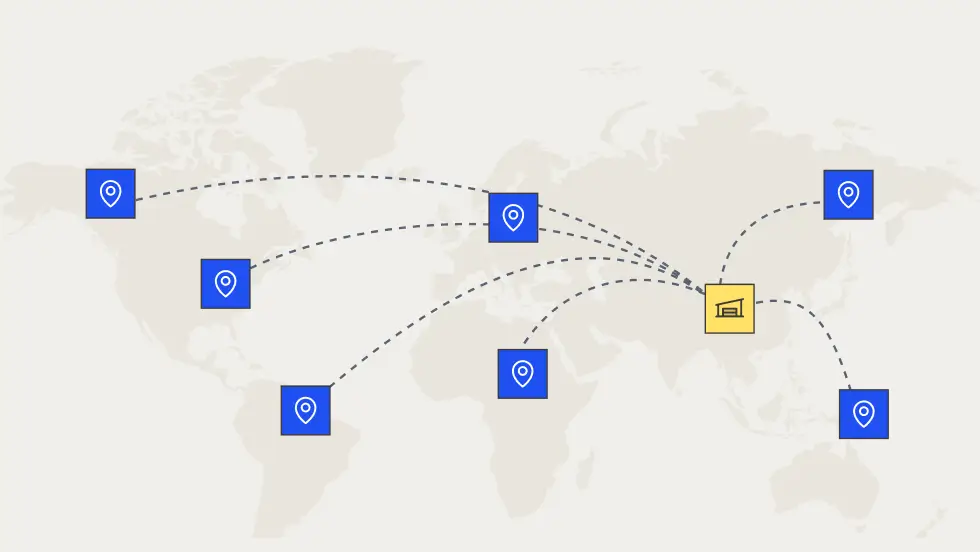
The solution: Direct fulfillment from China compressed inventory lead time cycle from months to days. Ugly Sleep Club now ships 5,000 orders a month and funds each production run out of the revenue from the last PO.
About Ugly Sleep Club
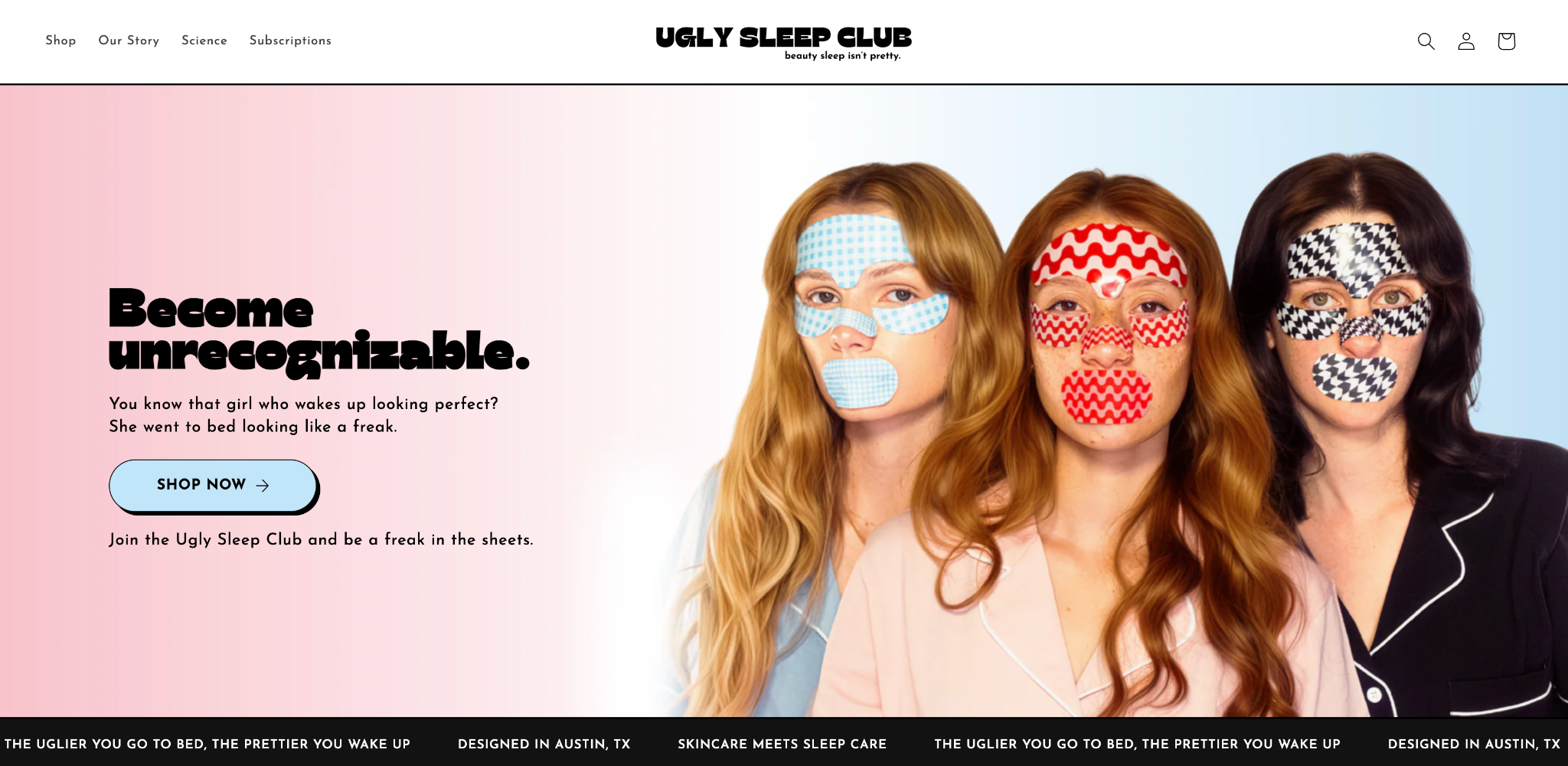
Ugly Sleep Club makes sleep skincare to a chemist's standard, because a chemist built it.
Founder Grace Clark looked at a category that was growing fast and formulating carelessly. Mouth tape had become a mainstream sleep product, and most of what reached customers was adhesive and little else. "Mouth tape was such a big product category, but so many mouth tapes on the market are just not high quality," she says.
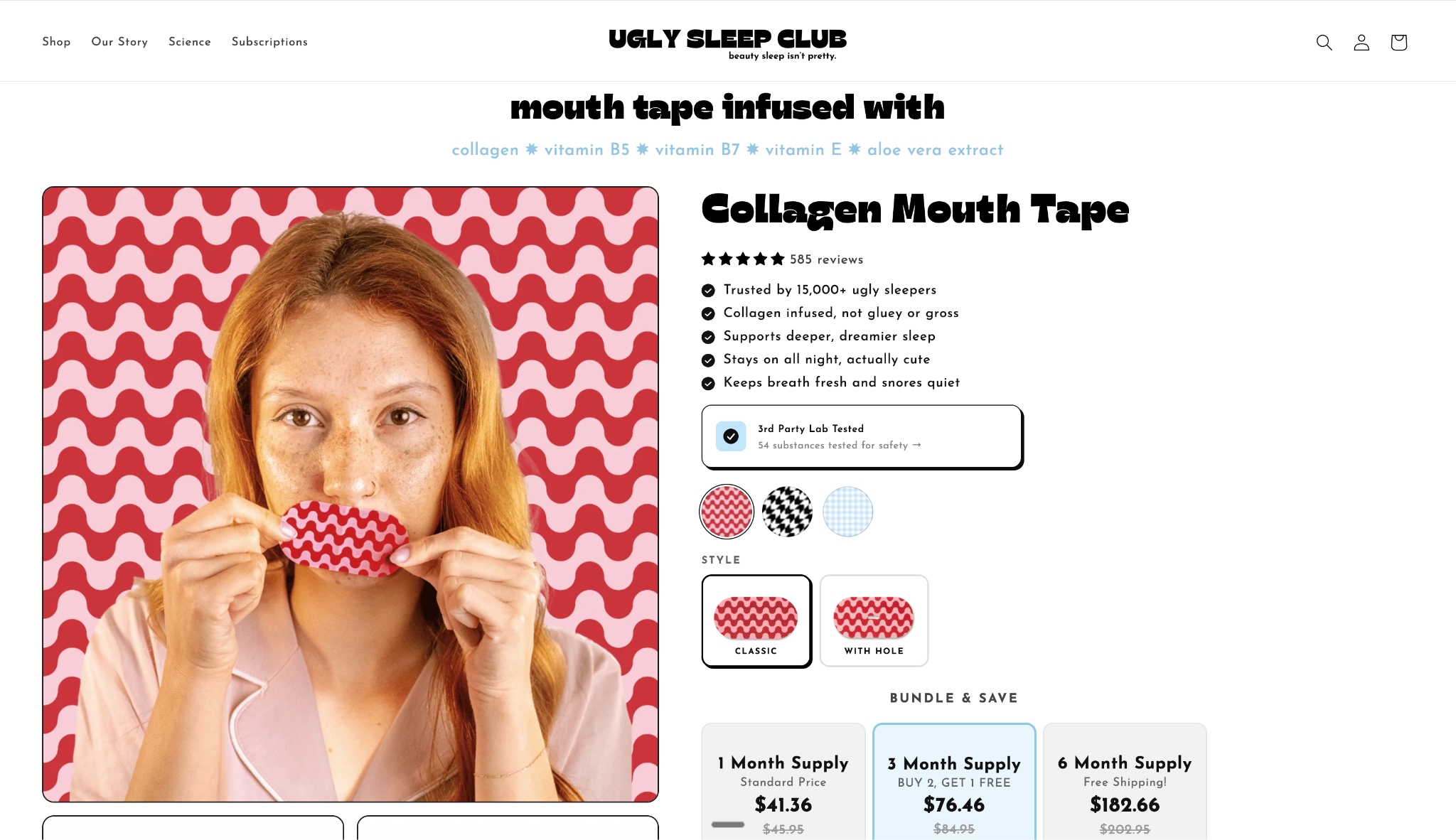
So she formulated her own. Ugly Sleep Club's hero product is a mouth tape infused with vegan collagen, aloe vera, and vitamins B5, B7, and E — a strip that encourages nasal breathing overnight while conditioning the lips and the skin around them. It's third-party tested and PFAS-free. Nose strips and reusable medical-grade silicone eye and forehead masks complete the line.
"I wanted to build something using my background as a chemist that actually had good skincare ingredients in it and was good for your skin and your sleep at the same time."
Grace approached 15 to 20 adhesive factories with her specification, ran samples through each, and has since refined the tape across four generations based on customer feedback. Production runs now come in at 20,000 units.
The challenge: a China-made product on a US-market clock
Grace had already priced out the legacy supply chain, and the timeline is what ruled it out.
Before Ugly Sleep Club, she had explored selling a different product on Amazon. "The whole Amazon model is that you get these bulk goods made in China and then you ship them over here and it takes three or four months," she says. "You don't get to launch for months and months."
Grace wanted a business where a product reached customers in weeks, which meant DTC rather than a marketplace and direct fulfillment rather than bulk importing. It even shaped what she chose to sell.
"Candidly, part of the reason we picked this product is because I knew it would be perfect for direct fulfillment."
Velocity matters this much for any brand that grows through digital marketing. When paid channels are how you acquire customers, you can raise demand almost on command. What you can't do on command is produce the inventory to meet it. Demand is rarely the constraint. Stock is.
"Going out of stock completely stops everything. You have to turn off all your ads. It's the worst case scenario if you're trying to grow really fast."
Under a bulk-import model, recovering from an inventory shortfall means paying for your products and then waiting two or three months of ocean freight on top of it. That's a scenario Grace has designed her operation to make impossible.
The decision: why Portless over NextSmartShip
Direct fulfillment was always the plan, so the question was never whether to ship from China. It was who to ship with.
NextSmartShip came first. It was one of the more visible options for a founder searching for fulfillment out of China, and on paper it did what Grace needed: hold inventory near her factory, pick and pack it there, and hand parcels to carriers for delivery in the US. The model worked. Orders went out, customers got their product, and the cash cycle was already far faster than anything bulk importing could have given her.
What became clear early was that the model was only half of it. Shipping from China fixed the timeline. It didn't address the fact that Grace was building a physical product on a continent she wasn't standing on.
With NextSmartShip, the engagement ended at inventory receipt. Stock arrived, stock shipped, and everything upstream of the warehouse door stayed her problem alone. "It was just drop your stuff off and we'll ship it. It wasn't a real partnership between us and our fulfillment provider," Grace says.
What she needed was operational presence where her supply chain actually lives. Her factories are in China. Her inventory is inspected, packed, and dispatched from China. Portless is on the ground for both.
"Every time we mess something up, we have a partner in China who can help us. We just fixed some barcodes that I messed up. They talk to our factory," she says. "It's more like having a partner in China that can communicate with your other partners and give you eyes on a part of the world that you're not able to be in all the time."
That's the distinction Grace draws. A fulfillment provider takes finished goods and moves them. A supply chain partner sits inside the process that produces them — talking to the factory, catching the barcode error before 20,000 units ship with it, and closing the gap between where a brand is built and where it's made.
"The amount of attention to detail we get with Portless compared to NextSmartShip is unmatched."
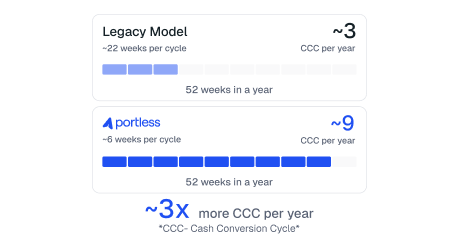
The results: a cash conversion cycle measured in days, not months
Ugly Sleep Club funds every production run out of the revenue the previous one generated not though working capital loans, or funding.
"Our cash flow is so fast that we are able to buy a new product, get it into our warehouse the day after it's finished, and start shipping it immediately and get more cash."
— Grace Clark, Founder, Ugly Sleep Club
The clearest illustration is peak season. A brand importing in bulk has to fund its holiday inventory months ahead and size the order to last half a year, because there's no realistic way to replenish inside the season. Grace does the opposite. She orders what the next few weeks of demand require, ships it, and reorders off the revenue it generates — replenishing inside peak instead of betting on it in advance.
"If I was placing a $200,000 order of product, I wouldn't have the cash to do it," she says. "But because I'm able to place smaller orders and get that into my fulfillment center and shipping to customers immediately, I'm able to pay for the product up front, get all the product I need, make more money from Black Friday, and pay for another PO."
Her Black Friday orders cover both November and part of December. Then she reorders. Instead of one oversized annual bet, she places smaller ones quarterly or more often, and the capital that would have been sitting in a warehouse goes into paid acquisition and new product development instead.
"We know that Portless can handle that volume with no setup. I don't have to worry about the complications of it getting stuck in customs on a boat or on a plane."
— Grace Clark, Founder, Ugly Sleep Club
The impact: fulfillment stopped being the constraint
Two things change when inventory stops absorbing a brand's cash and its calendar.
New markets become a marketing decision, not an infrastructure project. Ugly Sleep Club ships to the United States, Canada, the United Kingdom, and Australia from a single fulfillment footprint, with roughly 80% of volume in the US and the rest growing. "Essentially I decide that I want to start trying to sell to Australia, so I turn on ads to Australia, set up Shopify Markets, and I'm able to ship there with no setup required," Grace says. Canada came online most recently and is already producing meaningful volume.
Want to run the same sequence? The market-by-market approach Grace used to open Canada, the UK, and Australia is the one we've documented step by step — how to pick your next market, what to set up before you turn on ads, and how to read the first 30 days of data. Read the international expansion playbook.
The experience doesn't give away where the parcel started. "I don't even think people realize I'm not a Canadian, Australian, or UK company." And the only thing standing between Ugly Sleep Club and continental Europe has nothing to do with logistics: "It's not fulfillment that's stopping me from expanding markets, it's on the marketing side."
What's left is localization. To sell into France, Grace needs her ads, product pages, and checkout to work in French — a creative and merchandising job, not a supply chain one. It's also a smaller job than most brands assume. Language does most of the work, cultural adjustments handle the rest, and platform-level auto-translation now covers ad copy at close to no production cost. We broke down where localization actually moves revenue and where brands over-invest in taking your Ecommerce brand global.
Quality control moves upstream, to the factory floor. For a product that customers wear on their face overnight, a defect caught by a customer is a defect caught too late. Ugly Sleep Club was among the first brands to use Portless factory QC, replacing a process where the factory inspected its own work and charged extra for it.
"So many things can go wrong with your product in China if you're not there, especially when you're making 20,000 units of something," Grace says. Her first Portless inspection came back as a 20-page report. "I cannot believe I wasn't doing QC this robust before."
That's changed what the relationship is. "They're not only a fulfillment partner for us, but they're also a product partner," she says. "They check all of our products. They help us manage packaging and everything on the China side."









.svg)

.svg)