Backorder
A backorder is a customer order placed for a product that is temporarily out of stock but still available for purchase, with delivery scheduled once inventory is replenished. It signals demand has outpaced supply, not that the product is discontinued.
The order is real, the money is committed, but the inventory isn't there. You promise delivery on a future date — once the next production run lands, the next container clears port, or your supplier catches up. For DTC brands, backorders sit in the middle of two outcomes: a useful signal that demand is outpacing your forecast, or a slow leak of canceled orders, refund requests, and customers who never come back.
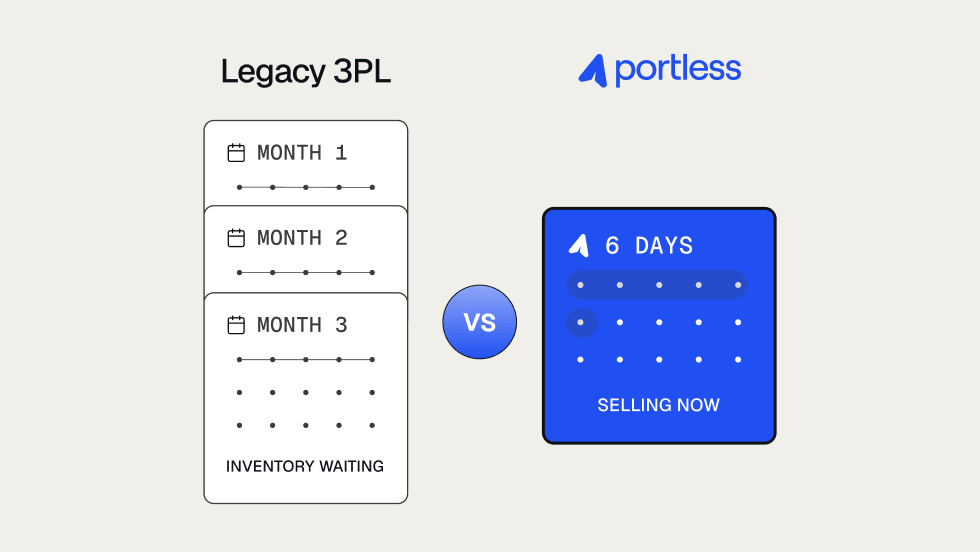
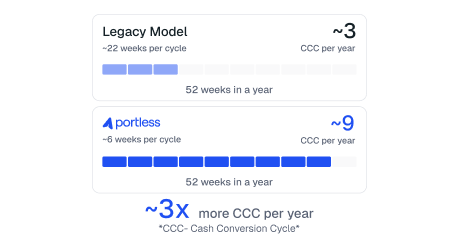
The legacy bulk-and-warehouse model makes backorders worse than they need to be. You commit to a purchase order months in advance, wait six to eight weeks for ocean freight, then watch your buffer evaporate during a campaign spike. By the time you reorder, you're already 60 to 90 days from restock. Direct fulfillment shortens that loop dramatically — which is why backorder frequency is one of the clearest indicators of whether your supply chain is built for how you actually sell.
What causes a backorder
Backorders are almost always a forecasting or lead-time problem. Demand moved faster than your replenishment cycle could keep up. The most common triggers:
- Demand spikes from a paid ad, influencer post, or PR moment that wasn't planned for
- Forecast misses on a new SKU or a seasonal product with no historical baseline
- Supplier delays at the factory — raw materials, QC failures, or capacity constraints during peak season
- Freight disruptions including port congestion, customs holds, or carrier capacity shortages
- Conservative reorder points set to protect cash flow, leaving little buffer when sales accelerate
The deeper cause is structural. When your replenishment cycle is 90+ days because you're shipping by ocean freight and storing in a domestic 3PL, every demand miss turns into a multi-week backorder. The system can't respond inside the window your customer cares about.
Backorder vs out of stock
These get used interchangeably, but they mean different things.
- Out of stock: the product is unavailable and the customer can't buy it. Revenue stops. The listing typically goes inactive or shows a "notify me" form.
- Backorder: the product is unavailable today but the customer can still place the order. Revenue continues, with an expected ship date.
Backorders preserve sales. Out-of-stock listings don't. The trade-off is customer experience — a backorder is only as good as your ability to deliver on the promised date. Miss it, and you've turned a sale into a refund plus a damaged relationship.
The real cost of backorders
It's tempting to view backorders as "sales saved." The full picture is more expensive:
- Refund and chargeback risk grows the longer the wait
- Customer acquisition cost is wasted if the backordered customer cancels
- Support tickets spike — Where is my order? (WISMO) volume can double during backorder periods
- Expedited air freight to recover the position eats into margin
- Repeat purchase rates drop for customers whose first order arrived late
Research on delivery timing shows that customers form expectations at checkout and judge the brand against that promise. A backorder communicated clearly is recoverable. A silent backorder is not.
How direct fulfillment reduces backorder frequency
The reason brands carry deep safety stock in domestic 3PLs is because the replenishment cycle is too long to react to real demand. Cut that cycle, and the math on backorders changes.
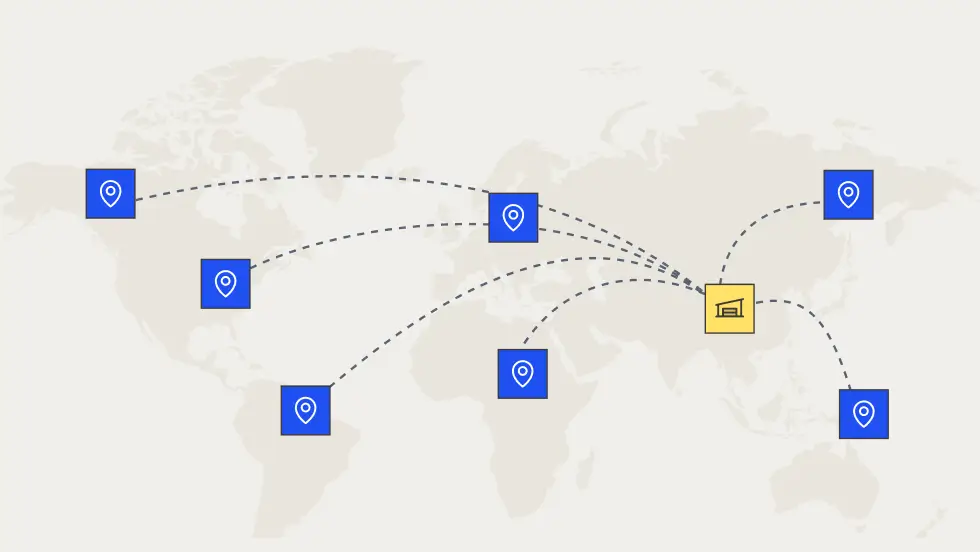
Portless ships orders directly from manufacturers in China and Vietnam to customers in 85+ countries in five to eight days. That means:
- Inventory becomes available for sale days after production, not weeks
- You can reorder smaller batches more frequently, matching production to actual demand
- A demand spike triggers a new production run that lands in your fulfillment flow within days, not months
- Working capital stays free instead of locked in bulk inventory sitting in a warehouse
Brands using this model — like the ones detailed in our made-to-order Ecommerce guide — find that backorders shift from a crisis to a managed signal. You still see them during true demand surges, but the recovery window is measured in days, not months.
How to manage backorders when they happen
You won't eliminate backorders entirely. The goal is to manage them in a way that protects revenue and trust:
- Show clear backorder status and estimated ship date on the product page, before checkout
- Send proactive updates — production started, QC complete, shipped — instead of waiting for the customer to ask
- Offer an incentive to hold the order: discount, free shipping, or a small gift
- Prioritize backorder fulfillment in your operations queue once stock arrives
- Track backorder rate as an operational KPI, broken out by SKU
For BFCM and other peak periods, pre-orders are often a better tool than backorders. You set the expectation upfront instead of recovering from a stockout.
Backorders signal a supply chain that can't keep up
Frequent backorders aren't a forecasting failure — they're a structural one. If your replenishment cycle is 90 days, no forecast is accurate enough to prevent stockouts. Portless cuts that cycle by shipping orders directly from your manufacturer to your customer, so inventory turns into revenue in days. Fewer backorders, less capital tied up in safety stock, and more flexibility to respond to what's actually selling.
Contact us to see how direct fulfillment changes the math on your inventory.
← Back to the Ecommerce supply chain glossary