Your carrier's customs shortcuts don't stay with your carrier. They land on you. When someone undervalues your shipment to shrink a duty bill, the importer of record takes the hit, and for most cross-border DTC brands, that's your name on the paperwork.
In 2026, that shortcut got a lot more expensive. A new executive order raised penalties, the $800 de minimis exemption is gone, and federal regulators are cracking down on carriers that cut corners at customs. Here's how to tell if yours is one of them.
::callout
Why this matters for your brand
If US regulators take action against a non-compliant carrier, the brands that shipped through it carry the legal risk, not the carrier. You are the importer of record. Picture the exposure: a carrier declares your $100 orders at $5 to move them cheaply, so the duty owed drops from about $35 a parcel to $1.75. Two years later, Customs audits the carrier and reassesses. As the importer of record, you owe the roughly $33 gap on every order you shipped. Across 50,000 orders that's about $1.65 million in back-duties, plus a penalty of at least 50%, plus interest.
:callout
Your carrier's shortcut is your liability
The importer of record answers for what's declared to customs, not the carrier that declares it. For most cross-border DTC shipments, your brand is the importer of record.
Undervaluation is the tactic you'll see most. A carrier ships a $100 order and writes $5 on the customs form. The duty owed drops to almost nothing, the parcel moves faster, and the rate looks great. That gap is your exposure, not theirs.
::table
Declared value on a $100 order;Duty paid (~35%);What it means for you
$100 (the real value);$35;Compliant. Nothing owed later.
$5 (undervalued);$1.75;$33.25 short per order. As importer of record, you owe the difference, plus penalties, if it's caught.
:table
Duty shown at roughly 35%, a common combined rate for China-made consumer goods. Your real rate depends on your HS code (more on that below).
It gets worse under DDP. DDP, or Delivered Duty Paid, means you — the seller — cover all duties and taxes before the parcel reaches your customer, so they pay nothing at the door. Great experience. But if the carrier running your DDP volume under-declares to keep its costs down, you're the named importer on shipments that were knowingly undervalued. Customs can go back years, reassess every entry, add penalties, and bill you.
Most brands never see the values their carrier declares for them. If you can't pull the declared value on last quarter's shipments, you can't prove they were right. Treat that blind spot as the problem.
What changed in 2026
In June 2026, the White House signed Executive Order 14411, the biggest customs-enforcement change in years. It rewrites who can import and what happens when a declaration is wrong. Here's what it says, and what each part means for you:
::table
What Executive Order 14411 says;What it means for your brand
Sets a penalty floor of "not less than 50 percent of the assessed penalty.";If you're caught, the fine starts at half the assessed amount. There's no negotiating it down to a slap on the wrist.
Requires importers of record to hold a "minimum level of tangible domestic assets, bonding, or both" and disclose beneficial ownership.;A paper-only US shell can no longer be your importer of record. The IOR needs real assets and a named owner.
Bars foreign importers from filing informal entries unless they use a validated customs broker.;The cheap, low-documentation entry path is closing for foreign importers. Expect formal entries, bonds, and money up front.
Ends penalty mitigation for repeat offenders and imposes maximum penalties on brokers that fail their due-diligence duties.;Everyone in your chain is on the hook. A carrier or broker that cuts corners now drags you down with it.
The duty-free door closed too. The $800 de minimis exemption ended for China and Hong Kong in May 2025, and for every other country that August. Every parcel pays duty now, whatever it's worth. That pressure is exactly what pushes a carrier to fudge the numbers. Our guide to the current US import rules covers where things stand.;Customs flagged over $1 billion in unpaid duties in a single stretch, a program record. A US senator has asked the DOJ to investigate several China-founded parcel carriers for helping clients dodge tariffs through transshipment, undervaluation, and ghost importers of record. Some of those carriers are ones DTC brands ship with today.
:table
Here's the plain-language version of what the order changes, and the workaround it shuts down:
How to tell if your carrier is compliant
Ask three questions and see how clearly they can answer:
- What value do you declare on my shipments?
- Who's the importer of record?
- Do my goods clear through formal entry?
::table
What to check;Compliant carrier;Warning sign
Declared customs value;Matches your commercial invoice;Declared far below actual product value
Importer of record;A named entity with real US assets;A shell entity, or they won't say
Entry type;Formal entry, full documentation;Everything moved as informal or "gifts"
Duty transparency;You see duties paid per shipment;Duties are a black box
Rates;In line with true landed cost;Priced well below everyone else
:table
Can't get a straight answer on declared value or importer of record? That's the finding. You don't need proof of fraud. Missing transparency is the risk.
Know your HS codes
Your HS code sets the duty rate on every product you ship, and getting it wrong is its own compliance risk. An HS (Harmonized System) code is the international classification number that tells Customs what your product is and what duty it owes. Pick the wrong code, or let a carrier pick a conveniently cheaper one, and you've misdeclared — the same liability as undervaluation. As the importer of record, you own that classification, not your carrier. Know the codes across your catalog, keep them accurate, and confirm your partner files them as-is.
Learn more about tariff engineering →
What compliant cross-border fulfillment looks like
Compliant fulfillment means true declared values, formal customs entry, and full visibility into the duties paid in your name. Speed and compliance aren't a trade-off when the model is built right.
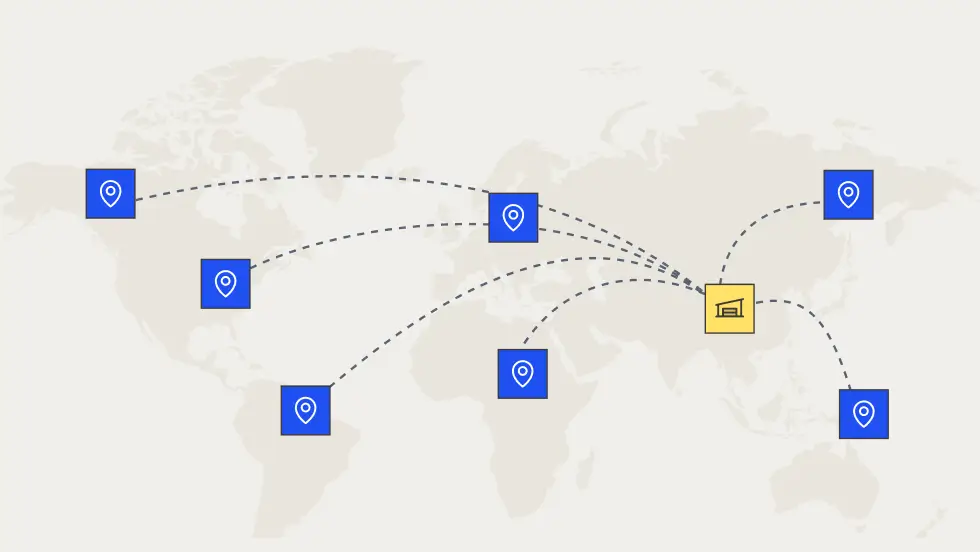
Portless ships direct from origin to customers in 85+ countries, with duties calculated on real product values. Your merchant imports under a real US company, or our licensed US customs broker is the importer of record. You see what's declared and what's paid. No shell entity, no mystery paperwork waiting to be reassessed. We built it this way back when the shortcut was cheaper and nobody at Customs was checking, and our breakdown of cross-border duty strategies shows the legitimate levers that actually lower landed cost.
Check your carrier before Customs does
The safest time to check your carrier is before Customs does it for you. Enforcement is tighter, penalties are higher, and the carriers most likely to be under-declaring are the ones already under federal scrutiny. If you can't see what your partner declares or name your importer of record, that blind spot is your risk. Book a Portless demo and we'll show you what compliant, transparent cross-border fulfillment looks like for your brand.
FAQ
Who is liable if my carrier undervalues a shipment?
The importer of record is liable, and for most cross-border DTC shipments that's your brand, not the carrier. Customs pursues the named importer for unpaid duties, penalties, and interest, even when the carrier filed the declaration.
What is the US de minimis threshold in 2026?
There is no de minimis threshold in 2026. The $800 exemption ended for China and Hong Kong in May 2025 and was suspended for all remaining countries that August. Every package now pays applicable duties regardless of declared value.
What are the penalties for customs duty evasion?
Under Executive Order 14411, signed in June 2026, the minimum penalty is at least 50% of the assessed amount, and repeat offenders lose access to penalty relief. Customs can also reassess back-duties on every affected shipment and hold the goods.
How do I check if my fulfillment partner is compliant?
Ask what value they declare to customs, who's named as importer of record, and whether your goods clear through formal entry. A compliant partner answers clearly and shows you the duties paid per shipment. Vague answers are the warning sign.








%20(1)%20(1).avif)
%20(1).avif)
.jpg)