“We generated $70K in package protection revenue in a single quarter by adding a simple $4 protection option at checkout — plus an additional $12K from cashbacks. Customers get peace of mind, and we're making a profit on every protected order with zero effort."
“We generated $70K in package protection revenue in a single quarter by adding a simple $4 protection option at checkout — plus an additional $12K from cashbacks. Customers get peace of mind, and we're making a profit on every protected order with zero effort."
For a DTC brand in Australia, New Zealand, Singapore, or Hong Kong, going global is no longer a someday plan. The home market only holds so many shoppers, ads at home keep getting more expensive, and the tools to sell abroad are already in the stack. The hard part is doing it profitably.
Portless CEO Izzy Rosenzweig sat down with Stewart Smith, who runs APAC for Global-e, to walk through how brands in the region actually do it. The short version is two moves. Convert the international shopper, which is Global-e's world, and fulfill the order fast without locking your cash in inventory, which is what Portless does. This post pulls out the parts most useful to an operator picking their next market.
Going global is now a question of how, not if
Expansion is not optional for a brand in this region. A single domestic market runs out of shoppers, so the next stretch of growth has to come from somewhere else. Izzy put the scale simply. California alone has more people than all of Australia.
"It's not a question, should I go international? It's now how do we do it?" — Stewart Smith, Managing Director APAC at Global-e
Stewart has watched the shift firsthand. A few years ago most Australian brands treated international as an afterthought and just mirrored their home pricing into the US. Now growth is assumed, and the whole conversation is about profit, margin, and cash flow. The global cross-border Ecommerce market is on track to hit roughly $2 trillion by 2034. The brands that win a real share of it treat expansion as a way to make money, not just grow the top line.
Why brands stall when they expand
Most brands already have international shoppers on their site. Something usually breaks in two places.
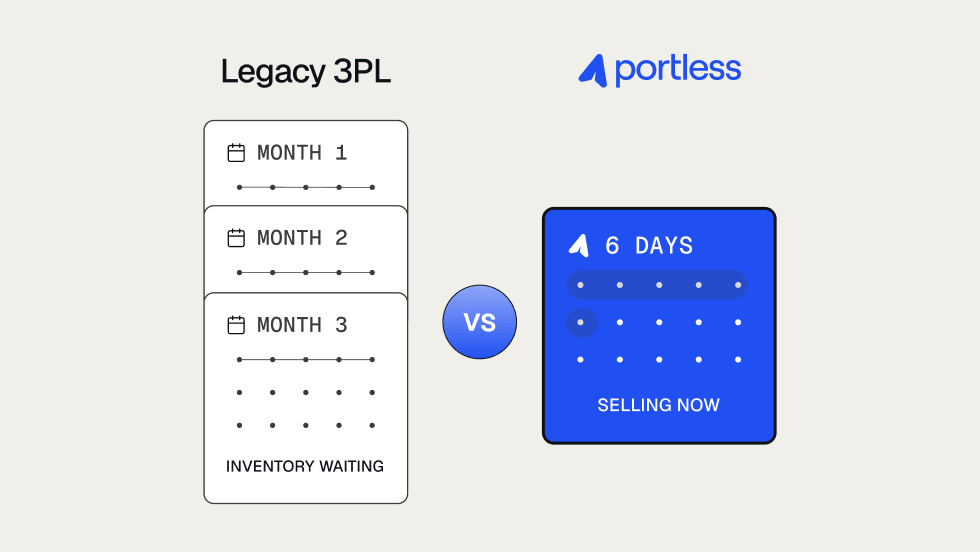
The first is inventory. The old way to enter a market is to forecast demand, manufacture, and ship stock to a warehouse in that country months before a single order comes in. For a market you cannot predict yet, that is a large bet made with cash you will not see again for a quarter or more.
"The one way to kill a business is put your product on the water to five countries or 10 countries around the world. One quick way to go bankrupt, with your money stuck." — Izzy Rosenzweig, CEO at Portless
The second is the checkout, which we cover further down. Fix both and the whole expansion case changes. Fix neither and international stays an expensive experiment.
Stock in one place and ship the world from it
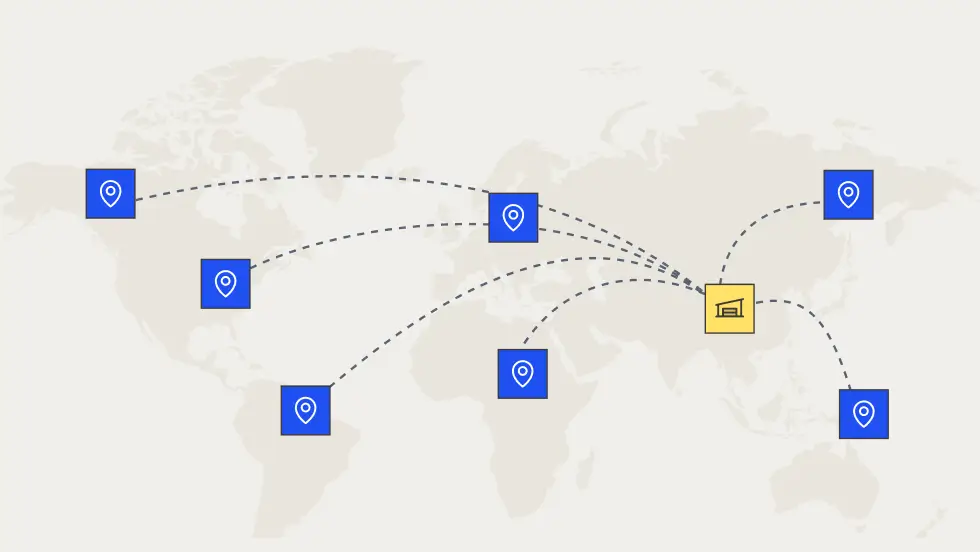
This is where a brand in this region has an edge. Direct fulfillment flips the old model. Instead of shipping stock ahead of demand, you hold one pool of inventory in a hub near your factory and ship straight to the customer when the order lands. Orders arrive in five to eight days with local carriers and tracking, to more than 75 countries, from that single hub.
For a brand already manufacturing in China, that hub sits right next to production. Stock is ready to sell within days of coming off the line, not after an ocean crossing. There is no destination warehouse to fill, no second stock pool, and no double-handling. Global-e only recently opened China as an outbound market, with Portless as a platinum partner on that route, so this model is newly open to a lot of brands here.
Because you fulfill from one hub, trying a new market costs almost nothing. You do not build anything or move stock. You turn on ads, and real orders ship from inventory you already hold.
"You could go live in new markets in days, not weeks, not months. Days." — Izzy Rosenzweig, CEO at Portless
Izzy's advice is to stop guessing. Do not send 10,000 units to the UK before you know it sells. Point marketing at the market, watch the real orders, and scale only where the numbers work. Because the downside is small, brands keep going.
"When we see brands come in at roughly 1.7 on average, and within nine months, they're in seven countries. That is a 4X, and once they enter a country, they never leave a country, because it's profitable." — Izzy Rosenzweig, CEO at Portless
Fast fulfillment only helps once the shopper buys, and that is the front end Global-e handles. The store has to feel local. Prices should show in the shopper's own currency and round the way a local expects. Convert an Australian price straight into yen and you get something like 9,859 yen, a number no Japanese shopper trusts, so they leave.
At checkout, local payment methods matter, and they differ by market. Afterpay means nothing to a European shopper, and hiding Klarna where people expect it costs sales. Duties matter too. In markets like Australia, the UK, and the EU, shoppers expect the price they see to include tax and duty, with no surprise charge at the door.
"Shoppers don't like surprises." — Stewart Smith, Managing Director APAC at Global-e
No single fix moves conversion much on its own. Together they are the difference between traffic that buys and traffic that leaks. Local payment methods alone are shown to lift conversion when they match what shoppers already use.
A 90-day plan to enter three new markets
Izzy and Stewart landed on the same simple timeline, mapped to how a brand here should sequence its markets.
In the first 30 days, look at your data. See where your traffic already comes from. For an Australian or New Zealand brand that is usually the other English-speaking markets first, so start there. Set your baseline by comparing your home conversion rate to your international one, decide how much margin you will trade for growth, and get compliance and logistics ready to switch on.
In the next 30 days, launch and test. Turn on the localized checkout, test the full delivery journey, then run ads into your priority markets and watch closely.
In the final 30 days, scale what works. Check conversion and contribution against your targets, then run the same playbook in your next tier of markets. Stewart's order after the English-speaking markets is the EU, then Southeast and North Asia such as Singapore, Malaysia, and Japan, then the Gulf and Middle East, and finally South America.
None of this needs money spent in the market upfront, so the whole loop runs in weeks. You read real demand from real orders and commit only where it converts. You can see how Portless supports international expansion end to end.
Watch the full session
The full conversation covers a few things this post does not, including how international returns work and what happens to orders that need a local name and tax ID.
Watch the full recording below. And if you're thinking about international expansion for peak season, or for 2027, reach out to our team and book a time to chat.
Frequently asked questions
Heading
Lorem ipsum dolor sit amet, consectetur adipiscing elit. Suspendisse varius enim in eros elementum tristique. Duis cursus, mi quis viverra ornare, eros dolor interdum nulla, ut commodo diam libero vitae erat. Aenean faucibus nibh et justo cursus id rutrum lorem imperdiet. Nunc ut sem vitae risus tristique posuere.
Get operator-level supply chain insights
Thank you! Your submission has been received!
Oops! Something went wrong while submitting the form.






%20(1)%20(1).avif)

%20(1).avif)
.jpg)
.jpg)