Harmonized system code (HS code or HTS code)
A harmonized system code (HS code) is a standardized numerical identifier used worldwide to classify traded products for customs purposes. The HTS code (Harmonized Tariff Schedule code) is the US-specific 10-digit extension of that system, which determines the exact duty rate applied to imported goods.
Every product that crosses a border gets a number. That number — the HS code, or the HTS code if you're importing into the US — tells customs authorities what your product is, what duty rate applies to it, and whether it qualifies for any preferential trade treatment. Get the classification right, and your landed cost is predictable. Get it wrong, and you're either overpaying duty on every shipment or facing penalties when customs catches the mistake.
The system was developed by the World Customs Organization and is now used by more than 200 countries. The first six digits are universal. After that, each country adds its own digits for tariff and statistical purposes.
How HS codes and HTS codes are structured
The Harmonized System is built as a hierarchy. Every code starts with a two-digit chapter, then drills down into a heading, subheading, and country-specific extensions.
- The first two digits identify the chapter (for example, 61 covers knitted apparel)
- The next two digits identify the heading within that chapter
- Digits five and six identify the international subheading
- Digits seven through 10 are country-specific (the US uses 10 digits in the HTS)
So an HS code is the six-digit international classification. An HTS code is the 10-digit US classification that starts with those same six digits. If you're exporting from the US, you'll use Schedule B codes instead, which are also 10 digits but built for export reporting rather than import duty.
You can look up your product's classification using the US International Trade Commission's HTS search tool or the EU's TARIC database for European imports.
Why classification determines your duty rate
The HTS code you declare drives the base duty rate, any Section 301 surcharges, and whether your product qualifies for free trade agreement benefits. Two products that look similar can sit in entirely different duty brackets.
A basic example: a steel garbage can is classified as a metal product and faces metal tariffs that can exceed 25% when stacked surcharges apply. The same garbage can with a motion sensor may be classified as a mechanical device, which sits in a different chapter with a different rate. Same shelf, different code, different landed cost. This is the legal basis for tariff engineering — designing or modifying products to qualify for a lower-duty classification, validated by US courts as far back as the 1881 Supreme Court case Merritt v. Welsh.
Duty rates vary dramatically by category. In the EU, electronics often sit at 0% to 5%, while textiles commonly face rates around 12%. In the US, base rates compound with Section 301 surcharges on goods from China and reciprocal tariffs on goods from Vietnam, depending on the category.
What happens when you classify a product wrong
There are two failure modes, and both cost you money.
Overclassification. You declare a higher-duty code than necessary, often out of caution or because someone in your supply chain copied a code from a similar product. You overpay duty on every shipment, and the overpayment compounds with volume.
Underclassification. You declare a lower-duty code than the product actually warrants. This can trigger customs holds, post-entry adjustments, and penalties. Under the False Claims Act, brands found to be undervaluing or misclassifying goods can face fines up to three times the duties owed, plus per-violation penalties between $5,500 and $11,000.
US Customs and Border Protection expects importers to exercise "reasonable care" in classification. That standard means you can't just guess. You need documentation showing how you arrived at the code, and the product description on your commercial invoice has to match.
HS codes and the end of de minimis
Until 2025, US shipments valued under $800 could enter duty-free under Section 321, often with minimal classification scrutiny. That's over. Every shipment entering the US now requires full documentation, including an accurate HTS code, regardless of value.
The same shift is coming to the EU. The €150 de minimis exemption is being eliminated starting in 2026, which means every parcel entering the bloc will need a complete commercial invoice with the correct classification. For brands selling internationally, this changes the operational picture: classification is no longer something you handle on bulk imports a few times a year. It's something that has to be accurate on every order.
For more on what these regulatory shifts mean for brands shipping cross-border, see our breakdown of the EU ending de minimis exemptions and our guide to customs valuation after de minimis.
How country of origin interacts with HS codes
Your HTS code determines the base duty. Country of origin determines what stacks on top of it.
Consider a $7 product:
- China origin: 16% base HTS duty + 25% Section 301 surcharge = 41% total
- Vietnam origin: same HTS code, but reciprocal tariffs of around 20% may apply on top of normal MFN rates, depending on the category and current USTR actions
How to classify a product correctly
Five practical steps to get classification right and keep it that way:
- Start with the HTS search tool and read the chapter notes carefully — they explain what's included and excluded
- Match your product description on the commercial invoice to the classification you're declaring
- For complex or borderline products, work with a licensed customs broker or get a binding ruling from CBP
- Audit your classifications quarterly — duty rates change, and product designs evolve in ways that can shift the right code
- Keep documentation showing how you arrived at each classification, for at least five years
Direct fulfillment changes when (and how often) you classify
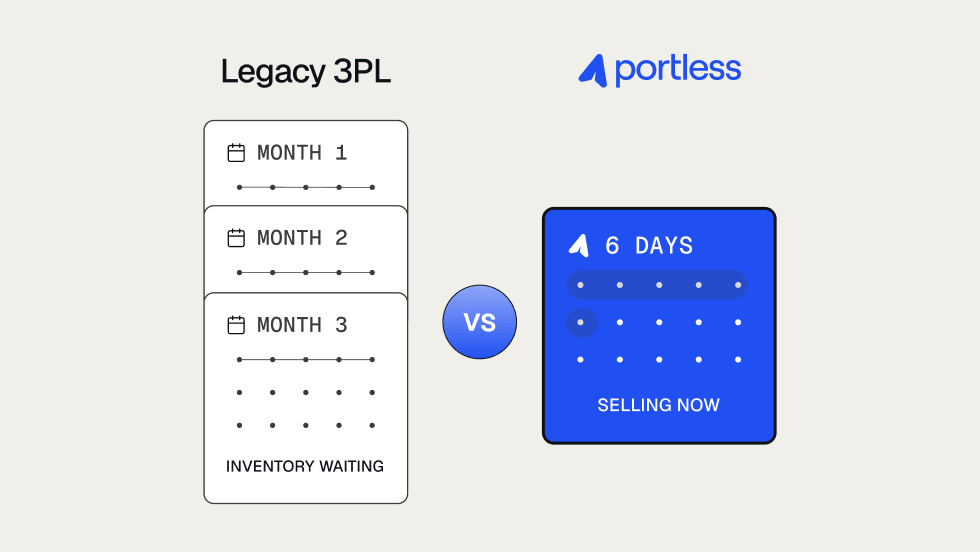
Under the legacy bulk freight model, classification happens once per shipment — a container of 10,000 units gets one HTS code declaration, duty is paid upfront, and goods sit in a domestic warehouse until they sell.
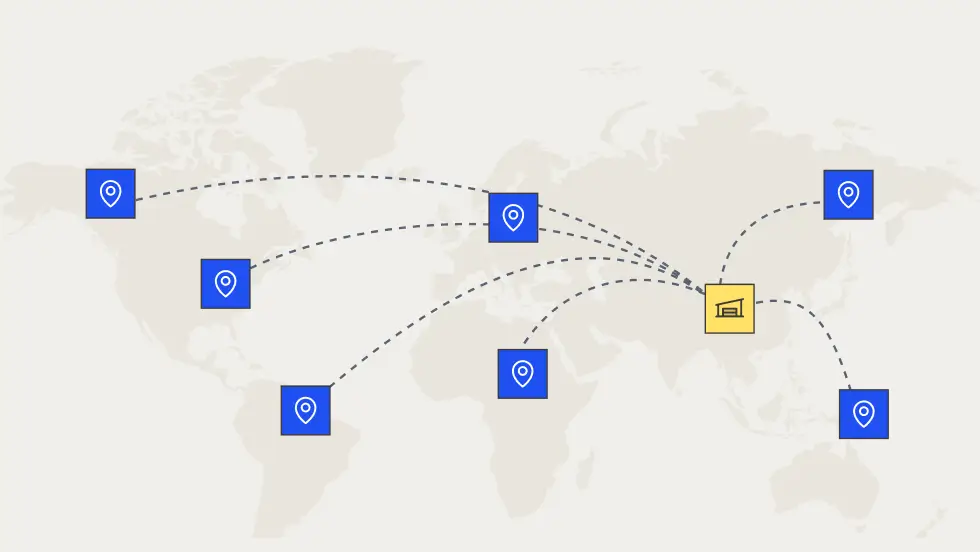
Under direct fulfillment, each parcel is classified and cleared individually as it ships to a customer. That sounds like more work, but it's actually more accurate: classification is tied to the specific product going to a specific customer, with duty applied at the order level rather than the container level. At Portless, our merchant portal includes HS code recommendations, suggested product descriptions, and automatic tariff calculations, so brands don't have to manually classify every order.
Get HS code classification right before it eats your margin
Misclassification is one of the most expensive mistakes a brand can make at scale, and it's also one of the most preventable. If you're shipping from Asia and want to see how direct fulfillment handles classification, duty calculation, and DDP at the order level, contact our team.
← Back to the Ecommerce supply chain glossary