Tariff
A tariff is a government-imposed tax on imported goods, typically calculated as a percentage of the product's declared customs value. For Ecommerce brands, tariffs raise the landed cost of every unit imported and directly compress margins, pricing power, and cash flow.
If you import products from Asia to sell in the US, EU, UK, or any market outside your country of manufacture, tariffs are a line item you can't ignore. They're collected by the importing country's customs authority — in the US, that's U.S. Customs and Border Protection (CBP) — and they're paid by the importer of record, not the foreign factory. That last part matters because it means the cost lands on your P&L, not your supplier's.
Tariff rates vary by product category, country of origin, and trade policy in effect at the time of import. A single product might be subject to a base most-favored-nation (MFN) rate, plus Section 301 duties, plus reciprocal tariffs, plus IEEPA-authorized executive tariffs — stacked on top of each other. The total can easily exceed 50% of declared value on goods sourced from China today.
How tariffs are calculated
Tariffs are applied to the declared customs value of imported goods, usually the transaction value — the price actually paid to the factory. The duty rate itself comes from your product's Harmonized Tariff Schedule (HTS) classification, which you can look up on the U.S. International Trade Commission's HTS search tool.
The basic formula:
- Declared customs value × applicable duty rate = tariff owed
- Multiple tariff programs can stack, so the effective rate is the sum of all applicable duties
- Tariffs are paid at the time of import clearance, before goods are released for sale
A brand importing $100,000 of apparel from China at a combined 55% effective tariff rate owes $55,000 in duties at the port. That's cash out the door before a single unit sells.
Why tariffs hit Ecommerce brands harder than retailers
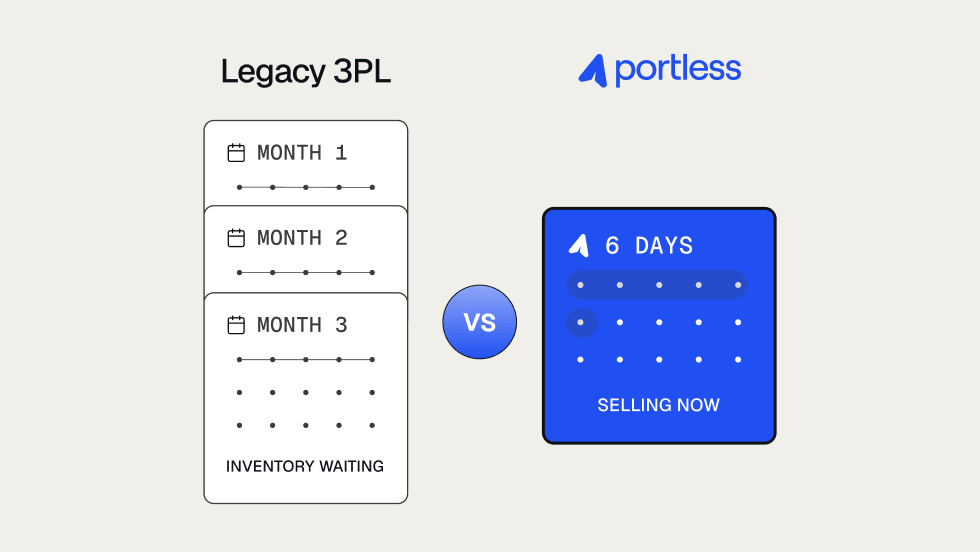
The legacy bulk freight model concentrates tariff exposure in one painful moment: import. You manufacture in volume, ship by ocean over 45 to 60+ days, and pay duties on the entire container at the point of entry. If your goods sit in a domestic 3PL for 90 days before selling through, you've paid tariffs upfront on inventory that hasn't generated a dollar of revenue.
Worse: if tariff rates rise between when you placed the production order and when the container lands, your pricing assumptions are wrong and your cash is already committed. This happened repeatedly to brands across 2025, with rates shifting faster than supply chains could adjust.
The result is a triple hit:
- Cash gets locked up in duties paid on unsold inventory
- Margins compress on goods already priced before the rate increase
- Working capital that should fund acquisition or product development sits in a warehouse
How tariffs interact with the rest of your supply chain
Tariffs don't exist in isolation. They sit on top of the broader Ecommerce supply chain and interact with every other cost in your landed cost calculation: freight, insurance, brokerage, last-mile delivery, and carrying costs. A 10-point tariff increase on a SKU with thin margins to begin with can flip a profitable product into a loss leader overnight.
This is why landed cost modeling matters more now than it did three years ago. If you don't know your true cost per unit at current duty rates — and at +10% and +25% scenarios — you're guessing at pricing. Tools like the Portless landed cost calculator exist for exactly this reason.
Strategies brands use to manage tariff exposure
There's no single fix for tariff exposure. The brands holding margin through trade volatility use a combination of structural and tactical levers:
- Diversify sourcing across multiple manufacturing countries to spread country-of-origin risk
- Apply tariff engineering to legally qualify products for lower-duty HTS classifications
- Use tariff deferment to delay duty payment until after goods sell
- Move from bulk imports to direct fulfillment so duties apply per-order, matched to revenue
- Model landed cost at multiple tariff scenarios before committing to a production run
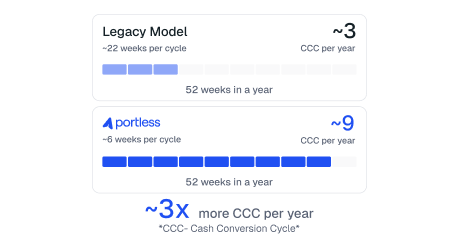
The structural choice that compounds the most over time is changing when duties are paid relative to when revenue comes in. Under the bulk model, tariffs come out 60 to 90+ days before the cash from sales arrives. Under a direct fulfillment model, tariffs are assessed per parcel at the point of shipment — after the customer has already paid.
Tariff deferment vs. tariff avoidance
Worth being clear: nothing legitimate about managing tariffs involves evading them. Tariff engineering, first sale valuation, bonded warehousing, and direct fulfillment are all legal structures within the trade system. They reduce or defer the duty burden — they don't eliminate it. The 1881 Supreme Court case Merritt v. Welsh established that strategic product design to qualify for lower duty classifications is compliant, as long as the classification itself is accurate.
What's not legitimate: under-declaring customs value, misclassifying products to dodge duties, or routing goods through third countries to disguise origin. Those are customs violations with serious consequences, including seizure, penalties, and loss of importer status.
How Portless changes the tariff equation for Ecommerce brands
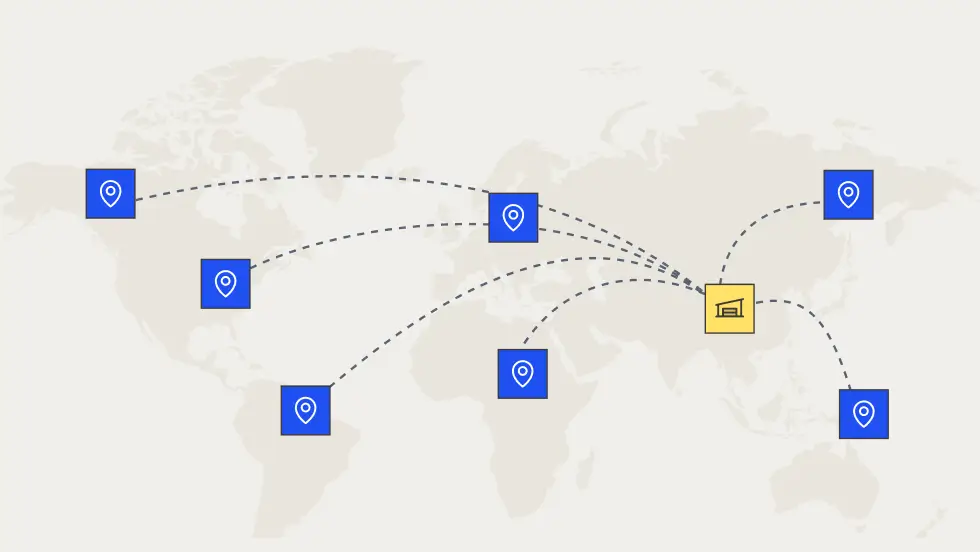
Portless ships individual confirmed orders directly from fulfillment centers in Asia to customers in 85+ countries. That structural difference means duties are applied per parcel at the time of shipment — after the customer has paid — rather than upfront on a full container of unsold inventory. You stop paying tariffs on goods that may never sell, and the duty payment timing aligns with revenue collection rather than running 90 days ahead of it. If you want to see what that shift would look like against your actual numbers, contact our team and we'll model it.
← Back to the Ecommerce supply chain glossary