CBP
CBP (U.S. Customs and Border Protection) is the federal agency under the Department of Homeland Security responsible for enforcing trade laws, collecting duties and tariffs, and screening goods entering the United States. For Ecommerce brands importing from China or Vietnam, CBP is the gatekeeper that determines how fast your shipments clear, what you pay, and whether your documentation holds up.
If you're moving goods into the US, every shipment you send touches CBP. The agency processes more than $3 trillion in imports annually and operates at every port, airport, and land border crossing in the country. For DTC brands manufacturing overseas, CBP isn't just a regulator — it's the entity that decides whether your inventory arrives on time, at the expected duty cost, with the documentation intact.
Most brands don't think about CBP until something goes wrong: a shipment gets held, a duty bill comes in higher than expected, or a classification gets flagged. The legacy model — bulk freight, container-level entries, customs brokers managing everything offline — makes CBP feel like a black box. It doesn't have to be.
What CBP actually does
CBP sits inside the Department of Homeland Security and handles three core functions that affect Ecommerce operators:
- Collecting tariffs, duties, and fees on imported goods, including Section 301 tariffs on China-origin products and country-specific reciprocal tariffs
- Enforcing trade laws, including valuation rules, country-of-origin requirements, and intellectual property protections
- Screening shipments for prohibited goods, safety violations, and partner government agency (PGA) compliance — for example, FDA review on cosmetics or CPSC review on children's products
CBP also publishes the rules that determine how your shipments are filed. The two systems most Ecommerce brands interact with are the Automated Commercial Environment (ACE), where entries are filed electronically, and CSMS messages, which announce operational changes in near real-time.
How CBP affects your unit economics
CBP decisions show up directly on your P&L. Three areas matter most:
Duty rates. CBP assesses duties based on the Harmonized Tariff Schedule (HTS) classification, country of origin, and declared customs value. A misclassified SKU can mean overpaying by 10–25% per unit — or facing penalties for underpaying. Read more on how to avoid overpaying in our guide to customs valuation after de minimis.
Entry type. CBP recognizes multiple entry types depending on shipment value and characteristics. Entry Type 86 was historically used for Section 321 shipments under $800. Type 11 covers informal entries, and Type 01 covers formal entries. Each has different documentation requirements and processing speeds.
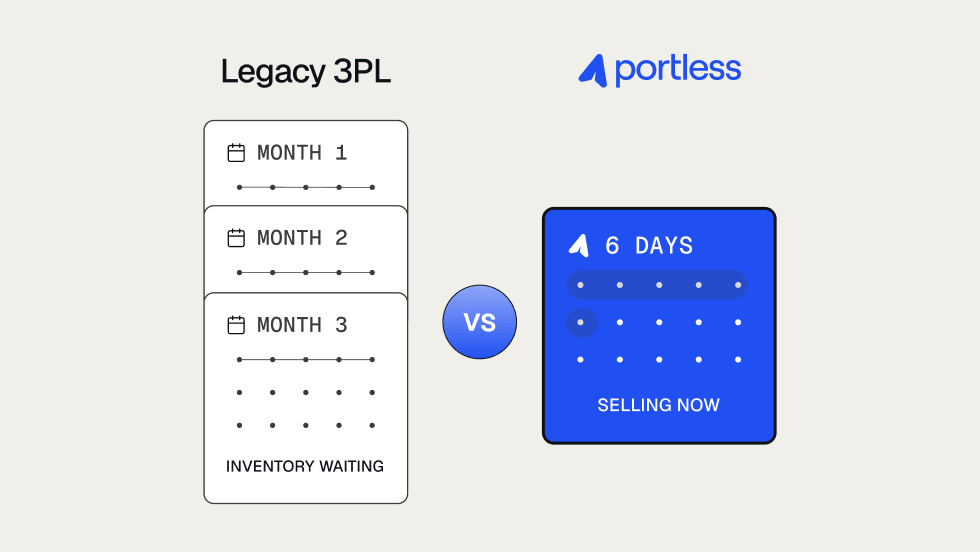
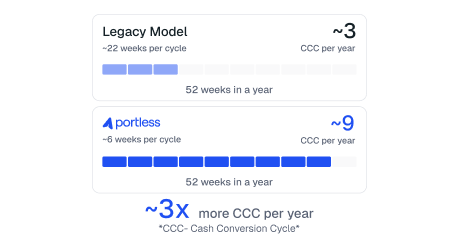
Timing. Under the legacy bulk freight model, you pay duties to CBP the moment a container clears — often months before the goods sell. In a direct fulfillment model, duty is paid per order, after the customer has bought. That timing shift is one of the largest cash flow levers in cross-border Ecommerce.
What CBP requires from importers
CBP expects every importer to exercise what it calls "reasonable care." That means accurate documentation, defensible classification, and a paper trail that holds up under audit. The core requirements:
- Accurate HTS classification matched to the actual product
- Declared customs value based on the transaction price paid to your supplier, not retail price
- Country of origin documentation, including evidence that the product wasn't transshipped to avoid tariffs
- Proper Importer of Record (IOR) designation
- Records retained for at least five years after entry
Getting any of these wrong creates risk. Repeated errors trigger audits. Underdeclared values can trigger penalties under the False Claims Act, with fines up to three times the duties owed.
Recent CBP changes Ecommerce brands need to track
Trade policy has shifted significantly in 2025. The de minimis exemption for China-origin goods was eliminated on May 2, 2025, and the broader $800 de minimis threshold was removed on August 29, 2025. Every shipment now requires full entry filing, and every unit triggers duty.
CBP has also suspended a proposed rule that would have forced Chapter 99 goods over $250 into formal entry, keeping the $2,500 informal entry limit in place for now. These rules change frequently — monitoring CBP CSMS messages and Federal Register notices is the only way to stay current.
How CBP fits into the Portless model
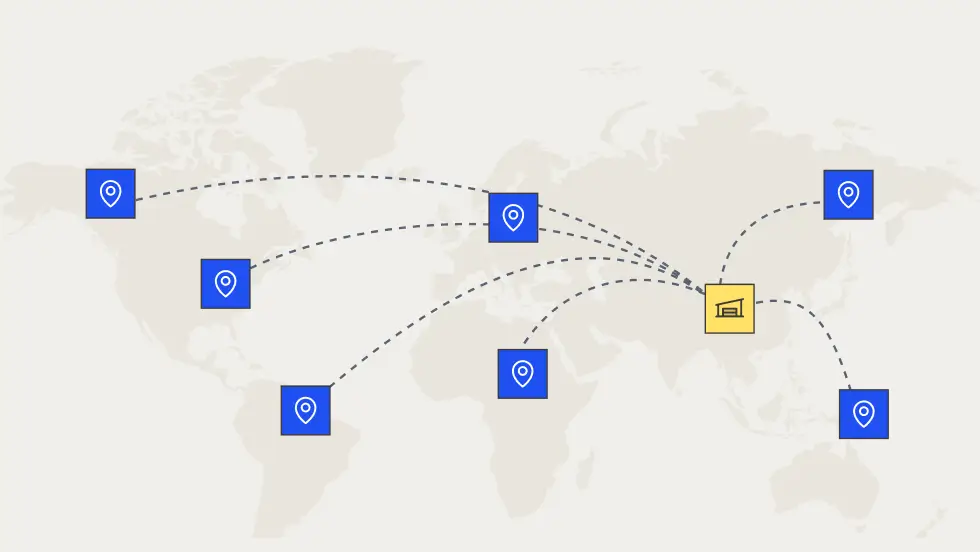
Portless brands ship from manufacturers in China and Vietnam directly to end customers, with each order processed as its own customs entry. That means duty is paid to CBP only after a customer buys — not months in advance on a full container. The merchant remains the Importer of Record, declares transaction value based on supplier price, and gets HS code recommendations and tariff calculations built into the merchant portal.
The result: no duty paid on unsold inventory, no upfront tariff bill on a container that may take 90 days to sell through, and a cash conversion cycle measured in days instead of months. Shein and Temu built their entire businesses on this model. Now smaller DTC brands can run it too.
To see how direct fulfillment changes your CBP exposure and cash flow, contact us.
← Back to the Ecommerce supply chain glossary