Transaction value
Transaction value is the price actually paid or payable for goods when sold for export to the country of import, plus specific statutory additions. It is the primary method customs authorities use to determine the dutiable value of imported merchandise.
Transaction value is the foundation of customs valuation in nearly every major trading economy. Under Section 402 of the Tariff Act of 1930 and the WTO Valuation Agreement, it is the preferred method for calculating how much duty you owe on imported goods. For Ecommerce brands sourcing from Asia, getting transaction value right is the difference between accurate landed cost forecasts and overpaying duty on every shipment.
The rule is simple in principle: customs cares about what you paid your supplier for the goods, not what your customer paid you at checkout. But the details — what counts as a sale, what gets added in, what gets excluded — are where brands lose money.
How transaction value is calculated
Transaction value starts with the price actually paid or payable to your supplier for the goods sold for export. To that base price, you add specific statutory items if they are not already included in the supplier invoice:
- Packing costs incurred by the buyer
- Selling commissions paid by the buyer
- The value of assists, such as tooling, molds, or design work supplied to the factory at no cost
- Royalties or license fees the buyer must pay as a condition of sale
- Proceeds of any subsequent resale that accrue to the seller
You exclude items that are separately stated on the invoice and not part of the price for the goods themselves:
- International freight and insurance
- Import duties and taxes
- Costs of construction, assembly, or maintenance performed after import
- US inland freight
If freight and insurance are bundled into the unit price on your supplier invoice, customs may include them in dutiable value. Separating them on the commercial invoice is one of the simplest ways to keep duty calculations clean.
Why transaction value matters for DTC brands
For brands using direct fulfillment, transaction value is often misunderstood. The customer pays $40 at checkout. The factory invoice was $6. Which number does customs care about?
The answer: $6. CBP presumes that transaction value is the price the importer of record paid for the goods, regardless of what happens downstream. As long as the merchant (or an entity acting on their behalf) is listed as the importer of record, the subsequent sale to the end customer is irrelevant for valuation purposes.
This matters because some brands mistakenly declare the retail price at import. The duty difference is brutal:
- Retail declared at $29.99 with an 8% duty: $2.40 per unit
- Factory cost declared at $3.90 with an 8% duty: $0.31 per unit
That's a 674% overpayment on every single order. At 5,000 orders a month, the math gets ugly fast.
When CBP can reject transaction value
Transaction value is the default, but it is not automatic. CBP can disregard it and apply an alternative valuation method if:
- The sale was not genuinely "for exportation to the United States"
- The buyer and seller are related parties and the price was not at arm's length
- Payment records don't match the declared invoice value
- Product descriptions are vague or inconsistent with the HS code
- Assists, royalties, or commissions were not disclosed
When transaction value is rejected, CBP moves down a hierarchy: transaction value of identical merchandise, transaction value of similar merchandise, deductive value, computed value, and finally a fallback method. Each step typically results in a higher dutiable value, so getting transaction value accepted on the first pass protects your margin.
How transaction value differs from first sale
For brands with multi-tier supply chains — factory sells to a trading company, trading company sells to the importer — there is an advanced method called first sale that uses the earlier (and lower) price in the chain as the dutiable value.
The standard transaction value uses the price you paid the middleman. First sale lets you use the price the middleman paid the factory, which is typically 10-20% lower. The catch: it requires arm's-length pricing, documented sales between each tier, clear US export intent, and substantial annual volume from a single factory (generally $1-2M+) to justify the compliance overhead.
For most DTC brands buying directly from factories, standard transaction value is the simpler, cleaner path.
Transaction value in a direct fulfillment model
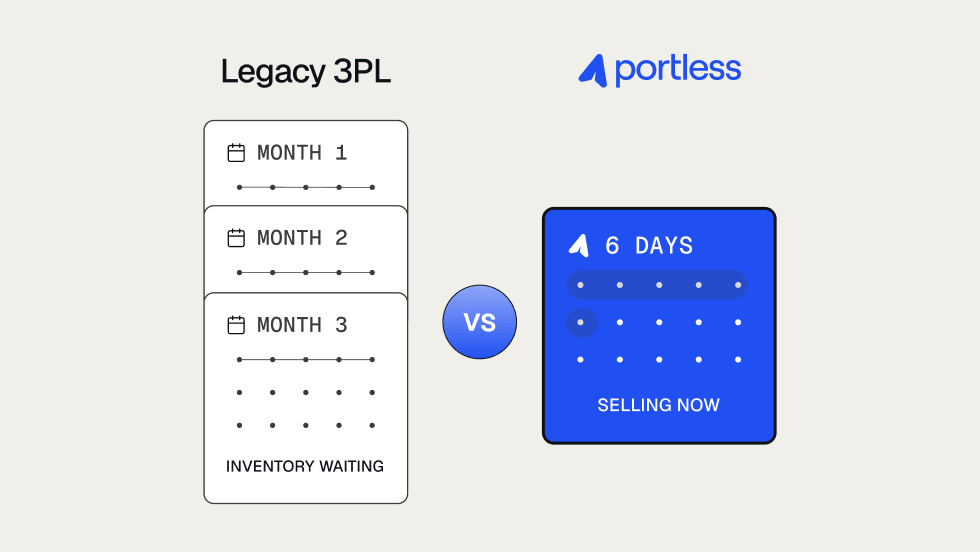
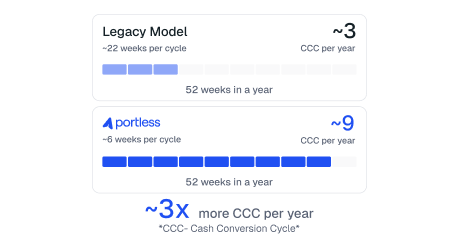
The legacy bulk import model pays duty on transaction value at the moment a container enters the US. You pay tariffs on every unit in the container — sold or unsold — months before revenue comes in. Cash conversion cycles stretch to 120-180 days.
Direct fulfillment changes the timing, not the rule. You still declare transaction value (the price you paid your factory) on every shipment. But you only pay duty as orders ship to customers. No duty on unsold inventory. No upfront tariff bill on goods you haven't sold yet.
The valuation rule is identical. What changes is when the money leaves your account.
Get transaction value right with Portless
Portless brands declare transaction value on every order under a Delivered Duty Paid (DDP) model. Duty is calculated on the factory price you paid — not retail, not your Shopify checkout price — and paid only when an order ships to a customer. You get accurate valuation, deferred duty timing, and clean documentation for every shipment.
Contact us to see how direct fulfillment aligns valuation, duty, and cash flow with how your business actually sells.
← Back to the Ecommerce supply chain glossary