Section 321
Section 321 is a provision of the US Tariff Act of 1930 that allowed shipments valued at $800 or less per person, per day to enter the United States duty-free and with simplified customs processing. It's the legal foundation of the de minimis exemption that powered direct-from-China Ecommerce for nearly a decade.
For most of the last 10 years, Section 321 was the quiet engine behind direct fulfillment. It's what made it economically viable to ship a $40 order from a factory in Shenzhen to a customer in Dallas without paying duties, filing a formal customs entry, or building a US warehouse. The rule itself is older than you'd expect — codified in 19 U.S.C. § 1321 — but it didn't become a serious commercial tool until 2016, when the de minimis threshold jumped from $200 to $800 per shipment under the Trade Facilitation and Trade Enforcement Act.
That threshold change is what built Shein, Temu, and a generation of DTC brands shipping direct from China. It's also what's been actively dismantled throughout 2025. Below is what the rule is, how it worked, what's changed, and what operators need to know now.
How Section 321 worked
The mechanics were simple, which is why it scaled. A shipment valued at $800 or less per recipient per day cleared US customs duty-free, with minimal paperwork, and usually without a formal entry. You didn't need an importer of record, you didn't pay Section 301 tariffs on Chinese goods, and the clearance happened in hours instead of days.
For brands manufacturing abroad and selling DTC, this meant one thing: you could skip the legacy model entirely. No bulk ocean freight. No domestic 3PL. No upfront duty payment on inventory that might not sell. You produced, shipped, and collected revenue on each order individually — which is the foundation of the direct fulfillment model.
A few rules always applied:
- Shipments had to be valued at $800 or less based on fair retail value in the country of shipment
- The $800 cap was per person, per day — not per order, per SKU, or per parcel
- Certain goods were excluded entirely: alcohol, tobacco, products subject to anti-dumping or countervailing duties, and goods regulated by agencies like the FDA, USDA, or EPA
- Each shipment required a consignee name, address, and declared value
Section 321 vs. Entry Type 86
These two terms get conflated constantly. They're related but not the same.
Section 321 is the legal provision — the statute that grants the duty-free exemption. Entry Type 86 is the customs filing mechanism CBP introduced in 2019 to formally process Section 321 shipments, especially those subject to Partner Government Agency (PGA) review like FDA or CPSC goods. Type 86 required an HS code and importer information; basic Section 321 manifest clearance did not.
In practice, most high-volume DTC operations used Type 86 because it was the only way to clear PGA-regulated goods under de minimis, and it gave CBP better visibility into what was crossing the border. The two ran in parallel until both were effectively shut down for the bulk of inbound Ecommerce traffic in 2025.
What changed in 2025
The exemption is gone for most practical purposes. Here's the sequence:
- February 2025: An executive order eliminated the de minimis exemption for goods of Chinese and Hong Kong origin under the IEEPA framework. T86 entries for China-origin goods were suspended.
- August 2025: sheiCBP fully suspended the de minimis exemption for all countries of origin. Every shipment, regardless of value or where it came from, now requires a formal entry and is subject to applicable duties and tariffs.
- 2027: Under current legislation, the Section 321 statute is set to be formally repealed, locking in the end of the duty-free, low-value entry framework. FTI Consulting has a detailed breakdown of the legislative timeline.
The practical impact: shipments under $800 now incur duties, require formal customs entries, and need an importer of record. The cost and complexity model that made direct-from-China viable for sub-$800 orders has fundamentally shifted.
What this means for DTC brands
The brands that built their entire model around Section 321 — Shein and Temu being the obvious examples — are now paying duties on every parcel. For DTC brands operating at $1M to $15M in revenue, the question isn't whether to use Section 321 anymore. It's how to structure your supply chain now that duty-free de minimis is off the table.
Three things matter more than they did a year ago:
- Landed cost accuracy. Knowing your true cost per unit, including duties, before you set retail pricing. You can model this with a landed cost calculator.
- Duty handling at the point of sale. Whether you're collecting duties from the customer or absorbing them into your pricing, the DDP model is now table stakes for cross-border DTC.
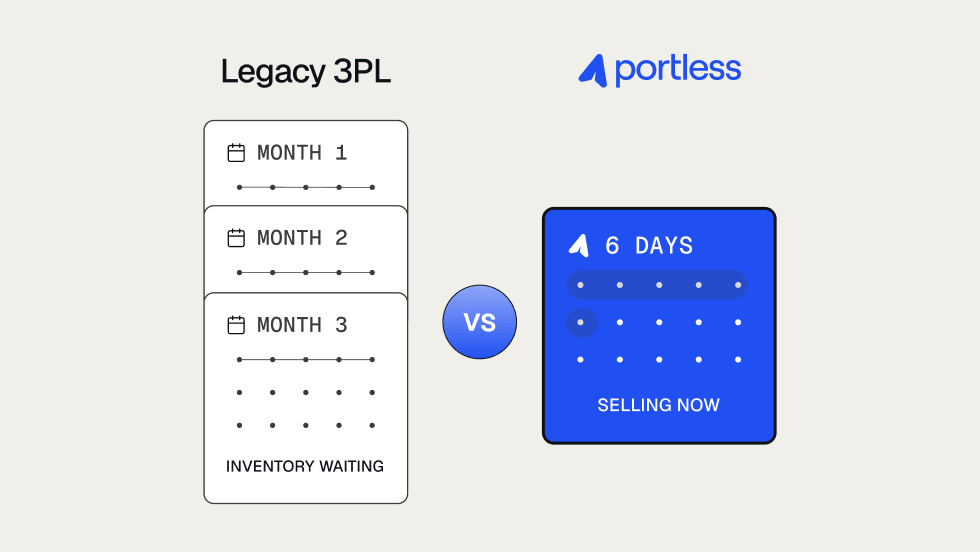
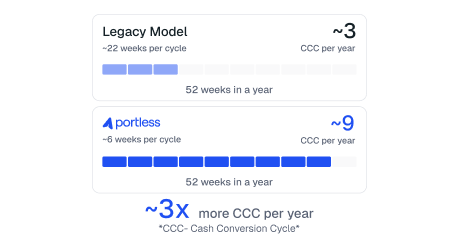
- Inventory cycle speed. Paying duties on bulk inventory that sits in a warehouse for 90 days is worse than paying duties on inventory that sells within seven days of production.
The legacy 3PL model — bulk ocean freight, domestic warehousing, upfront duties on unsold stock — looks even worse now than it did before, because brands are paying duties earlier in the cycle and tying up more capital before revenue materializes.
How Portless operates in a post-Section 321 world
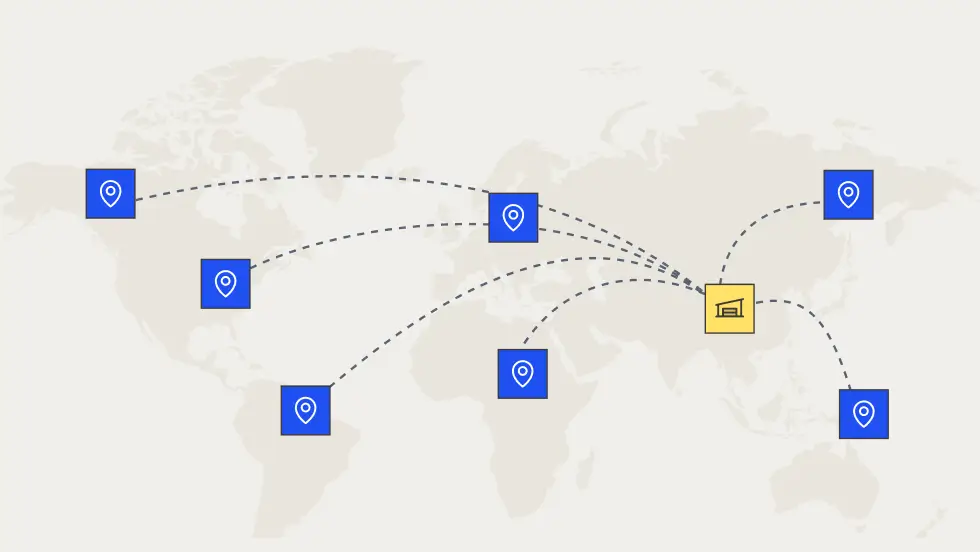
Portless was never built on Section 321 alone. The direct fulfillment model we run ships from manufacturers in Asia directly to customers in 85+ countries, with duties handled upfront under a Delivered Duty Paid structure. That model still works — and in many ways, it works better — when duties are paid per parcel at the point of fulfillment rather than upfront on bulk inventory.
If you're rebuilding your supply chain to account for the end of Section 321, contact us to see how direct fulfillment compares to your current setup.
← Back to the Ecommerce supply chain glossary