Ocean freight
Ocean freight is the transportation of goods by sea, typically in shipping containers loaded onto cargo vessels. It is the lowest-cost method for moving large volumes internationally, with transit times of two to six weeks depending on the route.
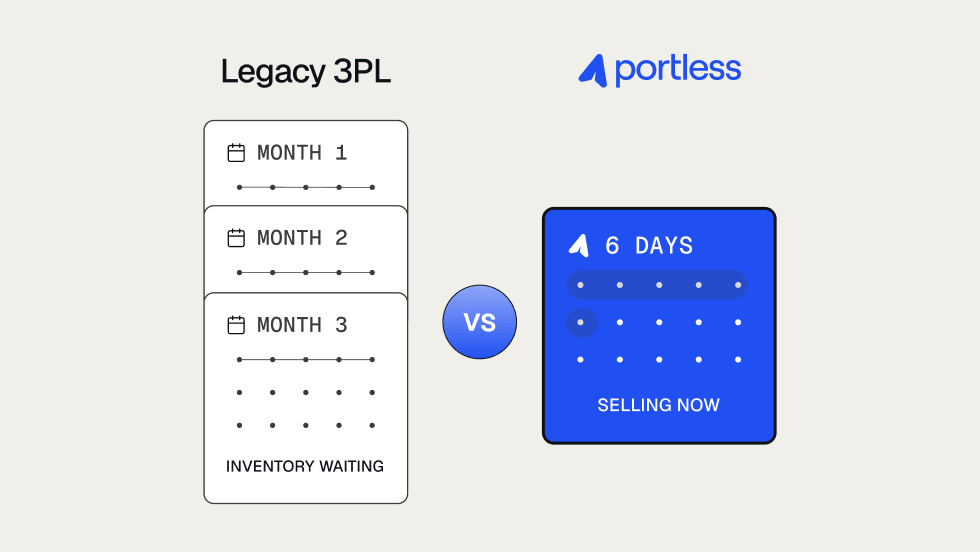
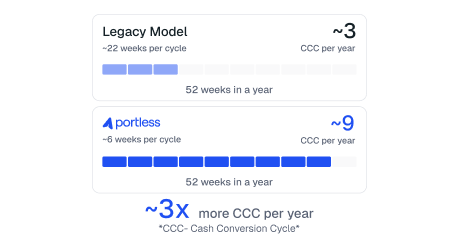
Ocean freight is how most physical goods cross borders. Roughly 80% of global trade by volume moves on container ships, according to UNCTAD's Review of Maritime Transport. For DTC brands manufacturing in Asia and selling outside Asia, ocean freight has been the default since the modern Ecommerce supply chain took shape. It is cheap per unit, predictable in good conditions, and built for scale. It is also slow, capital-intensive, and the structural reason most Ecommerce brands run a 60 to 90 day cash conversion cycle.
This page covers what ocean freight is, how it works, what it actually costs you beyond the freight invoice, and where faster fulfillment models fit.
How ocean freight works
A typical ocean freight shipment moves through six stages: pickup at the factory, drayage to the origin port, loading onto a container vessel, ocean transit, customs clearance at the destination port, and inland transport to a warehouse. Each handoff adds time and cost.
Goods ship in one of two container formats:
- Full container load (FCL) — your goods fill an entire 20-foot or 40-foot container
- Less than container load (LCL) — your goods share container space with other shippers
FCL is cheaper per unit but requires enough volume to fill a container. LCL adds consolidation and deconsolidation steps at both ends, which extend transit times and create more handoffs where damage or delays can occur.
A bill of lading governs the contract between you and the carrier. Incoterms — most commonly FOB or EXW — define who owns the risk at each stage and who pays for what.
Ocean freight transit times
Transit times vary by route, season, and carrier reliability. Typical port-to-port windows from China to major destinations:
- China to US West Coast: 15 to 20 days
- China to US East Coast: 30 to 40 days
- China to Northern Europe: 30 to 45 days
These numbers don't include factory-to-port drayage, customs clearance, or inland transport to your warehouse. Add 10 to 20 days on either end and the real factory-to-warehouse window often runs 45 to 60+ days. Reliability has also gotten worse since 2020. Schedule reliability across major carriers has hovered between 50% and 70% in recent years, according to Sea-Intelligence's Global Liner Performance reports.
What ocean freight actually costs
The freight invoice is the smallest part of the real cost. The full landed cost of ocean freight includes:
- Ocean freight rate (port-to-port)
- Bunker adjustment factors and fuel surcharges
- Drayage at both ends
- Port fees and terminal handling charges
- Customs brokerage
- Duties and tariffs paid at the port of entry
- Inland transport to the warehouse
- Inventory carrying costs once goods arrive
That last category is where most brands underestimate the impact. Inventory carrying costs typically run 20% to 30% of inventory value per year, covering warehousing, insurance, capital cost, and obsolescence. For a brand holding $500K in stock, that's up to $150K annually before a single unit ships.
Then there's the duty timing problem. Under ocean freight, you pay duties on the entire container at import — before any of it sells. If tariffs rise between when you placed the order and when the container lands, your margin math is already wrong by the time you find out. This is exactly the structural exposure that hit so many brands through the 2025 tariff waves.
To see what this looks like across your specific SKUs, the landed cost calculator models product cost, freight, duties, and last-mile fees together.
Why ocean freight still dominates
Ocean freight didn't become the default by accident. It works well for:
- Heavy or oversized products where air freight is prohibitively expensive
- Stable, predictable demand where long lead times don't create stockout risk
- Large production runs where per-unit economics matter more than speed
- Low-margin commodities where shipping cost is a meaningful percentage of COGS
For the right product profile, the math still works. The problem is that most DTC brands selling lightweight products under 3.5 pounds — apparel, beauty, electronics, home goods — don't fit that profile anymore. They're paying for a model designed around bulk industrial shipping when their unit economics, demand volatility, and capital position would be better served by something faster.
Where ocean freight breaks for modern DTC brands
The brands that absorbed recent tariff and freight shocks hardest weren't necessarily in the wrong category. Many were in the wrong supply chain structure. Three failure modes recur:
Cash locked in transit. With a 60 to 90 day cycle from PO to revenue, your capital is doing nothing for you for most of the year. It can't fund acquisition. It can't absorb a tariff increase. It can't fund the next launch.
Duty paid before demand confirms. When you pay duties on the entire shipment at import, you're betting on a forecast made months earlier. If demand softens, you're liquidating tariff-paid inventory at a loss.
No flexibility when something goes wrong. Whether it's a Red Sea diversion, a port strike, or a sudden tariff change, ocean freight gives you no levers. Goods on the water are committed.
Brands like &Collar found this out the hard way, heading into Father's Day 2023 at 5% in-stock with their hero SKU still being produced in China. Their options were running out of stock or air freighting 50,000 units at margin-destroying cost.
Ocean freight versus air freight versus direct fulfillment
Three models, three different supply chain shapes:
- Ocean freight + domestic 3PL — lowest per-unit cost, longest cash cycle, highest inventory risk
- Air freight + domestic 3PL — faster transit (3 to 7 days), higher per-unit cost, same inventory and duty timing problems once goods land
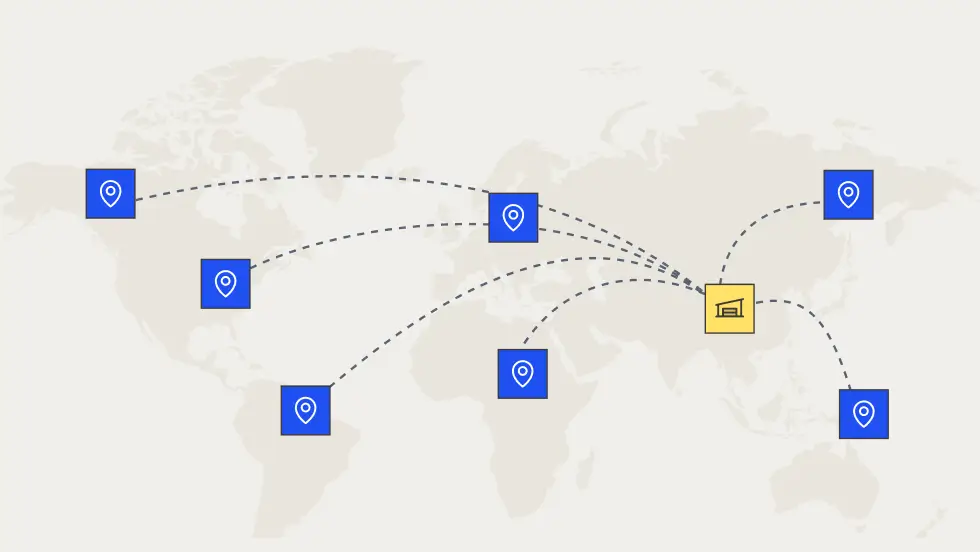
- Direct fulfillment from manufacturing market — individual orders ship from a fulfillment center near the factory, duties applied per parcel at fulfillment, no domestic warehousing layer
The third model is what Shein and Temu built their entire operations around, and it's what brands like Foreign Resource use to run a near-negative cash conversion cycle. Same factory, same country of origin, structurally different impact on cash flow and tariff exposure.
Where Portless fits if you're rethinking ocean freight
Ocean freight isn't going away. For heavy goods, stable demand, and bulk replenishment cycles, it remains the most cost-effective option per unit. But if you're a DTC brand shipping lightweight products from Asia, the legacy combination of bulk sea freight plus domestic 3PL is almost certainly locking up capital you could redeploy into growth. Portless ships individual orders direct from manufacturing markets to customers in 85+ countries within five to eight days, with duties handled per parcel under DDP rather than paid in bulk upfront. Talk to our team to model what that looks like against your current numbers.
← Back to the Ecommerce supply chain glossary