Container load
A container load is a shipment that fills a standard intermodal shipping container, either a 20-foot (TEU) or 40-foot (FEU) unit. Brands typically choose between full container load (FCL), which uses the entire container, and less-than-container load (LCL), which shares container space with other shippers.
For most Ecommerce brands manufacturing in Asia, the container load is still the default unit of import. You produce a batch, pack it into a 20- or 40-foot box, and wait two to six weeks for it to arrive at a domestic warehouse. The decision between full container load and less-than-container load shapes your freight cost, your transit time, and how much working capital sits in transit at any given moment.
But the container load model is also the root of most cash flow problems in DTC. It forces you to forecast demand months in advance, pay duties upfront on inventory that hasn't sold, and absorb rising container shipping costs that have nearly doubled since 2020.
Full container load (FCL) vs less-than-container load (LCL)
The two ways to move goods inside a shipping container behave very differently on cost and timing.
- Full container load (FCL): You pay a flat rate for the entire container, whether you fill it or not. Faster transit because the container moves directly from origin port to destination port without consolidation stops.
- Less-than-container load (LCL): You pay for the space your goods occupy, sharing the container with other shippers. Cheaper for small volumes, but slower because cargo is consolidated at origin and deconsolidated at destination.
FCL becomes more cost-efficient per unit once you can fill roughly 50% or more of a container. Below that threshold, LCL usually wins on landed cost — but loses on transit predictability.
Standard container load sizes
Two sizes dominate ocean freight. Capacity is measured both in volume (cubic meters) and in weight, and the limit that bites first depends on what you ship.
::table
Container;Internal volume;Max payload
20-foot (TEU);~33 cubic meters;~28,000 kg
40-foot (FEU);~67 cubic meters;~28,800 kg
40-foot high cube;~76 cubic meters;~28,600 kg
:table
Dense products like beauty, electronics, or supplements often hit the weight limit before filling the volume. Bulky, lightweight products like apparel or home goods do the opposite.
What a container load actually costs you
The headline freight rate is the smallest part of a container load's real cost. The full picture includes:
- Ocean freight: $2,000–$8,000 per container depending on lane and season, according to the Drewry World Container Index.
- Drayage: Trucking the container from port to warehouse.
- Duties and tariffs: Paid upfront on landed value, before a single unit sells.
- Warehouse receiving and storage: Domestic 3PL fees to unload, sort, and shelve inventory.
- Capital cost: Cash locked up for the two to six weeks the container is in transit, plus however long inventory sits before selling.
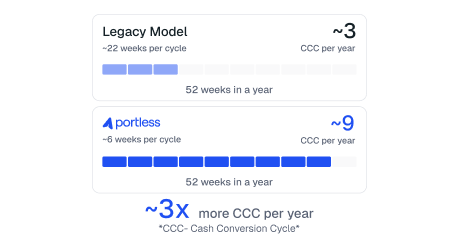
For a brand doing 5,000 orders/month, a single 40-foot container can represent 60–90 days of working capital tied up before the first unit ships to a customer.
Why the container load model breaks DTC cash flow
The container load is built for retailers replenishing predictable shelves. It is not built for DTC brands testing new SKUs, riding viral spikes, or expanding into new markets.
Three structural problems:
- Forecasting risk. You're committing to a quantity months before you see demand. Get it wrong and you're either stocked out or sitting on dead stock.
- Cash flow drag. You pay for product, freight, and duties upfront — then wait months to recover that cash through sales.
- Quality blind spots. If a defect shows up in the container after it lands, you're stuck. Shipping it back to the factory rarely makes economic sense.
Brands like Shein and Temu sidestep all three by shipping directly from manufacturers via air, not ocean. They've proven the container load model isn't the only way to move volume from Asia to Western consumers.
Air freight as an alternative to container loads
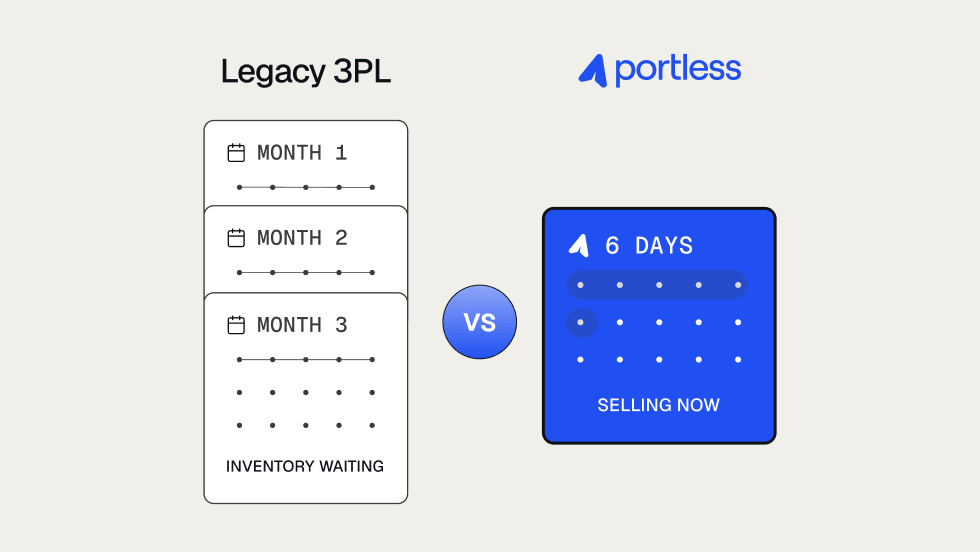
For products under 3.5 lbs — apparel, beauty, electronics, supplements, home goods — air freight from the factory direct to the customer can replace the container load entirely. Transit times drop from weeks to days. Duties are paid on actual sales, not forecasted ones. Inventory becomes available for sale within days of production, not months.
The tradeoff: air freight costs more per kilogram than ocean. But once you factor in landed cost, working capital savings, and the elimination of domestic warehouse fees, the math often flips in air's favor — especially for high-margin, low-weight products.
How Portless replaces the container load model
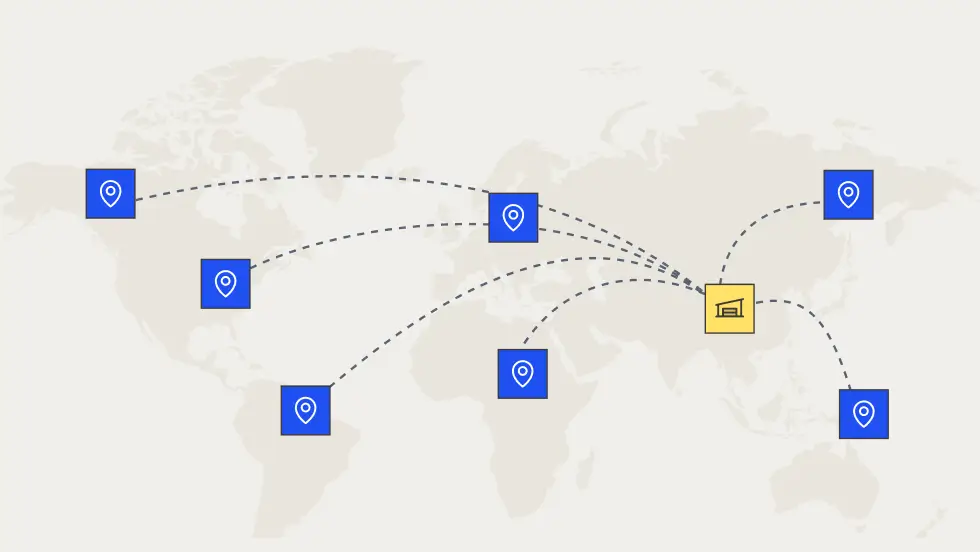
Portless ships orders directly from manufacturers in Asia to customers in 85+ countries via air, bypassing the container-and-warehouse cycle entirely. You produce on real demand, your inventory becomes available for sale within days of leaving the line, and you only pay duties on units that actually sell. To see what your true cost would look like under both models, contact our team or run the numbers through our landed cost calculator.
← Back to the Ecommerce supply chain glossary